Understanding the Mexican Peso: History, Stability, and Inflation
Watching your rent jump 20% simply because the exchange rate shifted overnight is a gut-wrenching experience that shatters the illusion of a cheap life abroad. I remember losing hundreds of dollars on a lease transfer because I didn’t understand currency volatility. This guide breaks down the Mexican peso’s history, current stability, and inflation so you can protect your wallet.
Disclosure: This post may contain affiliate links. We may earn a commission at no extra cost to you if you make a purchase through these links. Read full disclosure.
The Weight of History The 1994 Crisis and the Nuevo Peso
To understand how Mexicans view their currency—and how you should approach your financial planning—you have to understand the trauma of the 1990s. Many older expats moved to Mexico operating on the assumption that the peso would constantly devalue against the dollar, making their foreign pensions stretch further every single year. That assumption is rooted in a specific historical event that forever changed the country’s economic landscape.
Erasing Three Zeros
In the early 1990s, Mexico was grappling with hyperinflation and massive macroeconomic instability. Prices for everyday goods were soaring into the thousands and millions of pesos. Buying a simple loaf of bread or a gallon of milk required carrying massive stacks of bills with dizzying amounts of zeros. The government realized that the currency was becoming psychologically and practically unmanageable for daily commerce.
To reset the economy and combat the psychological effects of hyperinflation, the Mexican government introduced the Nuevo Peso (New Peso) in 1993. This wasn’t just a rebranding; it was a mathematical reset. The government essentially erased three zeros from the currency overnight. A 1,000 “old” peso note was legally converted into 1 Nuevo Peso. For a brief transitional period, both currencies circulated side-by-side, causing immense confusion at cash registers and banks before the old notes were completely phased out.
Today, the “Nuevo” has been dropped, and the currency is simply referred to as the Mexican Peso (MXN). However, the legacy of that transition lives on in the minds of the local population. When you start Opening a Bank Account in Mexico, you will notice that the older generation is still inherently distrustful of keeping massive amounts of liquid cash in local banks without tying it to tangible assets, a direct cultural byproduct of watching their savings evaporate overnight decades ago.
The Tequila Effect on Expat Budgets
The introduction of the Nuevo Peso was followed immediately by the infamous 1994 economic crisis, known globally as the “Tequila Crisis.” The government was forced to unexpectedly devalue the peso against the US dollar. Overnight, the currency lost massive amounts of its value, interest rates skyrocketed, and local businesses collapsed under the weight of foreign debt.
For expats earning US dollars at the time, this crisis created an artificial financial paradise. Because their dollars suddenly bought twice as many pesos, foreign retirees lived like royalty on incredibly meager pensions. This era cemented the persistent, yet dangerously outdated, stereotype that Mexico is a perpetually dirt-cheap country where the exchange rate will always bail you out of poor budgeting.
If you base your current Cost of Living in Mexico: A Realistic Budget Breakdown on advice from expats who moved here twenty years ago, you are walking into a financial trap. The modern Mexican economy has fundamentally transformed. The era of a perpetually crashing peso subsidizing a luxury expat lifestyle is over. Understanding this shift is the first step in creating a sustainable, realistic financial plan for your life south of the border.
The Modern Peso Stability and the Super Peso Era
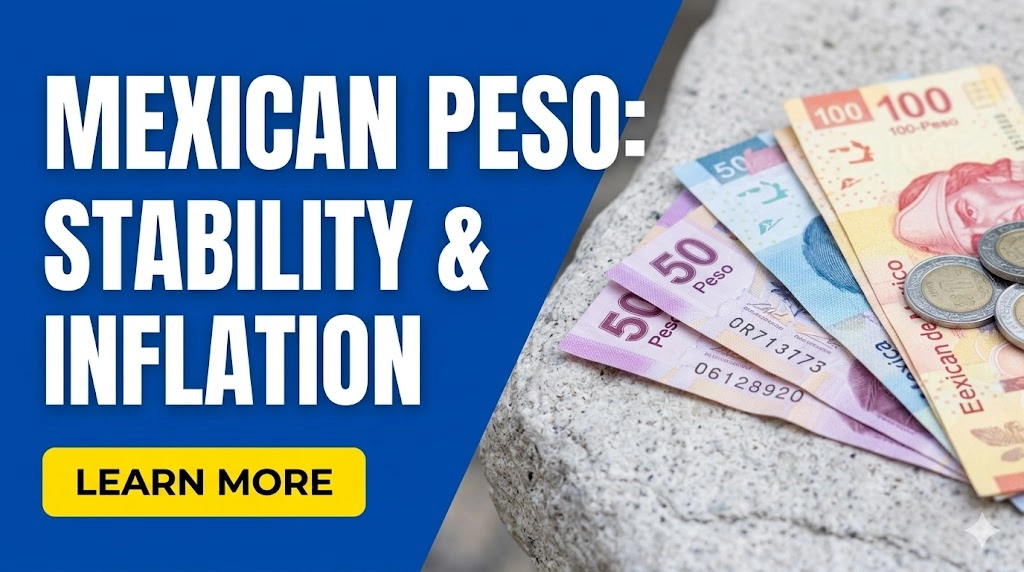
If the 1990s were defined by instability, the modern era of the Mexican peso is defined by unexpected, unyielding strength. In recent years, foreign remote workers and retirees have been shocked to watch their purchasing power shrink as the peso gained massive ground against global currencies.
Banxico and High Interest Rates
The cornerstone of the modern peso’s stability is the absolute autonomy of the Bank of Mexico (Banxico). Unlike in the past, where political pressure often dictated monetary policy, Banxico operates independently with a ruthless focus on controlling inflation. When global inflation began to surge recently, Banxico did not hesitate; they aggressively raised baseline interest rates long before the US Federal Reserve took action.
By pushing Mexican interest rates well above 10%, Banxico made holding Mexican government bonds incredibly attractive to global investors. Institutional money poured into the country to chase those high yields, creating a massive demand for pesos. This surge in demand directly strengthened the currency, catching thousands of expats completely off guard.
For a foreigner living on a fixed USD or EUR income, this high-interest-rate environment is a double-edged sword. While it signals a healthy, robust host country, it absolutely devastates your monthly remittance value. If your lease is signed in pesos, the strengthening of the currency means your rent technically goes up in dollar terms every single month. This volatility is exactly why veterans negotiate their leases carefully, a strategy outlined in Finding an Apartment in Mexico: Renting Guide for Expats.
Remittances and Nearshoring
Interest rates are not the only factor propping up the modern peso; structural shifts in the global economy are heavily favoring Mexico. The first pillar is the record-breaking influx of remittances. Mexican citizens working abroad (primarily in the United States) send billions of dollars home to their families every single month. When these billions of dollars cross the border, they are converted into pesos, creating a relentless, localized demand for the national currency that keeps its value artificially high.
The second, and perhaps most impactful, long-term pillar is the phenomenon of “nearshoring.” In the wake of global supply chain disruptions, massive multinational corporations are pulling their manufacturing hubs out of Asia and relocating them to Mexico to be closer to the North American consumer market. This industrial boom brings billions in foreign direct investment, massive infrastructure projects, and a steady flow of international capital directly into the Mexican economy.
These macroeconomic forces combined to create what the financial press dubbed the “Super Peso.” For expats, the Super Peso era served as a brutal wake-up call. It proved that you can no longer rely on a weak local currency to subsidize your lifestyle. You must budget for the reality that the Mexican economy is deeply integrated into global trade and is capable of outperforming your home currency for years at a time.
| Exchange Rate Scenario | $2,500 USD Monthly Income in MXN | Impact on Purchasing Power |
|---|---|---|
| 20 MXN to 1 USD | 50,000 MXN | Excellent. Covers luxury rent and dining comfortably. |
| 18 MXN to 1 USD | 45,000 MXN | Moderate squeeze. Discretionary spending must be monitored. |
| 16 MXN to 1 USD | 40,000 MXN | Severe squeeze. Budget deficit likely if rent is fixed in MXN. |
Inflation Realities Protecting Your Purchasing Power
Even if the exchange rate holds perfectly steady, your cost of living in Mexico will inevitably rise due to domestic inflation. Understanding how local inflation impacts different sectors of the economy is vital for long-term survival.
Rent Prices and Grocery Inflation
The most aggressive inflation you will face as an expat is not necessarily measured by the national average, but rather by the hyper-localized inflation in popular foreign hubs. In neighborhoods favored by digital nomads, landlords are acutely aware of foreign purchasing power. Rent prices in these areas frequently outpace national inflation by double digits. If you want to avoid this trap, you must learn to navigate outside the expat bubbles.
Food inflation is another daily reality. While local markets (tianguis) remain significantly cheaper than corporate supermarkets, the baseline cost of agricultural goods, meat, and dairy has climbed steadily. Expats who insist on purchasing imported goods—like foreign cheeses, American cereals, or European wines—will feel this inflation exponentially, as import taxes and supply chain costs are passed directly to the consumer.
To combat this, your lifestyle must adapt. You have to shift your dietary habits to rely on locally sourced, seasonal produce. Integrating into the local economy not only shields you from the worst of imported inflation but also provides a much richer cultural experience. Failing to adapt means your monthly grocery budget will quickly mirror what you were paying back home.
The UMA and Administrative Costs
One of the most confusing aspects of Mexican inflation for foreigners is how it impacts government fees, traffic tickets, and visa requirements. To prevent minor administrative fines from destroying working-class budgets during periods of high inflation, the Mexican government decoupled these fees from the minimum wage and created a standalone metric.
This metric is tied directly to the national inflation index. Every February, the government adjusts this baseline metric upward to account for the previous year’s inflation. This means that the financial solvency requirements for your residency visa, the cost of a speeding ticket, and the limits on your tax deductions increase every single year.
If you are living on a fixed pension, you must account for this annual bureaucratic inflation. What qualified you for a residency visa last year might fall short this year due to the upward adjustment of these official metrics. Navigating these exact administrative hurdles is deeply complex, which is why you must thoroughly review Understanding Mexico’s UMA: How It’s Used for Calculating Financial Requirements before applying for any long-term visa.
Managing Currency Risk as an Expat
When you live across borders, you are effectively a currency trader, whether you want to be or not. Relying on traditional banks to move your money exposes you to predatory exchange rates and hidden fees that will quietly drain your savings.
Day-to-Day Conversions
For daily living expenses, paying rent, or covering grocery bills, traditional bank wires are a terrible option. If you use your US or Canadian bank card at a Mexican ATM, you will likely be hit with an out-of-network fee, a foreign transaction fee, and a predatory dynamic currency conversion markup. Over the course of a year, these micro-fees can easily equal a full month’s rent. To understand exactly how these machines steal your money, read Bank Fees in Mexico: Tips to Avoid Unnecessary Charges.
To completely bypass this extortion, I strictly use Wise for my day-to-day capital management. Wise allows me to hold a balance in Mexican Pesos. When the exchange rate spikes in my favor, I instantly convert a block of USD to MXN within the Wise app at the true mid-market rate. I then use my Wise debit card for local purchases or execute free SPEI transfers to pay my Mexican landlord. By utilizing Wise, my monthly budget becomes entirely predictable, insulated from the day-to-day volatility of the forex market.
Moving Large Capital
While consumer apps are fantastic for daily expenses, they are not designed for massive capital movements. If you are preparing to transfer a huge sum of money to purchase a beachfront condo, fund a local business, or secure a large retirement nest egg, percentage-based transfer fees will eat thousands of dollars of your hard-earned wealth.
For heavy capital conversions, veteran expats rely on Interactive Brokers. Because Interactive Brokers is an institutional-level trading platform, it grants you direct access to the actual Forex spot rate. You can convert hundreds of thousands of dollars into Mexican Pesos via Interactive Brokers for mere pennies in commission.
Once your funds are converted safely within Interactive Brokers, you can wire the pesos directly to a Mexican notary, a real estate escrow account, or your localized Mexican bank. This specific strategy is the absolute cornerstone of Buying Real Estate in Mexico: A Step-by-Step Guide for Foreigners. Furthermore, properly structuring these large inbound transfers through recognized institutional channels is critical for maintaining clean fiscal records, a reality you must prepare for by reviewing Taxes in Mexico for Expats: A Complete Guide to Income Tax and More. If you don’t know the mechanical details of routing these wires, be sure to check How to Wire Money to Mexico: SWIFT Codes and Bank Details Explained.
References
Primary sources (official)
- Banco de México (Banxico): The official portal for the central bank’s monetary policy decisions, explaining the historical context of interest rate hikes and their direct impact on currency strength. https://www.banxico.org.mx/publicaciones-y-prensa/anuncios-de-las-decisiones-de-politica-monetaria/anuncios-politica-monetaria-t.html
Other helpful sources
- Mexperience – The Peso and Inflation: A highly trusted expat resource providing practical, localized context on how historical currency devaluations contrast with modern monetary stability in Mexico. https://www.mexperience.com/lifestyle/mexico-essentials/mexican-peso/
Disclaimer
The information provided in this guide is for educational, logistical, and informational purposes only and does not constitute formal financial, investment, or economic advice. I am a veteran expat sharing practical strategies, not a certified financial planner or a currency trader. However, international currency exchange rates, central bank interest policies, and localized inflation are subject to frequent, sudden, and unpredictable fluctuations. Digital transfer platforms like Wise and brokerage services like Interactive Brokers operate under their own strict terms of service and fluctuating fee structures. Always conduct independent market research and consult with a certified cross-border financial advisor before executing massive capital transfers or making long-term financial commitments in a foreign currency.