Opening a Bank Account in Mexico as a Foreigner
Most expats walk into a Mexican bank expecting a fifteen-minute setup, only to be met with three hours of waiting and a request for a document they have never heard of. I remember standing in a BBVA branch in Merida, sweating through my shirt because my utility bill was in my landlord’s name and the teller refused to budge. This guide breaks down the exact steps to navigate Mexican banking without losing your sanity.
Disclosure: This post may contain affiliate links. We may earn a commission at no extra cost to you if you make a purchase through these links. Read full disclosure.
Why You Need a Mexican Bank Account and When You Do Not
Navigating the financial landscape in Mexico is often a exercise in patience. For many, the first question isn't how to open an account, but whether you actually need one. If you are just spending a few months in a beach town, you might get away with using an international card. However, the moment you decide to stay long-term, the "cash is king" mantra of Mexico starts to clash with the reality of paying monthly bills.
A local account is essential for anyone undergoing the residency process. When you eventually look at Banking in Mexico: Complete Guide for Foreigners, you will realize that having a local debit card makes life infinitely easier. For instance, paying your CFE electricity bill or your Telmex internet at an OXXO is fine, but being able to pay via a mobile app at 11:00 PM on a Sunday is a luxury you will quickly appreciate. Furthermore, many landlords prefer a SPEI transfer (the Mexican equivalent of a wire transfer) over handling large envelopes of cash every month.
Another major factor is the exchange rate. While services like Wise are fantastic for day-to-day spending and moving money between currencies, having a local peso account protects you from the fluctuating "tourist rates" at ATMs. When you withdraw from a foreign bank at a Mexican ATM, you are often hit with a double whammy: a flat fee from the ATM provider and a hidden spread on the currency conversion. A local account allows you to move larger sums when the rate is favorable and spend locally without those nagging fees.
However, do not feel pressured to open one the week you arrive. If you are still on a tourist permit, the hurdles are significantly higher. It is often better to wait until you have your residency card in hand. If you are an American citizen, you also have to consider the reporting requirements back home. Working with a firm like Taxes for Expats can help you understand the FBAR and FATCA requirements that kick in once your foreign accounts exceed certain thresholds. It is not just about opening the account; it is about the long-term management of your global footprint.
The Residency Requirement Temporary vs Permanent vs Tourist
In the world of Mexican bureaucracy, your immigration status is the sun around which all other "tramites" or procedures orbit. Most major banks, such as BBVA, Santander, and Banorte, will strictly require a Residente Temporal or Residente Permanente card. This card is your golden ticket. Without it, you are often relegated to a "visitor" status that most traditional bank managers simply do not want to deal with because of the increased paperwork involved in "high-risk" foreign accounts.
If you are a temporary resident, you are in the clear. You will have a CURP (Unique Population Registry Code) printed right on your card, which is a fundamental requirement for the bank’s internal systems. I have seen many people try to open accounts using just their passport, and while some smaller "Caja Popular" branches in rural areas might occasionally allow it, the big players will almost always show you the door. If you are just starting your residency journey, you should look into How to Get a CURP in Mexico to ensure your documentation is ready before you even step foot in a bank.
For those on a tourist permit, the situation is much grimmer. Technically, Mexican law allows tourists to open accounts, but in practice, 99% of bank branches will refuse. They view the short-term nature of a tourist stay as a compliance headache. If you are determined to open an account without residency, you might find success with a "Cuenta de Expediente Simplificado," which has low monthly deposit limits. However, even then, you will likely need a Mexican phone number and a local address.
Finally, consider the distinction between a "Lucrativa" and "No Lucrativa" residency. If you have the right to work, the bank may ask for your RFC (tax ID). Even if you aren't working locally, having an RFC can sometimes smooth over the application process. It is a good idea to research How to Get an RFC in Mexico if you plan on staying in the country for more than a year. The more "local" you look on paper, the less likely the bank executive is to find a reason to deny your application.
Required Documentation The Papelito Habla Culture
Mexico operates on a "papelito habla" (the paper speaks) culture. If you do not have the physical document, the information does not exist. When you head to the bank, bring a folder with original documents and at least two photocopies of everything. You might think this is overkill until you meet a teller whose copier is broken and who tells you to come back tomorrow.
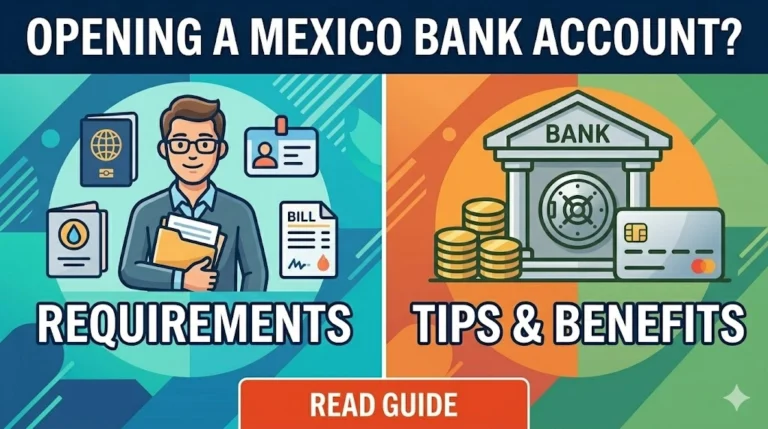
The most critical document, aside from your residency card, is the "Comprobante de Domicilio" or proof of address. This is where most expats trip up. In Mexico, a proof of address is almost always a utility bill—specifically CFE (electricity) or Telmex (landline internet). Crucially, the bill does not necessarily have to be in your name, but it must be recent (usually within the last three months) and show the exact address where you are living. If your name isn't on the bill, bring your lease agreement to show the connection between you and that address.
You will also need your passport. Even though you have a residency card, the bank needs to verify your international identity. They will scan every page of your passport, looking for your entry stamps. This is part of their "Know Your Customer" (KYC) protocols, which have become incredibly strict due to international money laundering regulations. This is another area where Americans need to be careful; ensure you provide your Social Security Number, as the bank will report this to the SAT (Mexico's IRS), which then shares data with the US. For help with these cross-border complexities, Taxes for Expats provides excellent resources for staying compliant.
| Document | Importance | Pro Tip |
|---|---|---|
| Residency Card (Temporal/Permanente) | Essential | Ensure the CURP is clearly legible on the back. |
| Passport | Essential | Must have at least 6 months validity remaining. |
| Proof of Address (Comprobante) | High | Use a CFE bill; it is the most widely accepted. |
| RFC (Tax ID) | Medium | Often required if you are opening a business account. |
| Mexican Phone Number | High | Needed for the mobile app "Token" activation. |
Choosing the Right Bank for Expats
Not all Mexican banks are created equal, especially when it comes to the expat experience. You want a bank that has a robust mobile app, a wide network of ATMs, and ideally, some experience dealing with foreigners. BBVA is widely considered the best for technology. Their app is world-class and allows you to do almost everything without ever visiting a branch again. However, their branches are often crowded, and getting that initial appointment can be a test of endurance.
Santander is another popular choice, particularly because they have a strong international presence. If you have a Santander account in another country, it doesn't necessarily mean your accounts will be linked, but the brand familiarity can sometimes help with the initial "vibe" of the meeting. Banorte is a very "Mexican" bank—it is the largest Mexican-owned bank—and while their app has improved, you might find the staff less used to dealing with English speakers. If you want a deep dive into the specifics of each institution, check out Major Banks in Mexico: BBVA, Banorte, and Santander Compared for a side-by-side analysis.
In recent years, a new wave of "Neobanks" or Fintechs has taken Mexico by storm. Companies like Nu (Nubank), Klar, and Stori are offering digital-first accounts that can often be opened from your smartphone in minutes. These are excellent for day-to-day spending and often offer higher interest rates on savings than traditional banks. You can read more about these in Mexican Fintech and Digital Banks (Nu, Klar, and More) to see if a digital-only approach suits your lifestyle better than a traditional brick-and-mortar bank.
Regardless of which bank you choose, consider the ATM fees. If you live in a small town like Sayulita but your bank only has branches in Puerto Vallarta, you will end up paying 30 to 100 pesos every time you need cash. Look for a bank that has a strong presence in your specific "colonia" or neighborhood. In Mexico, convenience often trumps brand loyalty.
The Opening Process What to Expect at the Branch
Opening an account is rarely a "walk-in" affair in the big cities anymore. Many branches require you to make an appointment online, while others operate on a ticket system. My advice? Show up ten minutes before the branch opens in the morning. You want to be the first person through the doors before the midday rush hits. Once you are called, you will be seated with an "Ejecutivo de Cuenta" (Account Executive) in a small cubicle.
The executive will spend a lot of time typing. They are entering your data into a system that was likely designed in the 1990s and requires precise formatting. Be patient. They will ask you about the source of your funds. Be honest but keep it simple. If you are a retiree, tell them you live on a pension. If you are a remote worker, explain that you work for a company abroad. This is where using a service like Wise to move your initial deposit can be helpful, as you can show the transfer on your phone as proof of where the money is coming from.
One of the biggest hurdles is the "Token." In Mexico, the token is a security feature within the bank's app that generates a rotating code for every transaction. You cannot set up your online banking without it, and you cannot set up the token without a Mexican SIM card. Do not attempt to use your US or Canadian number for this; the SMS verification codes often never arrive, or the app will simply reject the non-Mexican format. Have your local phone ready and the app already downloaded before you sit down with the executive.
The language barrier is a real factor. Unless you are in an expat heavy area like San Miguel de Allende or Lake Chapala, do not expect the executive to speak English. If your Spanish is shaky, bring a friend or a "facilitator." Many expat communities have people who you can hire for a few hundred pesos to sit with you and ensure nothing is lost in translation. This is especially important when discussing fees, insurance (which they will try to upsell you on), and the specific type of account you are opening.
Managing Your Money Transfers Fees and Taxes
Once your account is open, the real work begins: moving your money into Mexico. Most expats use a "pull" method, where they send money from their home country into their Mexican account. Traditional bank-to-bank wire transfers are expensive and the exchange rates are usually poor. This is where Wise shines. You can send a SPEI transfer from your Wise peso balance directly to your Mexican CLABE (the 18-digit account number) and the money usually arrives within seconds. To understand the mechanics of this, read How to Send Money to Mexico With Low Fees for a detailed breakdown.
Be aware of the fees within the Mexican system. While SPEI transfers between Mexican banks are usually free, many accounts have a "minimum balance" requirement. If you fall below this, you might be charged a monthly maintenance fee of 30 to 60 pesos. Additionally, some accounts limit the amount you can deposit each month. "Level 2" accounts are common for foreigners and usually limit monthly deposits to around 30,000 pesos. If you need to pay for a large expense, like a car or a house, you will need to "upgrade" your account level, which usually requires another trip to the branch.
Finally, we must talk about the tax man. Opening a foreign bank account is a reportable event in many countries. For Americans, the FBAR (Report of Foreign Bank and Financial Accounts) is mandatory if the aggregate value of all your foreign accounts exceeds $10,000 USD at any point during the calendar year. This is a "disclosure" form, not a tax payment, but the penalties for failing to file are astronomical. You should definitely check out Taxes in Mexico for Expats: A Complete Guide to Income Tax and More to understand how your local banking activity interacts with your home country obligations.
The SAT (Mexican tax authority) also monitors large cash deposits. If you start depositing more than 15,000 pesos in cash per month, the bank is legally required to report it. To avoid red flags, try to keep your transactions digital. The SPEI system is the backbone of the Mexican economy for a reason—it is transparent, fast, and creates a paper trail that protects you in case of a dispute with a landlord or service provider. If you find yourself in a situation where you need to report these accounts, remember that services like Taxes for Expats are specifically designed to handle the Reporting Mexican Bank Accounts to the IRS: FATCA/FBAR for US Expats paperwork.
Comparison of Major Mexican Banks for Expats
| Bank Name | App Quality | English Support | Branch Density | Best For |
|---|---|---|---|---|
| BBVA | Excellent | Low | High | Tech-savvy users |
| Santander | Good | Moderate | Medium | International travelers |
| Banorte | Average | Low | High | Local reliability |
| HSBC | Average | Moderate | Medium | Premier customers |
| Nu (Fintech) | Excellent | High | None (Digital) | Easy setup/Savings |
Disclaimer
This guide is for informational purposes only and does not constitute financial, legal, or tax advice. Banking regulations in Mexico are subject to frequent changes, and individual branch policies may vary. Always consult with a qualified professional or your local bank branch for the most current requirements. Use of third-party services involves their own terms and conditions.