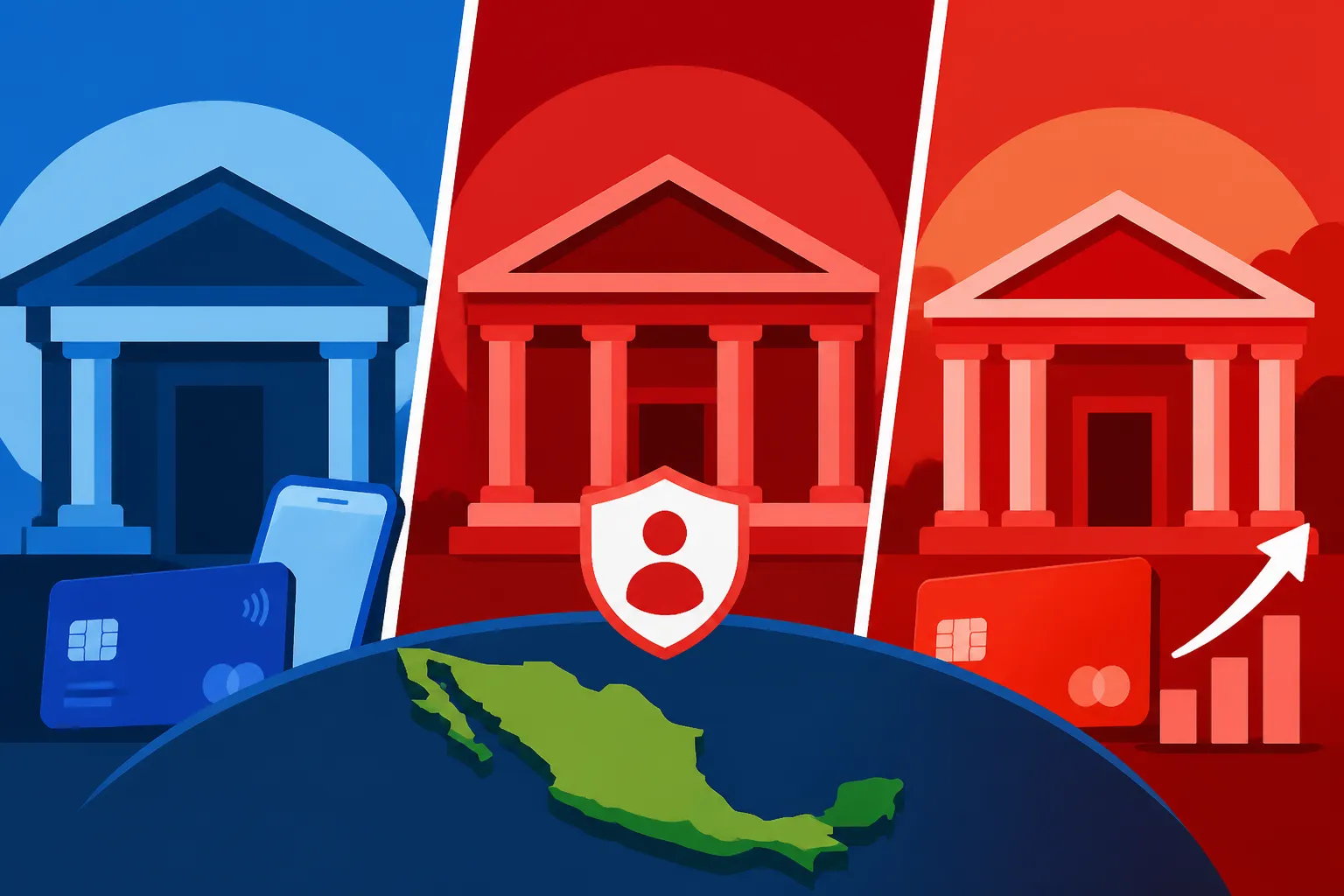
Major Banks in Mexico: BBVA, Banorte, and Santander Compared
Walking into a Mexican bank branch without a strategy is a recipe for three hours of standing in line only to be told you are missing a specific photocopy. I once spent an entire afternoon in a humid branch in Mérida just trying to update my phone number, nearly losing my mind as the ticket system reset. This guide breaks down the Big Three banks—BBVA, Banorte, and Santander—so you can choose the right financial partner and avoid the administrative headaches I endured.
Disclosure: This post may contain affiliate links. We may earn a commission at no extra cost to you if you make a purchase through these links. Read full disclosure.
BBVA Mexico: The Digital Heavyweight for Modern Expats
BBVA is arguably the most dominant force in the Mexican banking landscape, especially for those of us who prefer to handle our lives via a smartphone rather than a teller window. Formerly known as BBVA Bancomer, this Spanish-owned giant has invested more in its digital infrastructure than perhaps any other institution in the country. For an expat, this means a significantly shorter learning curve and fewer physical trips to the bank, which is a blessing in a country where "bank runs" (the errand, not the economic crisis) can take up your entire morning.
The App Experience: Why BBVA Leads the Pack
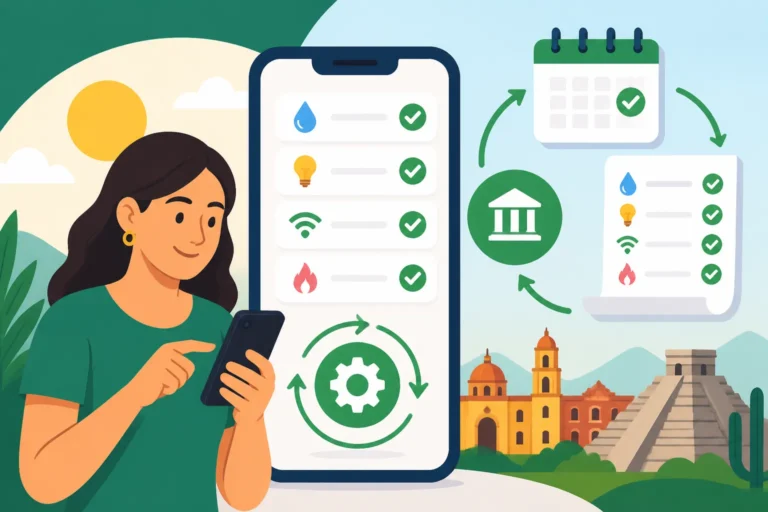
The BBVA Mexico app is widely considered the gold standard for banking in Latin America. It is intuitive, robust, and handles almost everything from utility payments to cardless ATM withdrawals. One of the most useful features I have found is the ability to create "Pockets" (apartados), which allow you to set aside money for rent or travel without it showing in your main balance. This is incredibly helpful for budgeting when you are still getting used to the exchange rate.
Furthermore, the app allows for seamless SPEI transfers. If you are learning how to make a SPEI transfer in Mexico, you will find that BBVA makes it as simple as scanning a QR code or entering a 18-digit CLABE. For many expats, the digital security features, like the dynamic CVV for online shopping, provide a peace of mind that older, more traditional Mexican banks haven't quite mastered yet.
Branch Presence and ATM Network
When you do need to find an ATM or a physical branch, BBVA is ubiquitous. From the heart of Mexico City to smaller towns in the Bajío region, you are never more than a few blocks from a blue-and-white BBVA sign. This is a critical factor when considering Best ATMs for Expats: Which Banks Have Low Fees and High Withdrawal Limits?, as using your own bank's ATM avoids the 30 to 90 peso fees charged for "inter-bank" transactions.
BBVA branches also tend to have more "Practicajas"—automated machines that allow you to deposit cash or pay bills without talking to a teller. I have used these late at night to pay my CFE electricity bill when I realized it was due the next morning. They are life-savers, though they occasionally "swallow" a bill, requiring a frustrating claim process.
Potential Drawbacks: The New Account Hurdles
The downside to BBVA’s popularity is that their branches are often the most crowded. If you have to see a "Ejecutivo" (account manager) to open an account or resolve a complex issue, expect to wait. Additionally, BBVA can be quite strict with documentation. Even if you have followed a guide on How to Open a Bank Account in Mexico: Requirements and Tips, a BBVA agent might still insist on a very specific type of proof of address (comprobante de domicilio) that is less than three months old and specifically a Telmex or CFE bill. They are not known for their flexibility with "alternative" documentation.
Banorte: The Strongest Local Contender
Banorte, often called "El Banco Fuerte de México," is unique among the Big Three because it is entirely Mexican-owned. For some expats, there is a certain appeal to keeping your money within a truly national institution. Banorte has grown aggressively over the last decade, acquiring smaller banks and modernizing its services to compete with the international players. It strikes a balance between traditional Mexican banking values and modern digital needs.
National Pride and Mexican Ownership
Because Banorte is Mexican, their decision-making processes are local. This can sometimes result in better customer service for residents, as they aren't waiting for a headquarters in Madrid or London to approve new product types. I’ve found that Banorte staff are often very knowledgeable about local financial regulations, such as How to Get a CURP as a Foreigner: The Mexican ID Number Explained and how it interacts with your bank records.
There is also a sense of stability with Banorte. They are deeply integrated into the Mexican economy, and their "Preferente" (Preferred) banking tier is often more accessible for retirees or those with a steady foreign pension than the high-end tiers at international banks.
Product Range: From Savings to Mortgages
Banorte offers an impressive array of products that cater to long-term residents. If you are looking beyond a simple checking account and considering Mortgage Options for Expats: Financing a Property Purchase in Mexico, Banorte is often at the top of the list for recommendations. They have specific programs for home buyers and are generally more open to considering foreign income if you can provide the right tax documentation.
Their credit card offerings are also robust, often featuring "Meses Sin Intereses" (interest-free months) at major retailers like Costco or Home Depot. This is a staple of Mexican financial life that many newcomers overlook, but it is essential for managing large purchases without dipping into your savings.
Navigating the Cultural Learning Curve
The "Mexican-ness" of Banorte means that their systems can feel a bit more bureaucratic if you aren't used to the local way of doing things. Their online banking portal, while functional, isn't quite as slick as BBVA’s. You might find yourself needing a physical "Token" (a small device that generates codes) more often than with other banks, though they are phasing these out in favor of mobile tokens.
Communication at Banorte also tends to be strictly in Spanish. While you might find an English-speaking manager in a high-traffic area like San Miguel de Allende or Puerto Vallarta, the default is Spanish. If you are worried about the language barrier, it might be worth looking into Online Banking in Spanish: Overcoming Language Barriers in Finance to familiarize yourself with the common terms before heading into a Banorte branch.
Santander Mexico: The International Alternative
Santander is a massive global brand, and for many expats, that familiarity is comforting. If you already have a Santander account in the UK, Spain, or the US, you might expect a seamless "Global Banking" experience. However, a word of warning from someone who has been through this: Santander Mexico operates as a largely separate entity from its international counterparts. You cannot simply walk into a branch in Playa del Carmen and access your Santander UK records.
Global Connectivity for Frequent Travelers
While the accounts aren't "linked" in the way many hope, Santander does offer some international perks. Their "OnePay" system is designed to make international transfers easier, though I still find that using an external service like Wise is usually cheaper for the actual currency conversion. Santander is excellent, however, for those who travel frequently back to Europe or other parts of Latin America, as their global presence means you can often find "partner" ATMs with lower fees.
For those managing complex tax situations, such as Americans who use services like Taxes for Expats to stay compliant with the IRS, Santander’s detailed monthly statements are usually very clear and easy to export, which your accountant will appreciate when it comes time to report your foreign bank accounts (FBAR).
Premium Banking and the Select Program
The "Santander Select" program is where this bank really shines for the high-net-worth expat. If you maintain a high balance, you get access to a dedicated account manager and a separate, quieter area in many branches. This completely bypasses the long lines I mentioned earlier. As a Select member, you also get better rates on Using Credit and Debit Cards in Mexico: What Expats Need to Know and insurance products.
The Select offices often feel more like a private lounge than a bank. When I was dealing with a complicated wire transfer for a house deposit, being able to sit in a private office with a coffee and a bilingual manager made a world of difference. It turns a stressful administrative task into a professional meeting.
Documentation Rigidity
Santander is notoriously "by the book." They have a reputation for being the most difficult bank for foreigners to open accounts with if their residency status isn't perfectly clear. If you are on a Temporary Resident visa that is close to expiring, they may refuse to open an account or, worse, freeze your account when the card expires until you show the new one.
I always tell new arrivals that if they choose Santander, they must be hyper-vigilant about their paperwork. Ensure you know What Is a CLABE and How Do You Use It? and keep your physical residency card on you at all times when visiting the branch. They will not accept a copy or a digital version of your visa.
Critical Comparison: Fees, Security, and Customer Service
Choosing between these three isn't just about which logo you like; it’s about how their fee structures and security protocols fit your lifestyle. Each bank has a "sweet spot" where they provide the most value, and a "pain point" where they can become a burden.
| Feature | BBVA Mexico | Banorte | Santander Mexico |
|---|---|---|---|
| Best For | Tech-savvy, digital-first users | Long-term residents, home buyers | High-net-worth, global travelers |
| App Quality | Exceptional / Best in Market | Functional but slightly dated | Good, stable, but rigid |
| Branch Presence | Highest – Everywhere | High – Very strong locally | Moderate – Strong in cities |
| English Support | Rare, depends on location | Very Rare | Moderate in "Select" tier |
| ATM Network | Massive and modern | Extensive and reliable | Good, with global partners |
Understanding Maintenance Fees and Minimum Balances
Most Mexican bank accounts require either a minimum monthly balance or a certain number of debit card transactions to waive the maintenance fee. BBVA's "Libretón" accounts are generally very affordable, often only requiring a few thousand pesos to keep active. Banorte tends to have slightly higher requirements for their premium accounts but offers very low-cost "Nivel 2" accounts for those who only need basic services.
If you fail to meet these requirements, the fees aren't just a few pesos; they can eat into your balance quickly. I once ignored a small Santander account for six months and returned to find it nearly drained by "comisiones por saldo promedio" (fees for average balance). Always ask for a "folleto informativo" that lists every possible fee before you sign.
Security Measures and Fraud Prevention
Fraud is a reality in the Mexican banking system, ranging from "clonación" (card skimming) to sophisticated phishing calls. BBVA’s use of the dynamic CVV—where the three-digit code on the back of your card changes every five minutes in the app—is a massive leap forward in security.
Banorte and Santander rely more on SMS alerts and physical tokens. Regardless of which bank you choose, you must be proactive. Never give your NIP (PIN) to anyone, even someone claiming to be from the bank. If you are worried about the safety of your funds, read up on Are Mexican Banks Safe? Understanding Deposit Insurance (IPAB) to understand how your deposits are protected by the government.
The Language Barrier in Physical Branches
Unless you are in a major expat hub like Ajijic or the Lomas neighborhood of Mexico City, you should expect all banking to be conducted in Spanish. This is where many expats stumble. The terminology for "wire transfer" (transferencia internacional) vs. "local transfer" (SPEI) is vital.
If your Spanish isn't quite there yet, I recommend bringing a trusted friend or hiring a local assistant for your first few visits. Alternatively, make use of the chat features in the BBVA or Santander apps, which allow you to use a translation tool to communicate with support agents.
The Practical Reality of Banking in Mexico
After years of living here, I've learned that your relationship with a bank in Mexico is only as good as your local branch manager. You might have a terrible experience at a BBVA in Tulum but a wonderful one at a BBVA in Querétaro. It is a very human-centric system, despite the move toward digital.
Essential Documents Every Expat Needs
To open an account at any of the Big Three, you will generally need:
- Your physical Residency Card (Temporary or Permanent).
- Your Passport.
- Your How to Get a CURP in Mexico document (printed from the government website).
- A Proof of Address (CFE or Telmex bill) in your name or with a rental contract.
- Your Do You Need an RFC Number? Why a Tax ID Matters for Expats' Finances (increasingly required for all new accounts).
If you don't have these, don't even bother going to the branch; they will send you away. I have seen people try to use their US driver's license as ID, and the teller just stared at them blankly. Stick to the list.
Integrating with International Services
Most expats don't just live on pesos; we have income or savings in dollars, euros, or CAD. While the Big Three allow for international wires, the fees are often exorbitant and the exchange rates are poor. I highly recommend linking your Mexican account to Wise.
You can send your foreign currency to Wise, convert it to pesos at the mid-market rate, and then send it to your BBVA, Banorte, or Santander account via a local SPEI transfer. This usually takes minutes and saves you hundreds of dollars a year in hidden bank fees. It's the "pro-move" that most veterans use to manage their Cost of Living in Mexico: 2026 Comprehensive Guide.
Handling Taxes and Reporting
Finally, remember that having a Mexican bank account comes with responsibilities back home. For US citizens, the FBAR (Report of Foreign Bank and Financial Accounts) is mandatory if your total foreign holdings exceed $10,000 USD at any point in the year.
This is where a service like Taxes for Expats becomes invaluable. They understand the specific reporting requirements for Mexican accounts and can help ensure you don't run afoul of the IRS while enjoying your life in the sun. Mexican banks do report interest earned to the SAT (Mexico's tax authority), so you also need to be aware of Income Tax Basics for Expats: Understanding Mexico’s Tax System if you are earning significant interest locally.
Disclaimer
This article is for informational purposes only and does not constitute financial, legal, or tax advice. Banking regulations, fees, and requirements in Mexico change frequently. Always consult with a qualified financial professional or the specific banking institution before making any financial decisions. Information regarding third-party services is based on general market knowledge as of 2026.