Mexican Fintech and Digital Banks (Nu, Klar, and More)
Opening a traditional bank account in Mexico often feels like a Kafkaesque nightmare involving endless lines, confusing paperwork, and the high probability of being rejected because your proof of address is printed on the wrong type of paper. I once spent four hours in a stuffy branch only to be told my middle name was missing a hyphen. This guide explains how Mexican fintech and digital banks are finally ending these administrative headaches for expats.
Disclosure: This post may contain affiliate links. We may earn a commission at no extra cost to you if you make a purchase through these links. Read full disclosure.
The Traditional Banking Struggle and the Rise of Fintech
For decades, banking in Mexico was synonymous with the "Big Five" institutions. While they offer stability, their reliance on physical branches and antiquated bureaucratic processes has left many foreigners frustrated. If you have ever tried to navigate a Spanish-only ATM menu while a line of twenty people watches you, you know the pressure. Fintech (financial technology) companies have stepped into this gap, offering digital-first solutions that prioritize user experience over physical stamps and signatures.
Why Expats Are Moving Away from Traditional Banks
The primary reason many of us are jumping ship to digital banks is the sheer ease of use. Traditional banks often require you to visit a branch for the most mundane tasks, such as updating a phone number or increasing a daily transfer limit. For an expat, this usually means taking a half-day off work to sit in a lobby. Digital banks, on the other hand, operate entirely through smartphone apps. Everything from identity verification to card activation happens on your screen.
Furthermore, traditional banks are notorious for "hidden" fees. You might be charged a monthly account maintenance fee unless you maintain a high minimum balance, or you might find small commissions chipped away for using an ATM outside of their specific network. In contrast, many digital options are built on a "no-fee" or "low-fee" model, which is much more aligned with the lifestyle of someone who wants to focus on enjoying the country rather than managing ledger entries. You can read more about the differences in How to Open a Bank Account in Mexico: Requirements and Tips.
Understanding the Fintech Law in Mexico
Mexico was a pioneer in the region by passing the "Fintech Law" in 2018. This provided a clear legal framework for companies like Nu, Klar, and others to operate securely. For us expats, this is a massive relief because it means these apps aren't just fly-by-night startups; they are regulated entities. Most digital banks in Mexico operate under the license of a SOFIPO (Sociedad Financiera Popular) or a specialized Fintech institution.
The most important thing to know about this regulation is the "Prosofipo" insurance. This is the Mexican equivalent of FDIC insurance in the United States. While the coverage amount is lower than what you might be used to—covering up to 25,000 UDIs (roughly $200,000 MXN as of 2026)—it provides a essential safety net. Knowing that your funds are protected by the government, even in a digital-only bank, makes the transition much less stressful. This level of security is a key part of Managing Your Money in Mexico: Budgeting, Saving, and Currency Tips.
The Shift Toward a Cashless Mexico
While Mexico still has a strong cash culture, especially in "tianguis" (street markets) and small "fondas," the tide is turning. Digital banks make it incredibly easy to use contact-less payments and QR-code-based transfers like CoDi and DiMo. These are government-backed systems that allow for instant, free transfers between different banks.
For the expat, having a digital bank card that actually works with Apple Pay or Google Wallet is a game changer. Many traditional Mexican debit cards still struggle with international online transactions or mobile wallets. Digital banks were built for this era. They provide a seamless bridge between the physical peso and the digital economy, making it easier to pay for everything from your morning coffee to your monthly rent via a SPEI and CLABE: How Bank Transfers Work in Mexico transfer.
The Big Players Nu Klar and More
The landscape of Mexican fintech is dominated by a few heavy hitters that have become household names. If you walk through Mexico City or Guadalajara today, you will see the distinctive purple Nu cards or the sleek Klar branding everywhere. These companies have succeeded because they understood that the average person—and especially the average foreigner—is tired of being treated like a number in a branch.
Nu Mexico The Purple Giant
Nu, originally the Brazilian powerhouse Nubank, has absolutely disrupted the Mexican market. Their entry point for most expats is the "Cuenta Nu," which is a debit account that offers some of the highest liquid interest rates in the country. In 2026, their "Cajitas" (little boxes) feature remains a favorite for savers, allowing you to set money aside and earn daily interest while still having the ability to withdraw it 24/7.
The onboarding process for Nu is legendary. If you have your residency card (temporary or permanent) and a valid CURP, you can often have an account approved in under ten minutes. They don't ask for a utility bill in your name—a common hurdle for renters—and their app is remarkably intuitive. For those looking to build credit in a new country, Nu also offers a credit card with no annual fee, which is a rare find among traditional Mexican banks.
Klar The Modern Credit Solution
Klar has positioned itself as the "bank for everyone," focusing heavily on providing credit and high-yield investment options. What makes Klar particularly attractive is its flexibility. They offer "Klar Plus," a tier that provides even higher interest rates and cashback on purchases if you meet certain deposit requirements. For an expat who is receiving a pension or a remote salary, reaching these tiers is often quite simple.
Klar is also a leader in the "buy now, pay later" space and offers easy-to-manage credit lines. If you are looking to make a larger purchase, like furniture for a new apartment, Klar’s transparent terms are often much better than the predatory interest rates found at traditional retailers like Coppel or Elektra. Their customer service is also largely digital, which means no waiting on hold for an hour; you can usually resolve issues via a chat interface.
Stori Mercado Pago and Niche Players
While Nu and Klar get the most press, other players like Stori are making waves by focusing on financial inclusion. Stori is often the best choice for those who might have struggled to get credit elsewhere. Then there is Mercado Pago, the financial arm of Mercado Libre (the Amazon of Latin America). If you do a lot of online shopping, Mercado Pago is almost essential. It acts as a digital wallet, a payment processor, and a high-yield savings account all in one.
There are also niche players like Albo or Fondeadora that cater to different styles of spending. Albo is fantastic for its "spaces" feature, which helps with granular budgeting, while Fondeadora focuses on a minimalist, premium aesthetic. For the international resident, these apps offer a way to compartmentalize spending. You might use Nu for your "emergency fund" in pesos and Mercado Pago for your daily grocery runs and utility payments. You can compare how these fit into your lifestyle in our Cost of Living in Mexico: 2026 Comprehensive Guide.
Features and Benefits of Digital Banking in Mexico
The transition to digital banking isn't just about avoiding lines; it’s about accessing features that traditional banks are slow to implement. In a country where inflation and currency fluctuations are constant topics of conversation, the tools provided by fintech apps can help you protect your purchasing power and manage your life more efficiently.
High-Yield Savings and Liquid Wealth
The interest rates offered by Mexican fintechs remain highly competitive. While a standard savings account at a big bank might offer you a measly 1% or 2% (often less than inflation), digital banks are frequently offering double-digit annual returns. This makes the "Cajita" or "Vault" features in these apps a legitimate investment tool for your liquid pesos.
This is particularly useful for expats who need to keep a certain amount of Mexican Pesos on hand for monthly expenses but don't want that money to lose value. By keeping your rent and grocery money in a high-yield digital account, you can actually earn enough interest to cover a few dinners out each month. It's a way of making the local economy work for you, which is a key strategy discussed in Currency and the Peso: Managing Exchange Rates in Mexico.
Ease of Bill Payments and Digital Transfers
One of the most annoying parts of living in Mexico is paying utilities. Historically, this involved taking a physical bill to an OXXO or a bank branch. Fintech apps have integrated these payments directly into their platforms. You can pay your CFE (electricity), Aguakan (water), and Telmex (internet) bills by simply scanning the barcode on your phone screen.
Moreover, the SPEI system in Mexico is one of the best in the world for inter-bank transfers. It is near-instant and operates 24/7. Digital banks leverage this perfectly. Need to pay your landlord? Just get their CLABE (18-digit account number), and the money is there in seconds. No more carrying envelopes of cash across town, which is a significant safety upgrade. This efficiency is why many prefer these apps over Using ATMs in Mexico: Avoiding Fees and Staying Secure.
Security and Fraud Prevention
Security is a major concern for anyone living abroad. Traditional Mexican bank cards are often targets for cloning or "skimming." Digital banks counter this by offering "Virtual Cards" within their apps. For any online purchase—whether it's Amazon Mexico or a flight on Volaris—you use a virtual card number with a dynamic CVV that changes every few minutes. This makes it almost impossible for your details to be stolen and used later.
Additionally, digital banks allow you to "freeze" and "unfreeze" your physical card with a single tap. If you misplace your wallet at a bar in Sayulita, you don't have to call a bank and go through an interrogation to cancel the card. You just freeze it in the app. If you find it the next morning under your bed, you unfreeze it. This level of control provides immense peace of mind for the expat navigating a new environment.
Practical Considerations for Expats
While the advantages are clear, there are specific logistical steps that foreigners must take to ensure their digital banking experience is smooth. Unlike locals, we have to navigate residency requirements and international tax reporting, which can add a layer of complexity if you aren't prepared.
Requirements and Onboarding for Foreigners
To open a fintech account in Mexico, you generally need three things: a valid residency card (temporary or permanent), a CURP, and a Mexican phone number. Some apps are starting to accept the FMM (tourist permit) for very basic accounts, but the limits are so low they are rarely useful for long-term living. Most of these apps use biometric verification—you’ll have to take a "selfie" and photos of the front and back of your residency card.
A common "gotcha" is the phone number. These apps are tied to your SIM card. If you change your number, you can lose access to your account. I always recommend getting a stable, post-paid Mexican SIM rather than relying on burner chips if you plan to use digital banking. Also, ensure your name on the account matches your residency card exactly. If your residency card has two last names and your passport only has one, the app might get confused. This is a common hurdle in Navigating Mexico's Immigration System: Visas, INM Procedures, and Regulations.
Integration with International Transfers
Most Mexican fintechs do not accept direct international wire transfers (SWIFT). If you try to send money from your home bank in the US, Canada, or Europe directly to a Nu or Klar account, the transaction will likely fail. This is where a service like Wise becomes indispensable. You can send your home currency to Wise, convert it to pesos at a fair rate, and then send those pesos via SPEI to your Mexican digital bank account.
Using Wise in conjunction with a Mexican digital bank gives you the "best of both worlds": the mid-market exchange rate and the high-yield, local utility of a Mexican account. This setup is the gold standard for savvy expats. It allows you to fund your Mexican life without getting eaten alive by the poor exchange rates and high wire fees charged by traditional banks. For more details on this, see Sending Money To and From Mexico: Transfers and Fees.
Tax Implications and Compliance
This is the part that many expats overlook. Just because a bank is "digital" doesn't mean the government doesn't know about it. In Mexico, all bank accounts are linked to your RFC (tax ID). If you are earning interest in a Nu or Klar account, that information is reported to the SAT (the Mexican tax authority). Depending on your residency status and income, you may owe Mexican taxes on that interest.
For Americans, there is the additional burden of the FBAR and FATCA reporting. If the total of all your foreign accounts exceeds $10,000 USD at any point during the year, you must report them to the IRS. Services like Taxes for Expats are incredibly helpful here, as they specialize in ensuring you don't run afoul of these complex regulations. Using a firm like Taxes for Expats ensures that your "digital" wealth doesn't lead to a very "real" audit back home. You can learn more about these requirements in Filing Taxes in Mexico as a Foreigner.
| Feature | Nu Mexico | Klar | Traditional Bank (BBVA/Banorte) |
|---|---|---|---|
| Onboarding | 100% Digital (Fast) | 100% Digital (Fast) | Physical Branch (Slow) |
| Annual Fee | $0 | $0 | Usually $0 – $50 USD |
| Interest Rate | High (Daily Liquid) | High (Fixed & Liquid) | Very Low |
| App Experience | Excellent | Very Good | Average / Clunky |
| Customer Support | Chat/Phone (Fast) | Chat (Good) | In-person (Wait times) |
| Physical Branches | None | None | Extensive |
| Apple/Google Pay | Yes | Yes | Often Limited |
Comparing Fintech to Traditional Mexican Banks
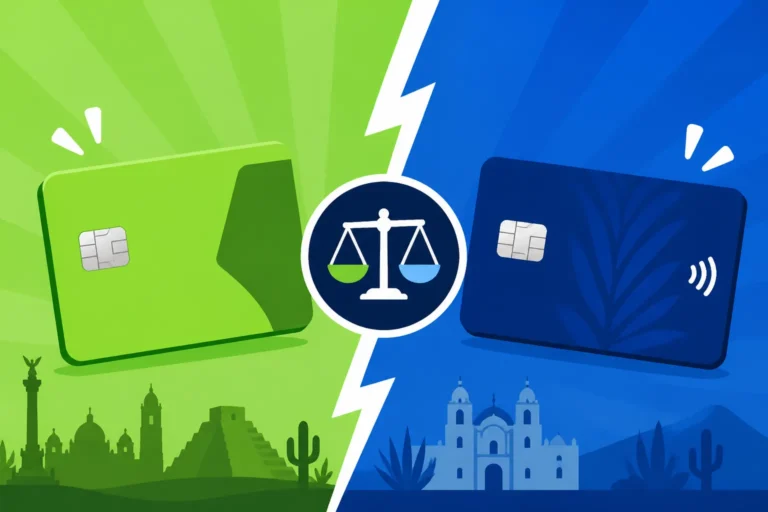
Is it time to close your BBVA or Santander account entirely? Not necessarily. While fintech is winning the race for daily usability, traditional banks still hold a few cards that might be important for certain residents, especially those looking to buy property or settle long-term.
Fees and Hidden Costs
The most glaring difference is the fee structure. Traditional banks love "comisiones." You might pay for a replacement card, for not using the account enough, or for receiving a transfer from a different bank. Digital banks have largely abolished these. However, where digital banks can sometimes lag is in ATM withdrawals. Since they don't have their own ATMs, you will have to use a traditional bank's machine and pay their fee (usually $30 to $75 pesos).
To counter this, some fintechs offer a limited number of "reimbursed" ATM withdrawals per month, or they partner with supermarket chains like Soriana or Walmart where you can withdraw cash at the register. If you are someone who rarely uses cash, the fintech model wins. If you live in a rural area where cash is king, having a local bank with a free ATM in the central plaza might be more practical. You can dive deeper into this in Major Banks in Mexico: BBVA, Banorte, and Santander Compared.
Customer Support and Language Barriers
Traditional banks are a mixed bag when it comes to English support. In tourist areas like Puerto Vallarta or San Miguel de Allende, you might find a bilingual teller, but it’s never guaranteed. Digital banks, being tech-forward, often have apps that can be toggled to English, and their chat-based support is much easier to navigate with a translation tool like DeepL or Google Translate.
That said, there is something to be said for being able to walk into a building and point at a problem on a piece of paper when things go wrong. If your digital account gets "locked" due to a security flag, you are at the mercy of the digital support queue. For this reason, many veterans recommend keeping a "hybrid" approach: a traditional bank for a small portion of your funds and a fintech for your daily life and savings. This balance is explored in Opening a Bank Account in Mexico as a Foreigner.
Physical Presence vs Digital Only
Traditional banks are better for complex transactions. If you need a "Cheque de Caja" (Cashier's Check) for a real estate closing or to pay the deposit on a new car, a digital bank will struggle to help you. These transactions often require physical stamps and specific paper forms that digital-only institutions aren't equipped to provide.
Furthermore, if you are applying for a mortgage or a large business loan, a traditional bank where you have a five-year history will be more likely to assist you than a fintech app. For the average "digital nomad" or retiree, this doesn't matter. But for those building a business or buying a home, the physical presence of a bank remains a necessary evil. You might find our guide on Mortgages and Property Financing in Mexico for Foreigners useful for this specific journey.
Tips for Managing Your Finances in Mexico with Fintech
Living in Mexico offers a wonderful lifestyle, but it requires a different kind of financial vigilance than you might be used to back home. Fintech tools provide the data and the flexibility to manage this, but you still need a strategy to make the most of them.
Balancing Multiple Accounts
Don't put all your eggs in one purple (Nu) or blue (Klar) basket. App outages happen. I've been at a grocery store checkout when a specific fintech app went down for "maintenance," leaving me standing there with a full cart and a declined card. I now always carry two different cards from two different institutions.
A common strategy is to keep your main "savings" in a high-yield account like Nu, a "spending" account in Mercado Pago, and a "backup" account in a traditional bank. This ensures that you are always earning interest on your idle cash while maintaining a redundant system in case of technical glitches. It also helps you stay organized for your end-of-year reporting with Taxes for Expats, as you can clearly see which account was for which purpose.
Maximizing Cashback and Rewards
Many Mexican fintechs are currently in a "customer acquisition" phase, meaning they are offering aggressive rewards to get you to use their card. Klar often offers cashback on gas and groceries, while others might give you discounts on movie tickets or Starbucks. These small wins add up over a year.
Check your app's "Promotions" tab regularly. Unlike US credit cards where rewards are often points-based and confusing, Mexican fintech rewards are usually straight-up "dinero." You spend 1,000 pesos at Chedraui, and 20 pesos instantly appears back in your account. It’s a simple, satisfying way to shave a few percentage points off your Monthly Budget in Mexico: Living Well on $1,500, $2,500, and $4,000.
Staying Safe from Scams
As fintech grows, so do the scammers. A common scam in Mexico involves a person calling you, pretending to be from "Nu Support," and telling you there is a suspicious charge on your account. They will ask you to "verify" your identity by giving them a code sent to your phone. Never do this. Digital banks will almost never call you out of the blue.
Always use the in-app chat for support. If you receive a suspicious call, hang up and open the app yourself. Also, be wary of "investments" that promise 50% returns in a week. If it isn't a regulated SOFIPO or bank, it's likely a pyramid scheme. Stick to the big names we've discussed, and your money will stay as safe as it is at home.
Disclaimer
The information provided in this guide is for informational purposes only and does not constitute financial, legal, or tax advice. Financial regulations and interest rates in Mexico are subject to change. Always verify current terms with the specific institution and consult with a professional advisor regarding your personal situation.