Managing Your Money in Mexico: Budgeting, Saving, and Currency Tips
Waking up to a notification that the peso has suddenly strengthened against your home currency can feel like an overnight pay cut that leaves your monthly budget in tatters. I remember the panic of my first “Super Peso” swing in Mexico City, realizing my fixed retirement income suddenly bought twenty percent less at the grocery store than it did thirty days prior. This comprehensive guide solves the volatility puzzle, giving you the exact strategies to budget, save, and handle currency like a seasoned pro.
Disclosure: This post may contain affiliate links. We may earn a commission at no extra cost to you if you make a purchase through these links. Read full disclosure.
The Foundations of an Expat Budget in Mexico
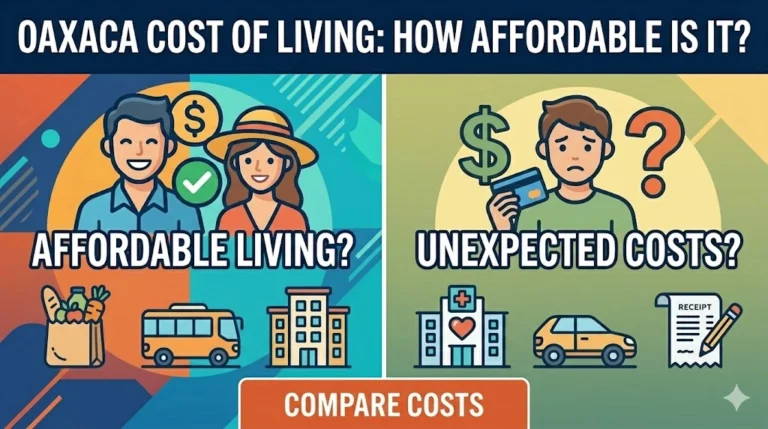
Tracking the True Cost of Living in 2026
Many people move south of the border under the illusion that Mexico is a monolithic bargain where everything costs a fraction of what it does in North America. While it remains more affordable than most major US or Canadian cities, the economic landscape of March 2026 has shifted significantly. With Mexico’s annual inflation rate hovering around 4.02% in early 2026 and consumer prices for fruits and vegetables rising even more sharply, your budget must be dynamic. If you insist on living in an expat enclave like Roma Norte in Mexico City or the hotel zone in Cancún, you will find yourself paying prices that rival Chicago or Miami.
A realistic budget for 2026 requires tracking expenses that often go overlooked in initial estimates provided by generic travel sites. For example, while property taxes are famously low, the cost of electricity in coastal areas can skyrocket if you rely on air conditioning to combat the humidity. You must also account for the cost of purified water, which is a non-negotiable weekly expense since the tap water is generally not potable. To get a granular look at how these numbers actually stack up across different regions, you should review our Cost of Living in Mexico: 2026 Comprehensive Guide.
The most successful expats use a hybrid budgeting approach where they pay for local services—like rent, utilities, and domestic help—in pesos but maintain their primary savings in a more stable currency. This “two-pot” system prevents you from being wiped out by sudden local inflation or unexpected currency devaluation. If you are still in the planning phase, seeing how others allocate their funds can be incredibly helpful; check our breakdown in Monthly Budget in Mexico: Living Well on $1,500, $2,500, and $4,000.
Managing Rent and Large Monthly Payments
One of the biggest culture shocks regarding money in Mexico is the logistics of how you actually pay for your housing. In many parts of the country, cash is still the primary medium of exchange, even for high-value transactions like monthly rent. However, as a foreigner, carrying large envelopes of cash through the streets to meet your landlord is a massive security risk and a logistical nightmare that most of us want to avoid. It creates a stressful monthly routine that ties you to a physical location and a specific time.
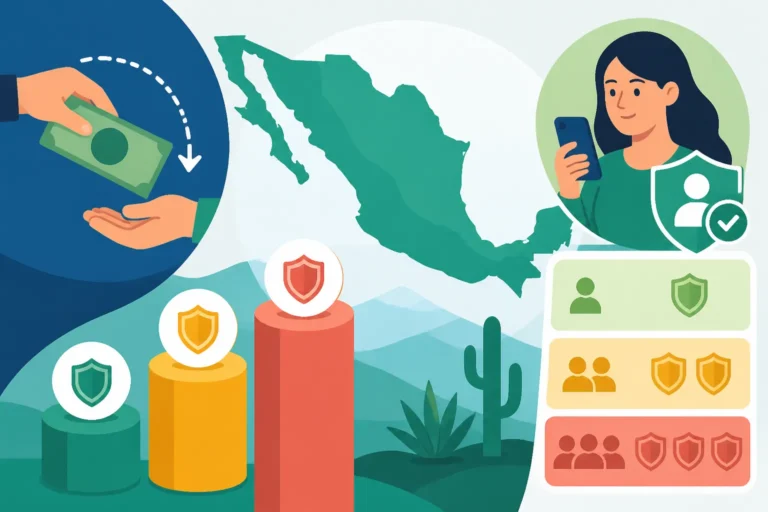
More landlords are now accepting bank transfers via the SPEI (Sistema de Pagos Electrónicos Interbancarios) system, which is Mexico’s version of an instant, 24/7 wire transfer. The problem is that many Mexican banks make it notoriously difficult for foreigners to set up these accounts initially, often requiring a permanent residency card or a mountain of localized paperwork that can take weeks to approve. You’ll often find yourself stuck in a frustrating loop of “bring more documents” that can derail your first month’s plans.
To bridge this gap during your transition, I highly recommend using Wise for your initial large payments. Wise allows you to send money directly to a Mexican bank account using the SPEI network without actually needing a local Mexican bank account yourself. It’s significantly faster, cheaper, and far more transparent than a traditional international wire from a standard US or Canadian bank.
Budgeting for Hidden Administrative and Legal Costs
Don’t let the low price of local tacos fool you; the administrative side of Mexican life can be surprisingly pricey if you aren’t prepared for the upfront costs. From residency fees to the cost of a fiador—a property-owning guarantor often required for a lease—the “moving-in” phase of your expat journey can easily cost several thousand dollars in unrecoverable fees. These costs hit all at once, usually within your first 30 to 60 days in the country.
For instance, the cost of processing your residency through the INM (Instituto Nacional de Migración) involves multiple federal fees that the government typically increases annually. If you don’t speak Spanish fluently, you will likely need to hire an immigration facilitator or lawyer to ensure your paperwork is filed correctly, which adds another significant layer of expense to your initial relocation fund. We break down these specific line items in Mexico Immigration Fees and Costs: Budgeting for Your Residency.
Additionally, if you decide to buy property eventually, you’ll encounter the fideicomiso (bank trust) fees, which include a substantial initial setup fee and an annual maintenance fee paid to the bank. These aren’t just “nice to have” expenses; they are mandatory for legal residency and property ownership in the restricted zones along the coasts and borders. Factoring these into your year-one budget is essential so they don’t derail your long-term savings plans.

Mastering Currency Exchange and Transfers
Beating the Predatory Exchange Rates
The quickest way to lose a significant percentage of your wealth in Mexico is to let a traditional retail bank handle your currency conversion. Whether it is the “convenient” ATM located at the airport or the wire transfer service offered by your home bank in the US or Canada, they are almost certainly skimming three to five percent off the top through hidden markups on the exchange rate. They hide these fees by giving you an exchange rate that is significantly worse than the one you see on financial news sites.
The “official” rate you see on Google is the mid-market rate, but retail banks rarely provide that to individual customers. Instead, they provide a “retail rate” that is heavily skewed in their favor to maximize their profit on every transaction. Over a year of paying rent, utilities, and grocery bills, this “convenience fee” can cost you thousands of dollars in lost purchasing power. This is money that should be in your pocket, not the bank’s profit margin.
This is exactly why Wise has become the absolute gold standard for Transferring Money Internationally: Best Ways to Send Money to/from Mexico. Wise gives you the actual mid-market rate—the same one the big banks use to trade with each other—and charges a small, transparent fee that is shown to you upfront. By using Wise, you ensure that every dollar, euro, or pound you bring into the country stretches as far as humanly possible. I’ve personally saved enough in fees over the years to fund multiple domestic trips within Mexico.
ATM Strategies and Avoiding Deceptive Fees
While digital payments are growing, cash remains a daily necessity for navigating street markets, small fondas, and local taxis. However, Mexican ATMs are notorious for their high transaction fees and deceptive “dynamic currency conversion” screens designed to trick you. When you insert your card, the machine will often show a screen with the flags of both countries and ask if you want to “accept the conversion” offered by the Mexican bank.
Always decline the conversion. By choosing “Decline,” you force the ATM to process the transaction in Mexican pesos and let your own card provider handle the exchange rate. If you “Accept,” the Mexican bank will apply a predatory exchange rate that can be five to ten percent worse than the market rate. It is a legal way for them to squeeze extra money out of unsuspecting travelers and new expats.
Furthermore, you should target “low-fee” ATMs like those found at Banco del Bajío or Banregio, and avoid the high-traffic machines located inside convenience stores or in the middle of tourist plazas, which often have higher fees and lower security. Target ATMs located inside physical bank branches during business hours for the best security and reliability. If you are curious about the limits on how much cash you can pull at once, see ATM Withdrawal Limits in Mexico: How Much Cash Can You Get?.
Hedging Against Peso Volatility and the “Super Peso”
The Mexican peso is one of the most liquid and volatile emerging market currencies in the world. It can swing wildly based on US election cycles, global oil prices, or international trade negotiations. If you are living on a fixed income from abroad, a strong peso (the “Super Peso”) means your cost of living just went up without any change in your spending habits. This can turn a comfortable retirement into a tight budget very quickly.
A smart strategy for long-term residents is to build a “Peso Buffer.” When the exchange rate is favorable—meaning you get significantly more pesos for your home currency—you should transfer a few months’ worth of living expenses into your Wise peso balance. This allows you to “lock in” a good rate and protects you if the peso suddenly strengthens next month. It takes the guesswork out of your monthly finances and provides a level of predictability that traditional banking cannot match.
Managing this risk is vital for anyone on a fixed income, such as retirees or those on social security. It is better to have a surplus of pesos bought at a good rate than to be forced to exchange your dollars when the rate is at a yearly low. We discuss more advanced currency strategies, including the pros and cons of keeping your main savings in different currencies, in Should Expats Keep Savings in Pesos or Dollars? Managing Currency Risk.
Long-Term Saving and Investment for Expats
Protecting Your Retirement Accounts from Foreign Address Freezes
A common and potentially catastrophic mistake many expats make is assuming their home-country brokerage accounts will remain open once they move abroad. Many US-based firms, such as Vanguard or Fidelity, will restrict or even forcefully close your account once they realize you have a permanent foreign address. This is usually due to complex international compliance issues like the Patriot Act and the “know your customer” (KYC) rules that make it expensive for them to service clients living outside the United States.
Losing access to your primary investment platform while living abroad can be a financial disaster, especially if it forces you to liquidate assets at an inopportune time or triggers unexpected tax liabilities. You need an investment platform that is built from the ground up for global citizens and international residents. This is why I recommend migrating your assets to Interactive Brokers before or shortly after your move.
Unlike traditional retail brokers, Interactive Brokers is designed for global residents. They allow you to maintain your accounts legally while residing in Mexico and give you unparalleled access to global stock and bond markets. Whether you are looking to buy US-listed ETFs, European stocks, or even Mexican corporate bonds, Interactive Brokers provides the institutional-grade tools you need to keep your wealth growing regardless of where you call home. They also offer highly competitive interest rates on uninvested cash, making it a great place to park your emergency fund.
Building Wealth with Global Assets from Mexico
Living in Mexico provides a unique opportunity to save more of your income because of the lower cost of living, but you shouldn’t just let that extra cash sit in a standard Mexican bank account. Mexican banks rarely offer interest rates that beat inflation, and your money is always at risk of significant devaluation if the national economy hits a rough patch. If your money is in a Mexican account during a currency crash, your global net worth drops instantly.
Instead, use your cost-of-living savings to increase your contributions to global index funds via Interactive Brokers. By investing in diversified, hard-currency assets—like an S&P 500 ETF or a global total market fund—you create a natural hedge against the local Mexican economy. If Mexico has a difficult economic year, your global portfolio remains a stable source of wealth that is not tied to the performance of the peso.
This is also a crucial consideration for those looking to eventually buy property in Mexico. Many expats save for years in pesos, only to find that the “luxury” real estate market in places like Playa del Carmen or Los Cabos is often priced exclusively in USD. Keeping your “house fund” in a dollar-denominated account at Interactive Brokers protects your buying power and ensures you can pull the trigger when the right property appears. For more on the financials of property, check out Mortgage Options for Expats: Financing a Property Purchase in Mexico.
Managing Taxes and Regulatory Compliance
Saving and investing abroad comes with a set of tax responsibilities that can be a legal minefield for the uninitiated. As an expat, you likely have tax obligations in both Mexico and your home country. For US citizens, the reporting requirements for foreign bank accounts (FBAR) and specified foreign financial assets (FATCA) are particularly strict and carry heavy penalties for non-compliance.
Failing to report your Mexican bank account if the aggregate value of all your foreign accounts exceeds $10,000 USD at any point during the year can result in draconian fines that far outweigh the tax you would have paid. It is essential to work with a cross-border tax specialist who understands the Double Taxation Treaties: How Expats Can Avoid Paying Taxes Twice. They can help you navigate the complexities of what income is reported to which country and ensure you aren’t paying more than your fair share.
While the administrative burden is high, the financial benefits of living in Mexico—such as the Foreign Earned Income Exclusion for those working locally—can be substantial. Understanding the Taxes in Mexico for Expats: A Complete Guide to Income Tax and More is the final piece of the financial puzzle. You must be proactive with the SAT (Servicio de Administración Tributaria) in Mexico as well, as they have become increasingly aggressive with audits and electronic invoicing in 2026.
Practical Money Habits for Daily Life
Cash Management and Personal Safety
In Mexico, you need to be smart about how much cash you carry on your person. While it remains a cash-based society for many things, carrying your entire month’s rent or a massive roll of bills in your wallet is asking for trouble and draws unnecessary attention. A good rule of thumb is to carry enough for your daily expenses—lunch, a few coffees, and a taxi ride—plus a small “emergency” stash hidden in a separate pocket or shoe.
Use your debit or credit card for larger purchases at major supermarkets like Chedraui, City Market, or Costco. Most modern credit cards offer great rewards and travel protection, but make sure yours has zero foreign transaction fees. To see which cards work best south of the border and avoid the most common pitfalls, check Using Credit and Debit Cards in Mexico: What Expats Need to Know.
When you do use cash, try to break large bills (like the 500 peso notes) at big stores or gas stations. Small street vendors and taxi drivers often struggle to give change for large bills, especially early in the day. Having a pocket full of 20 and 50 peso notes will make your life much easier when buying street corn or navigating local transit. For more on daily life habits, see Living in Mexico: Cultural and Practical Guide for New Expats.
Utilizing Digital Payments and Local Apps
Mexico is rapidly modernizing its digital payment infrastructure. The CoDi (Cobro Digital) system, backed by the central bank, allows for instant, QR-code-based payments from your smartphone with zero fees. While it’s still gaining traction in smaller, rural towns, it’s becoming an increasingly popular way to pay at boutiques, cafes, and markets in major cities like Monterrey and Guadalajara.
Apps like Rappi or Uber are also essential for the modern expat lifestyle. They allow you to link your Wise card and pay for everything from groceries and restaurant meals to pharmacy deliveries without ever having to touch a physical peso note. This digital trail also makes it much easier to track your spending, categorize your expenses, and stick to your monthly budget.
Using these apps is also a matter of convenience. For example, if you need medication delivered but aren’t feeling well enough to go out, Rappi can be a lifesaver. We explore these conveniences in Prescription Delivery: Can Pharmacies Deliver Medicine to Your Door?. Leveraging digital tools allows you to maintain a high level of organization in an environment that can sometimes feel administratively chaotic.
Emergency Fund Planning and Hospital Deposits
In Mexico, true medical or legal emergencies almost always require immediate, liquid cash. Whether it’s an urgent car repair after hitting a massive tope (speed bump) or a mandatory upfront deposit at a private hospital, you cannot always wait for an insurance reimbursement to clear. Private hospitals in the private sector will often refuse to even admit you to a room without a significant credit card hold or cash deposit.
This reality can be a terrifying shock for those used to the “treat first, bill later” systems of the North. Most private hospitals will demand a deposit of $2,000 to $5,000 USD just to begin diagnostic work, a reality we explain in Do Mexican Hospitals Require Payment Upfront? How Billing Works for Expats. Your emergency fund should therefore be split: keep a few thousand dollars in an easily accessible Mexican bank account for instant SPEI transfers, and maintain your larger “safety net” in a stable, high-yield account at Interactive Brokers.
| Expense Type | Best Payment Method | Savings Strategy |
| Rent / Utilities | SPEI Transfer via Wise | Keep 2-3 months of expenses in Pesos |
| Groceries / Retail | Credit Card (No FX Fees) | Pay off monthly from home account |
| Street Food / Taxis | Small Cash Denominations | Withdraw weekly from low-fee ATM |
| Emergency Medical | Credit Card / SPEI | $5k – $10k USD in liquid assets at Interactive Brokers |
| Long-term Wealth | Automated SPEI to Broker | Global ETFs via Interactive Brokers |
Summary of Financial Success in Mexico
Thriving financially in Mexico is less about how much you earn and more about how effectively you manage the logistics of your money. By automating your currency exchange with Wise, protecting your investment future with Interactive Brokers, and staying strictly compliant with both US and Mexican tax laws, you can focus on enjoying the incredible culture and lifestyle that brought you here in the first place.
Don’t let the administrative hurdles or the peso volatility scare you off. Like anything in Mexico, it just takes a bit of local knowledge and the right set of tools to navigate the system effectively. Once you have your “financial plumbing” set up, the daily stress of exchange rates and bank fees fades into the background, leaving you free to explore everything from the colonial streets of San Miguel to the turquoise waters of the Caribbean.
References
Primary sources (official)
- Banco de México (Banxico) – Official exchange rates and monetary policy updates for 2026: https://www.banxico.org.mx/
Other helpful sources
- Wise – Transparent currency exchange and SPEI transfer tools: https://wise.com/
- Interactive Brokers – Global investment platform for international residents: https://www.interactivebrokers.com/
Disclaimer
The information provided in this article is for educational and informational purposes only and does not constitute financial, investment, legal, or tax advice. Currency exchange rates and financial regulations are subject to extreme volatility and sudden government changes. Always consult with a certified financial advisor and a qualified tax professional who specializes in expat affairs before making significant financial decisions. Ensure that any financial platforms or services mentioned meet your specific individual needs and legal residency requirements.