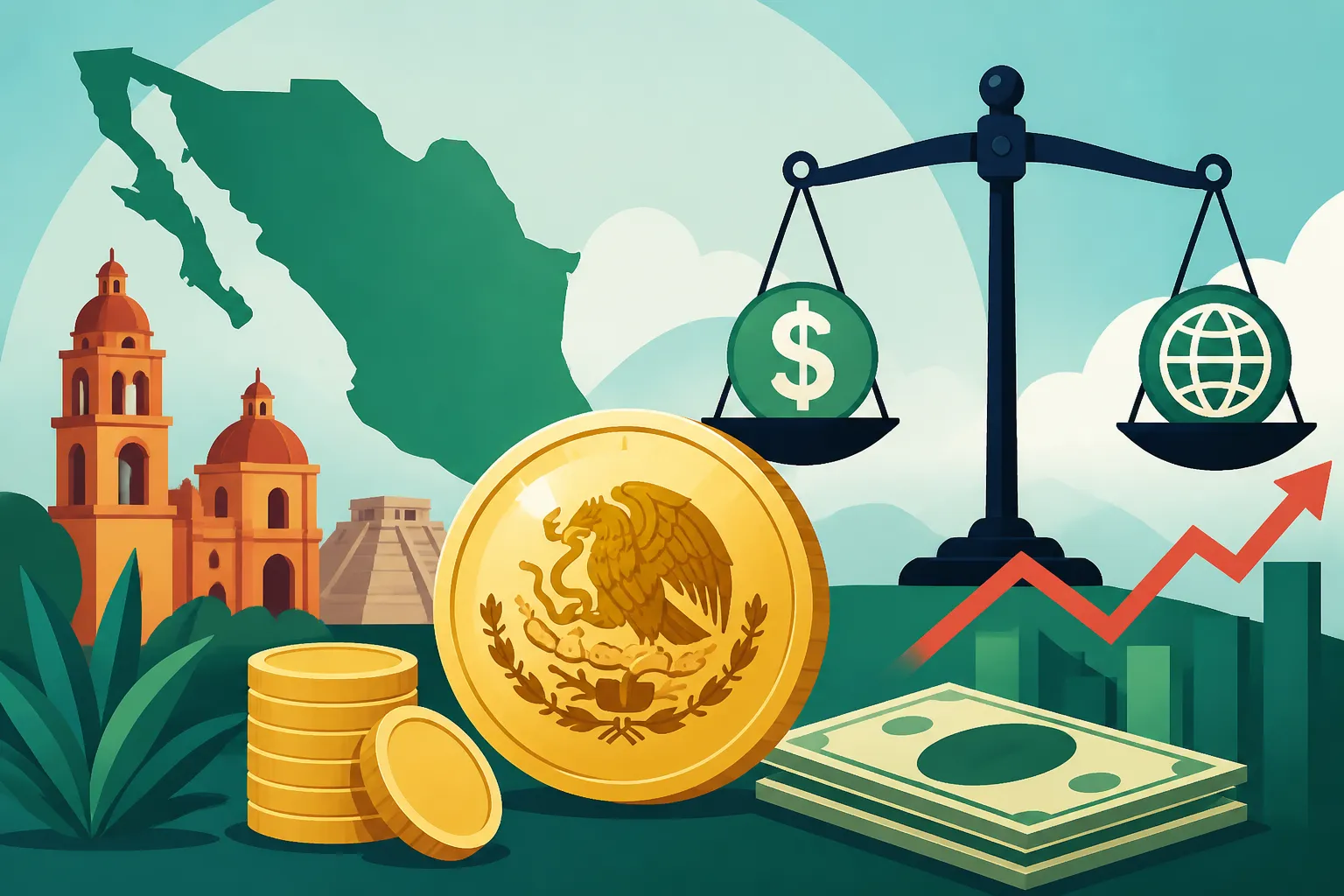
Currency and the Peso: Managing Exchange Rates in Mexico
Watching your bank balance fluctuate because of a sudden dip in the exchange rate can make anyone’s stomach drop. I remember the first time the peso strengthened against the dollar right when my rent was due; I felt like I was losing money just by standing still. This guide will teach you how to master the Mexican Peso and protect your budget from exchange rate volatility.
Disclosure: This post may contain affiliate links. We may earn a commission at no extra cost to you if you make a purchase through these links. Read full disclosure.
Understanding the Mexican Peso
Navigating the local currency is one of the first major hurdles you will face when moving to Mexico. The Mexican Peso, denoted by the same "$" sign used for the US Dollar, can be confusing for newcomers. It is often abbreviated as MXN to avoid confusion. When you see a price tag in a supermarket or a restaurant, that "$" refers to pesos. If a high-end real estate listing or a luxury service is priced in US Dollars, it will usually be specified as "USD" or "DLLS." Understanding this distinction is vital because assuming a price is in one currency when it is in the other can lead to massive budgeting errors.
The peso is a free-floating currency, meaning its value is determined by the global market. Unlike some currencies that are pegged to the dollar, the peso moves up and down daily based on oil prices, trade relations, and the general health of the global economy. For those of us living here on a foreign pension or remote salary, this "floating" nature is both a blessing and a curse. When the peso is weak, our dollars go much further at the grocery store. When the peso is strong—a phenomenon often referred to as the "Super Peso"—we have to be much more careful with our spending.
Denominations and the Feel of the Money
Mexico has a beautiful array of banknotes that have undergone significant design changes in recent years. Currently, you will find bills in denominations of 20, 50, 100, 200, 500, and 1,000 pesos. The newer "G Series" notes are made of polymer (a type of plastic) for the lower denominations like the 20, 50, and 100, while the higher denominations remain paper-based but with advanced security features. I always tell new arrivals to pay close attention to the colors; the 500-peso note is blue and features Benito Juárez, while the new 20-peso note is green and red.
Coins are also a huge part of daily life. You will frequently use 1, 2, 5, 10, and 20-peso coins. There are also smaller "centavo" coins (10, 20, and 50 centavos), but these are becoming less common in daily transactions and are often rounded up or down at the register. Learning the "feel" of these coins is important because you will be dealing with a lot of "cambio" (change). In Mexico, having small bills and coins is like having gold. Many small vendors, taxi drivers, and even convenience stores like OXXO often struggle to make change for a 500-peso note. I’ve made it a habit to break my large bills at supermarkets or gas stations whenever possible so I’m never stuck in a taxi without small change.
Why the Exchange Rate Fluctuates
If you are following the Cost of Living in Mexico: 2026 Comprehensive Guide, you know that the exchange rate is the single most significant variable in your monthly budget. The peso is often used by global investors as a "proxy" for emerging markets. This means that if there is trouble in other parts of the world, investors might sell off their pesos, causing the value to drop. Conversely, when the Mexican central bank (Banxico) raises interest rates to fight inflation, the peso often becomes stronger as investors flock to the higher returns available in Mexico.
I have lived through periods where one US dollar bought 25 pesos, and others where it only bought 17. That represents a nearly 30% difference in purchasing power. For an expat, this volatility means you cannot simply set a budget and forget it. You have to monitor the "interbank rate"—the wholesale rate at which banks trade—and understand that the "tourist rate" you see at an airport kiosk will always be significantly worse. This is why having a strategy for Currency Exchange in Mexico: Getting the Best Rates on Pesos is non-negotiable for long-term residents.
Strategic Money Transfers and Digital Tools
In the "old days" of the expat trail, people used to carry stacks of cash or rely on expensive wire transfers from their home banks. Thankfully, those days are over. Modern fintech has made it much easier to manage your money across borders. However, even with new technology, you can still lose a fortune in hidden fees if you aren't careful. Most traditional banks in the US, Canada, or Europe will tell you they offer "fee-free" transfers, but they hide their profit in a terrible exchange rate.
The goal for any smart expat is to get as close to the "mid-market rate" as possible. This is the real exchange rate you see on Google or XE.com. When you use a traditional bank, they might charge you a spread of 3% to 5% on top of that rate. On a $2,000 transfer for rent and expenses, that is $100 gone for no reason. This is why I almost exclusively use specialized services like Wise to move my funds. They provide the transparent mid-market rate and charge a small, upfront fee that is much lower than the hidden spreads at big banks.
Using Fintech and Apps Effectively
Apps like Wise allow you to hold a balance in Mexican Pesos and convert your home currency only when the rate is favorable. This is a game-changer for budgeting. If I see the dollar has spiked against the peso on a Tuesday morning, I might convert two months' worth of rent right then and there. By holding those pesos in a digital "jar," I’ve locked in a better price for my future expenses. This is much more efficient than the traditional method of Banking in Mexico: Complete Guide for Foreigners, where you might be forced to accept whatever the rate is on the day your automatic bill payment goes through.
Another benefit of these digital tools is the ability to send money via the Mexican SPEI system. SPEI is Mexico's near-instant electronic funds transfer system. If you have a local landlord or need to pay a utility bill, being able to send an electronic transfer is much safer and more professional than carrying around thousands of pesos in cash. Most digital banks and transfer services now integrate with SPEI, making your financial life in Mexico feel much more integrated and modern.
Timing Your Transfers
One of the most common questions I get from new expats is: "When should I exchange my money?" The honest answer is that no one can predict the currency market perfectly. However, there are patterns. Often, the end of the month sees higher demand for pesos as businesses pay their employees' salaries and "aguinaldos" (Christmas bonuses), which can slightly strengthen the peso.
I recommend a "dollar-cost averaging" approach. Instead of moving one massive lump sum once a year, move smaller amounts monthly or bi-weekly. This protects you from the risk of exchanging all your money on the one day the rate happens to be at its worst for the year. If you use a service like Wise, you can also set up "price alerts" that notify you when the peso hits a certain target, allowing you to strike when the iron is hot.
Cash Culture and ATM Strategy in Mexico
Despite the rise of digital payments, Mexico remains a cash-heavy society. You will need cash for everything from tipping the "empacadores" (grocery baggers) to buying fresh produce at the local "tianguis" (open-air market). Even in major cities like Mexico City or Guadalajara, small cafes and family-owned "fondas" may only accept cash or require a minimum purchase for card use. This creates a constant need for a safe, low-cost way to get physical pesos into your pocket.
Using a foreign debit card at a Mexican ATM is the most common way for expats to get cash, but it is fraught with hidden traps. The most predatory of these is "Dynamic Currency Conversion" (DCC). When you put your card in, the ATM will often detect it is a foreign card and offer to "convert the transaction for your convenience." Never accept this. The rate offered by the ATM screen is almost always 5% to 10% worse than what your home bank would give you. Always select "Decline Conversion" and let your own bank handle the exchange. You will still get your cash, but at a much fairer rate.
Choosing the Right ATM
Not all ATMs in Mexico are created equal. Some banks charge much higher "usage fees" than others. For example, some boutique or tourist-area ATMs might charge 100 pesos ($5-6 USD) just for the privilege of using the machine, while others like BanCoppel or Banco del Bajío might only charge 20 to 30 pesos. Over time, these fees add up. I always recommend finding a "hub" bank and sticking with it.
| Bank / Method | Average Fee | Best For |
|---|---|---|
| Wise / Fintech App | Low (0.5% – 1%) | Best overall rates for transfers |
| Traditional US/CA Bank | High (3% – 5% spread) | Emergency use only |
| Airport Casa de Cambio | Very High (8% – 12%) | Absolute desperation |
| Local ATM (Decline Conversion) | 30 – 100 MXN Fee | Daily cash needs |
Security is also a major concern. When Using ATMs in Mexico: Avoiding Fees and Staying Secure, always choose a machine located inside a bank branch or a well-lit shopping mall. Avoid standalone ATMs on the street, as these are much more susceptible to "skimmers"—small devices that steal your card information. I also suggest carrying two different debit cards from two different banks. It is not uncommon for a Mexican ATM to "eat" a card or for a foreign bank to flag a transaction as fraudulent, leaving you stranded without cash if you don't have a backup.
Credit Cards and Foreign Transaction Fees
If you have a credit card that offers "No Foreign Transaction Fees," it can be a great tool for larger purchases like hotel stays, car rentals, or supermarket hauls. However, you must be vigilant. Just like the ATM, the credit card terminal at a restaurant might ask if you want to pay in "USD" or "MXN." Always choose MXN. If you choose USD, the merchant's bank applies their own terrible exchange rate through the DCC process I mentioned earlier.
Furthermore, many smaller businesses will add a "commission" (usually 3% to 5%) if you pay by credit card. This is technically illegal under Mexican consumer protection laws, but it is a very common practice. In these cases, it is often cheaper to pay in cash. I always ask, "¿Aceptan tarjeta?" (Do you accept cards?) and "¿Hay una comisión?" before I order. This avoids awkward surprises when the bill arrives.
Living on a Foreign Income: Budgeting for Volatility
The biggest psychological hurdle for expats is learning to think in pesos while still earning in a foreign currency. It is tempting to always convert every price back to your home currency to see if it’s a "deal," but this can be exhausting and misleading. If the peso strengthens, your "deal" might disappear, even if the price in pesos hasn't changed.
To manage this, I recommend creating a Monthly Budget in Mexico: Living Well on $1,500, $2,500, and $4,000 based on a "worst-case scenario" exchange rate. If you know you need 30,000 pesos a month to live comfortably, calculate how much that costs you if the rate is 16:1 rather than 20:1. If you can afford the 16:1 rate, then any time the rate is better is just extra money for your savings or for exploring more of the country.
The Impact on Rent and Large Purchases
In many expat-heavy areas like San Miguel de Allende or parts of the Riviera Maya, landlords often try to price their rent in US Dollars to protect themselves from peso inflation. As a tenant, this is a terrible deal for you if you earn in dollars, as you lose the "natural hedge" of living in a cheaper country. If the dollar loses value, your rent effectively goes up, but your other costs stay the same.
Whenever possible, negotiate your lease in Mexican Pesos. This gives you certainty. You will know exactly how many pesos you need to come up with every month. If you are earning in a foreign currency, you can then use Wise to wait for a "strong dollar" day to convert your rent money. If your rent is fixed in dollars, you are at the mercy of the market every single month. This is particularly important for those who are Transferring Money Internationally: Best Ways to Send Money to/from Mexico for large investments like down payments on property.
Hedging Against Inflation and Fluctuations
Inflation in Mexico can sometimes outpace the exchange rate. This means that even if you are getting more pesos for your dollar, the price of milk, eggs, and gas might be rising even faster. To protect yourself, consider keeping a "peso reserve" in a local high-yield savings account if you have residency. Some Mexican fintech "sofipos" (popular savings institutions) offer very high interest rates compared to US or Canadian banks.
By keeping some of your emergency fund in pesos, you aren't forced to exchange money when the rate is at a multi-year low. I have seen friends have to pull money from their US accounts during a market dip just to pay for an emergency surgery in Mexico, losing thousands in the process. Having local liquidity is a key part of Managing Your Money in Mexico: Budgeting, Saving, and Currency Tips.
Managing Taxes and Legal Obligations
Money management in Mexico isn't just about exchange rates; it's also about staying legal. As an expat, your financial life is visible to both your home country's tax authorities and the Mexican SAT (Servicio de Administración Tributaria). Many people mistakenly believe that if they are paid in a foreign account, the Mexican government doesn't care. However, if you are a tax resident of Mexico, you are technically liable for taxes on your worldwide income.
This is where specialized services like Taxes for Expats become invaluable. They understand the complexities of the US-Mexico tax treaty and can help you navigate requirements like the FBAR (Foreign Bank and Financial Accounts Report). If you open a local bank account or even just hold a significant balance in a digital wallet while living here, you may need to report those accounts to the IRS. Ignoring these rules can lead to massive fines that far outweigh any savings you made on exchange rates.
The Importance of the RFC
To truly integrate into the financial system, you will eventually need an RFC (Registro Federal de Contribuyentes). This is your Mexican tax ID. While you can get by as a tourist without one, as a resident, you will need it for everything from opening a traditional bank account to getting a "factura" (official tax invoice) for your expenses.
A factura is more than just a receipt. In Mexico, only facturas can be used to deduct expenses from your taxes. If you are running a business or working as a freelancer, you must understand The RFC and SAT: Mexico's Tax System for Foreigners. Even if you aren't working, having an RFC makes you look much more permanent and legitimate to banks and utilities, often helping you avoid the high deposits sometimes required of foreigners.
Reporting Foreign Income
One of the biggest stresses for retirees is the fear of double taxation. Fortunately, Mexico has treaties with many countries to prevent this. However, the paperwork can be daunting. Using a service like Taxes for Expats ensures that you are claiming all the foreign tax credits you are entitled to. I’ve seen expats try to DIY their taxes and end up paying thousands more than necessary because they didn't understand how to report their foreign pension correctly.
Living in Mexico is a dream, but that dream requires a bit of administrative upkeep. Validating your frustrations here is easy—dealing with the SAT or the IRS is never fun. But doing it right the first time prevents the "administrative nightmare" that so many expats complain about after a few years in the country. If you want a deep dive into this, check out Taxes in Mexico for Expats: A Complete Guide to Income Tax and More.
Practical Tips for Daily Currency Management
Beyond the big transfers and tax forms, there are the "street level" currency skills you need to survive. One of the most important is spotting counterfeit bills. Unfortunately, counterfeit 200 and 500 peso notes are somewhat common. When you receive change, get into the habit of quickly checking the security features. The "G Series" bills have a transparent window and color-shifting ink. If a bill feels like "regular paper" rather than the slightly waxy polymer or the high-quality textured paper of the larger notes, ask for a different one. It’s not considered rude to check your change; locals do it all the time.
Another tip is to always carry "cambio." I cannot stress this enough. If you go into a small family pharmacy to buy a 40-peso bottle of water with a 500-peso bill, they will likely tell you "no hay cambio." This isn't because they are being difficult; many small businesses literally do not keep that much cash in the till for security reasons. Keep your 20 and 50 peso notes in a separate pocket for quick access. It makes your interactions with locals much smoother.
Tipping and Small Change Etiquette
Tipping (propina) is a huge part of the Mexican economy. Many workers, like the people who help you back out of a parking space (viene-vienes) or the grocery baggers, rely entirely on small change tips. Typically, 5 to 10 pesos is a standard tip for these small services. For restaurants, 10% is the minimum, 15% is standard, and 20% is for exceptional service.
When you are Finding English-Speaking Doctors and Specialists in Mexico, you generally don't tip the professional, but you might tip the person who cleans the office or the valet. Understanding these social cues helps you fit into the community. I always keep a handful of coins in my car’s center console specifically for the people who wash my windshield or help me park. It’s a small amount of money for us, but it’s a vital part of the local social fabric.
Reliable Resources for Rate Tracking
Don't rely on the "buy/sell" rates posted on the windows of local banks. Those are for cash exchanges and are always poor. Instead, use an app like XE or the Wise app to see the real-time interbank rate. This gives you leverage. If a "Casa de Cambio" is offering you 17 pesos when the real rate is 19, you know to keep walking.
I also recommend joining local expat Facebook groups for your specific city. People often post when a specific ATM is out of cash or when a particular bank is offering a better-than-average rate for wire transfers. The collective wisdom of people who have been here for a decade is your best defense against wasting money. Managing your finances in Mexico is a skill that takes time to hone, but once you master the "dance of the peso," your life here becomes much more predictable and stress-free.
Disclaimer
The information provided in this article is for educational and informational purposes only and does not constitute professional financial, legal, or tax advice. Currency markets are highly volatile, and tax laws in both Mexico and your home country are subject to change. Always consult with a qualified financial advisor or a certified tax professional, such as the team at Taxes for Expats, before making significant financial decisions or filing tax returns. The author and publisher are not responsible for any financial losses or legal issues arising from the use of this information.