How to Make a SPEI Transfer in Mexico
Trying to navigate the financial infrastructure of a new country often feels like learning a second language while your bank balance hangs in the balance. I remember the sheer panic of my first month in Mexico, standing in a crowded bank line for forty minutes just to pay my rent, only to be told I could have done it in seconds from my phone if I knew what a SPEI was. This guide breaks down exactly how to master the Sistema de Pagos Electrónicos Interbancarios so you can stop wasting time in branches and start living your life.
Disclosure: This post may contain affiliate links. We may earn a commission at no extra cost to you if you make a purchase through these links. Read full disclosure.
Demystifying the SPEI System in Mexico
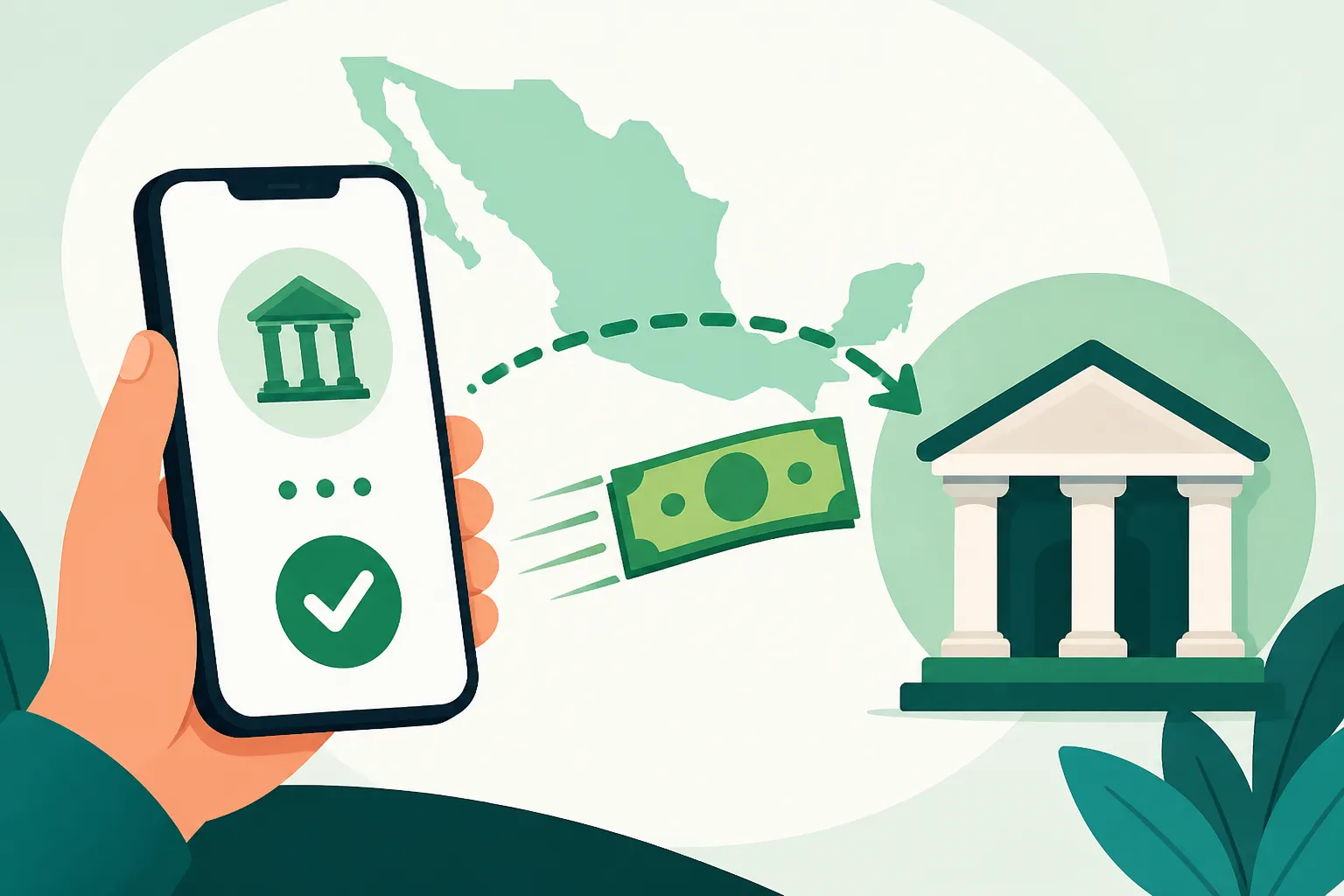
If you have spent any time Banking in Mexico: Complete Guide for Foreigners, you have likely heard the term SPEI tossed around by landlords, utility companies, and friends. SPEI stands for Sistema de Pagos Electrónicos Interbancarios. It is a near-instant electronic fund transfer system developed and operated by Banco de México (Banxico). Unlike the ACH transfers in the United States or similar systems in Canada that can take days to clear, a SPEI transfer usually settles within seconds, 24 hours a day, 365 days a year.
The beauty of this system is its ubiquity. Whether you are paying a few hundred pesos for a handmade rug at a boutique or tens of thousands for your monthly rent, SPEI is the standard. It has largely replaced the need for carrying large amounts of cash, which is a significant safety upgrade for most expats. When you are Managing Your Money in Mexico: Budgeting, Saving, and Currency Tips, understanding that SPEI is the backbone of your local financial life is the first step toward true residency.
Why SPEI Is Better Than Cash or Checks
In Mexico, the "check" is almost a relic of the past for individual consumers. While businesses might still use them, for the average person, they are a bureaucratic nightmare. Cash, while still king in local tianguis (street markets), is risky to carry in large volumes. SPEI provides a digital paper trail that is essential if you ever need to prove a payment to the SAT (Mexico's tax authority) or resolve a dispute with a service provider.
Furthermore, many digital-savvy businesses and landlords now prefer SPEI because it eliminates the need for them to visit a bank to deposit cash. For you, it means no more "mordida" or anxiety about carrying your rent money across town. If you have already gone through the process of Opening a Bank Account in Mexico as a Foreigner, your bank app is already equipped with this functionality; you just need to know how to unlock its potential.
The Role of Banxico and Security
One of the most comforting aspects of the SPEI system is that it is strictly regulated by the central bank. Every transaction generates a unique tracking number and a digital receipt known as a CEP (Comprobante de Pago Electrónico). This isn't just a screenshot of your bank app; it is a legally recognized document that proves the money moved from Point A to Point B.
From a security standpoint, Mexican banks are incredibly rigorous. Most require two-factor authentication (2FA) for every single transfer. This usually involves a "Token Móvil" built into your banking app. While it might feel like a hassle to enter a code every time you want to send 100 pesos to a friend, this layer of protection is what makes the system one of the most secure in Latin America.
The Essential Checklist for Your First SPEI Transfer
Before you open your app and start typing, there are a few pieces of information you must have. Missing even one digit can result in a rejected transfer or, in rare cases, sending money to the wrong person. The most critical component is the CLABE.
The CLABE (Clave Bancaria Estandarizada) is an 18-digit number that is unique to every bank account in Mexico. It is not your debit card number, nor is it your account number, though it contains elements of both. If you are still confused about this 18-digit string, you should read our deep dive on What Is a CLABE? Understanding Mexican Bank Account Numbers to ensure you are looking at the right set of digits on your bank statement.
| Feature | SPEI Transfer | International Wire (SWIFT) | Cash Deposit at OXXO |
|---|---|---|---|
| Speed | Near Instant (Seconds) | 1 to 5 Business Days | Instant to 24 Hours |
| Cost | Usually Free (or < 10 Pesos) | $20 – $50 USD + FX Margin | 12 – 15 Pesos Fee |
| Requirements | CLABE & Mobile App | SWIFT/BIC & Intermediary Info | Physical Cash & Card Number |
| Availability | 24/7/365 | Bank Hours Only | OXXO Store Hours |
Gathering the Beneficiary Information
To add a new person or business to your "Beneficiarios" list, you will need three things: their full legal name, their 18-digit CLABE, and the name of their bank (e.g., BBVA, Banamex, Santander). Some apps will automatically detect the bank name once you input the CLABE, but it is always good practice to double-check.
I once tried to pay a contractor for a kitchen repair and accidentally swapped two digits of his CLABE. Because the name didn't match the account holder's record at his bank, the transfer was rejected. However, it took three days for the funds to bounce back into my account. To avoid this, always ask for a "carátula" (the header of a bank statement) from the person you are paying. This ensures you have the exact legal name and CLABE as registered with the bank.
The Infamous Waiting Period
One of the quirks of Best Banks in Mexico for Expats: Comparing Fees and Services is the security "cooldown" period. Many major banks, such as Banorte or HSBC, require you to wait anywhere from 30 minutes to three hours after adding a new beneficiary before you can actually send them money.
This is a fraud prevention measure. If someone hacked your account and added themselves as a beneficiary, the delay gives you time to receive the notification and alert the bank. For you, it means you cannot wait until the very last minute to pay your rent for the first time. You need to "Register the beneficiary" (Dar de alta) at least a few hours before the deadline.
A Walkthrough of the SPEI Process: From Setup to Success
Once you have your beneficiary’s details and have waited out the security period, you are ready to send the funds. While every app (BBVA, Santander, Banamex, etc.) has a slightly different interface, the logic remains the same across the board.
The first step is logging in with your biometric data or password. Look for a section labeled "Transferir," "Enviar Dinero," or "Pagos." If you are moving money from abroad to fund these payments, using a service like Wise is often the most cost-effective way to get your CAD or USD into your Mexican account before distributing it via SPEI. Once the pesos are in your local account, the real process begins.
Step 1: Selecting or Adding the Beneficiary
If this is a new contact, click "Agregar Beneficiario." Input the 18-digit CLABE. The app should populate the bank name. Then, type in the name. A pro-tip from my years of experience: keep the names simple in your "Alias" list so you don't get confused between "Juan Landlord" and "Juan Electrician."
If the beneficiary is already in your list, simply select their name. Double-check that the last four digits of the CLABE match the one you have on file. It is remarkably easy to click the wrong "Juan" when you are in a rush.
Step 2: Entering the Amount and the Concepto
Enter the amount in Mexican Pesos. Be very careful with the decimal points. Next, you will see a field called "Concepto de Pago" or "Referencia." This is perhaps the most overlooked part of the SPEI process, but it is vital for Taxes in Mexico for Expats: A Complete Guide to Income Tax and More.
The "Concepto" is a short note (usually 30-40 characters) that the recipient will see on their statement. If you are paying rent, write "Renta Junio 2026." If you are paying a doctor, write "Consulta Medica." Avoid using vague terms like "Transfer" or "Payment." The SAT uses these descriptions to track income and expenses. If you ever work with a professional firm like Taxes for Expats to handle your home-country reporting, having clear, descriptive concepts for your transfers will make your life significantly easier when it comes time to categorize your spending.
Step 3: Authorization and Confirmation
After clicking "Continuar," the app will show you a summary. This is your final "point of no return." Check the name, the CLABE, the amount, and the Concepto. If everything looks correct, the app will ask for your "Token." Most modern apps generate this automatically in the background, but some might require you to enter a separate 6-digit pin or use FaceID.
Once authorized, you will see a confirmation screen with a "Clave de Rastreo" (Tracking Key). This is a 20+ character alphanumeric string. This is not the receipt itself, but it is the proof that the request has been sent to the Banxico servers. I always take a screenshot of this screen immediately. In Mexico, "comprobante" (proof) is the currency of trust. Sending that screenshot to your landlord via WhatsApp is the standard way to say, "The money is on its way."
Tracking and Safety: What to Do if Things Go Wrong
Even with a system as robust as SPEI and CLABE: How Bank Transfers Work in Mexico, glitches can happen. Perhaps the recipient claims they haven't received the money, or your app shows the transaction as "En Proceso" for an hour. Knowing how to troubleshoot these moments will save you a lot of gray hair.
The first thing to understand is that the bank’s app is just an interface. The real truth lies with the Banco de México. If a transfer is "stuck," you can go to the Banxico website and use their "Consultar CEP" tool. You will need the date of the transfer, the tracking key (Clave de Rastreo), the sending bank, and the receiving bank.
How to Use the CEP for Disputes
The CEP (Comprobante de Pago Electrónico) is the ultimate proof of payment. If your landlord insists the money isn't there, you can generate this official PDF from the Banxico portal. It shows exactly what time the money hit their bank's server. Often, the delay isn't in the SPEI system itself, but in the recipient's bank app failing to refresh their balance.
When you provide a CEP, the burden of proof shifts to the recipient. They must then contact their bank to find out why the funds aren't showing in their available balance. This is also a crucial document if you are How to Get an RFC in Mexico and operating a small business; these receipts are your best friends during an audit.
Common Pitfalls and How to Avoid Them
The most common mistake is forgetting that some transfers are subject to "TEF" (Transferencia Electrónica de Fondos) rules if the SPEI system is undergoing maintenance. TEF transfers are not instant; they move in batches and can take 24 hours. Always ensure your app says "SPEI" and not "TEF" if you need the money there immediately.
Another pitfall is the "Referencia Numérica." This is a 7-digit field separate from the "Concepto." Some automated systems (like paying your American Express card or a Telmex bill) require a specific number here. If you put your "Concepto" text into the numerical reference field, the transfer might be rejected by the receiving automated system.
International Context: Getting Money into the System
For many of us, our primary income arrives in a foreign currency. You cannot send a SPEI transfer directly from a US or Canadian bank account. You must first get your funds into a Mexican account. Using Wise is often the most efficient bridge here. You send your home currency to Wise, they convert it at the mid-market rate, and then they deposit it into your Mexican bank account via—you guessed it—a SPEI transfer. From there, you can distribute the pesos locally as needed.
This two-step process—International Wire to a Mexican account, then SPEI to the final recipient—is the most cost-effective way to live in Mexico. It avoids the predatory exchange rates offered by traditional banks and keeps your local How to Open a Bank Account in Mexico: Requirements and Tips active and healthy.
Disclaimer
The information provided in this article is for informational purposes only and does not constitute financial, legal, or tax advice. While we strive to provide the most up-to-date details regarding the Mexican banking system and the SPEI infrastructure as of 2026, regulations and bank policies can change frequently. Always consult with a qualified financial professional or a certified accountant in Mexico before making significant financial decisions or entering into long-term contracts. The mention of specific brands or services does not imply an endorsement beyond their contextual relevance to the topic discussed.