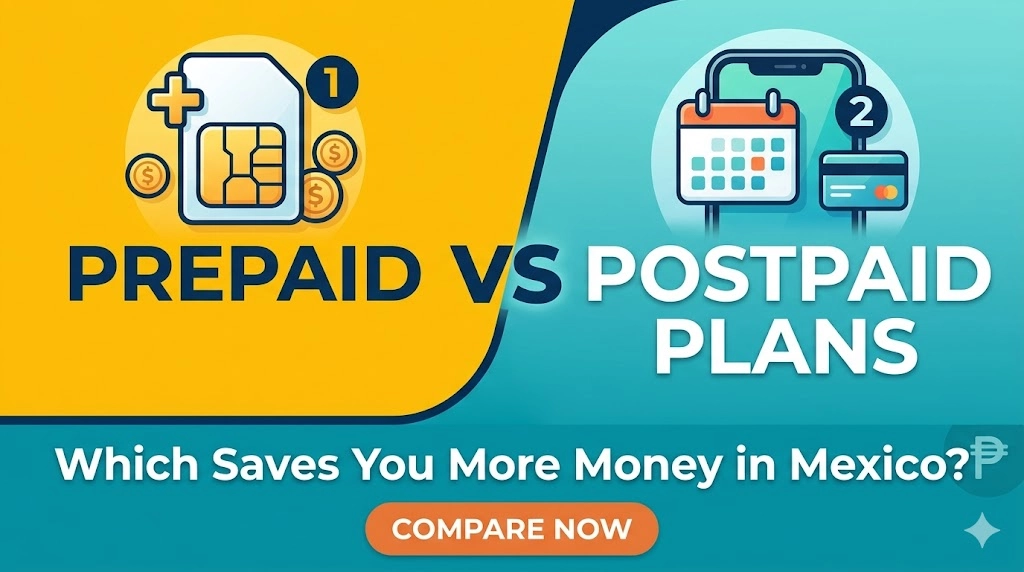
Prepaid vs Postpaid Cell Plans: Which Saves You More Money in Mexico?
Landing in Mexico and realizing your home-country carrier just throttled your data is a uniquely frustrating welcome. I burned through an exorbitant international roaming bill my first month because I didn’t understand the local telecom landscape. This guide breaks down the true costs of prepaid versus postpaid cell plans in Mexico so you can stay connected without getting ripped off.
Disclosure: This post may contain affiliate links. We may earn a commission at no extra cost to you if you make a purchase through these links. Read full disclosure.
The Mexican Telecom Landscape Telcel AT and T and Movistar
When you first start mapping out your Cost of Living in Mexico: A Realistic Budget Breakdown, establishing a reliable communication lifeline is paramount. The Mexican mobile market is dominated by three main carriers, each serving a very different demographic. Understanding their geographic strengths will save you from paying for a plan that drops the moment you leave your neighborhood.
Coverage Realities Outside the Expat Bubbles
Telcel, owned by América Móvil, operates a near-monopoly on rural and highway coverage. If your lifestyle takes you outside of major metropolitan areas, into the mountains of Oaxaca, or along remote stretches of the Baja peninsula, Telcel is undeniably the only network that will consistently hold a signal. The trade-off is that their customer service is notoriously bureaucratic, and their apps can be clunky.
AT&T Mexico is the primary competitor, offering phenomenal, fast 4G and 5G coverage within massive urban centers like Mexico City, Guadalajara, and Monterrey. If you are strictly living a Digital Nomad Life in Mexico: Remote Work Living Guide within highly developed urban hubs and relying on coworking spaces, AT&T is a robust and often slightly cheaper alternative with much more user-friendly digital interfaces. Finally, Movistar targets the ultimate budget consumer but historically suffers from significant dead zones once you leave the city limits.
The Role of the IFT in Consumer Protection
The Federal Telecommunications Institute (IFT) is the Mexican government body that regulates these cellular giants. Thanks to aggressive IFT regulatory reforms over the last decade, Mexican landline and cellular costs plummeted from being some of the most expensive in the Americas to among the absolute cheapest.
The IFT mandates heavy pricing transparency, which means hidden connection fees are heavily regulated. They also enforce “Sin Fronteras” (Without Borders) agreements. This means almost all Mexican mobile plans now include free roaming, calls, and texts across the United States and Canada. This is a massive relief for expats who need to call home, handle dual-authentication texts from their US banks, or travel back and forth without constantly swapping out SIM cards.
Prepaid Plans Prepago The Undisputed King of Flexibility
In the United States, Canada, and Europe, “pay-as-you-go” or prepaid phones are often stigmatized as burner phones or a massive budget compromise. In Mexico, the Prepago (prepaid) system is the absolute gold standard for locals and wealthy expats alike. It is incredibly efficient, completely commitment-free, and shockingly cheap.
The 200 Peso Magic Number
The current sweet spot in the Mexican telecom market is the $200 MXN package. For roughly $10 USD to $12 USD, providers like Telcel (with their Amigo Sin Límite plan) and AT&T (with their AT&T Más or Pago Único packages) offer a 30-day block of premium service.
This 30-day block universally includes unlimited calls and SMS across North America, unlimited data for specific social media apps (like WhatsApp, Facebook, Instagram, and X), and typically around 3GB of open-web browsing data. If you rely on Wi-Fi at home or in your office, this 3GB is more than enough for Google Maps, checking emails, and streaming Spotify when navigating the city. The fact that WhatsApp data is completely unlimited is crucial, as WhatsApp is the primary engine of communication for everything from chatting with landlords to ordering food delivery in Mexico.
How to Execute a Recarga Like a Local
The mechanics of the prepaid system are straightforward but require active management. You buy a local physical SIM card (or download an eSIM directly to your unlocked phone) at any convenience store or official kiosk. Once inserted, your phone instantly has a Mexican number. However, the plan does not automatically renew by default. You must perform a recarga (recharge) every 30 days.
You can execute a physical recarga by walking into any OXXO, 7-Eleven, or local pharmacy. You simply hand the cashier a 200-peso bill, say the name of your carrier, and recite your 10-digit Mexican phone number. The system tops you up instantly. Alternatively, you can top up digitally via the provider’s mobile app. If you forget to recharge your account, your phone simply reverts to a harsh per-megabyte charge until your balance is mathematically zero, and then service stops entirely. If you leave the account completely dormant for several months without adding any credit, the network will permanently deactivate your SIM and recycle the phone number.
Postpaid Plans Pospago Navigating Contracts and Subsidies
If you want massive, unthrottled data caps (like 20GB or 40GB a month) or you want to finance a brand-new iPhone over two years, you must look at Pospago (postpaid) plans. These are the traditional 12, 18, or 24-month contracts. However, the barrier to entry for a newly arrived foreigner is immensely high.
The Bureaucracy of Signing a Contract
You cannot walk into a Telcel or AT&T store on a 180-day tourist stamp and sign a two-year contract. Telecom companies legally require you to prove your long-term status. You will need to show a valid Temporary or Permanent Resident card, which you can only obtain by navigating the grueling legal processes detailed in Qualifying for Permanent Residency in Mexico: Paths and Requirements and Understanding the Residente Temporal: Lucrativa vs No Lucrativa (With/Without Work).
Furthermore, you must provide your RFC (Mexican tax identification number), a formalized local proof of address (comprobante de domicilio) in your name, and pass a strict Mexican credit check. If you have just arrived and have absolutely zero local credit history, the provider will demand a massive security deposit or require you to use an active Mexican credit card to automatically bill your monthly premium.
Device Subsidies vs Buying Outright
The primary lure of a postpaid contract is the device subsidy. Telecom providers will heavily discount the upfront cost of a flagship smartphone if you lock into a 24-month premium tier plan (like AT&T Premium or Telcel Max Sin Límite). While getting a new smartphone for essentially zero down sounds appealing, you are ultimately paying inflated monthly service premiums that far exceed the actual retail cost of the phone over two years.
Additionally, phones purchased on a Mexican postpaid contract are usually network-locked until the contract is paid in full. If you travel internationally outside of North America and want to pop in a local European or Asian SIM card, you will be entirely blocked. Because of these harsh restrictions, bureaucratic hurdles, and high long-term costs, veteran expats highly recommend avoiding Mexican phone contracts entirely and sticking to the prepaid route.
Financial Logistics Paying for Your Plan and Tech
Operating on a prepaid basis requires you to manage your capital smartly. If you are constantly trying to pay for Mexican telecom services using foreign banking tools, you will bleed money to conversion fees.
Managing Daily Top Ups
If you decide to embrace the prepaid lifestyle, you will need a reliable way to execute your monthly recargas without getting hit by your home bank’s foreign transaction fees. If you try to top up your Telcel app using a standard US or Canadian debit card, you will likely face frustrating security blocks or terrible dynamic currency conversion rates. To master this, you need to understand the structural traps detailed in Bank Fees in Mexico: Tips to Avoid Unnecessary Charges.
Instead of fighting with foreign cards, I use Wise to manage my daily localized expenses. I keep a dedicated peso balance in my Wise account and use my Wise debit card to effortlessly pay for my monthly phone recharges within the Telcel app. Because Wise gives me the true mid-market exchange rate and processes the transaction as a local Mexican payment, it never gets declined. If I need to set up automatic bill payments for a broader family plan, I can use Wise to push funds via the SPEI network directly to a local account, provided I have successfully managed Opening a Bank Account in Mexico and secured my own What Is a CLABE? Understanding Mexican Bank Account Numbers.
Converting Capital for Major Tech Purchases
If you bypass the postpaid contract trap, you will have to buy your smartphone outright in cash. Electronics in Mexico are heavily taxed and are universally more expensive than in the United States. A new, fully unlocked flagship phone purchased at a Mexican MacStore or Telcel authorized dealer can cost hundreds of dollars more than the exact same model across the border.
If you choose to buy your tech outright in Mexico to pair with your cheap $200-peso prepaid plan, you must strategize how you convert that massive amount of capital. Buying a $1,300 USD phone on a traditional foreign credit card means you will lose a heavy percentage to backend bank spreads. When making these major tech or lifestyle purchases, veteran expats rely on Interactive Brokers.
Because Interactive Brokers operates as an institutional-level global trading platform, you can convert massive chunks of foreign currency into Mexican Pesos at the literal, real-time spot rate for mere pennies in commission. By converting your savings through Interactive Brokers and wiring the pesos directly to your local accounts, you protect your purchasing power from retail bank extortion. You can then walk into the store and purchase your unlocked phone outright in pesos, ensuring your localized budget remains completely intact.
Plan Comparison Breakdown
| Feature | Prepago (Prepaid) | Pospago (Postpaid Contract) |
|---|---|---|
| Average Cost | $200 MXN / 30 days (~$10 USD) | $500 – $1,500+ MXN / month |
| Commitment | None (Pay as you go) | 12 to 24 Months |
| Data Allowance | ~3GB + Unlimited Social Media | 10GB to 40GB+ |
| Requirements | Cash and an unlocked phone | Residency Card, RFC, Credit Check |
| Device Subsidies | None (Bring your own unlocked device) | Heavily subsidized upfront costs |
| Best For… | 95% of expats, digital nomads, budgeters | Expats who need massive data hotspots daily |
References
Primary sources (official)
- AT&T México: The official site outlining AT&T’s localized postpaid contracts (Pospago), prepaid packages (Prepago), and specific device financing terms. https://www.att.com.mx/
- Instituto Federal de Telecomunicaciones (IFT): The federal regulatory agency’s official consumer tool for comparing mobile telephony plans, tariffs, and early termination penalties across all Mexican carriers. https://www.ift.org.mx/usuarios-telefonia-movil/comparador-de-planes-de-telefonia-movil
Other helpful sources
- Mexperience: A highly trusted expat guide detailing the historical shift in Mexican telecom pricing and the extreme value of current no-contract, pay-as-you-go cellular plans. https://www.mexperience.com/mexican-cell-phones-unlimited-calling-plans-for-north-america/
- Tom’s Guide: A comprehensive breakdown of how US-based carriers handle North American roaming data limits compared to localized international SIM options. https://www.tomsguide.com/us/wireless-carriers-international-travel-plans,review-4327.html
Disclaimer
The information provided in this guide is for educational, logistical, and informational purposes only and does not constitute formal legal, financial, or consumer advice. Telecom pricing, prepaid data limits (Fair Use Policies), and roaming agreements in Mexico are highly competitive and subject to sudden changes by the carriers. While prepaid plans are generally the most cost-effective solution for foreigners, individual data consumption needs vary drastically. Consumer platforms like Wise and brokerage services like Interactive Brokers operate under their own strict terms of service and fluctuating fee structures. Always conduct independent research, read the fine print on any postpaid cellular contract before signing, and verify your device’s network band compatibility before purchasing a Mexican SIM card.