How to Find Healthcare in Smaller Mexican Towns
The panic of waking up with a high fever in a remote Mexican village, far from the multi-specialty hospitals of the big cities, is a rite of passage every expat eventually faces. I remember my first night in a small town in Oaxaca, realizing the nearest "real" hospital was a three-hour drive through winding mountain roads. This guide provides a roadmap for Finding Healthcare in Smaller Mexican Towns so you can navigate medical needs without the big-city safety net.
Disclosure: This post may contain affiliate links. We may earn a commission at no extra cost to you if you make a purchase through these links. Read full disclosure.
Understanding the Landscape of Rural Healthcare
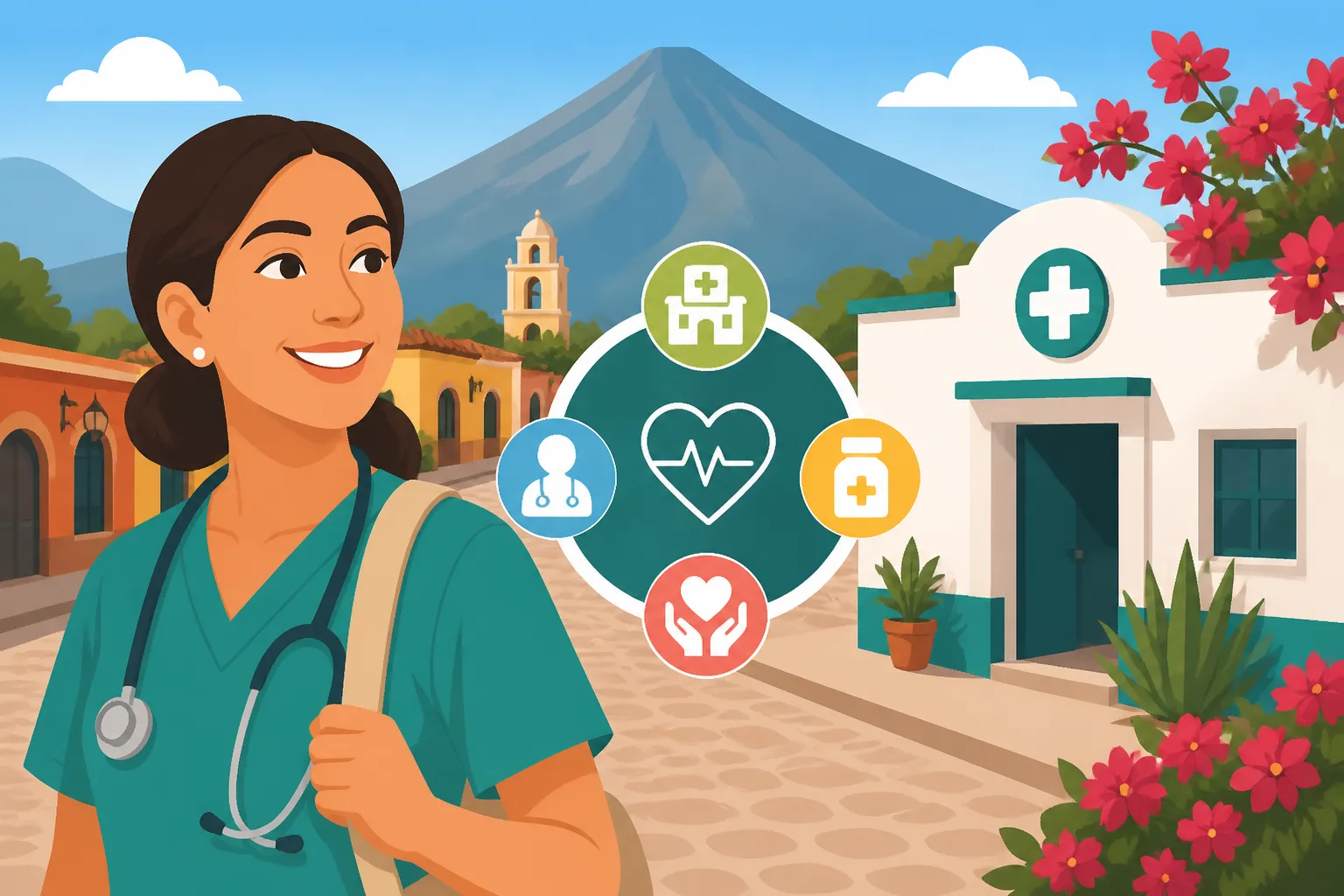
When you move to a smaller town or a "Pueblo Mágico," you are trading the convenience of massive private medical centers like Hospital Ángeles for a more decentralized, community-based system. The infrastructure in these areas is often divided between basic public clinics, small private consultorios, and the ubiquitous pharmacy-attached doctors. You won't find specialized oncology departments or advanced trauma centers in a town of 5,000 people, but you will find a surprising amount of primary care if you know where to look.
The first thing to accept is that Healthcare Quality: Mexico vs Your Home Country – A Comparison takes on a different meaning in rural areas. While the equipment might be older and the facilities more modest, the doctors in these towns are often incredibly resourceful. They are accustomed to treating everything from tropical infections to agricultural accidents with limited tools. Your goal as an expat is to identify which level of care you need: a quick prescription, a consultation for a chronic issue, or emergency stabilization.
In smaller towns, the lines between public and private can sometimes blur. A doctor might work at the government clinic in the morning and see private patients in the back of their own home in the evening. This dual-practice system is standard, and as a foreigner, you will likely find yourself utilizing both depending on the severity of your situation. Understanding Public Healthcare in Mexico: IMSS and IMSS Bienestar Explained for Expats is useful, but in the smallest villages, even IMSS-Bienestar might be limited to a single nurse and a handful of basic medications.
The Pharmacy Consultorio Your First Line of Defense
If you have a minor ailment—a respiratory infection, a rash, or a mild case of Traveler’s Diarrhea (Montezuma’s Revenge): Prevention and Treatment—your most reliable resource is the consultorio adjunto a farmacia. Brands like Farmacias Similares, Farmacias del Ahorro, and Farmacias Benavides have revolutionized primary care in Mexico. For a fee that usually ranges from 50 to 150 pesos, you can walk in without an appointment and see a general practitioner.
These doctors are qualified professionals, though often early in their careers or semi-retired. They can diagnose common issues and provide prescriptions on the spot. Because the consultorio is attached to the pharmacy, you can fill your medication immediately. This is particularly helpful because Pharmacies in Mexico: How to Get Medications (OTC vs Prescription) can be tricky for newcomers who aren't used to the specific regulations regarding antibiotics and controlled substances.
However, do not mistake a pharmacy doctor for a specialist. If you are Managing Chronic Illness in Mexico: Access to Medication and Specialists, a pharmacy consultorio is only a temporary stop. They are excellent for "quick fixes," but for long-term care, you will eventually need to travel to a larger regional hub. In my experience, these small-town pharmacy doctors are also great local resources; if you need a referral to a specialist in the nearest city, they often have the personal phone numbers of the best practitioners in the region.
Utilizing the Centro de Salud and IMSS-Bienestar
Every municipality in Mexico, no matter how small, is served by a Centro de Salud (Health Center) or an IMSS-Bienestar clinic. These are the government-run facilities designed to provide care to the uninsured population. For an expat living in a small town, these centers are vital for things like Vaccinations Needed for Mexico: Guidance for Expats (2026) or basic emergency stabilization.
When you visit a Centro de Salud, be prepared for the "morning rush." Locals often arrive at 6:00 AM to secure a spot for the day. As a foreigner, you are welcome to use these services, and the cost is typically a very small "recovery fee" or even free, depending on the program currently in place. While the wait times can be long, the care is generally competent. I have found that the nurses in these centers are the true experts on local health trends, such as outbreaks of Mosquito-Borne Illnesses (Dengue, Zika): Precautions for Expats.
If you find yourself in a situation where you need more than a simple consultation but don't have the time or ability to reach a private hospital, the Centro de Salud is where you should go. They usually have a small emergency room (urgencias) capable of administering IV fluids, cleaning wounds, or stabilizing a patient before transport. They are also the primary point of contact for Rabies in Mexico: What to Do If You’re Bitten by an Animal, as they stock the necessary post-exposure prophylaxis that private clinics rarely carry.
Private Clinics and Local Medical Networks
Beyond the government clinics and pharmacies, many smaller towns have small private clinics owned by local families or groups of doctors. These facilities often offer a higher level of comfort and privacy than the public centers. They may have a small lab for Lab Tests and Blood Work in Mexico: Using Local Laboratories or a basic X-ray machine.
Finding these clinics often requires a bit of "boots on the ground" research. They aren't always well-indexed on Google Maps. The best way to find them is to ask your neighbors or the local pharmacist: "¿Hay una clínica privada cerca?" Often, these clinics are the heart of the expat medical experience in a small town. They are more likely to have a doctor who speaks some English, and they often offer Doctor House Calls: Can You Get a Physician to Visit Your Home in Mexico?, which is a godsend when you're too sick to leave your bed.
When you find a local doctor you trust, get their WhatsApp number. In rural Mexico, medical care is highly personal. I’ve had my local doctor in a small lakeside village text me the day after a visit just to see if my fever had broken. This level of personalized care is one of the greatest benefits of Healthcare in Smaller Mexican Towns. However, keep in mind that Healthcare Costs in Mexico: Doctor Visits, Hospital Stays, and Surgery Expenses in these private clinics will still be quite affordable compared to US or European prices, but they will expect payment in cash at the time of service.
Handling Medical Emergencies in Remote Areas
The biggest challenge of rural living is the "Golden Hour"—the time it takes to get to advanced care during a life-threatening emergency. In many small towns, there is no centralized ambulance service like 911 in the US. You might find that Calling an Ambulance in Mexico: How Emergency Services Operate involves calling a local cell phone number for the Red Cross (Cruz Roja) or even the local police department.
In some cases, the "ambulance" might be a pickup truck with a siren. This is where Emergency Medical Services in Rural Mexico: Challenges and Tips for Expats becomes a critical study. You should always have a "Go Bag" and a pre-planned route to the nearest regional hospital. For example, if you live in a town near Sayulita, your emergency plan shouldn't just be the local clinic; it should be knowing exactly how to get to a major hospital in Puerto Vallarta.
| Healthcare Level | Location | Best For | Typical Cost (USD) |
|---|---|---|---|
| Farmacia Consultorio | Local Pharmacy | Flu, Rashes, Stomach Bugs | $3 – $10 |
| Centro de Salud | Government Clinic | Vaccines, Stabilization | $0 – $15 |
| Private Local Clinic | Private Facility | X-rays, Labs, IVs | $25 – $100 |
| Regional Hospital | Nearest City | Surgery, Major Trauma | $500+ |
If you have a serious medical condition, you must consider whether Medical Evacuation Insurance: Do Expats in Mexico Need Airlift Coverage? is necessary. In a cardiac or stroke event, the winding roads of rural Mexico can be a fatal delay. Having coverage through providers like SafetyWing for travel-related emergencies or Cigna Global for comprehensive international care can facilitate an airlift to a major city if the local resources are insufficient.
Overcoming Language Barriers in Small Towns
Unlike the medical hubs of Mexico City or Guadalajara, where many doctors are trained in the US or Europe, rural doctors may speak only Spanish. This is where Overcoming Language Barriers at the Doctor: Tips for Expats becomes an essential skill. If your Spanish is limited, don't rely on luck. Use a translation app, but more importantly, prepare a written "cheat sheet" of your symptoms, medical history, and allergies in Spanish.
If the situation is not an emergency, try to bring a bilingual friend or hire a local translator to accompany you. This ensures that nothing is lost in translation, especially when discussing dosages or follow-up care. In many small towns, the local expat community on Facebook or WhatsApp is a great resource for finding "the English-speaking doctor." Even if there isn't one in your town, there is almost certainly one in the next town over.
Don't be afraid to use Pharmacy Spanish: Phrases to Help You Buy Medicine in Mexico to get your point across. Simple phrases like "Me duele aquí" (It hurts here) or "¿Es grave?" (Is it serious?) are effective. Most Mexican doctors are incredibly patient and will work with you to understand the problem. They appreciate the effort of you trying to speak the language, and it often leads to a more empathetic level of care.
Financial Preparation and Insurance in Rural Areas
One of the most important things to know about rural healthcare is that it is almost entirely a cash-based system. Even if you have the best policy from Cigna Global, the local doctor in a town of 2,000 people will not know how to process an international insurance claim. You must be prepared to pay out of pocket and seek reimbursement later. This makes Do Mexican Hospitals Require Payment Upfront? How Billing Works for Expats a mandatory read for anyone moving away from the big cities.
For digital nomads or those on a budget, having a plan like SafetyWing is excellent for catastrophic coverage, but it won't help you pay the 200 pesos at the pharmacy. Always keep a "medical emergency" stash of cash in pesos. In some remote areas, even the local ATM might be out of service or out of money, and you don't want to be unable to pay for a life-saving injection because you only have a credit card.
If you are a resident, you might consider how Public Healthcare in Mexico: IMSS and IMSS Bienestar Explained for Expats fits into your plan. While you might not want to use the local IMSS clinic for a minor cold, having that registration can be a lifesaver if you need long-term medication for Managing Diabetes or Other Chronic Conditions: Availability of Supplies in Mexico. The cost of insulin or specialized heart medication can add up, and having access to the public system’s pharmacy can mitigate those costs significantly.
Building Your Own "Home Hospital"
When you live in a smaller town, you have to take on a higher degree of personal responsibility for your health. This starts with Building a First Aid Kit: Essential Medical Supplies for Expats in Mexico. Your kit should be much more robust than what you would keep in a city. It should include broad-spectrum antibiotics (prescribed by your doctor for "just in case" use), rehydration salts, wound care supplies, and a pulse oximeter.
Because connectivity can sometimes be an issue in rural areas, make sure you know How to Get a Local eSIM for Travel in Mexico so you can access Telemedicine in Mexico: Accessing Online Doctor Consultations as an Expat if you need a second opinion from an English-speaking specialist. Many doctors in Mexico City now offer Zoom consultations, which can be a perfect middle ground when the local advice feels insufficient.
Lastly, stay proactive. Don't wait until you are sick to find the local clinic. Walk in when you are healthy, introduce yourself, and see how the facility looks. Check for Choosing a Good Hospital: What Accreditations to Look for in Mexico if you are visiting a larger regional facility. Being a familiar face to the local medical staff can make a world of difference when you eventually show up at 2:00 AM with a medical emergency.
Medical Care in Smaller Mexican Towns Disclaimer
This article is for informational purposes only and does not constitute medical or legal advice. Healthcare infrastructure in Mexico can change rapidly, and the quality of care in smaller towns varies significantly by region. Always consult with a qualified medical professional before making decisions about your health. The mention of specific insurance providers like SafetyWing or Cigna Global is for contextual reference regarding expat insurance options and does not imply a guarantee of coverage for every specific rural medical situation. Under no circumstances should this guide be used as a substitute for emergency services or professional diagnosis.