Mosquito-Borne Illnesses (Dengue, Zika): Precautions for Expats
Relocating to Mexico’s beautiful coastal and tropical regions means adapting to the local climate, including the presence of mosquito-borne illnesses like Dengue and Zika. This guide provides essential prevention strategies, symptom recognition, and healthcare planning tips to keep your family safe.
Disclosure: This post may contain affiliate links. We may earn a commission at no extra cost to you if you make a purchase through these links. Read full disclosure.
The Landscape of Tropical Diseases in Mexico
Mexico’s stunning geographical diversity ranges from high-altitude alpine deserts to dense, humid tropical jungles. For expatriates moving to the coasts or the lush southern states, understanding the local biological environment is a necessary part of a safe relocation. The primary health concern in these regions is the presence of mosquito-borne viral infections, specifically Dengue, Zika, and Chikungunya.
These viruses are transmitted exclusively through the bite of infected female mosquitoes, primarily from the Aedes aegypti and Aedes albopictus species. Unlike the mosquitoes that typically transmit Malaria, which are active at night, the Aedes species are highly aggressive daytime biters. They thrive in urban and semi-urban environments, breeding rapidly in tiny pools of stagnant water.
The risk of contracting these illnesses is heavily dictated by geography and altitude. Dengue is currently considered endemic in 30 of Mexico’s 32 states. The only exceptions are high-altitude regions like Mexico City and Tlaxcala. The Centers for Disease Control and Prevention (CDC) notes that the mosquitoes capable of spreading Dengue generally do not live at altitudes above 6,500 feet. Therefore, expats retiring in the high central highlands face virtually zero risk, while those navigating life outlined in Healthcare in Cancún and Riviera Maya: Hospitals and Clinics for Expats or Healthcare in Puerto Vallarta: Medical Services in a Resort City must remain highly vigilant.
The risk of infection spikes dramatically during the Mexican rainy season, which typically runs from June through October. During these months, the daily afternoon downpours create millions of micro-breeding grounds across coastal cities, leading to localized outbreaks. Because Dengue is caused by four distinct viral serotypes (DENV-1 through DENV-4), recovering from one infection only provides immunity to that specific serotype; it is entirely possible to catch Dengue multiple times.
Preventative Measures for Your Home and Body
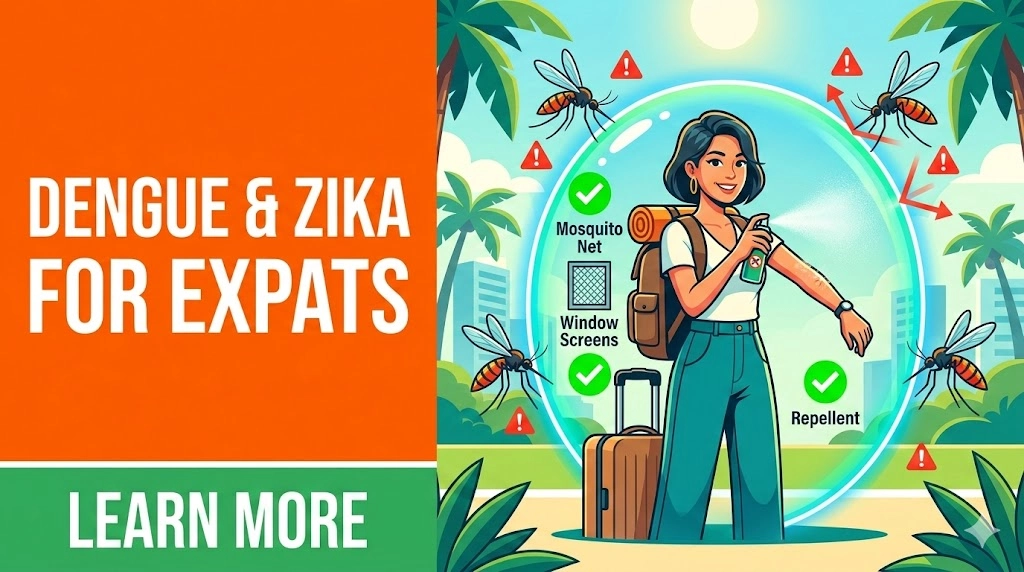
Because there are currently no widely distributed, universally approved prophylactic vaccines available to short-term expatriates to prevent these specific viruses, rigorous bite prevention is your only true line of defense. The Mexican Ministry of Health strictly advocates for a localized household prevention strategy aimed at destroying mosquito habitats.
This national strategy revolves around four simple actions: wash, cover, turn over, and throw away (lava, tapa, voltea y tira). Expatriates must routinely wash and scrub the walls of water storage tanks, tightly cover any cisterns or rain barrels, turn over empty buckets or wheelbarrows left in the yard, and throw away any trash, tires, or broken pottery that can collect rainwater. Relying solely on municipal fumigation trucks is insufficient, as chemical fogging only kills adult mosquitoes and does not destroy the larvae waiting in standing water.
Inside your home, establishing physical barriers is crucial. You should ensure that all windows and doors are fitted with tightly woven, undamaged screens (mosquiteros). Using air conditioning significantly deters mosquitoes, as they prefer hot, humid environments and actively avoid cooled rooms.
When stepping outside, particularly during the early morning and late afternoon hours when Aedes mosquitoes are most active, personal repellents are essential. While standard DEET-based chemical sprays are highly effective and widely available at local Mexican supermarkets, many health-conscious expats prefer cleaner, specialized preventative wellness products. Sourcing clinical-grade, DEET-free botanical repellents, pure citronella essential oils, or high-potency Vitamin B complexes (which some holistic practitioners believe alters body scent to deter insects) can be difficult in standard Mexican pharmacies.
To seamlessly maintain a non-toxic, holistic prevention strategy, proactive expats bypass the limited local retail supply chain entirely by utilizing global e-commerce platforms like iHerb. Because iHerb expertly manages cross-border shipping logistics directly into Mexico, you can securely order your preferred, trusted international brands of organic repellents and immune-supporting supplements. Having these premium wellness tools delivered directly to your door via iHerb perfectly bridges the gap between local preventative needs and global quality standards, a strategy heavily emphasized in Staying Healthy in Mexico: Essential Tips for Food Water and Preventive Care.
Recognizing Symptoms and Initial Medical Response
If you are bitten by an infected mosquito, symptoms typically appear within two to seven days. Differentiating between a standard seasonal flu, a bout of COVID-19, and a tropical mosquito-borne illness requires careful symptom monitoring.
Dengue is often colloquially referred to as “breakbone fever” due to the intense physical discomfort it causes. The hallmark symptoms of a classic Dengue infection include a sudden, exceptionally high fever, a severe headache, agonizing pain specifically located behind the eyes (retro-orbital pain), profound joint and muscle aches, extreme nausea, and a distinct red rash. Zika and Chikungunya share many of these symptoms, though Zika is frequently milder and associated with conjunctivitis (red eyes), while Chikungunya is notorious for causing debilitating, long-lasting joint pain.
If you suspect you have contracted Dengue, there is an absolutely critical medical protocol you must follow: Do not take NSAIDs. Non-steroidal anti-inflammatory drugs, such as Aspirin, Ibuprofen, Naproxen, or Diclofenac, severely interfere with blood clotting. Because Dengue inherently lowers your blood platelet count, taking these common over-the-counter medications can trigger severe, life-threatening internal hemorrhaging. To reduce fever and manage pain, you must use only Acetaminophen (known locally in Mexico as Paracetamol). To safely navigate the local pharmacy counter and ensure you are buying the correct chemical ingredients, expats must study Pharmacies in Mexico: How to Get Medications OTC vs Prescription.
For a definitive diagnosis, expats do not need to wait for a doctor’s referral. You can walk directly into an independent diagnostic facility to request a specific Dengue blood panel (such as the NS1 antigen test or PCR test during the first few days of fever). This incredibly efficient, consumer-driven testing model is detailed comprehensively in Lab Tests and Blood Work in Mexico: Using Local Laboratories.
When paying for out-of-pocket specialist consultations or private laboratory tests, smart financial management is vital. Mexican clinics strictly require payment in local currency. If you swipe a foreign debit card, your home bank will quietly penalize you with hidden international transaction fees and terrible currency exchange rates. Financially astute expats completely eliminate this friction by utilizing sophisticated multi-currency platforms like Wise. By setting up a Wise account, you can instantly and securely transfer your home country savings into a localized Mexican Peso balance at the true mid-market exchange rate. You can then use your Wise debit card at the clinic to pay exactly like a local, ensuring your healthcare budget remains completely optimized.
Managing Severe Cases and Hospitalization
There is no specific antiviral cure for Dengue, Zika, or Chikungunya; treatment is entirely supportive and focuses on aggressive hydration, deep rest, and pain management. The vast majority of expatriates who contract these illnesses recover fully at home within one to two weeks.
However, a small percentage of Dengue cases can rapidly escalate into Severe Dengue (historically known as Dengue Hemorrhagic Fever), a highly dangerous, life-threatening medical emergency. This critical phase typically occurs just as the initial fever begins to drop. Expatriates must be hyper-vigilant for the clinical warning signs of Severe Dengue, which include severe and continuous abdominal pain, persistent vomiting, bleeding from the gums or nose, rapid breathing, and extreme lethargy or restlessness.
If any of these warning signs appear, the patient must be transported immediately to the emergency room of a fully equipped private hospital. Severe Dengue requires intensive care monitoring, continuous intravenous fluid replacement to prevent vascular shock, and occasionally blood transfusions.
The financial reality of treating Severe Dengue in the Mexican private healthcare sector is daunting. A multi-day stay in a private Intensive Care Unit can effortlessly generate a hospital bill exceeding tens of thousands of dollars. Furthermore, private hospitals function as aggressive commercial enterprises; they will routinely demand a massive upfront cash or credit card deposit—often ranging from $3,000 to $10,000 USD—before they will formally admit a patient to a recovery suite. Understanding this billing structure is a core component of Healthcare Costs in Mexico: Doctor Visits Hospital Stays and Surgery Expenses.
To protect your physical life and your retirement portfolio from this catastrophic financial risk, securing premium international health insurance is absolutely vital. A robust policy from a world-class provider like Cigna Global offers unparalleled protection tailored specifically for the expatriate lifestyle.
Crucially, Cigna Global maintains extensive direct-billing agreements with the elite private hospitals located across Mexico’s tropical and coastal regions. If you are rushed to the emergency room with Severe Dengue, the dedicated, 24/7 multilingual emergency support team at Cigna Global instantly negotiates directly with the hospital’s billing administration. They issue a formal Guarantee of Payment, entirely bypassing the horrifying requirement for you to front a massive cash deposit while you are physically suffering. To thoroughly evaluate the structural differences between these global safety nets and restricted local coverage, read Choosing Private Health Insurance: Local Mexican Plans vs International Coverage. By integrating the unshakeable financial protection of Cigna Global into your household’s crisis plan—a process deeply explored in Medical Emergencies in Mexico: What Expats Should Know and Prepare—you can enjoy the stunning beauty of Mexico’s tropical coasts with absolute peace of mind.
Diagnostic Comparisons for Mosquito Borne Viruses
To help expats rapidly distinguish between the primary viruses found in Mexico’s coastal regions, the following table summarizes their distinct clinical profiles.
| Virus Type | Primary Distinctive Symptoms | Risk of Severe Complications | Preventative Medical Status |
| Dengue Fever | Severe retro-orbital eye pain, extremely high fever, bone and muscle aches. | High. Can progress to Severe Dengue (hemorrhaging) requiring ICU care. | Strict bite prevention. No widely available prophylactic vaccine for short-term expats. |
| Zika Virus | Mild fever, distinct conjunctivitis (red eyes), widespread rash. | Low for general adults. Extremely high risk of congenital defects for pregnant women. | Strict bite prevention. No vaccine available globally. |
| Chikungunya | Sudden fever, intensely debilitating and prolonged joint pain (arthralgia). | Moderate. Joint pain can become chronic, lasting for several months or years. | Strict bite prevention. No vaccine currently in widespread commercial distribution. |
If you develop any of these symptoms and struggle to communicate your medical history accurately in Spanish, reviewing the actionable strategies in Overcoming Language Barriers at the Doctor: Tips for Expats will ensure you receive the precise care you need. Furthermore, an overarching view of how these local clinical realities compare to your home country can be found in Healthcare Quality: Mexico vs Your Home Country A Comparison.
References
Primary sources (official)
- Secretaría de Salud (Mexican Ministry of Health) – Dengue Information: https://www.gob.mx/salud/acciones-y-programas/dengue
- Centers for Disease Control and Prevention (CDC) – Mexico Travel Health and Dengue: https://www.cdc.gov/yellow-book/hcp/americas-caribbean/mexico.html
Other helpful sources
- World Health Organization (WHO) – Mexico Health Profile: https://www.who.int/countries/mex/
- Pan American Health Organization (PAHO) – Dengue Epidemiological Data: https://www.paho.org/en/topics/dengue
Disclaimer
The information provided in this article is for educational and informational purposes only and does not constitute formal medical, diagnostic, legal, or financial advice. Healthcare infrastructure capabilities, emergency hospital deposit requirements, insurance underwriting policies, and regional disease prevalences in Mexico are subject to frequent changes without notice. Always consult directly with a qualified, licensed medical professional regarding your specific health needs, avoid self-medicating with restricted drugs, and speak with a certified international insurance broker to thoroughly evaluate your personal coverage options before relocating abroad.