How to Experience a Mexican Cantina as a Visitor
Most visitors walk past the swinging wooden doors of a Mexican cantina, hear the clinking glasses and boisterous laughter, and keep walking, fearing they’ll be the clueless tourist in a locals-only den. It’s an intimidating hurdle for any traveler. This guide demystifies the unwritten rules, the legendary botana system, and the social etiquette required to experience an authentic cantina with confidence and respect.
Disclosure: This post may contain affiliate links. We may earn a commission at no extra cost to you if you make a purchase through these links. Read full disclosure.
The Spirit of the Cantina: More Than Just a Bar
When you first move to Mexico or arrive for an extended stay, you’ll notice that "the bar" as you know it back home doesn't quite exist here in the same format. A traditional cantina is a cultural institution. It is a neighborhood living room, a place for business deals, a sanctuary for heartbreak, and a theater for the daily drama of life. For decades, these were exclusively male domains—a vestige of the past that has thankfully shifted in modern times. Today, most cantinas in major cities welcome women and tourists with open arms, though the "soul" of the place remains rooted in tradition.
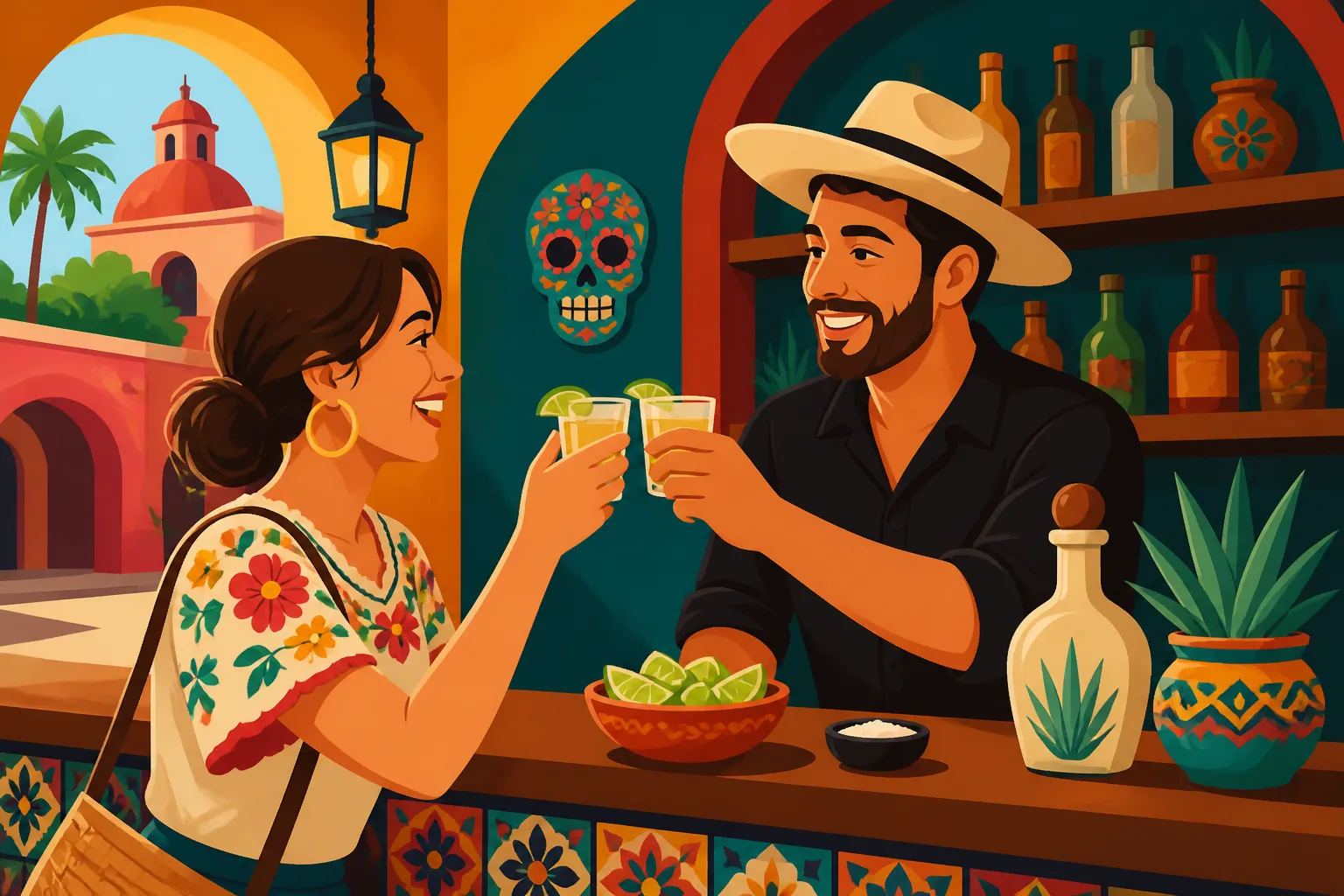
If you are staying in a central neighborhood found through Booking.com, you are likely within walking distance of at least one classic cantina. Stepping inside is like stepping back into the 1940s or 50s. You’ll see long wooden bars, perhaps a tiled floor designed for easy cleaning, and walls adorned with photos of famous revolutionaries or golden-age cinema stars. The atmosphere is loud but rarely aggressive. It is a place of conversation. To fit in, you need to understand that you aren't just there to drink; you are there to participate in a social ritual that has defined Mexican Customs, Etiquette, and Social Life for generations.
The first thing you’ll notice is the "vibe." Unlike a modern cocktail lounge or a loud "antro" (nightclub), the cantina is a place where time slows down. The waiters, often dressed in formal vests and bowties, are the masters of this universe. They aren't just servers; they are confidants and conductors. Respecting their authority and tenure is the first step toward a great experience. If you find the prospect of walking in alone too daunting, you can often find curated evening walks on Viator that focus on the history of these establishments, which can be a great "soft launch" into the culture.
The Historical Swinging Doors and the Social Shift
The iconic swinging doors, or puertas cancel, were originally designed to allow air to circulate while shielding the interior from the prying eyes of the virtuous outside. Historically, cantinas were off-limits to women, uniformed soldiers, and minors. While the law changed in the 1980s to allow women to enter, you might still find a few "old-school" spots in smaller towns where the clientele remains overwhelmingly male. In cities like Mexico City, Guadalajara, or Mérida, however, the crowd is beautifully mixed.
Understanding this history helps you navigate the space. If you enter a very traditional-looking spot and feel all eyes on you, it’s usually curiosity rather than hostility. A simple, polite "Buenas tardes" to the room or the barman goes a long way. You are entering a space where Mexican Drinking Culture is celebrated with a certain level of decorum, despite the volume of the music.
The Legend of the Botana
The absolute "Hero" of the cantina experience is the botana. In a traditional cantina, you do not order food from a menu. Instead, the food is "free," provided you keep ordering drinks. This system is a point of pride for many establishments. The quality and variety of the botanas often determine the loyalty of the regulars.
It works in rounds. Your first drink might come with a simple bowl of seasoned peanuts or spicy chickpeas. By your third or fourth drink, you could be served a full plate of caldo de camaron (shrimp broth), tacos de guisado, or even a small portion of paella. It is a marathon, not a sprint. If you’re traveling between cities using Busbud to see the different regional styles of cantinas, you’ll find that the botana menu changes drastically based on where you are. In the north, expect more meat; in the south, expect more seafood and citrus-heavy snacks.
Mastering the Art of the Botana and Ordering Drinks
To truly enjoy a cantina, you have to play the game correctly. You don't walk in and ask for a dinner menu. If you do, you've already outed yourself as a novice. Instead, you take a seat—at the bar if you're alone, or at a small table if you're with friends—and wait for the waiter to approach.
The Beverage of Choice: Tequila, Mezcal, and Beyond
Most regulars will start with a beer (una cerveza) or a "tequila derecho" (neat tequila). If you choose tequila or mezcal, remember that in Mexico, we sip these spirits; we don't shoot them. Taking a "shot" is considered a waste of good agave. If you want to know more about the different types of spirits you might encounter, check out our guide on Tequila, Mezcal, and Mexican Drinking Culture.
Many people also order a michelada or a chelada. A chelada is beer with lime and salt, while a michelada adds various sauces (Maggi, Worcestershire, hot sauce) and sometimes clamato. It’s the ultimate refreshing drink for a long afternoon of botanas. As you sip, the snacks will begin to arrive. Do not be afraid to try whatever is put in front of you. Even if you aren't sure Is Street Food Safe to Eat in Mexico? or are generally cautious, cantina food is typically prepared fresh in a kitchen that is subject to the same health standards as a restaurant.
Understanding the Botana Cycle
The botana cycle is a crescendo. Here is a typical progression you might experience in a classic Mexico City cantina:
- Round 1: Salty snacks like peanuts with lime and chili, or chicharrones (pork rinds).
- Round 2: A warm soup or broth, usually a spicy shrimp broth meant to "awaken the appetite."
- Round 3: Tacos or small sandwiches (tortas). This could be cochinita pibil or carnitas.
- Round 4: A heavier "main" dish, like a small portion of mole or a stew.
Because the food is tied to the drink order, the waiter will be watching your glass. If you finish your drink and don't order another, the food stops. It’s a symbiotic relationship. If you have dietary restrictions, it can be tricky, but you can always ask How to Order Food in Spanish in Mexico Without Stress for something specific, though it might break the "free" cycle and you may have to pay for a specific dish.
Comparison of Drinking Establishments in Mexico
| Venue Type | Focus | Food Policy | Vibe |
|---|---|---|---|
| Cantina | Conversation & Tradition | Free "Botanas" with drinks | Boisterous but respectful; historic |
| Bar / Lounge | Mixology & Music | Paid menu (Standard) | Modern; international feel |
| Cervecería | Beer & Fast Food | Paid snacks (Tacos/Wings) | Casual; younger crowd |
| Antro | Dancing & Bottle Service | Very limited/None | Loud; late-night; high energy |
Cantina Hotspots and Where to Find Them
Every city in Mexico has its legendary spots. If you are a visitor, starting in the Historic Center of a city is usually your best bet. These areas are dense with history and usually have the most "theatrical" cantinas that are used to seeing a few foreign faces.
Mexico City: The Cathedral of Cantinas
In CDMX, the Centro Histórico is king. You have places like La Opera, where Pancho Villa famously fired a bullet into the ceiling (you can still see the hole). It’s more upscale and feels like a European café, but the heart is all Mexican. Then there’s El Gallo de Oro, one of the oldest in the city, which serves some of the best traditional botanas you can find. If you’ve settled into your hotel from Booking.com in the Reforma or Roma area, a quick Uber ride will get you to these gems.
For a more rugged, authentic experience, head to Salón Victoria. It’s less about the "tourist trail" and more about the local worker getting a midday meal. This is where you’ll hear the best jukebox music, ranging from Vicente Fernández to Juan Gabriel. It’s essential to know Spanish Language and Everyday Communication for Visitors if you want to request a song or chat with the person at the next table.
Guadalajara and the Jalisco Heartlands
Guadalajara takes its drinking seriously. As the home of tequila, the cantinas here are legendary. La Fuente is a must-visit, famous for the rusty old bicycle perched above the bar (the story goes a patron left it as collateral for his tab and never returned). In Guadalajara, the botana culture is often replaced by the "birria" or "torta ahogada" culture. While you’re in the area, you should definitely look into How to Visit a Tequila Distillery Near Guadalajara to see the source of what you’re drinking.
Regional Variations
If you take a bus via Busbud to Guanajuato or San Miguel de Allende, you’ll find cantinas that are smaller and more intimate. In Guanajuato, the Incendio is a classic student and local haunt. In these smaller towns, the rules are often more relaxed, but the "locals-only" feel can be stronger. Don't be deterred; a polite smile and an order of a "Victoria" (beer) will earn you your spot.
Practical Survival Tips for Visitors
Entering a cantina is a social contract. You are there to enjoy, but also to respect the peace of others. While they can be loud, they are rarely rowdy in a way that feels dangerous. However, as with any travel experience, being aware of Safety in Mexico: What Expats Need to Know About Staying Safe is vital.
The Bill and Tipping Etiquette
When you are ready to leave, you ask for "la cuenta." A common gesture is to catch the waiter's eye and mimic writing in the air with your hand. In a cantina, the "free" food isn't exactly free—it’s baked into the slightly higher price of the drinks. Therefore, you should tip generously if you’ve been there for several rounds and eaten well. A 15% to 20% tip is standard for good service. For more details on the nuances of gratuity, see our guide on Tipping in Mexico (Propina): When and How Much.
Language and Social Cues
You don't need to be fluent in Spanish, but knowing the basics helps. Phrases like "Otra, por favor" (Another, please) and "Salud" (Cheers) are the bare minimum. If a wandering musician (Mariachi or a lone guitarist) approaches your table, it is polite to either listen and tip a small amount (20-50 pesos) or politely decline with a "Gracias, ahora no" before they start playing. If you let them play a full song, you are expected to pay for it.
Avoid discussing sensitive topics like local politics or the "drug war" with strangers. Cantinas are places for escapism. Talk about the food, the music, or how much you love the city. If you find yourself in a deep conversation with a local—which happens often—be prepared to be asked a lot of questions about where you’re from. This is part of the charm.
What to Avoid
- Don't get too drunk: While it’s a place for drinking, being "the sloppy drunk foreigner" is a quick way to get asked to leave.
- Don't rush the service: The waiters are often managing dozens of tables and a complex kitchen cycle. Patience is a virtue.
- Don't ignore the "Grito": If the whole room suddenly erupts in a "Grito" (the traditional Mexican yell), don't be alarmed. It’s usually just a reaction to a favorite song or a goal in a soccer match. Smile and join in if you feel the spirit!
Disclaimer
The information provided in this guide is for educational and cultural informational purposes only. Alcohol consumption should be done responsibly and in accordance with local laws. The author and this website do not encourage excessive drinking or the violation of any local regulations. Always prioritize your personal safety and the safety of others when visiting unfamiliar establishments.