Mexican Customs, Etiquette, and Social Life
Navigating the social nuances of Mexico can feel like a delicate dance for newcomers accustomed to direct, fast-paced interactions. From subtle greeting customs and flexible schedules to deep-seated dining etiquette, misunderstanding local unwritten rules often leads to unintended awkwardness. This comprehensive guide breaks down Mexican customs, social etiquette, and everyday cultural norms so you can build genuine relationships and blend in effortlessly.
Disclosure: This post may contain affiliate links. We may earn a commission at no extra cost to you if you make a purchase through these links. Read full disclosure.
Greetings, Personal Space, and First Impressions
The Art of the Warm Greeting and Handshake
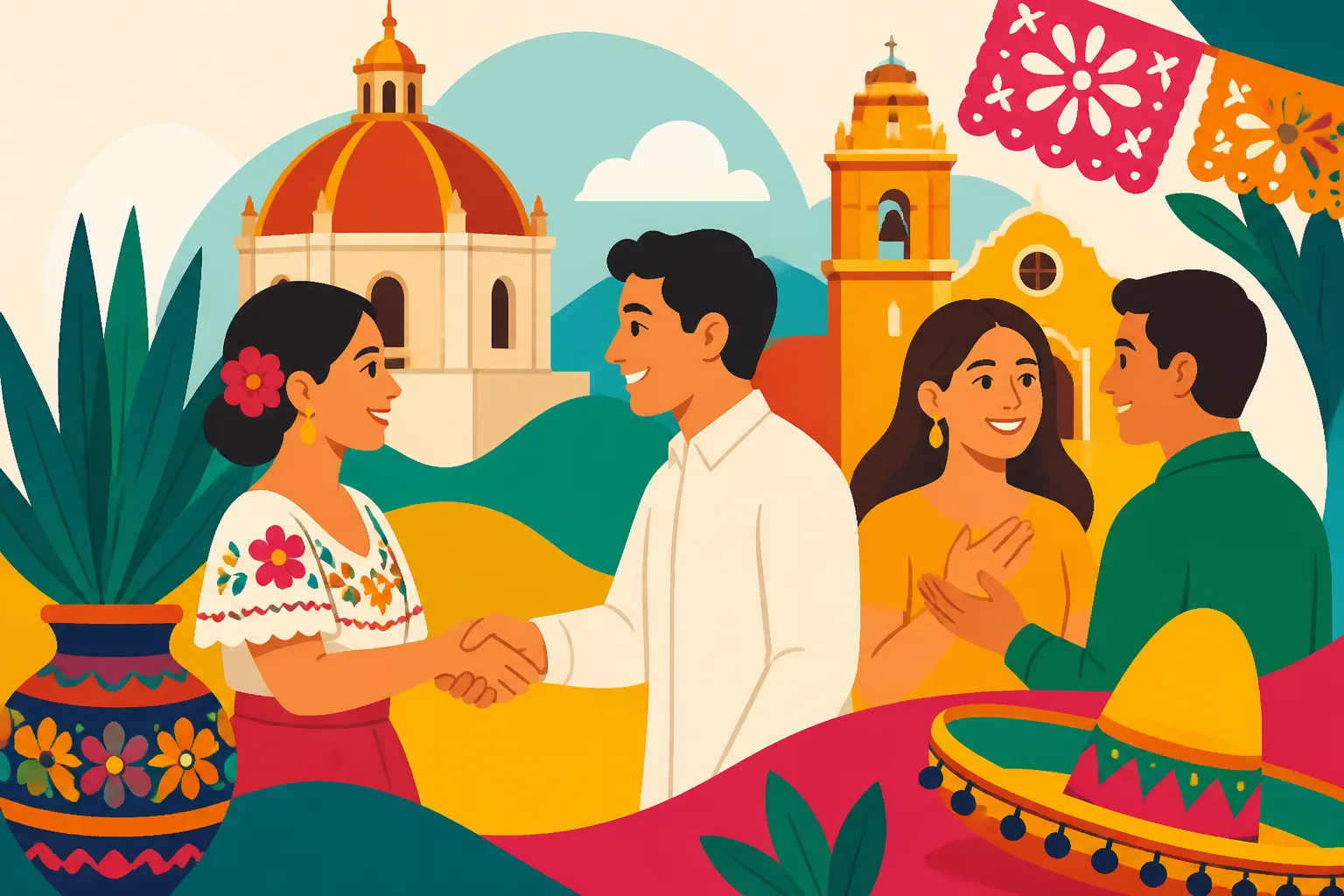
In Mexico, greetings are far more than a passing formality. Passing someone on the street, stepping into an elevator, or walking into a small neighborhood shop requires a acknowledged greeting. A simple “Buenos días” (good morning), “Buenas tardes” (good afternoon), or “Buenas noches” (good evening) establishes immediate goodwill. Walking into a room and remaining silent can easily be perceived as cold, distant, or even rude by locals who value interpersonal connection above all else.
When meeting someone for the first time in a professional or semi-formal context, a firm yet warm handshake is standard for both men and women. Unlike the ultra-brief, assertive business handshakes common in North America or Northern Europe, handshakes in Mexico are often slightly softer and held a moment longer. It is common for the handshake to be accompanied by a warm smile, eye contact, and a polite introductory phrase like “Mucho gusto” (nice to meet you).
For deeper reading on building initial rapport, explore our article on Mexican Social Etiquette for Visitors: Greetings and Warmth. Taking the time to pause and acknowledge people around you transforms daily interactions from transactional exchanges into moments of genuine human connection.
The Beso on the Cheek and Physical Proximity
As conversations become more personal or when friends meet, physical touch plays a central role. The single cheek kiss—strictly an air kiss where cheeks lightly touch while making a subtle kissing sound—is the standard greeting between women, as well as between men and women who know each other. Men typically exchange a handshake, a light pat on the shoulder, or an abrazo (a brief hug with a couple of back pats) if they are close friends or family members.
Personal space in Mexico is noticeably closer than in Anglo-Saxon cultures. People stand nearer to one another during conversation, and light touches on the forearm or shoulder during dialogue are signals of warmth and engagement rather than invasive behavior. Stepping backward when someone moves closer to you can be interpreted as discomfort or aloofness.
When entering a social gathering, such as a dinner party or a backyard gathering, etiquette dictates that you greet every person individually upon arrival. Floating into a room with a generic wave to the group is generally considered poor form. Taking the time to walk around, shake hands, or exchange cheek kisses with each guest shows respect and appreciation for the gathering.
Formal Titles and Polite Speech
Respect is built directly into the Spanish language through formal titles and honorifics. When speaking to elders, authority figures, or individuals you do not know well, using the formal “usted” instead of the informal “tú” is essential. For more advice on navigating these linguistic nuances, see our guide on Polite Spanish in Mexico: Usted vs Tú for Visitors.
Honorific titles are widely used in daily life. Addressing older adults or respected community members as Don (for men) or Doña (for women) followed by their first name demonstrates traditional courtesy. In professional contexts, addressing colleagues or service providers by their professional title—such as Ingeniero (engineer), Doctor (doctor), Licenciado (attorney or degree holder), or Maestro (master craftsman or teacher)—is standard practice.
When addressing service professionals, waitstaff, or street vendors, warmth and deference go a long way. Phrases like “Por favor” (please) and “Muchas gracias” (thank you very much) should frame every interaction. Adding a friendly “Joven” (young man/woman) or “Señor/Señora” when getting someone’s attention instantly establishes a respectful dynamic.
Understanding Mexican Time and Daily Rhythms
The Nuances of Ahorita and Flexible Schedules
Time in Mexico is viewed through a relational lens rather than a strictly rigid, transactional one. While schedules, flight departures, and medical appointments operate on fixed clocks, casual social life and home services run on a much more fluid timeline. Grasping this distinction is vital for maintaining peace of mind as an expat or traveler.
Few words capture this temporal flexibility better than ahorita. While a literal dictionary translation suggests “right now,” its real-world meaning ranges anywhere from “in five minutes” to “later today,” “someday,” or even a gentle “no, thank you.” If a technician tells you they will arrive ahorita, it simply means you are on their radar, but not necessarily next in line.
Understanding this approach prevents unnecessary frustration. To dive deeper into how time perception influences daily life, read our overview of Mexican Time and Daily Rhythm for Visitors. Learning to slow down and accept flexible schedules allows you to align with the local tempo rather than constantly fighting against it.
Social Gathering Arrival Expectations
Punctuality rules vary dramatically depending on whether you are attending a formal business meeting or a casual weekend social gathering. For professional obligations, job interviews, or official appointments, arriving on time or a few minutes early is expected and respected.
However, social invitations follow an entirely different set of unwritten rules. If a Mexican friend invites you to a home dinner or birthday party starting at 7:00 PM, arriving precisely at 7:00 PM will likely result in finding your host still in the shower or setting up furniture. Arriving 30 to 60 minutes after the stated time is considered polite, as it gives the hosts a comfortable buffer to finish preparations.
When planning trips across different towns or heading to social events in neighboring cities, booking intercity travel through platforms like Busbud makes managing flexible regional itineraries straightforward. Giving yourself extra time on travel days reduces stress and allows you to enjoy the journey at a relaxed pace.
The Daily Meal Rhythms and Sobremesa Culture
The Mexican daily rhythm revolves heavily around meal times, which are structured differently than in many Western nations. Breakfast (el desayuno) is typically served between 8:00 AM and 10:00 AM and is often a warm, substantial meal. The main meal of the day is la comida, consumed between 2:00 PM and 4:00 PM. This is a multi-course affair where businesses often pause, families gather, and heavy dining takes place.
Because la comida is so generous, dinner (la cena) is typically enjoyed much later in the evening, usually between 8:00 PM and 10:00 PM. La cena is generally lighter, consisting of sweet bread with hot chocolate, a few tacos, or a simple soup. Adjusting your eating schedule to match local habits makes dining out significantly more rewarding.
Perhaps the most cherished aspect of Mexican dining culture is la sobremesa—the unhurried period of conversation spent around the table long after the food has been consumed. Clearing the table quickly or rushing off immediately after finishing your meal is considered poor etiquette. Enjoying coffee, digestifs, and spirited conversation for an hour or two after eating is the true heart of any shared meal.
Dining Etiquette, Tipping, and Table Manners
Saying Buen Provecho and Table Courtesy
Food in Mexico is deeply tied to community, comfort, and culture. A fundamental piece of table etiquette is the phrase “¡Buen provecho!” (or simply “¡Provecho!”), which translates to “enjoy your meal.” It is customary to say this to your dining companions before taking your first bite.
Equally important is extending this courtesy to strangers. As you walk past occupied tables in a restaurant, entering or leaving a dining area, it is polite to softly say “Provecho” to nearby diners. They will invariably respond with a warm “Gracias” or “Igual” (same to you). It is a simple gesture that builds instant community goodwill.
Table manners themselves lean traditional. Keep your hands visible above the table rather than resting in your lap, avoid resting your elbows on the table while actively eating, and wait until everyone at the table has been served before eating your food. For more insights on dining norms, review our guide on Dining Out in Mexico: Restaurant Etiquette and Tipping Guide.
Paying the Bill and Splitting Checks
When dining out in Mexico, waitstaff will almost never bring you the bill (la cuenta) automatically when you finish eating. Doing so would be seen as rushing the guest and violating the spirit of sobremesa. Your server will gladly leave you alone for hours until you explicitly ask for the check by catching their eye and making a writing motion in the air or saying “La cuenta, por favor.”
When it comes to paying, splitting bills down to the cent among large groups is relatively uncommon in traditional venues. Usually, one person settled the bill on a card and others hand them cash, or the group divides the total roughly equally. If you require separate checks (cuentas separadas), it is best to request this from your server before placing your initial order.
If you are hosted by a Mexican friend or business associate who extended the invitation, they will often insist on paying the entire bill. Attempting to aggressively fight over the check can make your host uncomfortable. Offer once to contribute or cover the tip; if they politely decline, accept graciously and offer to host the next outing.
Tipping Norms Across Different Settings
Tipping, known locally as la propina, is an integral part of the service economy in Mexico. While service staff are paid a base wage, gratuities represent a major portion of their livelihood. Understanding when and how much to tip ensures you support service workers appropriately without over- or under-tipping.
To clarify common expectations, here is a breakdown of standard tipping practices across various everyday scenarios:
| Setting / Service | Standard Tipping Expectations | Payment Preferred | Notes |
|---|---|---|---|
| Sit-Down Restaurants | 10% to 15% of the total bill | Cash or Card | 10% is standard; 15%+ for exceptional service. |
| Casual Cafes & Taquerías | 10% or loose change | Cash | Leave small bills or change in the tip jar/table. |
| Bars and Cantinas | Small bills per drink round or 10-15% total | Cash or Card | Tipping per drink ensures prompt service. |
| Grocery Packers (Empacadores) | Small bills or spare coins per bag | Cash Only | Packers are often seniors or youth working for tips only. |
| Gas Station Attendants | Small cash tip per fill-up/windshield wash | Cash Only | Attendants pump gas, check oil, and clean glass. |
| Tour Guides & Drivers | Daily tip amount based on group size | Cash Preferred | For tours booked via platforms like Viator or private hires. |
| Hotel Housekeeping | Daily cash tip placed on the nightstand | Cash Only | Tip daily since housekeeping staff shifts rotate. |
To delve further into tipping dynamics, refer to our practical article on How Much Should You Tip in Mexico? to ensure you are always prepared with small bills.
Indirect Communication and Mexican Politeness
Avoiding Direct Refusals and the Soft No
Mexican culture places a high value on harmony, diplomacy, and preserving interpersonal relationships. Consequently, direct confrontation, harsh criticism, or a blunt “no” are usually avoided in daily conversation. Instead, people use indirect phrases and gentle qualifiers to soften bad news or signal a polite refusal.
If you ask someone for a favor or invite them to an event and they respond with “Tal vez” (maybe), “Yo te aviso” (I’ll let you know), or “A ver si puedo” (let’s see if I can), it is very often a polite, indirect “no.” Pushing for a definitive confirmation after receiving these soft responses can cause unnecessary social awkwardness.
Learning to read between the lines is a critical skill for foreign residents. For a broader look at adapting to local communication patterns, read through Living in Mexico: Cultural and Practical Guide for New Expats. Recognizing that soft responses stem from a desire to maintain warmth rather than deceit helps you navigate conversations smoothly.
The Importance of Small Talk Before Business
In many Anglo-Western corporate cultures, getting straight to the point is prized as efficient and respectful of time. In Mexico, diving straight into transactional business without preliminary personal conversation is seen as cold, aggressive, and abrasive.
Every interaction—whether buying fruit at a local market, negotiating a rental lease, or sitting down for a corporate meeting—should begin with genuine pleasantries. Inquire about the other person’s family, ask how their week is going, or comment pleasantly on the weather before bringing up business matters. Building personal trust (confianza) is an absolute prerequisite to successful business dealings.
Taking five extra minutes to build rapport creates a cooperative environment. People are far more willing to go out of their way to solve problems, offer discounts, or assist you if they feel viewed as an individual rather than a vehicle for a transaction.
Navigating Conflict with Grace and Warmth
When misunderstandings or service failures occur, reacting with visible anger, raised voices, or demanding demands will almost always backfire. Public displays of frustration cause loss of face for both parties, causing service workers or neighbors to shut down or become unresponsive.
The most effective way to resolve conflicts in Mexico is through calm, respectful, and slightly self-deprecating conversation. Frame your issue as a shared problem to be solved together rather than laying direct blame. Using phrases like “Disculpe la molestia” (sorry for the bother) or “Ayúdeme a entender” (help me understand) opens doors that anger firmly shuts.
Maintaining a smile and a gentle tone, even when genuinely dissatisfied, yields vastly superior results. Treating the person opposite you with dignity encourages them to work hard on your behalf to set things right.
Socializing, Invitations, and Hospitality
What Mi Casa Es Su Casa Really Means
Mexican hospitality is legendary for its genuine warmth and generosity. The famous phrase “Mi casa es su casa” (my house is your house) is not merely a polite cliche; it reflects a deep-seated cultural value of making guests feel completely welcome, sheltered, and cared for.
When you enter a Mexican home, your host will likely offer you food, beverages, and the most comfortable seat in the room. Declining offers of food or drink entirely can sometimes be perceived as a slight. Even if you are not hungry, accepting a glass of water, a cup of coffee, or a small bite shows appreciation for your host’s effort.
It is also common for hosts to offer complimenting phrases if you admire an item in their home, sometimes saying “Es tuyo” (it’s yours). While this is an expression of deep generosity rather than a literal transfer of ownership, acknowledging the gesture with a warm smile and a polite “Muchas gracias, eres muy amable” (Thank you, you are very kind) keeps the social harmony intact.
Being a Great Houseguest and Bringing Gifts
If you are fortunate enough to be invited to a Mexican home for a dinner party or a weekend gathering, bringing a thoughtful host gift is essential etiquette. You should never arrive empty-handed. Excellent options include a bottle of good wine, high-quality chocolates, flowers, or dessert pastry from a local bakery (repostería).
If you bring flowers, avoid yellow flowers in some traditional contexts, as they can sometimes carry historical associations with grief or funerals; mixed colorful bouquets are always a safe, joyous choice. If you bring a dessert, mention it to the host so they know whether to serve it alongside their prepared meal.
After the event, sending a brief WhatsApp message the following morning thanking the host for their incredible hospitality (hospitalidad) cements your standing as a thoughtful guest. These small touchpoints of gratitude go a long way in nurturing long-term friendships.
Celebrating Fiestas, Birthdays, and Family Gatherings
Social life in Mexico centers around family and communal celebrations. Birthdays, anniversaries, baptisms, and weddings are lively, multi-generational events where music, food, and dancing take center stage. Children and grandparents alike participate fully in night-long celebrations.
A iconic tradition at birthday parties is the singing of “Las Mañanitas” (the traditional birthday song) followed by la mordida. After the candles are blown out, guests will chant “¡Mordida, mordida!” encouraging the birthday person to take a direct bite out of the cake. Guests often take this opportunity to playfully push the person’s face into the frosting. Participating in these lighthearted traditions with good humor shows you embrace local culture.
When booking accommodations or planning stays in vibrant historic towns during major regional festivals, utilizing Booking.com ensures you secure central lodgings close to town squares where local fiestas take place.
Public Life, Dress Codes, and Street Protocol
Appropriate Dressing for Cities, Churches, and Beach Towns
While Mexico is home to world-class tropical resorts, general public dress standards in inland cities and historic towns lean far more conservative than many tourists anticipate. Understanding the distinction between beachwear and urban attire helps you avoid standing out uncomfortably.
In major cities like Mexico City, Guadalajara, or Querétaro, locals dress neatly and smartly. Wearing flip-flops, athletic tank tops, or swimwear away from the beach or pool is generally viewed as inappropriate. Jeans, tailored trousers, casual dresses, and stylish sneakers or leather shoes are the standard daily uniform for strolling around town.
When visiting religious sites, cathedrals, or small traditional villages, modest attire is required. Knees and shoulders should be covered, and men should remove hats upon entering a church. For detailed guidelines on avoiding common visual and behavioral mistakes, consult our resource on What Should You Not Do in Mexico as a Visitor?.
Public Decorum and Environmental Courtesy
Public life in Mexico is marked by a high level of interpersonal politeness. Loud, obnoxious behavior, excessive public drunkenness, or aggressive foul language on city streets reflect poorly on visitors. While nightlife spots and beach clubs are energetic, public spaces, parks, and public transit call for respectful behavior.
Keeping public spaces clean is another essential courtesy. Littering is heavily frowned upon, especially in historic centers and nature reserves. If trash cans are not immediately available, carry your waste with you until you find a proper disposal bin.
Additionally, noise levels in residential areas require mindfulness. While weekend family parties often feature loud music late into the night—a widely tolerated aspect of neighborhood life—excessive, daily noise from construction, pets, or loud speakers without consideration for neighbors can cause friction.
Interacting with Local Vendors and Service Workers
Street markets (tianguis) and local artisan stalls are central to Mexican retail culture. Interacting with local vendors is a social experience rather than a cold commercial exchange. Always begin your interaction with a warm greeting before asking for prices.
Haggling over prices is nuanced. While light, playful bargaining is acceptable at informal street markets or when purchasing multiple hand-crafted souvenirs, aggressive bargaining over tiny amounts of money is considered disrespectful to local artisans who invest substantial time and labor into their crafts. Bargaining should always remain cheerful and fair.
When exploring regional markets or taking specialized culinary tours organized through platforms like Viator, engaging with vendors with curiosity and respect enriches your cultural understanding while directly supporting local families.
Summary Matrix of Mexican Social Etiquette
Social Scenarios and Quick Courtesy Rules
To help you navigate everyday interactions smoothly, the following reference table summarizes key social scenarios, common cultural expectations, and simple actions to take:
| Social Scenario | Cultural Expectation | Recommended Action | Pitfall to Avoid |
|---|---|---|---|
| Walking into an elevator or small shop | Universal courtesy requires acknowledging everyone present. | Say “Buenos días” or “Buenas tardes” clearly. | Walking in silently without looking at people. |
| Invited to a house party at 8:00 PM | Arriving right on time can catch hosts unprepared. | Arrive around 8:30 PM to 9:00 PM. | Arriving early or exactly on the dot. |
| Passing diners in a restaurant | Wishing others well during their meal shows community warmth. | Say “Provecho” softly as you pass occupied tables. | Ignoring surrounding diners entirely. |
| Asking for the restaurant check | Staff avoid bringing the bill automatically so guests feel unhurried. | Catch your server’s eye and ask “La cuenta, por favor.” | Waiting silently for the bill to magically appear. |
| Receiving a gift or favor | Expressions of gratitude are vital to relationship building. | Say “Muchas gracias, eres muy amable” warmly. | Accepting items transactionally without warmth. |
| Invited to a Sunday family lunch | Meals are lengthy, multi-hour social connections. | Clear your schedule for the entire afternoon; enjoy sobremesa. | Checking your watch or rushing off immediately after eating. |
Key Phrases for Daily Social Smoothness
Mastering a handful of courteous Spanish phrases goes a long way toward building bridges with locals. Keep these versatile expressions in your daily vocabulary:
- Con permiso: Used when stepping past someone in a tight space, squeezing through a crowd, or leaving a dining table briefly.
- Disculpe / Perdon: Used to politely get someone’s attention or apologize for a minor physical bump.
- Gracias, igualmente: A classic response when someone wishes you a good day, a safe trip, or a nice meal (“Thank you, same to you”).
- Que le vaya bien: A warm farewell used when departing from a shopkeeper, taxi driver, or acquaintance (“May things go well for you”).
- No se preocupe: A comforting phrase meaning “Don’t worry,” useful for smoothing over small mistakes or delay hiccups.
Integrating these expressions into daily life signals that you respect local customs and are eager to engage positively. For further guidance on avoiding cultural missteps, read Mexican Etiquette and Customs: Do’s and Don’ts for New Expats.
Cultural Sensitivities, Traditions, and Sacred Spaces
Respecting Religious Customs and Indigenous Traditions
Mexico is a country with deep spiritual roots, blending Roman Catholicism with centuries-old Indigenous beliefs and traditions. Patron saint festivals, religious processions, and local church customs are vibrant parts of community identity across every state.
When observing or photographing religious events, processions, or Indigenous ceremonies, discretion is required. Always ask for permission before taking close-up photos of individuals, particularly children, elders, or religious altars. In certain Indigenous communities, taking photographs inside sacred chapels or during ritual ceremonies is strictly forbidden and can cause severe offense.
Approaching local customs with humility and quiet observation ensures you are welcomed as an appreciative guest. Participating respectfully—whether by standing quietly during a procession or dressing modestly inside sacred buildings—demonstrates genuine honor for local heritage.
Taboo Topics and Sensitive Conversational Pitfalls
When engaging in casual conversations with local acquaintances, keeping topics light, positive, and culturally sensitive helps maintain harmony. Mexicans are generally immensely proud of their nation’s rich history, diverse cuisine, natural beauty, and vibrant art scene.
However, certain topics should be approached with extreme nuance or avoided altogether during early conversations. Debating cartel violence, street safety issues, local political figures, or making sweeping negative generalizations about Mexico can make locals defensive. While locals may freely discuss domestic political challenges among themselves, hearing harsh critiques from foreign visitors can feel patronizing.
Additionally, avoid making direct comparisons that position your home country as superior. Approaching every discussion with curiosity rather than judgment fosters genuine trust and lasting social bonds.
Embracing Local Traditions with Openness
Ultimately, thriving in Mexico as a traveler or expat requires replacing rigid expectations with social openness and patience. Cultural differences are not hurdles to overcome, but invitations to experience life through a warmer, more relational lens.
Whether learning to navigate flexible schedules, savoring long afternoons around the dining table during sobremesa, or exchanging daily greetings with neighborhood vendors, adopting local customs enriches your daily journey immensely.
For broader context on preparing for life abroad, browse our core foundational guide on Common Cultural Surprises for First-Time Visitors to Mexico. By stepping out with empathy, humor, and respect, you will quickly discover that Mexico’s greatest treasure is the incredible warmth of its people.
Disclaimer
This article is for general informational purposes only and does not constitute professional advice. Laws, prices and regulations vary by location and change over time. Consult a qualified professional for guidance on your specific situation.