Credit Card Travel Cover for Mexico Trips: Where the 90-Day Limits Bite
You land in Mexico City for a slow winter, then stretch it into Oaxaca, the Yucatán and a month on the Pacific coast. Around week thirteen you get food poisoning bad enough for a private hospital, and you find out your credit card’s travel cover ended weeks ago. This guide explains where card protection stops on long Mexico trips and how to stay covered for the full stay.
Disclosure: This post may contain affiliate links. We may earn a commission at no extra cost to you if you make a purchase through these links. Read full disclosure.
How Credit Card Travel Cover Actually Works on a Mexico Trip
When I first moved south, I assumed the premium card in my wallet was my insurance. It carried the right logo and I’d paid a hefty annual fee for it, so I felt protected. I didn’t read the benefits guide until a friend in Mérida spent a night in a private clinic with dengue symptoms. Her card’s cover had expired because her trip had passed the maximum duration. The bill was hers to pay.
Card travel benefits are real and can be useful. They were designed for vacations, though, not long stays. If you understand how they are built, you’ll know exactly when to rely on them and when to buy something else.
The Fine Print Hiding in Your Benefits Guide
Every card with travel protection comes with a benefits guide. It’s usually a dense PDF you can download from the issuer’s website or request by phone. In it you’ll find several conditions that decide whether you’re covered in Mexico:
- Maximum trip duration. Many cards cap each covered trip at a set number of days, often 90 or fewer. When the trip goes past that cap, cover can end entirely. It does not simply shrink.
- Purchase requirement. Cover often switches on only if you paid for the trip, or part of it, with that specific card. Paying for the flight with airline miles from another program, or splitting the fare across cards, can leave you without cover.
- Departure point. Some benefits measure the trip from the day you leave your home country. Others count from the date on the ticket. If you flew down on a one-way fare and booked onward travel inside Mexico later, the clock may have started earlier than you think.
- Secondary versus primary cover. Many card benefits pay only after your other insurance has paid. You file with your main insurer first, then claim the remainder from the card’s benefit administrator.
- Eligible travelers. Spouses, partners and children may or may not be included. The guide defines who counts.
Read these sections with a highlighter before you book. Benefits change, so check the issuer’s current guide rather than relying on what you read years ago.
Medical Coverage Versus Trip Protection
This distinction matters most. A large share of card travel benefits are about the trip itself: cancellation, interruption, delayed or lost baggage, and rental car damage. These help when Aeroméxico cancels your connection or your suitcase misses the flight to Cancún. They don’t pay a hospital in Puerto Vallarta.
Some higher-tier cards add emergency medical and evacuation benefits, but the limits and conditions vary widely. Many cards have no medical cover at all. Others offer only a travel assistance line that helps you find a doctor without paying for the visit. If your card offers “travel assistance,” check whether that means paying for care or just giving you a phone number.
In Mexico this is a practical issue. Private hospitals in tourist areas often expect a deposit or a card guarantee before they admit you. Our guide Direct Billing vs Pay-and-Claim at Mexican Hospitals: What to Expect explains how that works at admission. A benefit that reimburses you weeks later still leaves you covering the upfront cost yourself.
Where the 90-Day Limit Bites in Mexico
Mexico rewards long stays. The tourist permit can allow visitors up to 180 days, which is about double a typical 90-day card limit. The immigration officer at the airport or border decides how many days you actually get, so read Will I Get 180 Days? Understanding Mexico’s Tourist Entry Stamp Policies before you plan around the full allowance. Whatever number you receive, your immigration stay and your card’s insurance window are separate clocks, and they rarely end on the same day.
Slow Travel and the Six-Month Permit
Here is how this tends to play out. A remote worker from Toronto flies into Guadalajara intending to stay a month. The coworking spaces are good, the tacos are better, and she decides to stay. She takes the ADO bus to San Miguel de Allende, then on to Oaxaca for Día de Muertos, and ends up in Puerto Escondido for the dry season. Her permit allows all of it. Her card’s cover, which began when she left Canada, ended quietly somewhere between Oaxaca and the coast.
She didn’t break any rule. She just had a different kind of trip than the card was written for. If you’re planning several cities over a few months, see How to Travel Mexico Slowly Over a Month. Remember that adding a second and third month can push you past a card’s window without any clear moment when it happens.
The longer you stay, the more ordinary health risks add up. These include stomach bugs from a street stand you trusted, a sprained ankle on cobblestones in Guanajuato, mosquito-borne illness in the rainy season on the Yucatán, and a scooter fall in Tulum. Over a long stay, you will very likely see a doctor at some point.
Snowbird Seasons and Repeat Trips
Snowbirds have a different problem. Many spend the whole northern winter in Ajijic, Mazatlán or Puerto Vallarta. A winter season easily lasts longer than 90 days. Some snowbirds try to work around this by flying home for a few days mid-season so the card’s trip clock restarts. Whether that works depends on how the benefits guide defines a trip and when cover starts again. Some guides require the new trip to be paid on the card. Others have annual caps that a second trip doesn’t reset.
There is also the question of home cover. Canadians need to watch provincial health plan rules on time abroad. Americans need to know that Medicare generally does not pay for care in Mexico. Snowbirds in Mexico: Insuring Six Months South Without Dropping Home Cover covers how to protect both. For the full set of options past the three-month mark, read Long Stays Without Residency: Which Policies Still Cover You Past 90 Days.
What Happens on Day 91
Consider a common situation. You’re on day 95 in Playa del Carmen. You wake up with a fever, joint pain and a rash. You take a taxi to a private hospital and the front desk asks for a guarantee before they’ll start tests. You call the number on the back of your card. The administrator asks when your trip began, checks your departure date against the benefit’s duration cap, and tells you that the trip passed the covered period several days ago. Nothing they can do changes that.
You’re now paying out of pocket in a private hospital, possibly for several days if it turns out to be dengue and needs monitoring. It isn’t a disaster, since private care in Mexico costs less than in the US, but it’s an unplanned expense at a bad time. It’s avoidable.
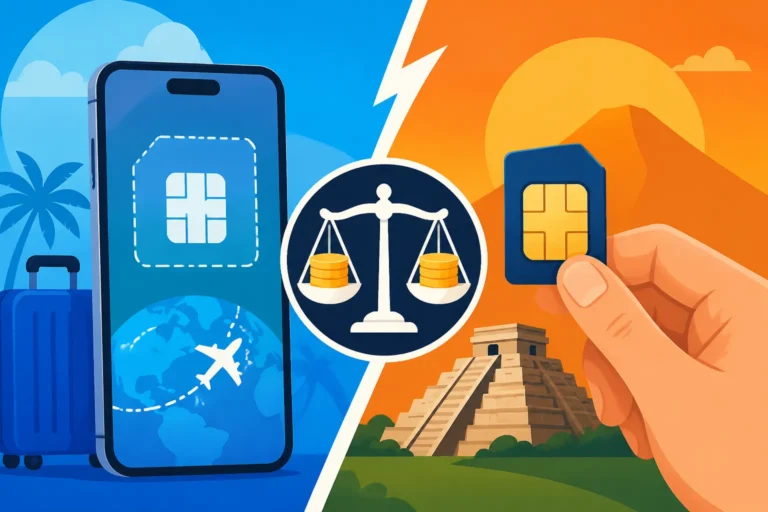
The table below shows how the two kinds of protection compare on a long stay.
| Feature | Typical Credit Card Travel Benefit | SafetyWing Nomad Insurance |
|---|---|---|
| Designed for | Vacations and short trips | Long-term travelers and remote workers |
| Trip length | Capped per trip, often 90 days or fewer | Rolling subscription you can keep renewing |
| Activation | Usually requires paying for the trip with the card | Bought directly, no card purchase link |
| Buying after departure | Not applicable, tied to the original booking | Can be started while you’re already abroad |
| Emergency medical | Absent on many cards, limited on others | Core feature of the policy |
| Primary or secondary | Often secondary to other insurance | Check the policy wording for how claims are paid |
| Trip cancellation and baggage | Often a strong point | Limited, check what’s included |
| Where to check terms | Your card’s benefits guide | The provider’s own policy page |
Neither option does everything. Card benefits are often good for trip disruption, and a dedicated travel medical policy is built for health emergencies over a long stay. Many long-stay travelers in Mexico use both.
Why SafetyWing Fills the Gap for Longer Mexico Stays
After the clinic incident in Mérida, I looked for cover that fit how expats and slow travelers actually move around Mexico. That means open-ended plans, one-way flights and stays that get extended. SafetyWing kept coming up in the nomad WhatsApp groups and Facebook communities I belonged to, and the reason is its structure.
Rolling Cover That Matches an Open-Ended Trip
SafetyWing Nomad Insurance works as a subscription. You can set an end date or let it renew automatically, so cover continues as long as your trip does. You don’t need a return ticket to qualify, and you can start a policy after you’ve already left home. That second point matters for anyone already in Mexico whose card cover has run out. You can arrange cover from your rented apartment in Roma Norte without flying anywhere.
For a slow traveler, cover that renews automatically removes the problem of a hidden end date. If you decide to stay longer in Oaxaca, the policy continues. If you leave early, you cancel the renewal. The provider’s page explains how billing and cancellation work, so check there for current details.
Paying for Care at Mexican Hospitals
A medical policy helps most in the practical moments: the front desk asking for a guarantee, the specialist referral, the follow-up visit. SafetyWing’s model includes a deductible and claim limits. Typically you pay the deductible portion, and the policy handles eligible costs above it, sometimes by reimbursing you and sometimes through arrangements with the facility. Keep every receipt, the medical report, and the factura if the hospital issues one. Claims are much easier with complete documents.
For serious emergencies, especially in rural areas far from a major trauma center, evacuation cover is important. Medical Evacuation From Mexico to the US: When It’s Needed and What It Costs explains when an airlift is needed and why it’s one of the most expensive situations you can face without cover.
The Limits You Should Know Before Buying
I’d be doing you a disservice if I described SafetyWing as covering everything. It doesn’t. Like any travel medical policy, it has exclusions, conditions on pre-existing illnesses, age-related terms and rules about activities. Scuba diving in Cozumel’s cenotes and the reefs off Isla Mujeres can fall under depth or certification conditions; see Diving and Cenote Swimming: Depth Limits and Chamber Costs in Your Policy. Renting a scooter in Tulum or an ATV near Puerto Vallarta raises licensing and helmet questions, which ATV, Scooter, and Motorcycle Rentals: Why Travel Policies Often Won’t Pay goes through in detail.
Before you subscribe, read What SafetyWing Does Not Cover in Mexico: The Exclusion List, Line by Line. It’s better to find a gap now than at a hospital desk. Retirees in particular should check the age terms on the provider’s page, because nomad-style policies aren’t always suitable for older travelers.
Step-by-Step: Building Cover That Lasts Your Whole Mexico Trip
Here’s the process I recommend to anyone who emails me before a long stay in Mexico. It takes about an evening, and you’ll be glad you did it if something goes wrong.
- Download your card’s current benefits guide. Find the sections on trip duration, medical cover, evacuation and eligible travelers. Write down the maximum covered trip length.
- Mark the date your card cover ends. Count from the date the benefit starts its clock, usually your departure from home, and put the cutoff in your phone calendar with a reminder a week earlier.
- Compare that date with your realistic stay. Use the length you think you’ll actually stay, not the one you’ve booked. If there’s any chance the trip runs past the card’s window, plan for it now.
- Decide what each product will handle. Keep the card for what it does well, such as cancellations, delays, baggage and rental car damage if your guide includes it. Rely on a dedicated medical policy for health emergencies.
- Get a quote from SafetyWing. Enter your age, home country and expected travel dates on the provider’s site. Check the current price, deductible and claim limits there. You can choose an end date or let it renew.
- Read the exclusions against your plans. If you’ll be diving, surfing in Puerto Escondido, hiking volcanoes or riding scooters, confirm how the policy treats those activities before you do them.
- Store your documents offline. Save the policy certificate, the emergency number and your passport scan on your phone and in a cloud folder. Mexico’s rural coverage can be patchy, so keep offline copies.
- Learn where the good hospitals are. Before you arrive in a new city, note the nearest reputable private hospital and how you’d get there by Uber, DiDi or taxi.
- Review the plan whenever your trip changes. Extending in Oaxaca, adding a Baja road trip or switching to residency all affect what cover you need.
When a Card Alone Is Enough
To be fair, plenty of trips fit comfortably inside a card’s window. A week at an all-inclusive in Los Cabos, ten days exploring Mexico City’s museums or a long weekend in Tulum can all stay within the duration cap. If your card includes solid emergency medical cover, it may be enough. See Do You Need Travel Insurance to Visit Mexico? for help deciding.
Even on short trips, check whether the card actually includes medical cover, because many don’t. If yours offers only cancellation and baggage benefits, a short-term medical policy is still worth having.
When You Should Add Dedicated Cover
Add a dedicated medical policy if any of these apply: your stay may run past the card’s window, you flew down one way, your card has little or no medical benefit, you plan to dive, surf or ride, or you’ll spend time far from major cities in places like Chiapas or the Sierra Gorda. For the wider picture, including how travel cover fits alongside home insurance, see Travel Insurance for Trips to Mexico.
My own setup is simple. My card covers flights and bookings. SafetyWing covers my health for as long as I’m in Mexico. I check both whenever my plans change. Knowing that my medical cover won’t lapse partway through the season lets me relax and stay longer.
If your Mexico plans might run past the card’s window, get a SafetyWing quote before you go, or today if you’re already here. Then you can enjoy the trip knowing a hospital visit won’t land entirely on you.
Disclaimer
This article is for general informational purposes only and does not constitute professional advice. Laws, prices and regulations vary by location and change over time. Consult a qualified professional for guidance on your specific situation.