Direct Billing vs Pay-and-Claim at Mexican Hospitals: What to Expect
One of the biggest anxieties for expats in Mexico, beyond navigating the traffic or the maze of immigration paperwork, is undoubtedly facing a medical emergency. You're in a foreign country, perhaps your Spanish isn't perfect, and suddenly you’re hit with a health crisis. Will your insurance work? Will you be stuck paying exorbitant sums upfront? This guide is here to demystify the two primary ways you'll interact with Mexican hospitals regarding payment: direct billing and the more common, yet often frustrating, pay-and-claim method, ensuring you know what to expect and how a solid plan like SafetyWing can be your lifeline.
Disclosure: This post may contain affiliate links. We may earn a commission at no extra cost to you if you make a purchase through these links. Read full disclosure.
Understanding the Mexican Healthcare Landscape and Your Options
First, let’s set the scene. Mexico offers a blend of public and private healthcare. While the public system (IMSS) is available to residents, most expats opt for the private sector for its higher standards, English-speaking staff, and shorter wait times. When you’re dealing with private hospitals and clinics, the question of how to pay is paramount. It’s not always as straightforward as it might be back home. For a broader look, check out our guide on Healthcare in Mexico: Complete Guide for Expats (Public vs Private).
The main challenge for foreigners often boils down to how their international health insurance interacts with local providers. You might assume your policy will always cover you directly, but the reality can be quite different. Many smaller clinics or even some private hospitals, especially in less touristy areas, might not have direct billing agreements with international insurers. This is where knowing the difference between direct billing and pay-and-claim becomes critical. Having comprehensive coverage, like that offered by SafetyWing, means you’re prepared, no matter which payment method a facility uses.
Public vs Private Hospitals and Billing Differences
In Mexico, public hospitals are primarily for those enrolled in the IMSS system. While they provide essential care, they can be crowded, and language barriers are more prevalent. Billing is often handled internally through the IMSS system, meaning expats without IMSS would be charged out-of-pocket, typically at much lower rates than private hospitals, but with varying quality of care and wait times.
Private hospitals, on the other hand, cater to a clientele that values efficiency, modern facilities, and often, bilingual staff. These are the institutions most expats use, and where the direct billing versus pay-and-claim discussion becomes crucial. For example, large hospital networks like Hospital Ángeles or Star Médica often have departments specifically dedicated to international patients and are more likely to engage in direct billing. However, even within these networks, the specific situation of your treatment and your insurance policy can dictate the payment method. Ensuring your private health insurance plan, such as SafetyWing, is recognized and understood by the hospital is your first step. It's wise to review our detailed guide on Navigating Hospitals and Clinics in Mexico: An Expat’s Guide to Medical Care before an emergency strikes.
Direct Billing: The Smooth Path to Hospital Care
Imagine this: you've had an accident or fallen ill, you arrive at a private hospital, and after initial assessment, you don't have to worry about paying a massive sum upfront. That's the dream of direct billing, and thankfully, it's becoming more common in Mexico, especially with major international insurance providers.
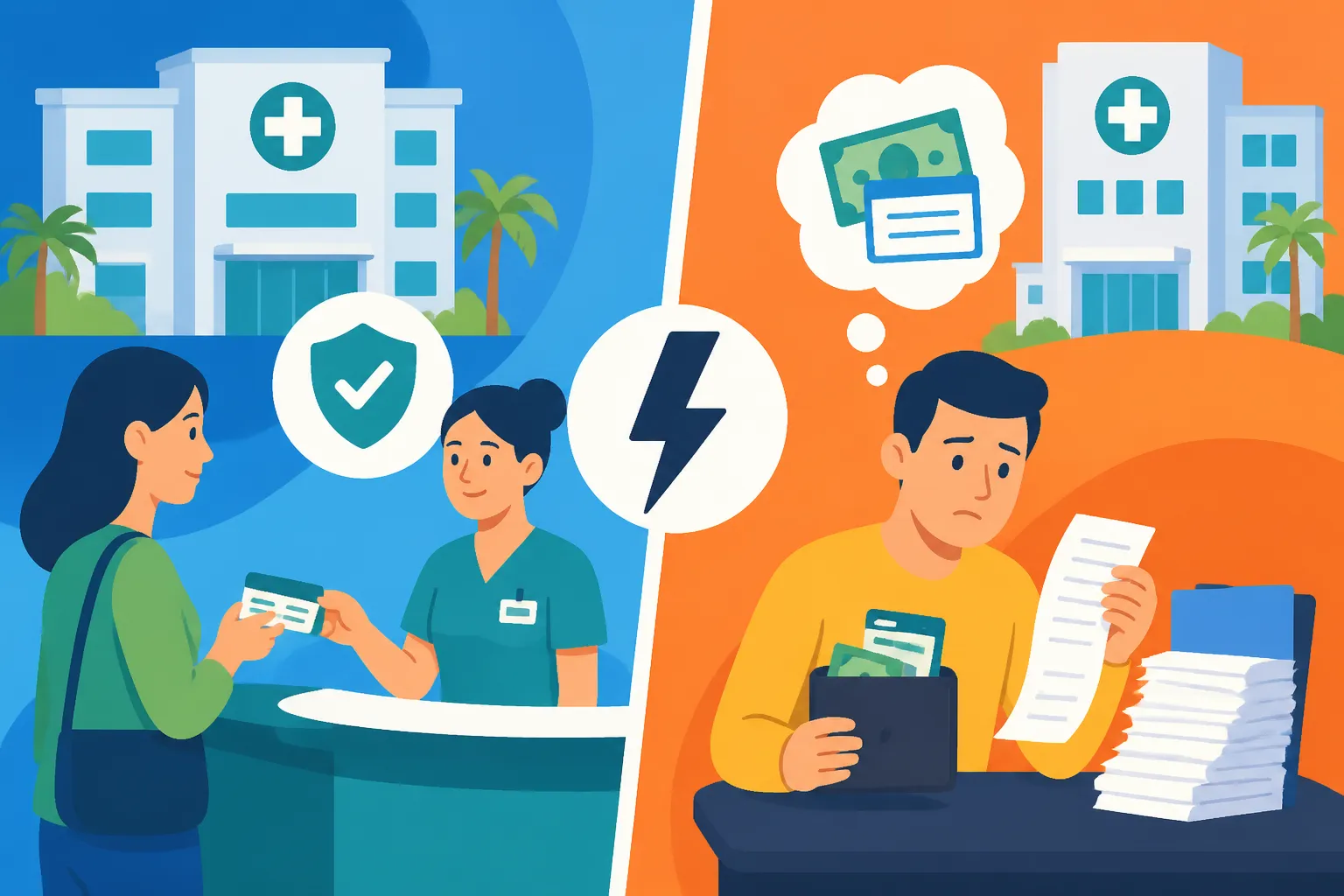
Direct billing, or pago directo, means your insurance company pays the hospital or clinic directly for your covered medical expenses. You, the patient, only pay for deductibles, co-pays, or any services not covered by your policy. It’s the least stressful option when you’re unwell and the one we all hope for.
How it Works: The Ideal Scenario
When you're admitted to a hospital or need significant outpatient treatment, your healthcare provider will contact your insurance company. This is usually handled by a dedicated "international patient services" department if the hospital has one, or by the administrative staff. They will verify your coverage, the nature of your illness or injury, and the estimated costs. Once your insurance company, like SafetyWing, approves the procedure or hospital stay, they will send a "guarantee of payment" (carta de garantía) directly to the hospital. This document assures the hospital that the insurer will cover the agreed-upon costs, allowing you to focus on your recovery without the immediate burden of payment.
For this to work smoothly, it’s essential to have all your insurance details readily available, including your policy number, a direct contact number for your insurer's international claims department, and ideally, an app or online portal where you can access your policy information quickly. A provider like SafetyWing excels here, as their platform is designed with global nomads in mind, making it easier to connect hospitals with the necessary information for direct billing.
When Direct Billing Isn't an Option
Unfortunately, direct billing isn't always available. There are several reasons this might happen:
- Smaller Clinics or Remote Hospitals: Many smaller clinics, doctors’ offices, or hospitals in less-developed areas may not have established relationships with international insurance companies. They might not have the administrative infrastructure to process direct billing, or they simply prefer to deal with local payments.
- Emergency Situations: In severe emergencies where immediate treatment is paramount, hospitals prioritize saving your life over administrative procedures. They might stabilize you first and then discuss payment. In such cases, you or a loved one might be required to pay upfront, with the expectation of seeking reimbursement later. This is a common scenario in many countries, not just Mexico.
- Specific Policy Exclusions or Limits: Your policy might have specific exclusions, waiting periods, or daily limits that prevent direct billing for certain treatments. Always be intimately familiar with your policy's terms and conditions.
- Lack of Prior Authorization: Some procedures or hospital stays require prior authorization from your insurer. If this wasn’t obtained (which can happen in an emergency), direct billing might be denied, leading to a pay-and-claim situation.
Even if direct billing isn't immediately possible, having a robust plan from a company like SafetyWing means you're well-positioned to manage the pay-and-claim process, which we’ll discuss next. For insights into what specific plans cover, our article on Choosing Private Health Insurance: Local Mexican Plans vs International Coverage provides excellent detail.
Benefits and Potential Pitfalls
The benefits of direct billing are clear: reduced financial stress, no large upfront payments, and a smoother patient experience. You can concentrate on getting better. However, there are potential pitfalls:
- Waiting for Approval: Even in a direct billing scenario, there might be a waiting period while the hospital and insurer communicate. This can feel agonizing if you’re in pain or anxious.
- Limited Choice: You might be guided towards hospitals or clinics that have direct billing agreements with your insurer, potentially limiting your choice of facility or specialist.
- Unexpected Out-of-Pocket: Even with direct billing, you’ll still be responsible for your deductible, co-insurance, and any services your policy explicitly doesn't cover. Always clarify these amounts upfront if possible.
Pay-and-Claim: The Reality of Out-of-Pocket Expenses
The pay-and-claim method, or reembolso, is often the default, especially for routine doctor visits, minor procedures, or when direct billing simply isn't an option. This means you pay for the medical services out-of-pocket and then submit a claim to your insurance company for reimbursement.
While it might sound daunting, especially for larger expenses, it’s a standard procedure. The key is to be meticulously organized and proactive. Many expats initially struggle with this, but it becomes second nature once you understand the process. Your SafetyWing insurance, for instance, provides a clear and straightforward process for submitting claims, designed to ease this burden.
The Standard Process: What to Document
To ensure a smooth reimbursement process, documentation is everything. From the moment you step into a clinic or hospital, consider yourself an investigative journalist of your own medical expenses.
- Detailed Invoices (Facturas): This is the most critical document. You must get a factura (electronic invoice) for all services, consultations, medications, and lab tests. This isn't just a simple receipt; it’s an official tax document. Make sure it includes:
- Your full name and address (as it appears on your insurance policy).
- Your RFC (if you have one, though often not strictly necessary for medical claims unless it's a tax deduction for you).
- The clinic/doctor’s name, address, and RFC.
- A detailed breakdown of services rendered, including dates and costs.
- Proof of payment (stamped "Pagado" or a clear indication).
- Crucially, ensure the "Uso de CFDI" (use of the electronic invoice) is 'G01 Adquisición de mercancías' or 'P01 Por definir', or better yet, if your insurance asks for it, 'G03 Gastos en general' or 'S01 Sin efectos fiscales'. If possible, request 'D01 Honorarios Médicos, Dentales y Gastos Hospitalarios' (Medical, Dental and Hospital Fees). Many clinics will ask for your RFC to issue a factura; if you don't have one, they can typically issue it to "público en general" (general public) or with your passport number. Always confirm with your insurer what details they require on the factura.
- Medical Reports and Prescriptions: Obtain a written medical report from the doctor detailing your diagnosis, treatment, and prognosis. Keep all prescriptions for medications. These documents validate the medical necessity of the expenses.
- Test Results: Keep copies of any lab results, X-rays, or other diagnostic reports.
- Payment Receipts: While the factura is primary, always keep the simple receipts as well. If you pay by credit card, keep the transaction slip.
Once you have all your documents, you'll typically submit them through your insurer’s online portal or via email. Companies like SafetyWing are known for their user-friendly online claims process, which simplifies what can otherwise be a tedious task.
Managing Costs: Upfront Payments and Negotiations
Facing a significant medical bill upfront can be alarming. Here’s how to navigate it:
- Credit Card is King: For larger expenses, using a credit card is usually the easiest way to pay. It also provides an automatic record of the transaction. Make sure you inform your bank you're traveling or living abroad to avoid holds.
- Cash Discounts: For smaller payments (e.g., a doctor’s consultation at a consultorio within a farmacia), cash might sometimes get you a small discount, but always ensure you still get a proper factura if you intend to claim reimbursement. Many doctors might offer a lower cash price but then give you only a simple receipt (nota de venta), which won't be accepted by your insurer. Be firm and politely request a factura.
- Negotiation (Rare for Services, Possible for Cash): While negotiating medical service prices directly with hospitals is rare, if you are paying entirely in cash for smaller services and explicitly not seeking a factura, you might find a slightly reduced rate. However, for anything substantial you plan to claim, never forgo the factura.
- Emergency Funds: It’s wise for any expat to maintain an accessible emergency fund specifically for unexpected medical expenses or deductibles. Our guide on Healthcare Costs in Mexico: Doctor Visits, Hospital Stays, and Surgery Expenses offers more budgeting insights.
Tips for a Successful Reimbursement Claim
- Submit Promptly: Don't delay. Most insurance companies have a time limit (e.g., 90 days, 180 days) from the date of service to submit a claim.
- Keep Copies: Always keep digital and physical copies of everything you submit, along with a record of when and how you submitted it.
- Communicate Clearly: If there are any questions from your insurer, respond promptly and provide any additional information requested. This is where Overcoming Language Barriers at the Doctor: Tips for Expats becomes very important during the initial visit to ensure proper documentation.
- Understand Your Deductible and Co-Insurance: Don't be surprised if the reimbursement isn't 100% of your paid amount. Your deductible (the amount you pay before insurance kicks in) and co-insurance (a percentage you share in the costs) will apply. Understanding these terms from your policy, like with SafetyWing, will manage your expectations.
Choosing the Right Insurance for Your Needs
This is where the rubber meets the road. Your choice of health insurance is paramount to minimizing stress and financial burden when seeking medical care in Mexico. It’s not just about having any insurance; it's about having the right insurance that understands the expat experience and the nuances of the Mexican healthcare system. You can also explore options for Health Insurance in Mexico: How Expats Can Get Coverage (2027).
What to Look for in an Expat Health Insurance Plan
When evaluating health insurance, especially plans designed for expats and digital nomads like SafetyWing, consider these key features:
- Global Coverage, Local Understanding: Does the plan cover you not just in Mexico, but also if you travel back home or to other countries? Does it have a good understanding of local procedures and requirements? SafetyWing is designed for global citizens, offering worldwide coverage, with optional coverage in your home country.
- Direct Billing Network: Inquire about their direct billing network in Mexico. Which major hospitals in your chosen city (or cities you travel to) have agreements with the insurer? A strong network means less hassle for you.
- Clear Claims Process: How easy is it to submit a claim? Is there an online portal, a mobile app, or a dedicated team for expat claims? SafetyWing excels with its straightforward digital claims process.
- Customer Service & Language Support: Can you get assistance in English (or your preferred language) when you need it most? 24/7 support is a huge plus, especially for emergencies.
- Emergency Evacuation: This is critical. If you have a severe medical emergency that requires transport to a higher-level facility or even back to your home country, will your insurance cover it? SafetyWing includes robust emergency medical evacuation benefits.
- Reputation and Reliability: Read reviews and ask other expats about their experiences with different insurers. A company’s reputation for paying claims fairly and promptly is invaluable.
- Coverage for Pre-Existing Conditions: If you have pre-existing conditions, understand how they are covered, if at all. Many policies have waiting periods or exclusions. For those with significant medical needs, looking into Managing Chronic Illness in Mexico: Access to Medication and Specialists can be helpful.
Local vs. International Plans
You have two main categories of private insurance:
- Local Mexican Health Insurance: Companies like GNP Seguros or AXA Seguros offer plans specifically for residents in Mexico. These often have strong direct billing networks with local hospitals and can be more affordable for basic coverage. However, they typically only cover you within Mexico.
- International Health Insurance: Providers like SafetyWing offer plans designed for individuals living abroad long-term. They typically provide worldwide coverage, are more accustomed to dealing with foreign claims, and often have more comprehensive benefits, including emergency evacuation. While potentially pricier, the peace of mind and flexibility they offer are often worth it. For a deeper dive, read our article Will Mexican Hospitals Accept International Health Insurance?.
How to Prepare for Medical Expenses in Mexico
Beyond choosing your insurance, here are some practical tips for financial preparedness:
- Understand Your Policy Inside Out: Read the fine print. Know your deductible, co-pays, annual limits, exclusions, and what requires prior authorization. Don't wait until an emergency to do this.
- Keep Your Insurance Information Handy: Store policy numbers, emergency contact numbers for your insurer, and copies of your insurance card (digital and physical) on your phone and in your wallet. If you have SafetyWing, keep their contact details prominently displayed.
- Establish an Emergency Fund: Even with excellent insurance, you’ll likely need to cover deductibles, co-pays, or initial payments for a pay-and-claim scenario. Have readily accessible funds (in pesos or a major currency you can easily exchange) in case of an emergency.
- Know Local Emergency Numbers: While 911 works, it's also good to know the direct numbers for hospitals and ambulances in your area. For more information, check out Medical Emergencies in Mexico: What Expats Should Know and Prepare.
- Build a Relationship with a Local Doctor: Finding a trusted English-speaking family doctor in Mexico who can guide you through the system is invaluable. They can advise you on reputable hospitals and specialists, making the process much smoother.
The reality of healthcare payments in Mexico for expats varies, but with solid preparation and the right insurance, you can navigate it with confidence. Whether it’s a direct billing agreement with a major hospital thanks to your SafetyWing policy or a meticulously documented pay-and-claim reimbursement, knowing the process empowers you.
Direct Billing vs. Pay-and-Claim Comparison
| Feature | Direct Billing | Pay-and-Claim |
|---|---|---|
| Payment Responsibility | Insurer pays hospital directly. Patient pays deductibles/co-pays. | Patient pays hospital/clinic upfront. Then seeks reimbursement. |
| Upfront Cost to Patient | Low (deductibles, co-pays) | High (full cost of service) |
| Administrative Burden | Mostly handled by hospital & insurer | Heavily on the patient (document collection, claim submission) |
| Ideal For | Major surgeries, hospitalizations, planned procedures | Routine doctor visits, minor treatments, emergencies without direct billing |
| Required Documentation | Insurance card, policy number, identity | Detailed facturas, medical reports, prescriptions, test results |
| Pros | Less financial stress, smoother patient experience | More choice of providers, can sometimes get cash discounts |
| Cons | Not always available, might require prior approval | High upfront cost, time-consuming reimbursement process, risk of denied claims |
| Best Insurance Choice | Plans with strong direct billing networks (e.g., SafetyWing) | Plans with clear, efficient claims processes (e.g., SafetyWing) |
Disclaimer
The information provided in this guide is for general informational purposes only and does not constitute medical, legal, or financial advice. While we strive to provide accurate and up-to-date information, healthcare systems, insurance policies, and immigration regulations in Mexico can change frequently. Always consult with a qualified medical professional for health concerns, a licensed insurance broker for specific policy details, and a legal expert for immigration or contractual advice. Your personal situation may vary, and independent verification of all information is recommended.