Will I Get 180 Days? Understanding Mexico’s Tourist Entry Stamp Policies
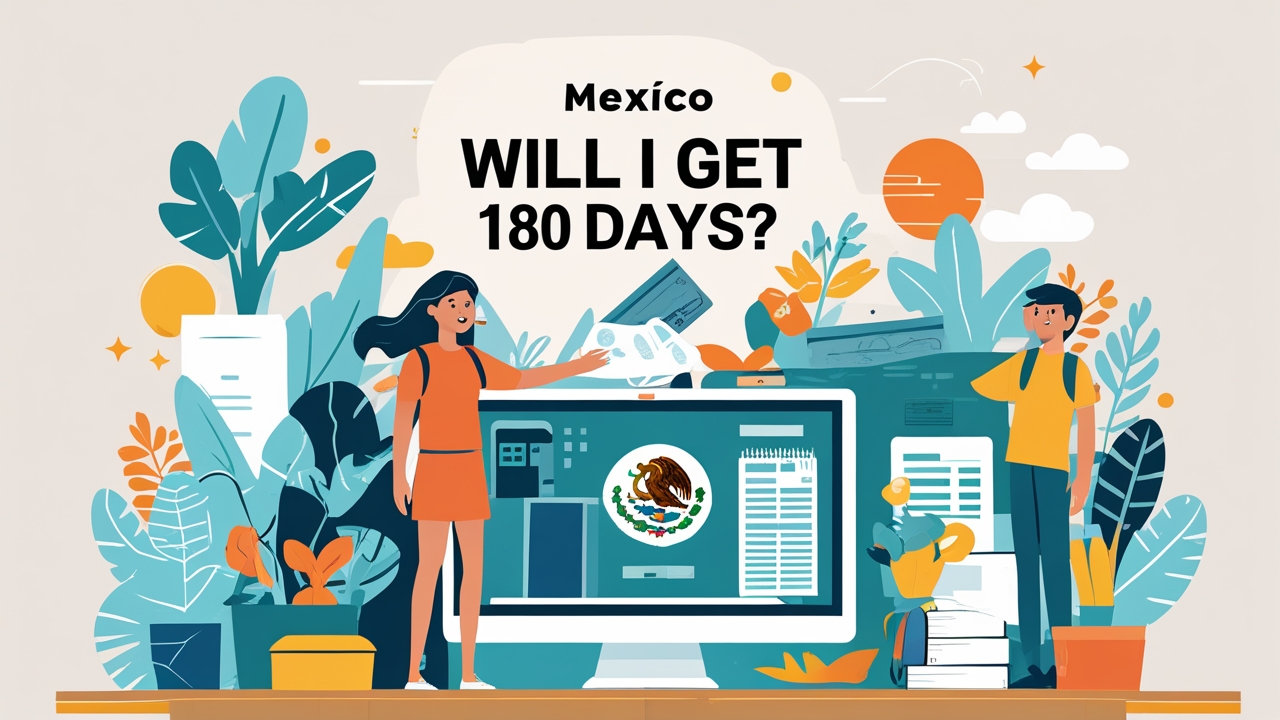
Standing in that immigration line at Mexico City’s Benito Juárez airport, clutching your passport, you are likely playing a high-stakes mental game of "How Many Days Will I Get?" I remember the cold sweat on my palms the first time an agent reached for his pen without asking me a single question. This guide breaks down the reality of the 180-day entry policy and how to navigate the current enforcement landscape.
Disclosure: This post may contain affiliate links. We may earn a commission at no extra cost to you if you make a purchase through these links. Read full disclosure.
The Myth of the Automatic 180 Day Entry
For years, the conventional wisdom among travelers and prospective expats was that everyone entering Mexico as a tourist automatically received 180 days on their FMM (Forma Migratoria Múltiple). While 180 days is the legal maximum for a visitor stay, it has never been a guarantee. In recent years, the Instituto Nacional de Migración (INM) has shifted toward a policy of "discretionary entry," meaning the individual officer at the booth decides exactly how long you can stay based on the evidence you provide.
The transition from the traditional paper FMM to a digital-first system has only increased the scrutiny. In many major airports like Cancun, Los Cabos, and Mexico City, you may not even receive a paper form anymore; instead, the agent simply stamps your passport and writes a number. If that number is "15" and you planned to stay for four months, you are suddenly in a difficult administrative position. Understanding Mexico Tourist Card (FMM) Explained: Entry Requirements for 2026 is the first step in realizing that your entry duration is a negotiation, not a right.
Agents are increasingly looking for "perpetual tourists"—people who live in Mexico on back-to-back tourist entries without ever applying for residency. If your passport is filled with Mexican entry and exit stamps from the last two years, the agent is significantly more likely to give you a shortened stay, perhaps only 7 or 30 days, to encourage you to formalize your status.
Factors That Influence Your Entry Duration
When you approach the immigration desk, the officer is essentially performing a quick risk assessment. They want to know three things: Are you going to work illegally? Do you have the means to support yourself? When are you leaving? If you cannot answer these questions convincingly, you will likely see a truncated number written in your passport.
One of the most critical factors is proof of onward travel. Showing a confirmed flight booking out of Mexico within a specific timeframe is the most effective way to secure a stamp for that duration. If your flight is in 170 days, they are much more likely to give you the full 180. If you arrive on a one-way ticket, you are almost inviting the agent to give you a minimal stay. For those planning a longer transition into expat life, having your documents in order is vital. If you are bringing supporting documents from home, using a service like RushTranslate to ensure your bank statements or letters of intent are clearly understood can prevent unnecessary confusion at the border.
Another major factor is your accommodation plan. An agent will ask where you are staying. Providing a specific address of an Airbnb, a hotel reservation, or the home of a friend is much better than saying, "I’ll find a hostel when I get to town." If you have a long-term rental contract, even better—though be careful, as showing a six-month lease while asking for a tourist entry can sometimes signal to the agent that you are trying to reside here illegally. In these cases, it is often helpful to have a copy of your Health Insurance in Mexico: How Expats Can Get Coverage (2027) through a provider like Cigna Global to show that you are a responsible traveler who won't become a burden on the Mexican public system.
| Traveler Profile | Common Entry Duration | Probability of 180 Days |
|---|---|---|
| First-time visitor with round-trip ticket | 180 Days | Very High |
| Repeat visitor (3+ trips in one year) | 30 – 90 Days | Moderate |
| Entering via land border (San Ysidro/Tecate) | 7 – 30 Days | Low |
| One-way ticket, no booked accommodation | 7 – 15 Days | Very Low |
| Digital Nomad with proof of remote income | 180 Days | High (with proof) |
Strategies to Secure the Full 180 Day Stamp
To maximize your chances of getting the full six months, you need to treat the immigration interview like a professional interaction. This is not the time for casual beach attire or an indifferent attitude. A polite "Buenas tardes" goes a long way. If you’ve been practicing your Pharmacy Spanish: Phrases to Help You Buy Medicine in Mexico, use that same confidence to answer basic questions about your trip in Spanish.
Always have a printed folder of your documents. Even in a digital age, Mexican bureaucracy loves paper. Your folder should include your return flight itinerary, your lodging confirmations, and perhaps your most recent bank statements. If these documents are not in Spanish, having certified versions from RushTranslate can act as a "shield" against an agent who is looking for a reason to deny a long stay.
Be prepared for the "Why are you here?" question. If you are a digital nomad, be honest but specific. Tell them you are here to enjoy the culture while working for your company back home. Mentioning that you have comprehensive international coverage from Cigna Global can further demonstrate that you are a self-sufficient visitor. If the agent seems hesitant, you can politely ask, "Is it possible to have 180 days? I have a lot of travel planned within the country." Sometimes, simply asking politely is enough to get the agent to change their mind.
What to Do If You Receive a Short Stamp
If you look down at your passport and see "15" or "30" and your heart sinks, do not argue with the agent at the booth. Their decision is final at that moment, and causing a scene can lead to your entry being denied entirely. Instead, accept the stamp and move through to baggage claim. You have options, but you must act quickly.
One option is to visit a local INM office within the country to request an extension. However, this is notoriously difficult and often rejected unless you have a legitimate medical or emergency reason. Mexico is moving away from extensions and toward a "leave and re-enter" or "regularize" model. If you were short-changed, you might need to reconsider your long-term plans. This might be the sign you need to look into Mexico Residency 2026: New Rules and Financial Criteria Updates and stop relying on tourist entries altogether.
If you find yourself approaching the end of a short stamp, do not ignore it. Overstaying in Mexico: Consequences and How to Fix Your Status can range from a small fine at the airport to being detained and deported. If you truly want to stay in Mexico, the best path is often to leave before your stamp expires and return, or better yet, apply for a residency visa at a Mexican consulate in your home country. For those already in the country who meet certain criteria, there are sometimes "regularization" programs that allow you to bypass the usual consulate process. You should research Can You Change from a Tourist Visa to Residency Without Leaving Mexico? to see if you qualify for these specific windows of opportunity.
Navigating Land Borders vs. Airports
There is a significant difference between flying into an international airport and walking or driving across the land border from the United States. At land crossings, the 180-day stamp is becoming increasingly rare. Many travelers at the Tijuana or San Ysidro crossings report being given only 7 or 30 days by default, regardless of their plans.
If you are driving, you also have to manage your Temporary Import Permit (TIP) for your vehicle. The duration of your TIP is tied directly to the duration of your entry stamp. If the agent gives you 7 days, your car is only legal in Mexico for 7 days. This creates a massive headache for road trippers. In these scenarios, it is even more vital to have all your paperwork translated and ready. Using RushTranslate for your vehicle registration and insurance documents can help the process move smoother, but it still won't guarantee a longer stay.
Airports remain the best bet for securing 180 days. Major hubs that handle high volumes of international tourists are generally more lenient than small land offices that primarily see local cross-border traffic. If you are a Digital Nomads in Mexico: Visa Options for Remote Workers in 2027 candidate, flying into a major city like Mexico City or Guadalajara is your best strategy for a long initial stay while you figure out your residency application.
The Importance of Checking Your Digital Record
Since Mexico has largely moved away from the paper FMM, your "stamp" is often recorded digitally in the INM system. It is your responsibility to verify how many days were actually entered into the computer. Sometimes the agent writes "180" in your passport but accidentally types "18" into the system. This discrepancy can cause major issues when you try to leave the country.
After you enter, you can often log into the INM portal to download a digital version of your FMM. This document will show the official expiration date of your stay. If you find an error, you must visit an INM office immediately to have it corrected. Bringing your original passport and your printed flight confirmation will be necessary for this correction.
Living as an expat in Mexico is a beautiful experience, but it requires a level of administrative diligence that many are not used to in their home countries. Whether it is keeping your Health Insurance in Mexico: How Expats Can Get Coverage (2027) current with Cigna Global or ensuring your entry stamps are correct, staying "legal" is the key to a stress-free life under the Mexican sun. Treat every interaction with immigration as a formal process, and you’ll find that the "180-day lottery" is much easier to win.
Disclaimer
This guide is provided for informational purposes only and does not constitute legal or immigration advice. Mexico's immigration policies and enforcement practices change frequently and can vary significantly between different ports of entry. Always consult with the official Instituto Nacional de Migración (INM) website or a qualified Mexican immigration attorney before making travel or residency plans. While we strive to keep this information up to date, we cannot guarantee the accuracy of policies at any specific moment.