What to Do If You’re Given Less Than 180 Days on Your Mexico Tourist Permit
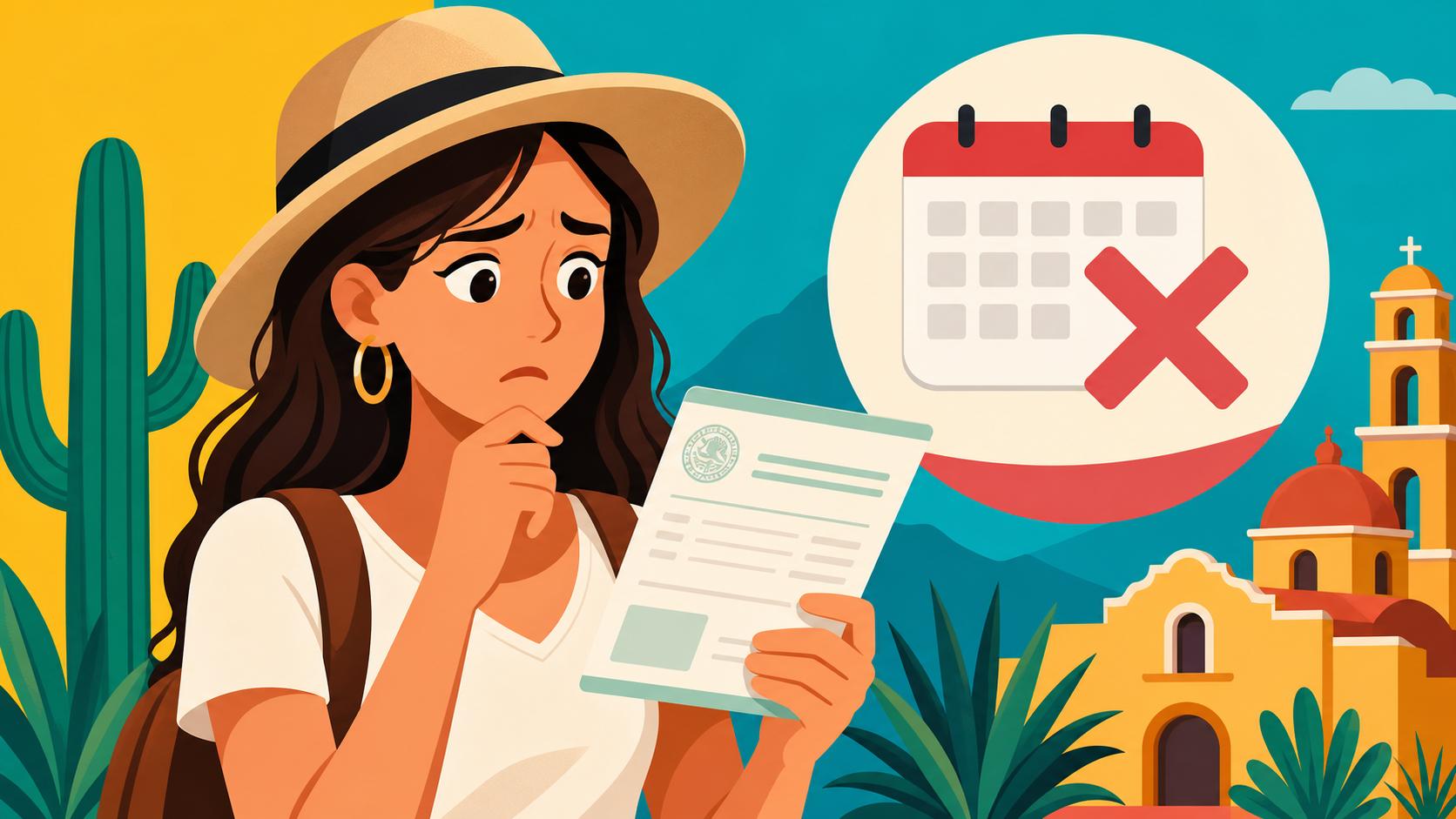
Landing at a Mexican airport and realizing the immigration officer only granted you seven or ten days instead of the standard six months is an incredibly stressful experience that can derail your entire relocation or vacation plan. I remember the cold sweat I felt when I first saw a "30" scribbled on my digital entry record, knowing my lease was signed for much longer. This guide will walk you through exactly why this happens, how to verify your assigned time, and your realistic options for fixing a shortened stay.
Disclosure: This post may contain affiliate links. We may earn a commission at no extra cost to you if you make a purchase through these links. Read full disclosure.
Understanding the Shift in Mexico's Tourist Entry Policy
For decades, many of us took it for granted that entering Mexico as a tourist meant an automatic 180-day stay. You’d show up, get your stamp, and start your life. However, over the last couple of years, the National Institute of Migration (INM) has shifted its approach significantly. The goal is no longer to hand out the maximum duration to everyone; instead, officers are now instructed to grant time based on the traveler’s actual stated plans. This is part of a broader effort to crack down on "perpetual tourists"—people who live in Mexico full-time on tourist permits without ever applying for formal residency.
If you are coming in as a "digital nomad" or a prospective expat, you might find that saying "I'm staying for a while to look around" is the quickest way to get a shortened permit. The officers want to see concrete evidence of your departure. If you cannot provide a return flight or a detailed itinerary, they often default to a shorter window, sometimes as little as 7 to 15 days. This is why Do You Need an Onward Ticket to Enter Mexico on a Tourist Visa? is a question every traveler should take seriously before they even pack their bags.
Another major shift is the transition to a paperless system. In many major airports like Mexico City (AICM) or Cancun (CUN), the old paper FMM form is gone. Your entry is now recorded digitally. This change has led to a lot of confusion because travelers often leave the immigration booth without looking at their passport stamp or checking the digital portal, only to find out weeks later that they are technically in the country illegally. Is Mexico Eliminating the FMM? Understanding Entry Changes in 2026 provides more context on how this digital transition affects your legal status.
Why Officers Are Shortening Stays
It isn't always about "perpetual tourism." Sometimes, the officer might simply be following local directives or reacting to the specific documents you have in hand. If you tell an officer you are staying at a hotel for five days, but you want 180 days "just in case," they are likely to give you seven. They are looking for a logical match between your stated purpose and your documentation. If your answers are vague or if you seem unprepared, you are much more likely to receive a restricted entry.
There is also the element of "discretionary power." Under Mexican law, the immigration officer has the final say on how long you can stay. Even if you have a stack of documents, if the officer feels you are planning to work locally without a permit or that you are abusing the tourist system, they can limit your stay. This is why it is so crucial to understand Will I Get 180 Days? Understanding Mexico's Tourist Entry Stamp Policies before you approach the booth.
The Impact of the Digital Record
Because the system is now largely digital, you no longer have a physical card to look at in your wallet. You must log into the INM portal to download your digital FMM (Forma Migratoria Múltiple). Many expats make the mistake of assuming they have 180 days because the officer didn't say otherwise. By the time they check the portal, they might have already overstayed. If you discover your stay is shorter than expected, it’s vital to have international health insurance like Cigna Global active from day one, as your legal status can impact your ability to access certain services or even maintain your coverage in some scenarios.
How to Verify Your Assigned Days and What to Do Immediately
The moment you clear immigration, you should check your passport stamp. If there is no number written next to the date, or if it’s illegible, you need to access the official INM website as soon as you have internet access. Do not wait until you reach your Airbnb or hotel. If you find a mistake while you are still at the airport, you have a very slim window to try and speak with a supervisor at the immigration office located within the terminal. Once you leave the airport grounds, correcting a simple clerical error becomes a multi-day bureaucratic hurdle.
To check your status, you’ll need to visit the Portal de Servicios del INM. You will enter your passport number, nationality, and birth date to retrieve your digital entry record. This document will clearly state your "Fecha límite de estancia" (limit date of stay). If this date does not match your return flight or your plans, you are now in a race against the clock. Mexico Tourist Card (FMM) Explained: Entry Requirements for 2026 explains the nuances of this digital document in more detail.
Immediate Action at the Airport
If you are still inside the airport and notice a shortened stay on your stamp, stay calm and be extremely polite. Look for the "Instancia de Migración" or the supervisor’s booth. Explain that you have a return flight in 30 days but were only given 7. If you have a printed itinerary, show it. Sometimes, an officer will amend the stamp on the spot. However, if you have already walked through the "Nothing to Declare" customs area and exited into the arrivals hall, you generally cannot go back inside.
If you’ve already left the airport, your next step is visiting a local INM office. Be prepared: this is rarely a "quick fix." You will likely be told that once an entry is recorded in the system, it cannot be changed unless there was a manifest clerical error. In most cases, the INM will tell you that you must leave the country before your permit expires and re-enter, or apply for a different status.
Documenting Your Intentions
To avoid this situation in the future, or to have a better case when visiting the INM office, keep a folder with your return flight, hotel bookings, or a letter from a host. If you are planning to apply for residency, having your documents ready—including those processed by RushTranslate for your initial consulate appointment—can show the officer that you are trying to follow the legal path rather than skirting the rules. Showing that you have international health insurance through a provider like Cigna Global also demonstrates that you are a "solvent" visitor who won't be a burden on the public healthcare system.
| Situation | Common Duration Given | Recommended Action |
|---|---|---|
| No return flight shown | 7 – 15 Days | Book a refundable flight immediately |
| Confirmed hotel for 1 week | 10 – 15 Days | Present proof of further travel plans |
| Digital Nomad (unclear answers) | 30 Days | Apply for Temporary Residency |
| Visiting Family (with proof) | 90 – 180 Days | Keep family contact info ready |
| Returning "Perpetual Tourist" | 7 Days | Consult an immigration lawyer |
Options for Extending Your Stay or Regularizing Your Status
If you find yourself stuck with a 7-day permit and your life is in boxes in a Tulum apartment, you have a few choices. The most common advice you’ll hear in expat Facebook groups is to do a "border run." This involves leaving Mexico (usually to the US, Belize, or Guatemala) and re-entering the same day or a few days later in hopes of getting a longer permit. While this used to work reliably, it is now a risky gamble. Immigration officers can see your entry/exit history, and if they see you just left for two hours, they may deny you entry entirely or give you an even shorter stay.
A much more stable, albeit more expensive, route is to look into Mexico's Regularization Programs: Giving Illegal Stays a Second Chance. These programs are periodically offered to people who have overstayed their permits or who have at least one previous entry to Mexico. If you qualify, you can pay a fine and a fee to transition directly from a tourist to a temporary resident without leaving the country.
Can You Extend a Tourist Permit?
Technically, there is a process called a "prórroga" (extension), but it is almost never granted for general tourism. It is usually reserved for medical emergencies or humanitarian reasons where the traveler is physically unable to leave. If you simply want to stay longer to enjoy the beaches in Puerto Vallarta, the INM will likely deny an extension request. Instead, they will advise you to leave and re-enter or start the residency process.
If you decide that Mexico is your long-term home, the best move is to stop relying on tourist permits. You should look into the Mexico Temporary Resident Visa: Comprehensive Guide for Expats (2026 Update). This requires applying at a Mexican consulate outside of the country, but it grants you one year of legal stay (renewable for three more) and eventually leads to permanent status. This eliminates the "180-day lottery" at the airport.
Transitioning to Residency
To transition to residency, you will need to meet specific financial requirements. The INM wants to see that you have enough monthly income or savings to support yourself. When you prepare your bank statements and income proof for the consulate, remember that all documents not in Spanish must be professionally translated. Services like RushTranslate are essential here because the Mexican government requires high-quality, certified translations for official applications. How to Translate Documents for Your Mexican Visa Application (Certified Translations) can guide you through that specific hurdle.
Having a robust health insurance policy, such as one from Cigna Global, is often a requirement or a highly recommended component of your residency application. It shows that you are prepared for the costs of living abroad and that you won't be relying on Public Healthcare in Mexico: IMSS and IMSS Bienestar Explained for Expats during your initial stay.
Navigating Overstays and Penalties
If your permit is for 15 days and you stay for 16, you are technically an undocumented person in Mexico. While Mexico is generally not known for aggressive interior enforcement against tourists, you are at risk. If you are pulled over at a highway checkpoint or involved in a minor traffic accident, the police will check your immigration status. If you have overstayed, you can be detained and eventually deported, which often comes with a multi-year ban on re-entering the country.
Most people who overstay "by accident" deal with it at the airport when they leave. You will be directed to the INM booth, where you'll have to pay a fine (multa). The fine amount depends on how long you stayed over, but it usually starts around $700 MXN and can go up significantly. You must pay this in cash or via a bank deposit before you are allowed to board your flight.
The Regularization Program (Programa de Regularización Migratoria)
For those who have overstayed and want to stay in Mexico legally, the "Regularización" program is a lifesaver. This program allows you to fix your status if you have an expired FMM and have visited Mexico at least once between 2022 and 2025. It’s a way for the government to bring "shadow" residents into the legal fold. If you go this route, you will receive a temporary residency card.
The process involves visiting the INM office, admitting your overstay, paying the associated fines, and providing your documentation. You will definitely need certified translations of your birth certificate or other ID, so having a contact at RushTranslate ready to go is a smart move. This is a far better option than living in fear of the next checkpoint. You can read more about the specifics in Mexico Residency 2026: New Rules and Financial Criteria Updates.
Living Legally for Peace of Mind
Ultimately, the goal of any expat should be to live with peace of mind. Relying on the 180-day tourist permit is becoming increasingly difficult and stressful. By moving toward residency, you gain a CURP (tax ID), the ability to open a local bank account, and the right to drive a Mexican-plated car. It transforms your experience from that of a "visitor" who is always looking over their shoulder to a "resident" who is part of the community.
If you are currently facing a shortened stay, take a deep breath. Evaluate if you can realistically leave and come back, or if this is the sign you needed to finally start your residency paperwork. Mexico is a beautiful place to call home, but the "tourist loop" is closing. Getting your paperwork in order—from your Cigna Global insurance to your Mexico Temporary Resident Visa: Comprehensive Guide for Expats (2026 Update)—is the only way to ensure your Mexican dream doesn't end abruptly at an immigration booth.
Disclaimer
This article is for informational purposes only and does not constitute legal or immigration advice. Mexican immigration laws and INM procedures are subject to frequent changes. Always consult with a qualified immigration attorney or the nearest Mexican consulate for the most current regulations regarding your specific situation.