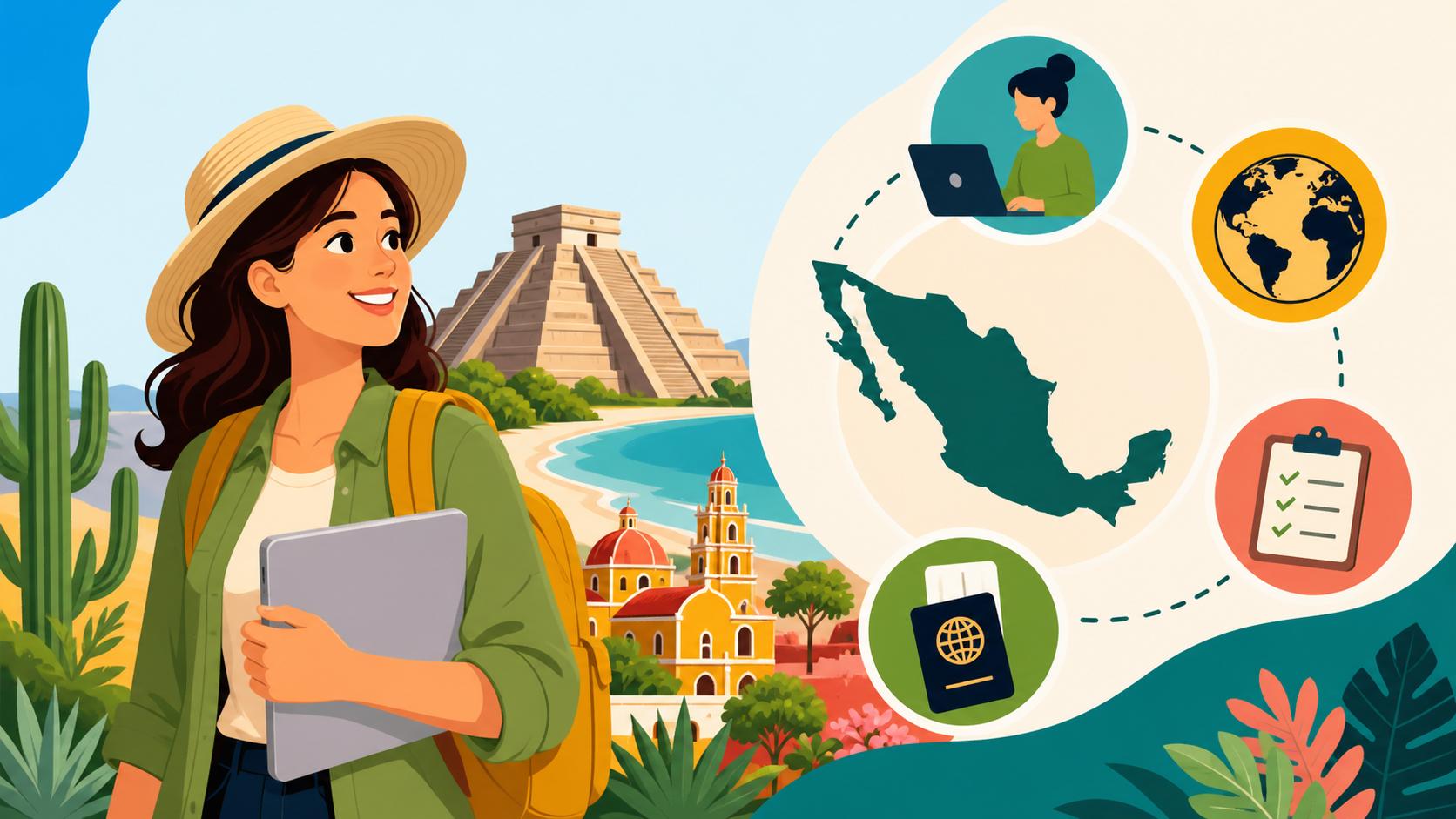
Mexico Working Holiday Visa: Which Countries Qualify and How to Apply
Navigating Mexican immigration can feel like trying to solve a Rubik's cube while wearing oven mitts, especially if you do not fit the typical retiree profile. I remember the sheer anxiety of my first consulate visit, clutching a folder of papers and hoping I had not missed one obscure stamp. This guide solves the mystery of the Working Holiday Visa, detailing exactly who qualifies and the steps to secure it.
Disclosure: This post may contain affiliate links. We may earn a commission at no extra cost to you if you make a purchase through these links. Read full disclosure.
What Exactly is the Mexico Working Holiday Visa
The Working Holiday Visa, often referred to in official circles as a Youth Mobility or International Experience program, is a unique legal pathway designed for young adults who want to experience life in Mexico without being restricted to the 180-day tourist limit. Unlike a standard tourist permit, this visa allows you to legally seek employment to supplement your travel funds. It is a reciprocal agreement, meaning Mexico offers it to citizens of countries that provide similar opportunities to young Mexicans.
Many people confuse this with the Mexico Temporary Resident Visa: Comprehensive Guide for Expats (2026 Update), but they are fundamentally different. While a temporary residency usually requires a high monthly income or significant savings, the Working Holiday Visa is much more accessible for those just starting their careers or taking a gap year. It is effectively a bridge between being a visitor and a resident, giving you a full year to explore the country's diverse landscapes, from the bustling streets of Mexico City to the serene beaches of Oaxaca.
It is important to understand that this visa is not a permanent work permit. It is intended for "incidental" work. This means the primary purpose of your stay should be holidaying, with the job being a secondary means to support that holiday. However, having that legal right to work is a massive relief, especially when you are trying to integrate into the local culture and gain professional experience abroad.
Which Countries Qualify for the Program
Mexico has expanded its list of partner nations, but it remains a selective program. The eligibility is strictly based on your citizenship, not where you are currently living. If you hold a passport from one of the following countries, you are in the running for this specific visa. Each country has slightly different age limits and quotas, so paying attention to the fine print is essential.
Currently, Mexico maintains active Working Holiday agreements with:
- Canada (under the International Experience Canada program)
- Germany
- France
- South Korea
- New Zealand
- Chile
- Colombia
- Peru
For most of these nations, the age bracket is 18 to 30 years old, though some agreements, like the one with Canada, have historically allowed applicants up to age 35. You must also prove that you have never participated in the Mexican Working Holiday program before, as it is generally a once-in-a-lifetime opportunity.
Before you get too deep into the paperwork, you should brush up on Mexico Immigration Terminology 101: FMM, CURP, RFC and Other Essentials to understand how your status will be categorized once you land. Knowing the difference between an FMM and a CURP will save you hours of confusion at government offices later on.
Summary of Eligibility and Age Requirements
| Country | Age Limit | Maximum Stay | Work Authorization |
|---|---|---|---|
| Canada | 18 – 35 | 12 Months | Full |
| Germany | 18 – 30 | 12 Months | Full |
| France | 18 – 30 | 12 Months | Full |
| South Korea | 18 – 30 | 12 Months | Full |
| New Zealand | 18 – 30 | 12 Months | Full |
| Chile | 18 – 30 | 12 Months | Full |
| Colombia | 18 – 30 | 12 Months | Full |
| Peru | 18 – 30 | 12 Months | Full |
The Application Process Step by Step
Applying for this visa is a two-part marathon. The first part happens at a Mexican consulate outside of Mexico—ideally in your home country. You cannot simply show up at the border and ask for a Working Holiday Visa. I learned the hard way that Mexican consulates are strictly by appointment only, and those slots can disappear faster than street tacos on a Friday night.
Your first step is to visit the MiConsulado booking portal. Once you have an appointment, you need to gather your "expediente" (file). This typically includes your valid passport, a visa application form, passport-sized photos with a white background, and proof of financial solvency. The financial requirement for this visa is significantly lower than for regular residency, but you still need to show you have enough to survive for the first few months without a job. Usually, this is proven through three to six months of bank statements.
If your bank statements or other documents are not in Spanish or English, you will likely need a certified translation. In my experience, using a reliable service like RushTranslate is the best way to ensure the consulate accepts your paperwork without a hitch. Consular officers can be extremely pedantic about formatting, so having a professional handle the translations of your birth certificate or diplomas is a smart move.
The Consulate Interview
The interview is where most people get nervous, but it is generally straightforward. The officer wants to confirm that you are actually a young person looking for a cultural experience and not someone trying to bypass stricter immigration rules. They might ask where you plan to live, what kind of work you hope to find, and how you will support yourself if it takes a while to land a job.
After the interview, if approved, you will receive a visa sticker in your passport. This sticker is not your final residency card; it is simply a "ticket" to enter the country. Within 30 days of arriving in Mexico, you must go to an INM (Instituto Nacional de Migración) office to complete the "canje" or exchange process. This is when you receive your actual plastic card that proves your legal status. Understanding How to Get Your Fingerprints and Photo Taken for Residency (INM Process) will help you navigate this final, often bureaucratic, hurdle.
Living and Working in Mexico as a Resident
Once the plastic card is in your hand, the real adventure begins. Unlike tourists, who are often stuck in a "vacation bubble," you will be living as a local. This means dealing with the practicalities of Living in Mexico: Cultural and Practical Guide for New Expats, from finding an apartment to figuring out which "tianguis" (street market) has the best produce.
Finding a job can be a challenge if your Spanish is not yet fluent, but there are plenty of opportunities for English speakers. Many working holiday makers find success in the hospitality industry in places like Playa del Carmen or Puerto Vallarta, or in English teaching roles in bigger cities. You should check out Best Websites to Find Jobs in Mexico for English Speakers to start your search early. Be prepared for the fact that Mexican wages are generally lower than in Europe or North America, so your savings will still be an important cushion.
Healthcare and Safety Requirements
One of the mandatory requirements for the Working Holiday Visa is having comprehensive health insurance that covers you for the entire duration of your stay. This is not just a bureaucratic checkbox; it is a vital safety net. Mexican private hospitals are excellent, but they can be expensive if you are paying out of pocket.
For many expats, a plan from Cigna Global is the gold standard because it provides international coverage that meets all the consulate's requirements for repatriation and emergency care. Having solid insurance gives you the freedom to explore remote parts of the country without worrying about the financial fallout of an accident. You can find more detailed information on your options in our guide on Health Insurance in Mexico: How Expats Can Get Coverage (2027).
Furthermore, while the Working Holiday Visa allows you to work, you will still need to register with the SAT (Mexico's tax authority) to get an RFC number if you are hired by a formal Mexican company. Many smaller businesses might try to pay you "under the table," but having your RFC and working legally protects your rights as an employee under Mexican labor law.
Logistics and Preparation Checklist
Before you board that flight, there are a few logistical items that can make or break your first month. First, ensure all your vital documents are digitized and backed up. If you lose your passport or residency card, having a digital copy makes the replacement process significantly less painful. Again, for any official documents you bring from home, using RushTranslate for certified copies can save you from being turned away at a local Mexican notary.
Second, think about your "landing pad." I always suggest booking a hostel or short-term rental for the first two weeks in a neighborhood that is well-connected. This gives you time to view long-term apartments in person. Photos online can be incredibly deceiving, and you do not want to be locked into a six-month lease in a neighborhood that turns out to be a construction zone or lacks reliable internet.
Finally, keep an eye on your insurance policy. If you decide to travel outside of Mexico during your holiday year—perhaps a quick trip to Guatemala or back home for the holidays—ensure your coverage remains active. Companies like Cigna Global are particularly useful here because their policies are often portable, meaning you are covered whether you are hiking in Chiapas or visiting family in Vancouver.
Final Thoughts for Aspiring Travelers
The Mexico Working Holiday Visa is one of the most underrated ways to see this incredible country. It removes the constant stress of the "180-day countdown" that tourists face and gives you a legitimate stake in the community. Yes, the paperwork is a bit of a headache, and yes, the INM offices can be frustratingly slow, but the reward is a year of deep cultural immersion that a standard vacation simply cannot provide.
Validate your frustrations early—bureaucracy is part of the "Mexico experience." But once you are sitting in a plaza with a coffee, watching the world go by, and knowing you have the legal right to stay and work, all those hours at the consulate will feel entirely worth it.
Disclaimer
This guide is intended for informational purposes only and does not constitute legal or professional immigration advice. Mexico's visa regulations and financial requirements are subject to frequent changes by the National Institute of Migration (INM) and the Secretariat of Foreign Affairs (SRE). Always verify current requirements with the official website of the Mexican consulate where you plan to apply or consult with a licensed immigration attorney before making financial or travel commitments.