Avoiding Common Scams in Mexico
There is nothing quite as disheartening as that sudden, cold realization that the friendly stranger you were just chatting with has actually just pickpocketed your sense of security or, more literally, a few thousand pesos from your wallet. Whether it is a taxi driver taking the "scenic" route in Mexico City or a sophisticated digital bait-and-switch on a vacation rental, scams can turn a dream trip into a stressful ordeal. This guide is designed to pull back the curtain on the most common deceptive tactics used across Mexico, providing you with the street-smart strategies I wish I had known when I first moved here.
Disclosure: This post may contain affiliate links. We may earn a commission at no extra cost to you if you make a purchase through these links. Read full disclosure.
The Transportation Trap: Navigating Taxis and Shuttles
One of the first hurdles you will face upon landing in Mexico is getting from the airport to your accommodation. This is where many tourists experience their first "welcome to Mexico" scam. In major hubs like Cancún or Mexico City, the arrivals terminal can be a gauntlet of men in semi-official-looking uniforms claiming to be from "the government" or "official airport transport." They are often highly persuasive, telling you that Uber is illegal (a half-truth depending on the specific zone) or that your pre-arranged shuttle has already left. Their goal is to lead you to a private vehicle where they will charge you three to four times the standard rate.
To avoid this, always walk past the solicitors inside the terminal and go straight to the official taxi kiosks or the designated "Transporte Terrestre" booths. Better yet, pre-book a private transfer through a reliable platform like Viator before you even leave home. This ensures your price is locked in and your driver is vetted. If you are trying to figure out how to navigate the city once you’ve settled in, I highly recommend reading my guide on How to Use Uber and Ride-Hailing Safely in Mexico to understand which apps work best in which regions, as the landscape varies significantly between the capital and coastal towns.
Once you are out on the streets, the "broken meter" becomes a common refrain. You flag down a street hail, and the driver insists the meter is out of order, offering a "special price" instead. Usually, that price is double what the meter would have shown. As an expat, I’ve learned to never get into a taxi without first confirming the price or ensuring the meter—the "taxímetro"—is running. If the driver refuses, simply wait for the next one. There is rarely a shortage of taxis in Mexico, and walking away is your strongest negotiating tool.
For long-distance travel between cities, the risks shift toward unofficial "luxury" shuttles that overcharge or change their drop-off points at the last minute. To stay secure and ensure you are getting the best value, use a service like Busbud to compare legitimate bus companies. This allows you to book tickets for reputable lines like ADO or Primera Plus, which offer high levels of security and fixed pricing. You can find more details on how to navigate the terminal in my post on How to Buy ADO Bus Tickets in Mexico.
Gas Station Deceptions and the Currency Swap
If you decide to rent a car and drive through the beautiful landscapes of the Yucatán or Baja, you will inevitably end up at a Pemex or a local gas station. Unlike in the U.S. or Canada, gas stations in Mexico are full-service, meaning an attendant pumps the gas for you. This creates an opportunity for a classic sleight-of-hand scam known as the "bill swap." You hand the attendant a 500-peso note, they turn away for a split second, and then they turn back showing you a 50-peso note, claiming you made a mistake. Because the colors are somewhat similar at a glance, many tired travelers apologize and hand over more cash.
The way to defeat this is by being loud and intentional. When you hand over a bill, look the attendant in the eye and say the amount: "Cinco cientos pesos." Hold the bill until they acknowledge it. Additionally, always make sure the pump is set to zero before they start. Attendants have been known to start a new transaction on top of a previous one, effectively charging you for gas you never received. If you are worried about safety while driving, it is worth checking out our article on Staying Safe in Mexico: Practical Tips for Travelers for a broader look at road safety.
Another variation of this involves "short-changing" where the attendant counts the change back so fast that you don't notice they’ve kept 50 or 100 pesos for themselves. They rely on the fact that most tourists are still trying to do the mental math of the exchange rate. Take your time. Don't let the line of cars behind you pressure you into rushing. If you need a refresher on how to handle your money safely, read my guide on How to Withdraw Pesos Safely From ATMs in Mexico to avoid the other side of the coin: ATM skimmers.
| Scam Category | Common Location | Red Flag | Prevention Strategy |
|---|---|---|---|
| Airport Transport | Arrivals Gate | "Uber is illegal today" | Use official kiosks or pre-book via Viator |
| Gas Station | Pemex/Full-Service | Pump not at zero | State bill amount aloud; watch the pump |
| Street Market | Tourist Tianguis | No price tags | How to Bargain at a Tianguis (Street Market) in Mexico |
| Restaurant Bill | Zócalo areas | "Service" included | Ask for the "cuenta desglosada" (itemized bill) |
| Rental Listing | Social Media | Too good to be true price | Stick to Booking.com or verified sites |
Accommodation and The Bait-and-Switch
The rise of digital nomadism has unfortunately led to a spike in rental scams. Many people find what looks like a luxury apartment in Roma Norte or Playa del Carmen on a Facebook group for a fraction of the market price. The "owner" will often claim they are currently out of the country but can hold the property for you if you send a deposit via wire transfer or a non-traceable app. Nine times out of ten, that apartment doesn't exist, or the photos were stolen from a legitimate listing.
To protect yourself, I always suggest using reputable platforms like Booking.com for your initial stay. These platforms have built-in protections and customer service to help if the property isn't as described. If you are looking for long-term residency, never pay a deposit until you or a trusted representative has physically walked through the door. I’ve written extensively about this in How to Spot Rental Scams in Mexico Before Paying, which is essential reading if you’re planning on staying for more than a few weeks.
Then there is the "timeshare presentation" freebie. You’ll see booths on the street or in the airport offering free breakfast, catamaran tours, or jeep rentals in exchange for "just an hour" of your time to see a new resort. That one hour almost always turns into four or five hours of high-pressure sales tactics. These people are professionals, and they know exactly how to make you feel guilty for saying no. Unless you are actually in the market for a timeshare and have a thick skin, it is best to politely say "No, gracias" and keep walking. Your vacation time is worth more than a "free" breakfast.
Dining and Nightlife Misdirections
Eating out is one of the highlights of living in Mexico, but it isn't without its pitfalls, especially in highly touristic areas like the Zócalo in Mexico City or the Quinta Avenida in Playa del Carmen. One common tactic is the "mandatory service" charge. In Mexico, tipping is customary, but it is not legally mandatory to be included in the bill. Some restaurants will add a 15% or 20% "servicio" to the total, hoping you won't notice and will tip an additional 15% on top of that.
Always ask for an itemized bill, known as a "cuenta desglosada." Check that the prices match the menu you were originally given. Sometimes, a "tourist menu" with higher prices magically replaces the local one. For more on the nuances of dining out without the stress, take a look at How to Order at a Taquería in Mexico and our guide on Tipping in Mexico (Propina): When and How Much. It helps to know that a standard tip for good service is 10-15%, and anything forced upon you should be questioned.
In the nightlife scene, be wary of the "friendly local" who invites you to a "secret" bar or a festival that is only happening tonight. These "guides" often lead you to a place where the drinks are exorbitantly priced, and you may find yourself facing a massive bill backed by intimidating "security" at the door. If you want to experience the local culture safely, it is better to book an organized tour or follow recommendations from trusted expat blogs. Even when visiting world-famous sites, scammers are afoot. For instance, people may try to sell you "official" entrance tickets in the parking lot of a ruin that are actually just worthless pieces of paper. I recommend reading How to Visit Chichén Itzá Without the Crowds for tips on how to handle the "official" solicitors at major archaeological sites.
The Distraction and Interaction Scams
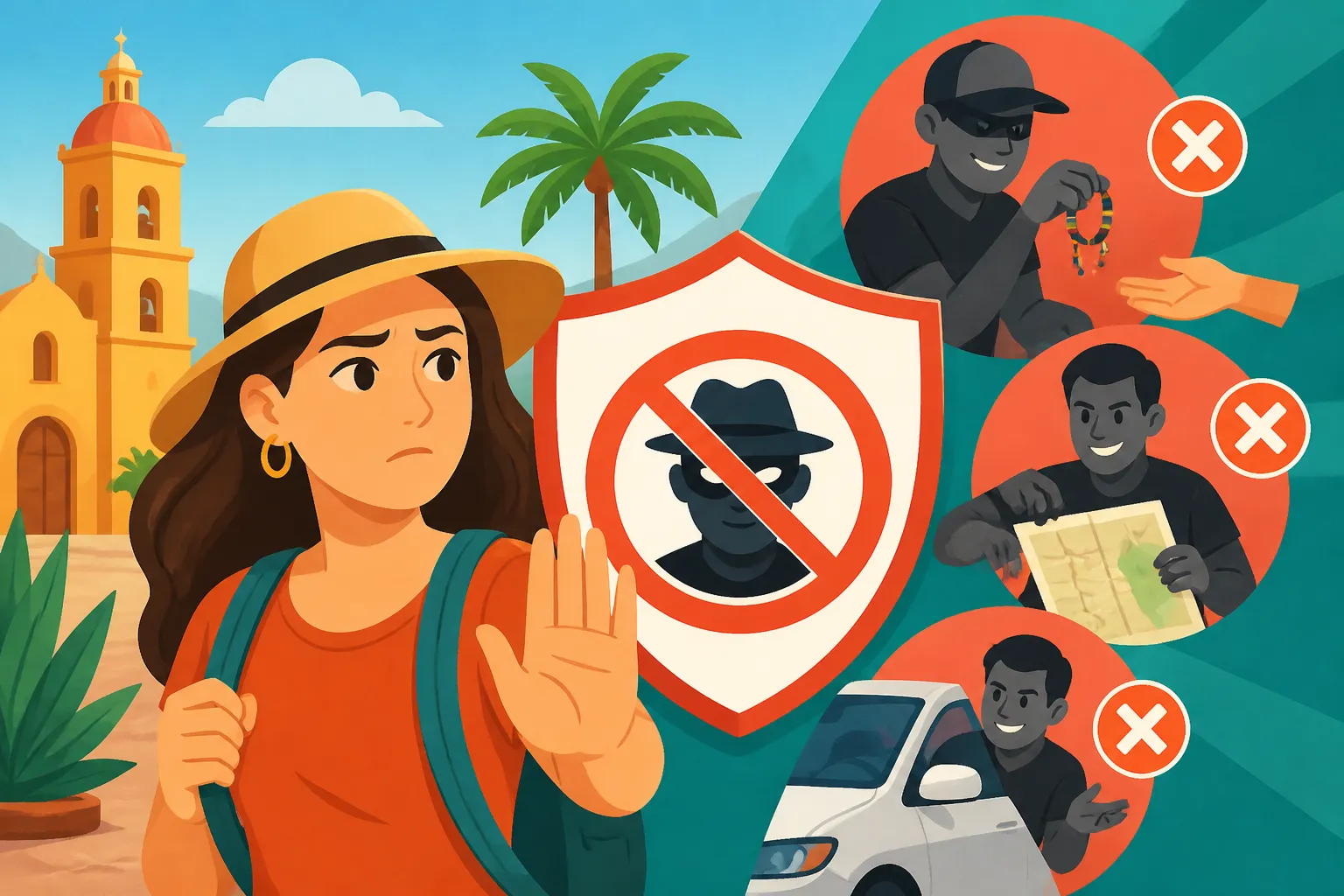
Physical distraction scams are less common but still occur in crowded areas like the Metro or busy markets. The "mustard scam" involves someone accidentally spilling something on your clothes—mustard, ketchup, or even bird droppings. As they profusely apologize and help you "clean up," their partner is busy lifting your wallet or phone from your pockets. If anyone spills anything on you, don't let them touch you. Secure your belongings and move to a safe, well-lit area to clean yourself up alone.
Another social scam is the "broken bird" or "dropped item" trick. Someone will drop something in front of you, or perhaps a child will approach you with a "gift" like a rosemary sprig or a bracelet. The moment you take it, they demand a payment, often making a scene if you refuse. It’s an uncomfortable situation designed to exploit your politeness. A firm "No" and continuing to walk is the only way to handle this. You can find more advice on what to avoid in my article What Should You Not Do in Mexico as a Visitor?.
Finally, there is the "mordida" or the bribe. While not a scam in the traditional sense, it is a form of corruption that often targets foreigners driving rentals. A police officer might pull you over for a minor or fabricated infraction and suggest that you can "pay the fine now" to avoid a trip to the station. This is illegal. You have the right to ask for a written ticket and pay it at the local station, which often results in a 50% discount for early payment anyway. For a step-by-step on how to handle this without losing your cool, check out What to Do If You’re Pulled Over by Police in Mexico.
Handling the Aftermath: What to Do If Scammed
If you do find yourself the victim of a scam, the most important thing is to stay calm. Most of these scams are designed to take a relatively small amount of money (the "gringo tax"), and it isn't worth escalating into a physical confrontation. If it is a significant theft or a serious crime, you should contact the "Policía Turística" (Tourist Police), who are often more helpful and speak better English than the regular municipal police.
You can also report consumer fraud to PROFECO (Procuraduría Federal del Consumidor). They are the government agency responsible for protecting consumers in Mexico. While they might not be able to get your 200 pesos back from a taxi driver, they are very effective at dealing with hotels, car rental agencies, and established businesses that are engaging in deceptive practices.
Ultimately, the best defense is a good offense. By staying informed and maintaining a healthy level of skepticism, you can enjoy all the magic Mexico has to offer without becoming a target. If you are feeling a bit overwhelmed by these warnings, please don't be. The vast majority of people you meet here are incredibly warm and honest. For a balanced view of the current landscape, I suggest reading Is Mexico Safe for Tourists Right Now? to put these risks into perspective and help you plan a trip that is as safe as it is unforgettable.
Disclaimer
The information provided in this guide is for educational and informational purposes only. While every effort has been made to ensure the accuracy of the details regarding common scams in Mexico, the tactics used by scammers are constantly evolving. Travelers should exercise personal judgment and remain aware of their surroundings at all times. This guide does not constitute legal advice, and we are not responsible for any financial loss or negative experiences encountered during your travels. Always consult official government travel advisories before your trip.