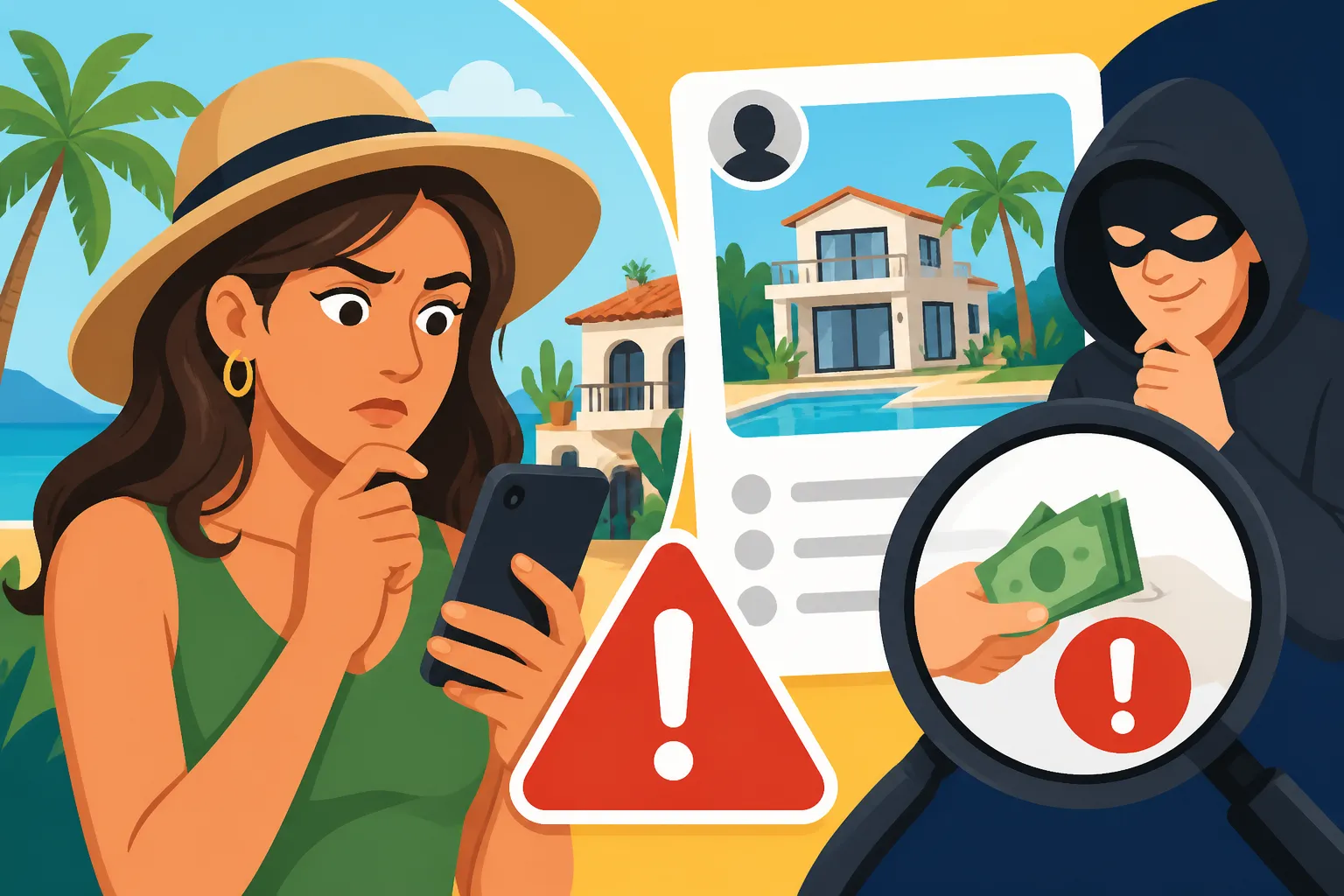
How to Spot Rental Scams in Mexico Before Paying
You are scrolling through Facebook groups, your eyes widen at a gorgeous Roma Norte loft for half the market price, and your thumb hovers over the "send" button for a deposit. I almost lost $2,000 this way when I first moved to Mexico, blinded by a "deal" that didn't exist. This guide reveals exactly how to spot rental scams so you can protect your money.
Disclosure: This post may contain affiliate links. We may earn a commission at no extra cost to you if you make a purchase through these links. Read full disclosure.
Common Red Flags of Rental Scams in Mexico
The excitement of moving to a new country often masks the subtle warning signs that something is wrong. Scammers in Mexico have refined their tactics, moving away from broken English and obvious errors to sophisticated narratives that pull at your heartstrings or play on your fear of missing out. Understanding these red flags is your first line of defense.
The "I am Currently Abroad" Excuse
This is the classic, most persistent scam in the Mexican rental market. You find a beautiful listing, but when you inquire, the "owner" tells you they are currently working in the UK, Canada, or Spain. They claim they left the keys with a cousin, a lawyer, or even a fake delivery service like DHL or a spoofed Airbnb link. They will tell you that once you wire the deposit and first month's rent, they will have someone meet you with the keys.
In reality, there are no keys. Real landlords in Mexico either show the property themselves or hire a local inmobiliaria (real estate agency). If someone cannot show you the property in person because they are "out of the country," walk away immediately. To avoid this stress while you search, many expats book a week or two at a Selina location. Staying at a Selina gives you a secure home base and a community of other expats who can help you vet local listings.
Prices That Defy Market Reality
We all move to Mexico hoping for a lower cost of living, but if a three-bedroom house with a pool in a prime area of San Miguel de Allende is listed for $500 USD, it is a scam. Scammers use "bait" pricing to attract as many victims as possible in a short window. They know that expats often don't know the hyper-local market rates yet.
Before you start looking at individual listings, you should research the Cost of Living in Mexico City (2026): Detailed Expat Budget Guide or the equivalent for your target city. Knowing the average price for a colonia (neighborhood) prevents you from falling for "too good to be true" offers. When I first arrived, I used an eSIM from Airalo to stay connected and constantly check market prices on local portals while walking the streets of different neighborhoods. Having reliable data through Airalo allowed me to compare prices in real-time and avoid being fooled by inflated or suspiciously low prices.
High Pressure and Artificial Urgency
Scammers love to create a sense of panic. They will tell you that there are five other "very interested" people ready to pay right now, but because they like your profile, they’ll give you priority if you send the deposit within the hour. This tactic is designed to stop you from thinking logically or performing due diligence.
Legitimate landlords in Mexico often take their time. They want to vet you, check your references, and often ask for an aval (a co-signer who owns property in Mexico). If someone is rushing you to send money via Western Union, MoneyGram, or a random bank transfer before you’ve even seen a contract, it is a scam.
Where and How Scammers Target Foreigners
Understanding the platforms scammers frequent can help you stay alert. While many legitimate rentals are found online, certain areas are more prone to fraudulent activity.
Facebook Marketplace and Expat Groups
Facebook is the "Wild West" of Mexican real estate. While many locals use it, it is also the easiest place for a scammer to create a fake profile with stolen photos. They often join groups like "Expats in Mérida" or "Rentals in Puerto Vallarta" to find "green" newcomers. They may even engage in the comments, pretending to be happy tenants of the fake landlord.
If you are using Facebook, always check how old the profile is. If the person listing the property joined Facebook last month or has no real photos of themselves, be wary. You can find more reliable advice on where to look in our guide on the Best Places to Live in Mexico for Expats (2027 Edition).
Spoofed Real Estate Portals
Some scammers go as far as cloning popular websites like Vivanuncios or Inmuebles24. They might send you a link that looks official but is actually a phishing site designed to steal your credit card information. Always navigate to these portals directly rather than clicking links sent via WhatsApp.
When you do find a legitimate long-term home and are ready for the big move, using a reputable international moving coordinator like Sirelo can save you a lot of grief. Sirelo helps you find trusted movers, ensuring your belongings actually arrive at your new home—which is the second half of the battle after finding a real apartment. Using Sirelo to compare moving quotes ensures you aren't overpaying for the logistics of your relocation.
Practical Steps to Verify a Listing
Verification is the only way to ensure you aren't being taken for a ride. Never assume a listing is real just because it has high-quality photos.
Insist on a Physical or Video Walkthrough
Never, under any circumstances, pay for a rental you have not seen. If you are not in the country yet, do not send "holding deposits." Wait until you arrive. If you must secure something before you land, book a reputable co-living space or hotel like Selina. This allows you to perform the "boots on the ground" search that is necessary in Mexico.
Once you are here, use Airalo to navigate to the property using Google Maps. If a landlord says they can't meet you but "the door is open, just look through the window," that is a massive red flag. A real landlord or agent will walk you through the property, show you that the water works, and explain the Household Quirks in Mexico: Water Cisterns, Gas Tanks, and More that you need to know.
Verify the Landlord's Identity and Property Ownership
In Mexico, it is perfectly acceptable to ask for proof of ownership. You can ask to see the predial (property tax) receipt. The name on the predial should match the ID of the person you are dealing with or the legal representative of the company. If they refuse to show you basic documentation, they likely don't own the property.
You should also check the Safety in Mexico: What Expats Need to Know About Staying Safe guide to understand how to handle these interactions professionally. Most scammers will vanish the moment you start asking for legal documentation.
Comparison: Legitimate Listings vs. Rental Scams
| Feature | Legitimate Listing | Potential Rental Scam |
|---|---|---|
| Price | Matches local market rates for the colonia. | Significantly lower than everything else nearby. |
| Viewing | Landlord or agent meets you at the property. | Landlord is "away" but wants a deposit first. |
| Contract | Written in Spanish; includes legal terms. | No contract, or a generic one-page PDF. |
| Payment | Deposit paid upon signing the contract. | Pressure to pay via Western Union or cash upfront. |
| Communication | Professional, willing to answer all questions. | Aggressive, urgent, or avoids specific questions. |
| Documentation | Shows property tax (predial) or ID. | Claims documentation is "with their lawyer" or "locked up." |
How to Handle Payments and Contracts Safely
The way you pay is your final safety net. In Mexico, the rental process involves specific documents that can feel overwhelming, but they are there to protect both parties.
Understanding the Contract and Póliza Jurídica
A real rental agreement in Mexico is a formal affair. Many landlords now use a póliza jurídica, which is a type of legal insurance. A third-party company will vet your documents and handle any legal issues. While this costs you a fee (usually 30-50% of one month's rent), it is actually a good sign because it means a real legal entity is involved. You can learn more about this in our article on How to Understand a Mexican Rental Contract.
If a landlord tells you "we don't need a contract, we can just do it on a handshake," be careful. Without a contract, you have very little recourse if they decide to kick you out or keep your deposit. Always ensure you understand the Renting a Home in Mexico: Complete Expat Guide to Leases, Deposits, and More basics before signing anything.
Making the Payment
The safest way to pay is via a SPEI (bank transfer) once you have a signed contract and the keys in your hand. Avoid paying in large amounts of cash, as there is no paper trail. If you have just moved your life across borders using a service like Sirelo, the last thing you want is for your moving budget to vanish into a scammer's pocket. Sirelo makes the moving part easy, so make sure you make the payment part just as secure.
Always get a receipt (recibo) for every payment, including the security deposit. In Mexico, it is standard to pay one month of rent as a deposit and the first month of rent upfront. If they ask for six months in advance because you are a foreigner, that is a red flag (unless you are intentionally prepaying to negotiate a lower rate).
What to Do If You Have Been Scammed
If you realize you have sent money to a scammer, time is of the essence. While it is difficult to recover funds in Mexico, there are steps you can take to prevent others from being hurt.
- Contact Your Bank: If you did a bank transfer, contact your bank immediately to see if the transaction can be reversed (though with SPEI, this is nearly impossible once completed).
- Report the Profile: Report the scammer's profile and the listing on the platform where you found it (Facebook, etc.).
- File a Report (Denuncia): You can go to the Ministerio Público to file a denuncia for fraud. While the police may not be able to get your money back, having a formal report is important for legal records.
- Warn the Community: Post in the local expat groups to warn others about the specific scammer, phone number, and listing photos used.
Finding a home is the most stressful part of being an expat. Too many newcomers lose their "startup" capital to these sharks. Don't let the "perfect" balcony view blind you to the reality of the transaction. Stay in a safe place like Selina while you do the work, keep your Airalo data active so you can research on the go, and trust your gut. If it feels wrong, it probably is.
Final Tips for a Stress-Free Move
To ensure your transition into the Mexican rental market is as smooth as possible, follow these final veteran tips:
- Walk the Neighborhood: Many of the best deals aren't online. They are found by walking through a neighborhood and looking for Se Renta signs. This is also the best way to verify that a property actually exists.
- Use a Local Agent: If you are looking for a high-end rental, a reputable agent (agente inmobiliario) can be a godsend. They are usually paid by the landlord, not you.
- Check the Utilities: Make sure there are no outstanding debts on the CFE (electricity) or water bills. If there are, you might find your power cut off on your first day.
- Confirm Pet Policies: If you are moving with a furry friend, read our guide on How to Find Pet-Friendly Rentals in Mexico to avoid being scammed by "pet-friendly" listings that actually aren't.
- Coordinate Your Move: Once the contract is signed, use Sirelo to find a moving company that specializes in expat relocations. Having professional help with the physical move lets you focus on settling into your new life.
Mexico is a wonderful place to live, and for every scammer, there are a thousand honest landlords. By staying informed and refusing to be rushed, you’ll find that perfect home in no time.
Disclaimer
The information provided in this article is for informational purposes only and does not constitute legal or financial advice. Rental laws and market conditions in Mexico can change frequently. We recommend consulting with a qualified Mexican real estate attorney or a licensed professional before signing any contracts or transferring funds.
Summary of Brands Used
- Airalo: For reliable eSIM data while searching and navigating.
- Selina: For safe, short-term accommodation during your apartment hunt.
- Sirelo: For comparing international and local moving quotes.