Museums of Mexico City: Anthropology and Beyond
Mexico City is home to over 150 museums, which sounds like a dream until you realize that navigating the sheer volume of history, art, and administrative quirks can be an absolute nightmare for the uninitiated. This guide cuts through the overwhelm to help you master the legendary National Museum of Anthropology and the city's hidden gems, ensuring you don't waste your limited time standing in the wrong lines or showing up on a Monday when the doors are bolted shut.
Disclosure: This post may contain affiliate links. We may earn a commission at no extra cost to you if you make a purchase through these links. Read full disclosure.
The Crown Jewel: National Museum of Anthropology
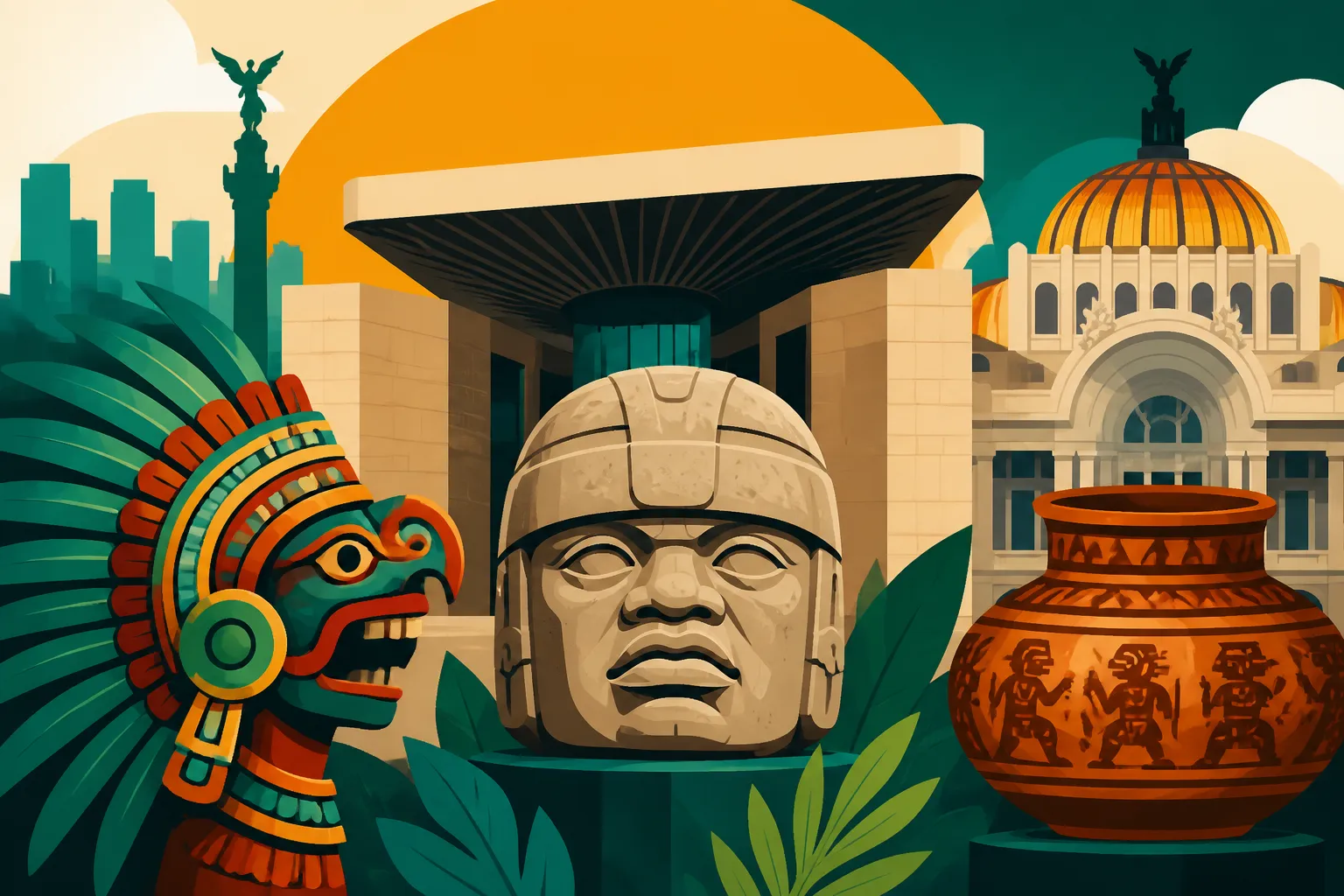
The Museo Nacional de Antropología is not just a museum; it is a sprawling, multi-level testament to the soul of Mexico. Located in the heart of Chapultepec Park, it is often the first stop for any expat or tourist, but its scale is terrifying. If you try to see everything in one day, you will fail, your feet will throb, and your brain will stop processing information by the time you hit the Olmec heads. I have seen countless visitors wandering aimlessly through the 22 rooms, looking increasingly glazed over because they didn't have a plan.
Navigating the Sun Stone and Aztec Hall
The Sala Mexica (Aztec Hall) is the museum's undisputed centerpiece. This is where you will find the Piedra del Sol, often erroneously called the Aztec Calendar. It is massive, imposing, and surrounded by a constant throng of people. To truly appreciate it, you need to arrive right when the museum opens at 9:00 AM. Walk past the other rooms and head straight to the back of the courtyard. The sheer detail on the Sun Stone tells the story of the five eras of creation, and seeing it without twenty selfie sticks in your peripheral vision is a religious experience.
Beyond the stone, the hall contains the terrifyingly beautiful statue of Coatlicue, the mother of gods, and the meticulously reconstructed model of the Templo Mayor. When you look at that model, it helps to remember that you can actually visit the physical site later. For more on that, check out How to See Templo Mayor in Mexico City. Understanding the scale of the ancient city of Tenochtitlán here makes walking the modern streets of the Centro Histórico much more profound. You begin to realize that the colonial buildings are literally sitting on top of these massive basalt structures.
The Mayan Legacy and the Tomb of Pakal
After the Aztec Hall, most people are exhausted, but the Maya Hall on the ground floor is non-negotiable. It houses the reconstructed tomb of Pakal the Great, found in the Temple of the Inscriptions in Palenque. Descending into the climate-controlled replica of the burial chamber gives you a sense of the funerary rites and the obsession with the underworld that defined Mayan royalty. The jade death mask of Pakal is one of the most significant archaeological finds in the Western Hemisphere, and seeing it up close is worth the price of admission alone.
While the ground floor focuses on the archaeological past, the upper floor of the museum is dedicated to the living indigenous cultures of Mexico. Many people skip this, which is a massive mistake. It provides the necessary context to understand the people you see in the markets today. If you are planning to travel further south later, perhaps taking a trip you booked via Busbud to head toward Oaxaca or Chiapas, these ethnological exhibits will give you a head start on the local customs and dress you will encounter.
Logistics and Expat Secrets for Visiting
The logistical side of the Anthropology Museum is where most people get tripped up. First, it is closed on Mondays—a rule that applies to almost every state-run museum in Mexico. Second, Sunday is free for Mexican citizens and legal residents (those with a residency card). If you are a tourist, avoid Sundays like the plague unless you enjoy being shoulder-to-shoulder with thousands of people. For a smoother experience, I always recommend checking How to Visit the National Museum of Anthropology in Mexico City for specific updates on current entrance fees and photography permits.
The museum has a decent restaurant, but it is overpriced. My expat secret? Walk five minutes out of the park into the Polanco neighborhood for a proper lunch, or grab a tamale from a street vendor near the park entrance. Also, the "Voladores de Papantla" (the flying men) usually perform outside the museum entrance every hour. It is a spectacular pre-Hispanic ritual, but remember that they survive on tips. If you are unsure about the local etiquette regarding gratuities, read up on Tipping in Mexico (Propina): When and How Much to avoid any awkward social blunders.
Artistic Legacies: Frida Kahlo and Diego Rivera
No discussion of Mexico City’s museums is complete without the power couple of the Mexican art world. Their presence is felt everywhere, from the walls of government buildings to the suburbs of Coyoacán. However, visiting their sites requires more than just a passing interest; it requires serious digital legwork and a bit of patience.
Casa Azul: More Than Just a Blue House
Museo Frida Kahlo, known as the Blue House, is where Frida was born, lived with Diego Rivera, and ultimately died. It is located in the beautiful, cobblestoned neighborhood of Coyoacán. Here is the hard truth: you cannot simply walk up and buy a ticket. If you don't book online at least two to three weeks in advance, you will be turned away at the door, and no amount of "por favor" will help. I have watched heartbroken tourists pleading with the guards every single time I visit.
Inside, the house is preserved much as it was in the 1950s. You can see Frida’s studio, her specially designed bed with a mirror on the canopy, and her collection of traditional Tehuana dresses. It is an intimate, sometimes painful look at her life of chronic physical suffering and artistic triumph. To make sure you don't miss out on this experience, you should definitely read How to See Frida Kahlo's House (Casa Azul) in Mexico City for the exact booking links and the best times to visit to avoid the worst of the crowds. If you want a more guided experience that includes transportation, platforms like Viator often have packages that combine the Blue House with a trip to the floating gardens of Xochimilco.
Museo Anahuacalli: Rivera’s Pre-Hispanic Temple
While everyone flocks to the Blue House, Diego Rivera’s personal project, the Museo Anahuacalli, remains criminally underrated. Located a short drive away in the Pedregal de San Ángel area, this building is a massive pyramid-like structure built from black volcanic stone. Rivera designed it to house his enormous collection of pre-Hispanic art, which he viewed as the essential foundation of Mexican identity.
The atmosphere inside is moody, dark, and powerful. Each floor represents a different level of the cosmos—the underworld, the earthly plane, and the celestial. The top floor offers a stunning view of the surrounding volcanic landscape. Your ticket for the Frida Kahlo Museum usually includes entrance to Anahuacalli, and there is often a free shuttle between the two. Do not skip this; it provides the masculine, monumental counterpoint to Frida’s intimate domesticity.
Palacio de Bellas Artes: Murals in the Heart of the City
Moving back to the city center, the Palacio de Bellas Artes is an architectural masterpiece of Art Nouveau and Art Deco. While it serves as a performance venue, its upper floors are a museum dedicated to the great Mexican muralists. Here, you can see Diego Rivera’s "Man at the Crossroads," a recreation of the mural originally commissioned for Rockefeller Center in New York but destroyed because it included an image of Lenin.
Standing in front of these murals is like taking a crash course in Mexican political history. Siqueiros and Orozco also have massive works here that are visceral and violent, depicting the struggle of the Mexican Revolution and the clash of civilizations. If you are staying in the city center—perhaps at a boutique hotel you found on Booking.com—this should be a morning stop before the crowds of the Alameda Central park become too dense. To get your bearings in this part of town, take a look at Mexico City for First-Time Visitors: Neighborhoods and Highlights.
Off the Beaten Path: Specialized and Quirky Museums
Once you have checked off the "Big Three," it is time to delve into the niche museums that give Mexico City its eclectic character. These are the places where you can escape the massive tour groups and find something truly unique.
Museo Soumaya and Museo Jumex: Modern Contrasts in Polanco
In the upscale neighborhood of Polanco, two of the city's most important modern art museums sit right next to each other, yet they couldn't be more different. The Museo Soumaya, owned by billionaire Carlos Slim, is a shimmering, anvil-shaped building covered in 16,000 hexagonal aluminum tiles. Inside, it houses a vast collection of European old masters and the largest collection of Rodin sculptures outside of France. The best part? It is completely free, every single day.
Right next door is the Museo Jumex, which focuses on contemporary art. Its saw-toothed roof is a landmark of the neighborhood. While the Soumaya feels like a traditional, gilded treasury, the Jumex is airy, experimental, and often provocative. If you find yourself in this part of town, you'll want to know the Best Neighborhood to Stay in Mexico City to decide if Polanco's high-end vibe or the artistic soul of Roma Norte is more your speed.
Museo de Arte Popular: A Riot of Mexican Craftsmanship
If you love the colors and creativity of Mexican folk art, the Museo de Arte Popular (MAP) is mandatory. Housed in a stunning Art Deco former fire station, this museum celebrates the "artesanías" of the entire country. You will see gigantic alebrijes (fantastical creatures), intricate pottery from Michoacán, and elaborate "trees of life" from Metepec.
The museum does an incredible job of explaining the techniques and the regional significance behind these objects. It turns what could be seen as "souvenirs" into the high art they truly are. It is located just a few blocks from the Palacio de Bellas Artes, making it an easy addition to a day in the city center.
The Museum of Memory and Tolerance
For those looking for something deeper and more sobering, the Museo Memoria y Tolerancia is a world-class institution. It focuses on the history of genocides (the Holocaust, Armenia, Rwanda, etc.) and then transitions into a section on the importance of tolerance and human rights in the modern world, specifically within the context of Mexico. It is a powerful, emotional experience that utilizes incredible multimedia displays. It is not a "fun" museum, but it is a necessary one for anyone wanting to understand the complex social fabric of the 21st century.
Practical Strategies for the Museum Lover in CDMX
To truly enjoy the museums here, you have to play the game by Mexico's rules. This isn't London or Washington D.C.; the bureaucracy and the crowds require a strategic approach.
Mastering the Monday Closure and Free Entry Days
As I mentioned before, Mondays are the "dead zone" for museums in CDMX. If you are here on a Monday, use that day for a trip to Teotihuacán or a walk through the parks. Additionally, almost all museums are free on Sundays for residents. If you aren't a resident, Sunday is the day to avoid the most popular museums.
| Museum Name | Primary Focus | Neighborhood | Typical Cost (MXN) |
|---|---|---|---|
| National Anthropology | Archaeology/History | Chapultepec | $95 |
| Frida Kahlo (Casa Azul) | Biography/Art | Coyoacán | $250 – $300 |
| Soumaya | European Masters | Polanco | Free |
| Templo Mayor | Aztec Ruins | Centro | $95 |
| Bellas Artes | Murals/Architecture | Centro | $85 |
Transport and Neighborhood Logistics
Mexico City is enormous, and traffic is legendary for all the wrong reasons. Do not underestimate how long it takes to get from the city center to Coyoacán. If you are using public transit, knowing How to Use the Mexico City Metro as a First-Time Visitor is essential. The metro is fast and incredibly cheap, but it can be overwhelming during rush hour. For a more private experience, ride-hailing apps are the way to go. You can find tips on staying secure in our guide on How to Use Uber and Ride-Hailing Safely in Mexico.
Language Barriers and Guided Tour Realities
Most of the signage in the National Museum of Anthropology is in Spanish. While the main headings might be translated, the deep-dive information often is not. If your Spanish is rusty, I highly recommend hiring a certified guide at the entrance or booking a tour through Viator ahead of time. A good guide doesn't just translate; they weave the artifacts into a narrative that makes the history come alive. Without one, you’re just looking at a lot of very old, very impressive rocks.
Beyond the Walls: Open-Air History and Archaeology
In Mexico City, the line between a museum and an archaeological site is often blurred. Some of the best "museums" don't have a roof.
Templo Mayor: The Heart of the Aztec Empire
Right next to the Metropolitan Cathedral in the Zócalo lies the ruins of the Templo Mayor. It was the religious center of the Aztec world, dedicated to the gods of war and rain. Walking through the site on the elevated walkways, you can see the different layers of the temple as it was expanded by successive rulers. The onsite museum is equally impressive, housing the massive stone disc of Coyolxauhqui, the moon goddess. If you want to dive deep into this specific site, check out How to See Templo Mayor in Mexico City.
Castillo de Chapultepec: History with a View
Perched on top of a hill in the middle of Chapultepec Park, the "Castle" is the only royal castle in the Americas that was actually inhabited by royalty (Emperor Maximilian I and Empress Carlota). It now houses the National Museum of History. The walk up the hill is steep, but the view of Paseo de la Reforma from the terrace is the best in the city. The murals inside by Siqueiros and Orozco are legendary, and the rooms preserved from the imperial era offer a fascinating look at Mexico's brief period of monarchy.
Disclaimer
The information provided in this guide is for educational and informational purposes only. While every effort has been made to ensure the accuracy of the details regarding museum hours, fees, and procedures, these are subject to change by the Mexican government and individual institutions. Always verify current requirements on official websites before your visit. This guide does not constitute legal or travel advice. Stay safe and enjoy your cultural exploration of Mexico City.