Telemedicine in Mexico: Online Doctor Options
Trying to navigate a foreign healthcare system while shivering with a fever or nursing a sudden infection is one of the most isolating experiences you can have as an expat. I remember lying in bed in my first apartment in Oaxaca, staring at my phone and wondering if I could explain "throbbing pain" in Spanish without accidentally insulting the doctor’s mother. This guide solves that specific anxiety by showing you exactly how to access telemedicine in Mexico, ensuring you get professional medical advice in your own language without leaving your couch.
Disclosure: This post may contain affiliate links. We may earn a commission at no extra cost to you if you make a purchase through these links. Read full disclosure.
The Digital Revolution in Mexican Healthcare
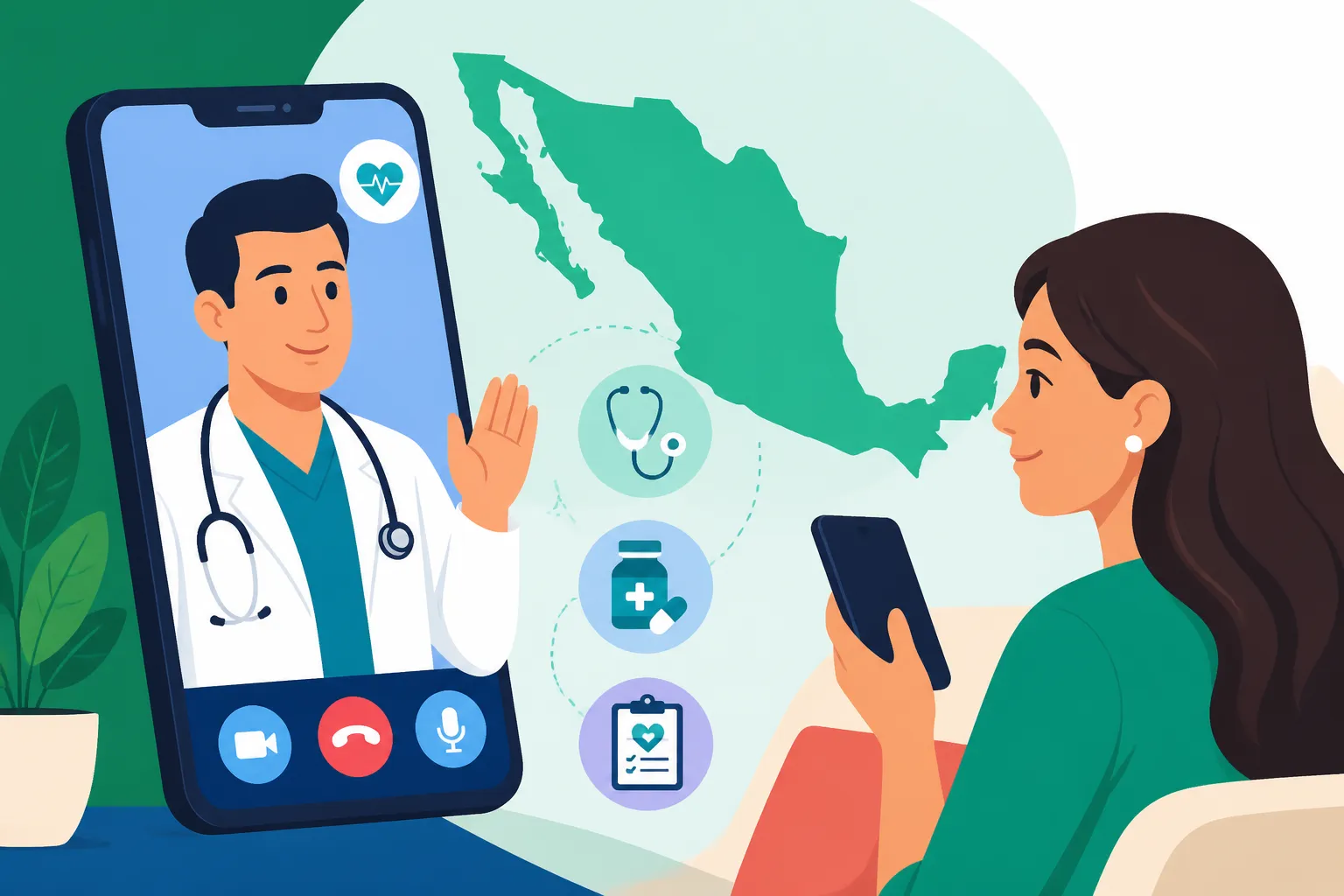
The landscape of medical care in Mexico has shifted dramatically over the last few years. While Mexico has always had a strong culture of face-to-face consultations—and the traditional house call isn't entirely dead—the infrastructure for digital health has exploded. For those of us living here, this means the days of sitting in a crowded waiting room for three hours just to get a refill on basic medication are largely over. Telemedicine has moved from a "luxury extra" to a core component of how both locals and foreigners manage their health.
This shift wasn't just about convenience; it was about necessity. In a country where traffic in cities like CDMX can turn a five-kilometer drive into a ninety-minute ordeal, virtual visits have become a lifeline. For an expat, the benefits are even more pronounced. We often struggle with the hyper-local nuances of the Healthcare in Mexico: Complete Guide for Expats (Public vs Private) system, and having a digital gateway simplifies the entry point. You no longer need to know which neighborhood clinic is open or which specialist has the shortest queue. You just need a stable signal and the right app.
The legal framework has also caught up. The Mexican government and health authorities have clarified regulations regarding "recetas digitales" (digital prescriptions), making it much easier for pharmacies to accept a QR code or a PDF from a verified online doctor. This is a massive win for those Managing Chronic Illness in Mexico: Access to Medication and Specialists who need consistent care but don't want the logistical headache of physical appointments every month. The integration of technology into the medical field here is, frankly, more advanced in some aspects than what I experienced back home.
Why Telemedicine is a Game Changer for Expats
The most obvious hurdle we face is the language. Even if your Spanish is "restaurant-fluent," describing the specific nuances of a respiratory infection or a complex neurological symptom is a different beast entirely. Through telemedicine platforms, you can specifically filter for providers who are bilingual. This eliminates the "lost in translation" fear that often prevents expats from seeking care until a minor issue becomes a major problem. I’ve found that Overcoming Language Barriers at the Doctor: Tips for Expats is significantly easier when you can choose a doctor based on their language profile rather than just their proximity to your house.
Then there’s the "expat price" or the general confusion over billing. When you walk into a high-end private hospital in a tourist zone, the costs can be opaque. Telemedicine platforms usually have transparent, flat-fee pricing. You know exactly what you’re paying before you hit the "Join Call" button. This transparency helps you manage Healthcare Costs in Mexico: Doctor Visits, Hospital Stays, and Surgery Expenses without the surprise of "administrative fees" that sometimes appear at the checkout desk of a physical clinic.
Finally, there’s the comfort of being in your own space. When you’re dealing with Traveler’s Diarrhea (Montezuma’s Revenge): Prevention and Treatment, the last thing you want to do is navigate a taxi ride and a public restroom. Being able to talk to a doctor from your bed, have them prescribe an antibiotic and a rehydration solution, and then have those meds delivered via a delivery app is the ultimate expat survival hack. It turns a miserable weekend into a manageable one.
Top Telemedicine Platforms and Services in Mexico
If you’re looking for a general practitioner, the first place many expats turn is Doctoralia. Think of it as the "Yelp" of doctors in Mexico. It allows you to search by specialty, city, and language. Most importantly, it has a robust filter for "Consulta en línea" (Online consultation). You can see real patient reviews, check the doctor’s credentials, and book directly through the platform. It’s incredibly reliable and used by the top specialists in the country. If you are looking for Finding English-Speaking Doctors and Specialists in Mexico, this is your most powerful tool.
Another rising star is Medicato. This app is designed for speed. It’s essentially "Uber for doctors." You open the app, list your symptoms, and within minutes, you’re connected to a licensed physician via video call. It’s perfect for those "I need an answer right now" moments, like a child’s sudden earache or a weird rash. For more specialized care, many of the major hospital chains, such as Hospital Ángeles or ABC Hospital, have launched their own proprietary telehealth portals. These are great if you want to ensure that your virtual visit is backed by a major brick-and-mortar institution.
Then there are the pharmacy-linked services. While Pharmacy Consultorios in Mexico (Farmacias Similares and More) are famous for their $50-peso walk-in clinics, many are moving into the digital space. Farmacias del Ahorro, for example, has a very functional app where you can request a guidance call. It’s a bit more basic than a full specialist consult on Doctoralia, but for minor ailments, it’s efficient and incredibly cheap. It’s a great way to handle the basics without spending a fortune.
| Platform | Best For | Language Support | Typical Cost (MXN) |
|---|---|---|---|
| Doctoralia | Finding specialists and reading reviews | High (Filterable) | $800 – $2,500 |
| Medicato | Immediate "Urgent Care" style calls | Medium | $400 – $800 |
| Farmacias del Ahorro | Minor ailments and quick prescriptions | Low | $0 – $150 |
| Hospital ABC Portal | High-end care with hospital backing | High | $1,200 – $3,000 |
| Cigna Global Network | Comprehensive expat-focused care | Very High | Covered by Policy |
Specialized Online Medical Care
Telemedicine isn't just for the flu. One of the biggest areas of growth in Mexico is online mental health support. Moving to a new country is stressful, and culture shock can take a real toll on your well-being. Finding a therapist who understands the specific immigrant/expat experience is crucial. There are now several networks specifically dedicated to Mental Health Resources: Finding English-Speaking Therapists in Mexico that operate entirely online. This allows you to maintain a consistent therapeutic relationship even if you move from Puerto Vallarta to San Miguel de Allende.
Pediatric care is another sector where telemedicine shines. As a parent, the panic of a midnight fever is universal. Being able to jump on a call with a pediatrician who can see the child via video often saves a traumatic (and expensive) trip to the emergency room. For those who have recently arrived, Pediatric Care in Mexico: Healthcare for Expat Children often starts with finding a trusted doctor on a digital platform who can then recommend a local lab if blood work is needed. It’s about building that circle of care from day one.
We should also talk about specialized chronic care. If you are managing something like diabetes or hypertension, you need more than just a quick call; you need a management plan. Many Mexican endocrinologists and cardiologists now use apps to track patient data (like glucose levels or blood pressure) in real-time. They can review your stats remotely and adjust your medication via a virtual follow-up. This is where a plan from Cigna Global can be particularly useful, as they often have specialized networks and coordination services that facilitate this high-level, long-term digital care.
Integrating Insurance with Telehealth
A common question I get from new arrivals is: "Will my insurance actually pay for a Zoom call?" The answer in 2026 is a resounding yes, but the way they pay matters. Most international expat policies, like those offered by SafetyWing, are designed with the modern nomad and expat in mind. They recognize that a $50 virtual consult can prevent a $5,000 hospital admission. Often, these providers have their own built-in telehealth portals where the consultation is "cashless," meaning you don't pay anything out of pocket at all.
If you are using a more traditional local Mexican private policy, you might have to pay the doctor upfront and then submit the digital receipt (factura) for reimbursement. This is why it’s vital to ensure you have Health Insurance in Mexico: How Expats Can Get Coverage (2027) that specifically outlines their telehealth protocols. Always ask the doctor for a "CFDI" (the official Mexican electronic invoice) and a "reporte médico" (medical report). Without these two digital documents, getting reimbursed by any insurance company—local or international—will be nearly impossible.
For those on the move, SafetyWing is a popular choice because their claims process for outpatient "e-visits" is usually streamlined. On the other end of the spectrum, Cigna Global offers a more robust "concierge" style healthcare experience where they can often help you find the right specialist within their digital network, ensuring the doctor is pre-vetted for both quality and language skills. This level of support is a huge comfort when you’re feeling vulnerable and sick in a foreign city.
Prescription Logistics: From Screen to Pharmacy
Once the virtual call ends, you’re often left with a PDF on your phone. In the "old days," pharmacies were wary of anything that wasn't a hand-signed piece of paper with a physical stamp. Today, the "receta digital" is widely accepted at major chains like Farmacias Guadalajara, Farmacias del Ahorro, and Benavides. These digital prescriptions contain a professional license number (cédula profesional) and often a QR code that the pharmacist scans to verify the doctor's credentials. It’s a smooth process that saves you from the headache of Pharmacies in Mexico: How to Get Medications (OTC vs Prescription).
The real "pro tip" for expats is to combine telemedicine with delivery apps. Apps like Rappi and Uber Eats have "Pharmacy" sections where you can upload a photo of your prescription. A delivery rider picks up the meds and brings them to your door. I can’t tell you how many times this has saved me when I was too dizzy to drive. However, be aware that for "controlled" medications (like certain strong painkillers or psychiatric meds), a physical original prescription might still be required by law. Always ask your online doctor if the medication they are prescribing is "fraccionable" or if it requires a "receta original."
If you find yourself Running Out of Medication: Getting a Prescription Refill in Mexico, a quick 15-minute telemedicine appointment is often the fastest way to get a new legal script. Just have your old bottle or previous prescription handy to show the doctor over the camera so they can verify your dosage and history. It’s much more professional and safer than trying to convince a pharmacist to sell you something under the counter, which is increasingly difficult and risky in Mexico.
Technical Logistics and Practical Tips
None of this works if your internet drops out right as the doctor is looking at your throat. Mexico’s internet has improved massively, but "Totalplay" or "Telmex" can still have their moments of "mañana." Before your call, do a quick speed test. If your home Wi-Fi is shaky, I always recommend having a backup. A local SIM card from Telcel with a good data plan can be a lifesaver. You can find more details on this in the guide on Best Internet Providers in Mexico: Expats' Top Picks for Reliability.
When you're preparing for the call, treat it like a real appointment. Have your "CURP" (your Mexican ID number) ready, as some doctors need it for the official prescription software. Also, write down your symptoms and any medications you are currently taking in a list. If your Spanish is still a work in progress, use a translation app to get the technical terms for your symptoms ready beforehand. Even if the doctor speaks English, having the Spanish terms for things like "nausea" or "chills" (escalofríos) can help clarify things if there’s a technical glitch in the audio.
Lastly, make sure you are in a well-lit room. If the doctor needs to see a skin issue or the back of your throat, a dark bedroom isn't going to cut it. I’ve had to use my kitchen's bright LED lights more than once for a virtual "check-up." It feels a bit silly at the time, but it’s the difference between an accurate diagnosis and a "maybe you should come in" response.
When to Skip the Screen and Go to the ER
As much as I love the convenience of telemedicine, it has its limits. There are times when you need to put the phone down and get to a hospital immediately. If you’re experiencing chest pain, difficulty breathing, sudden slurred speech, or a high fever that won't break with basic meds, don't wait for a video link to load. You need a physical triage. Knowing the difference can be a literal lifesaver. I always tell new expats to read up on Medical Emergencies in Mexico: What Expats Should Know and Prepare so they aren't trying to make life-or-death decisions while in a state of panic.
If the situation is dire, you need to know how to call for help. The emergency number is 911, but the response times can vary wildly depending on where you live. In many cases, if you have private insurance like SafetyWing or Cigna Global, they might have a dedicated emergency line that can dispatch a private ambulance. This is often much faster and more reliable than the public system. Make sure you understand the basics of Calling an Ambulance in Mexico: How Emergency Services Operate before you actually need one.
Telemedicine is a bridge, not a replacement for the entire system. It’s perfect for the 80% of healthcare needs that are routine, annoying, or minor. But for that other 20%, you need a plan that involves knowing where the nearest high-quality private hospital is and how you’re going to get there. Using digital tools for the small stuff keeps your stress levels low so that if a big thing ever happens, you have the mental energy to deal with it.
Disclaimer
This guide is for informational purposes only and does not constitute professional medical, legal, or financial advice. Healthcare regulations and the availability of specific telemedicine services in Mexico can change rapidly. Always consult with a licensed medical professional for any health concerns and verify your insurance coverage directly with your provider before seeking treatment. The author and publisher are not responsible for any actions taken based on the information provided in this article.