Best Internet Providers in Mexico: Expats’ Top Picks for Reliability
Setting up your life in a new country is an exhilarating whirlwind, but few things can bring that excitement to a grinding halt faster than a buffering screen during a high-stakes work meeting. I’ve spent more hours than I care to admit sitting on a curb outside a closed cafe just to catch a stray Wi-Fi signal after my home connection flickered out. This guide breaks down exactly which internet providers in Mexico actually deliver on their promises, helping you avoid the dreaded "no hay sistema" nightmare.
Disclosure: This post may contain affiliate links. We may earn a commission at no extra cost to you if you make a purchase through these links. Read full disclosure.
The State of Connectivity in Mexico
When you first start researching the Digital Nomad Life in Mexico: Remote Work Living Guide, you’ll quickly realize that the internet landscape is a tale of two realities. In major urban hubs like Mexico City, Guadalajara, and Monterrey, you have access to world-class fiber optic networks that rival anything you would find in Austin or Toronto. However, if your dream is a remote beachfront palapa in Oaxaca, the situation becomes significantly more complex.
The Rise of Fiber Optic Technology
In 2026, fiber optic, or fibra óptica, has become the gold standard across the country. Most major providers have spent the last few years aggressively replacing old copper wires with high-speed glass cables. When you are looking at Home Utilities in Mexico: Setting Up Electricity, Water, Gas, and Internet, your primary goal should be to ensure your specific street is "fiber-ready." Do not take a salesperson’s word for it; ask your neighbors specifically if they have a fiber connection. The difference between fiber and the old DSL lines is the difference between a lightning-fast 500 Mbps connection and a sluggish 10 Mbps that dies every time it rains.
Infrastructure and Regional Variations
Availability varies wildly by neighborhood. If you are Living in Mexico City: An Expat's Guide to Neighborhoods and Lifestyle, you might have four different providers to choose from. In contrast, in smaller "Pueblos Mágicos," you might be limited to a single local provider or satellite options. The infrastructure often follows the path of least resistance, meaning gated communities and newer apartment complexes are almost always prioritized for the latest upgrades. Before signing a lease, I always recommend running a speed test on your phone’s data while inside the apartment to see what the baseline "emergency" connectivity looks like.
Top Internet Providers for Expats
Choosing a provider often feels like a gamble, but three names consistently rise to the top of expat forums for their reliability and speed. Each has its quirks, and your choice will likely depend on your specific address more than the brand itself.
Totalplay: The Fiber Leader
Totalplay has earned a massive following among the expat community for one simple reason: they were one of the first to go 100% fiber optic. In my experience, they offer the most consistent "symmetrical" speeds, meaning your upload speed is nearly as fast as your download speed. This is crucial if you are Working in Mexico: Job Market, Work Culture, and Opportunities for Foreigners and need to upload large files or host video conferences without lag.
The installation process for Totalplay is generally efficient. They often send a technician within 24 to 48 hours of your request. However, be prepared for a bit of a struggle if you need to cancel your service later. They are notorious for making the "break-up" process difficult, often requiring you to visit a physical service center to return equipment. Despite this, for pure performance, they are currently the "Hero" of Mexican ISPs.
Telmex: The Reliable Giant
Telmex is the "old faithful" of Mexico. Owned by Carlos Slim, it has the widest coverage in the country. If you are moving to a less populated area, Telmex might be your only choice. Their brand for high-speed internet is called "Infinitum." In years past, Telmex had a reputation for being slow because they relied on old phone lines, but their fiber rollout has been massive.
One of the biggest perks of Telmex is that their bills are easy to pay at almost any OXXO or through their app. If you are Settling in Mexico: Step-by-Step Guide to Your First 30 Days as an Expat, getting a Telmex account can also serve as a "comprobante de domicilio" (proof of address), which is a vital document for opening bank accounts or applying for residency. Their customer service is hit-or-miss, but they have a very helpful Twitter (X) support team that often responds faster than their phone line.
Izzi: The Cable and Media Contender
Izzi is primarily a cable company that provides internet via coaxial cables, though they are increasingly moving toward fiber. They are very popular in Mexico City and often offer "triple-play" packages that include internet, cable TV, and a phone line. If you want a simple one-stop-shop for your home entertainment, Izzi is a strong contender.
The main drawback with Izzi is "peak hour" congestion. Because they use a shared cable architecture in many older neighborhoods, you might notice your speeds dipping slightly around 7:00 PM when everyone in your building sits down to watch Netflix. However, their pricing is very competitive, and they often have the most flexible contract terms for those who aren't ready to commit to a 12-month plan.
| Provider | Best For | Typical Speeds | Reliability |
|---|---|---|---|
| Totalplay | Power Users / Remote Work | 100 Mbps – 1 Gbps | Very High |
| Telmex | Wide Availability / Proof of Address | 50 Mbps – 1 Gbps | High (Fiber areas) |
| Izzi | Budget / Entertainment Bundles | 50 Mbps – 500 Mbps | Moderate |
| Starlink | Rural / Remote Locations | 50 Mbps – 200 Mbps | High (Clear sky) |
Alternative Solutions and Redundancy
If there is one piece of advice I can give to any expat, it is this: never rely on a single internet source. Power outages are common, and "corte de fibra" (a cut fiber line) can happen during road construction. You need a backup plan.
Starlink: The Remote Savior
For those who choose the Best Places to Live in Mexico for Expats (2027 Edition) that are off the beaten path—think the jungles of Quintana Roo or the remote cliffs of Baja—Starlink has been a game-changer. It is more expensive than local providers, but the ability to get 100+ Mbps in the middle of nowhere is revolutionary. Many expats keep a Starlink dish as a secondary connection. If the local fiber line goes down, you just plug in the dish and continue your workday.
Mobile Data and Local Hotspots
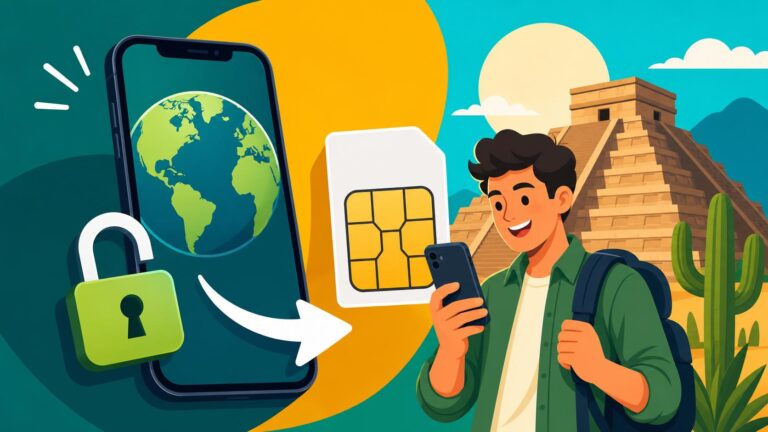
When your home internet fails, your smartphone becomes your best friend. I always recommend having a secondary SIM card from a different network than your primary ISP. Airalo is an excellent tool for this, especially when you first arrive or if you are traveling between cities. It allows you to download an eSIM and get instant data without hunting for a physical SIM card shop. For more permanent backups, brands like Bait (which runs on the Altan Redes network) offer massive amounts of data for very low prices, often around 300 pesos for a month of nearly unlimited use.
Maximizing Your Internet Performance
Sometimes the problem isn't the provider; it's the equipment. Most routers provided by Mexican ISPs are, frankly, subpar. They are often refurbished units with poor range and limited security features.
Investing in Better Hardware
To get the most out of your high-speed connection, I highly recommend bypassing your ISP's router and using your own. You can find high-end mesh Wi-Fi systems on Amazon Mexico that can cover a large Mexican house (which often has thick concrete walls that kill Wi-Fi signals). A mesh system like Eero or TP-Link Deco will ensure you have a strong signal in the bedroom, the kitchen, and the patio. Just plug your third-party router into the ISP's modem and turn off the ISP's Wi-Fi signal to avoid interference.
Finding Emergency Workspace
If your home internet is out and your backup data is crawling, look for a Selina location. These co-living and co-working spaces are designed specifically for travelers and digital nomads. They almost always have redundant high-speed fiber connections and backup generators. Paying for a day pass at a co-working space can be a lifesaver when you have a deadline and your home infrastructure has decided to take a siesta. It's also a great way to meet other expats who have likely dealt with the same frustrations.
Navigating the Installation and Contracts
Bureaucracy in Mexico can be a test of patience. When you call to order internet, the person on the phone will be incredibly polite, but that doesn't mean the technician will show up at 9:00 AM on Monday as promised.
The Installation Process
When the technician finally arrives, be prepared to "hover" a little. In Mexico, it is culturally acceptable (and often necessary) to guide the technician on where you want the wires to run. If you don't speak up, they might take the path of least resistance, which usually involves drilling a hole in the middle of your living room wall. Have a cold bottle of water or a soda ready for them; a little hospitality goes a long way and might even get you a slightly "cleaner" installation.
Understanding the Bill
Your monthly bill will include the Cost of Living in Mexico: 2026 Comprehensive Guide expectations. Most plans start around 400-600 pesos per month for a basic fiber connection. Be aware that most "promotional" rates expire after 6 or 12 months, after which the price will jump by 100 or 200 pesos. Also, keep an eye out for "added services" like Netflix or antivirus software that they might bundle into your bill without you explicitly asking for them.
Final Thoughts on Staying Connected
Living in Mexico is a dream for many, and with the right setup, the "infrastructure hurdles" become minor blips rather than major disasters. By choosing a fiber-to-the-home provider like Totalplay or Telmex, keeping an Airalo eSIM as a backup, and investing in quality hardware from Amazon Mexico, you can enjoy the tacos and the sunshine without sacrificing your professional reliability. If all else fails, grab your laptop and head to the nearest Selina or cafe—sometimes a change of scenery and a strong espresso are exactly what you need to get back online.
Disclaimer
This guide is for informational purposes only. Internet availability, pricing, and service quality in Mexico can change rapidly based on regional infrastructure updates and company policy changes. Always verify current offers and coverage maps with providers directly before signing any contracts or making financial commitments. Your experience may vary based on your specific location and local network conditions.