How to Choose a Dentist for Dental Tourism in Mexico
Staring at a five-figure dental estimate in the US or Canada is enough to make anyone’s heart sink, especially when you realize your insurance barely covers a cleaning. I remember that exact feeling when a local dentist told me I needed three crowns and a bone graft, a price tag that rivaled the cost of a used car. This guide cuts through the noise to help you find a reliable, high-quality Mexican dentist without the stress of the unknown.
Disclosure: This post may contain affiliate links. We may earn a commission at no extra cost to you if you make a purchase through these links. Read full disclosure.
Why Mexico has Become the Global Hub for Dental Care
The reality of dental tourism in Mexico is far from the "back-alley clinic" stereotypes you might hear from skeptics back home. The country has invested heavily in medical infrastructure, and for many of us living here as expats, the care we receive in cities like Querétaro or Merida is often superior to what we had in our home countries. The primary driver is, of course, the Healthcare Costs in Mexico: Doctor Visits, Hospital Stays, and Surgery Expenses. You can generally expect to save between 50% and 70% on major procedures like implants, veneers, and full-mouth restorations.
But it isn't just about the money. The speed of service is a massive factor. In the US, getting a crown often involves two or three appointments over a month. In major Mexican dental hubs, clinics often have on-site CAD/CAM labs that can mill a permanent porcelain crown in a single afternoon. This efficiency is a hallmark of Medical Tourism vs Expat Healthcare: Key Differences and Tips. When you are choosing a dentist, you are looking for this combination of modern technology and specialized expertise.
The reason it is cheaper isn't because the materials are lower quality; in fact, most high-end Mexican clinics use the exact same Swiss or American-made implants and German porcelain as top-tier US offices. The savings come from lower labor costs, lower real estate overhead, and the fact that Mexican dentists don't graduate with $500,000 in student loan debt. This allows them to offer world-class care at a fraction of the price.
How to Verify a Dentist’s Credentials and Expertise
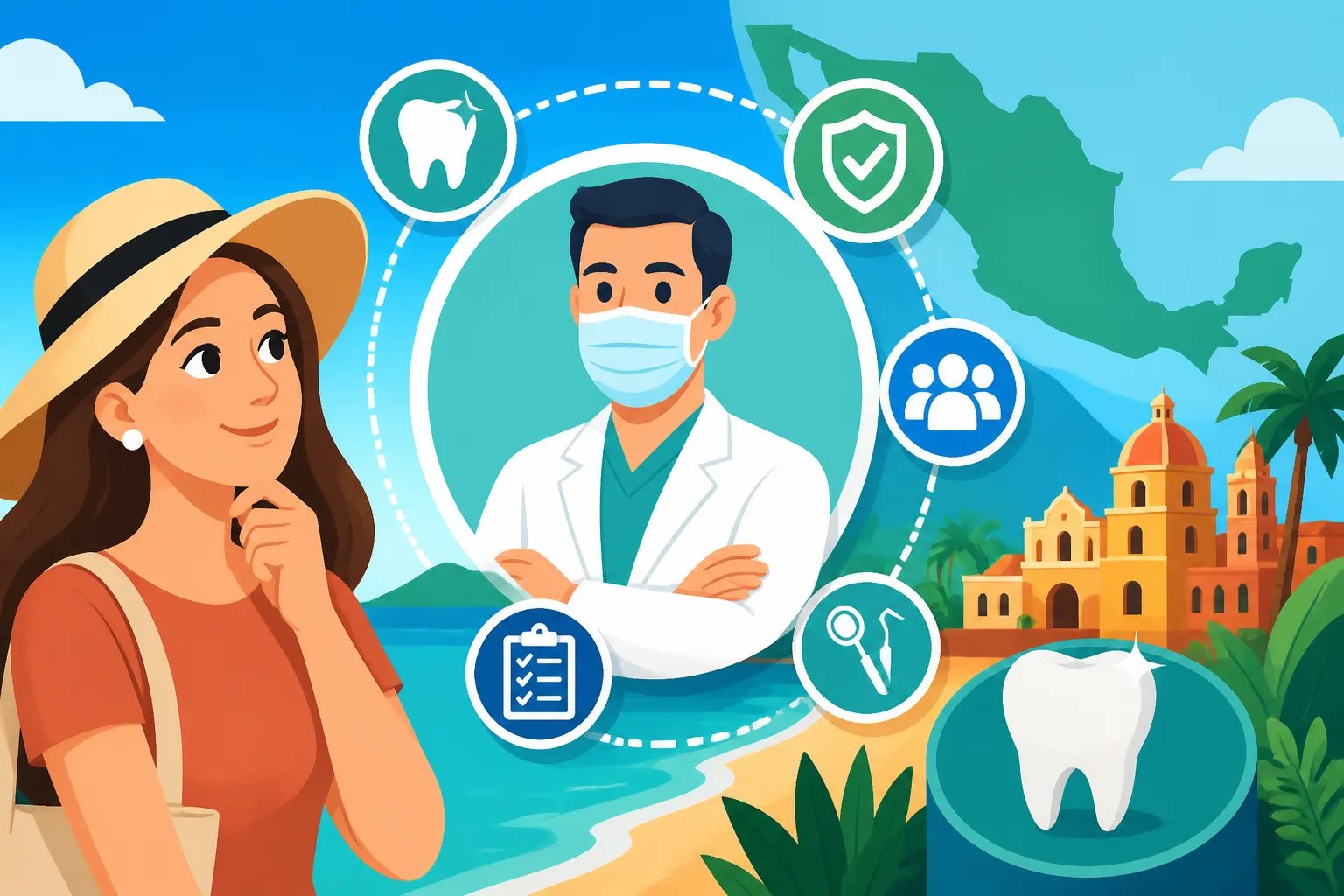
The most common fear I hear from newcomers is, "How do I know if they are actually qualified?" In Mexico, the title for a general dentist is Cirujano Dentista. However, for dental tourism, you usually want a specialist. If you need an implant, you should be looking for a Periodontist or a Maxillofacial Surgeon, not just a general practitioner who "does" implants.
First, check for membership in the Asociación Dental Mexicana (ADM). This is the equivalent of the ADA in the United States. While membership is voluntary, it shows a commitment to continuing education and peer-reviewed standards. Even better, look for dentists who have been board-certified or have received post-graduate training in the US or Europe. Many top-tier dentists in Mexico City or Los Algodones are actually members of the American Academy of Implant Dentistry (AAID).
When vetting, don't be afraid to ask for their "Cédula Profesional" number. This is their official license number issued by the Mexican government. You can actually look this up on the SEP (Secretaría de Educación Pública) website to verify their graduation date and specialty. It’s a quick step that provides a lot of peace of mind. For more on how the broader system works, see our Healthcare in Mexico: Complete Guide for Expats (Public vs Private).
| Procedure | Average Cost in USA/Canada | Average Cost in Mexico | Estimated Savings |
|---|---|---|---|
| Dental Crown (Porcelain/Zirconia) | $1,200 – $2,000 | $350 – $600 | 70% |
| Titanium Dental Implant | $3,000 – $5,000 | $800 – $1,500 | 72% |
| Root Canal (Molar) | $1,000 – $1,500 | $250 – $450 | 73% |
| All-on-4 Dental Implants | $25,000 – $35,000 | $8,000 – $12,000 | 65% |
| Professional Teeth Whitening | $500 – $800 | $150 – $300 | 65% |
Identifying the Right Location for Your Needs
Not all dental destinations in Mexico are created equal. Depending on whether you are looking for a quick border hop or a "dental vacation," your choice of city will change. Los Algodones, often called "Molar City," is a small town near the border of Arizona and California that has more dentists per square mile than anywhere else on earth. It is incredibly convenient for residents of the Southwest, but it can feel a bit like a dental factory.
If you prefer a more traditional vacation feel, Cancun and Playa del Carmen offer high-end clinics that cater specifically to international patients. The benefit here is that you can recover by the beach, though you must be careful about sun exposure and swimming if you’ve had oral surgery. In these areas, Finding English-Speaking Doctors and Specialists in Mexico is incredibly easy, as the staff is almost entirely bilingual to accommodate the high volume of tourists.
For those of us living deeper in the country, cities like Guadalajara and Mexico City offer elite-level specialists who serve the local upper class. These clinics often have the most advanced technology in the country. If you are a digital nomad using something like SafetyWing for your travel medical needs, you might find that these central cities offer a better "living" experience while you wait for your dental lab work to be completed. SafetyWing is great for covering those unexpected non-dental mishaps that can happen while you’re traveling between appointments.
Evaluating the Clinic Facility and Technology
When you walk into a clinic, it should feel like a step into the future, not a relic of the 1980s. High-quality dental tourism clinics in Mexico pride themselves on their tech stack. You should look for (or ask about) 3D Cone Beam CT scans (CBCT). This is essential for dental implants because it allows the surgeon to see your bone density and nerve locations in three dimensions. If a dentist offers to do an implant with only a 2D X-ray, that is a massive red flag.
Cleanliness and sterilization are also paramount. Look for an autoclave in a visible area or ask about their sterilization protocols. Most top clinics use "Class B" autoclaves, which are the gold standard. I always check if the dentist and assistants are using fresh gloves, masks, and disposable barriers on the equipment. If you feel uncomfortable with the hygiene at any point, walk out. There are too many great options in Mexico to settle for a place that makes you nervous.
Furthermore, communication is the bedrock of a good experience. A reputable clinic will provide a detailed, written treatment plan in English before you even leave your house. This plan should break down every cost, including consultations, X-rays, and the materials used. If you are an expat with a comprehensive plan from Cigna Global, check if they offer any reimbursement for international dental care. While Cigna Global is typically for major medical, some of their higher-tier modules include dental benefits that can be used worldwide, including in Mexico.
Navigating the Financials and Insurance Logistics
One of the biggest hurdles is understanding how to pay and how to get reimbursed. Most Mexican dental clinics expect payment at the time of service. For large procedures, they may ask for 50% upfront to cover lab costs and the remaining 50% upon completion. While almost all of them accept credit cards, be aware that many will charge a 3% to 5% "terminal fee" to cover the bank's processing costs. Paying in cash (either Pesos or sometimes US Dollars in border towns) can often snag you a small discount.
If you are a US veteran or have a specific PPO insurance plan, some clinics in Mexico are "in-network" or can at least provide the ADA-coded claim forms you need to file for reimbursement yourself. However, don't count on your standard domestic insurance to make it easy. You should always call your provider beforehand and ask specifically about "out-of-network international reimbursement."
For long-term residents, Choosing Private Health Insurance: Local Mexican Plans vs International Coverage is a vital read. If you have a plan through Cigna Global, you’ll likely have a much easier time with the paperwork, as they are accustomed to international billing. On the other hand, if you are just visiting for a week and encounter a non-dental emergency, having Travel Insurance vs Local Insurance: Do Expats Need Both? is essential. SafetyWing can be a lifesaver if you trip on a cobblestone street while heading to your root canal appointment, ensuring you aren't paying out of pocket for a hospital visit.
Avoiding Common Pitfalls and Red Flags
The "too good to be true" price is the first thing to watch out for. While Mexico is significantly cheaper, if a clinic is quoting you $200 for a dental implant when every other reputable place is quoting $800, they are cutting corners somewhere—likely on the quality of the titanium or the sterilization of the components. High-quality care has a floor price even in Mexico.
Another red flag is the "over-treatment" trap. Some clinics catering to tourists might suggest 20 veneers when you only really need a good whitening and two crowns. If a dentist seems more like a salesperson than a doctor, get a second opinion. This is why I always recommend visiting a clinic for a simple cleaning and consultation first before committing to a $10,000 "smile makeover."
Finally, consider the long-term. What happens if a crown pops off or an implant fails six months later? A reputable dentist will offer a written warranty on their work—often 5 to 10 years for implants and 2 to 5 years for crowns. However, you have to be willing to fly back to Mexico to have it fixed. This is one of the "I've-been-there" realities of Dental Care in Mexico: Quality of Service and Costs for Expats. Always ask, "What is your policy if I have a problem when I get home?"
Preparing for Your Trip and Aftercare
Before you fly down, have your local dentist at home take a full set of X-rays and send them to your Mexican dentist for a preliminary quote. This prevents surprises once you are in the chair. Also, make sure you have a plan for Medical Emergencies in Mexico: What Expats Should Know and Prepare. Know where the nearest hospital is to your dental clinic, just in case.
Aftercare is the most neglected part of dental tourism. If you are having oral surgery, you won't want to fly the next day. The pressure changes in a plane cabin can be incredibly painful for someone with fresh sutures or a sinus lift. Plan to stay at least 3 to 5 days after a major procedure to ensure no immediate infections or complications arise. During this time, keep your SafetyWing information handy, as it provides a safety net for any general health issues that might crop up during your stay.
Lastly, don't forget the cultural aspect. Things move a bit slower in Mexico—the "mañana" culture is real, even in professional settings. Your 10:00 AM appointment might start at 10:30 AM. Pack your patience, bring a book, and remember that the $3,000 you just saved is well worth a thirty-minute wait in a comfortable, air-conditioned lobby. For more on the logistics of living here while getting treatment, check out our Dental Care in Mexico: Quality of Service and Costs for Expats.
Important Medical Disclaimer
The information provided in this guide is for informational and educational purposes only and is based on personal expat experiences and general research. It is not intended as medical advice or a substitute for professional consultation with a qualified healthcare provider or dentist. Always seek the advice of your physician or other qualified health provider with any questions you may have regarding a medical condition or treatment. Never disregard professional medical advice or delay in seeking it because of something you have read in this article. Medical procedures, especially those performed abroad, carry inherent risks, and it is the responsibility of the patient to perform due diligence when selecting a healthcare provider.