Medical Tourism vs Expat Healthcare: Key Differences and Tips
Navigating Mexico’s medical landscape involves understanding the distinct approaches of medical tourism and resident expat healthcare. This guide explores the critical differences in costs, insurance, quality, and continuity of care to help you make informed decisions about your health.
Disclosure: This post may contain affiliate links. We may earn a commission at no extra cost to you if you make a purchase through these links. Read full disclosure.
Defining the Two Healthcare Approaches in Mexico
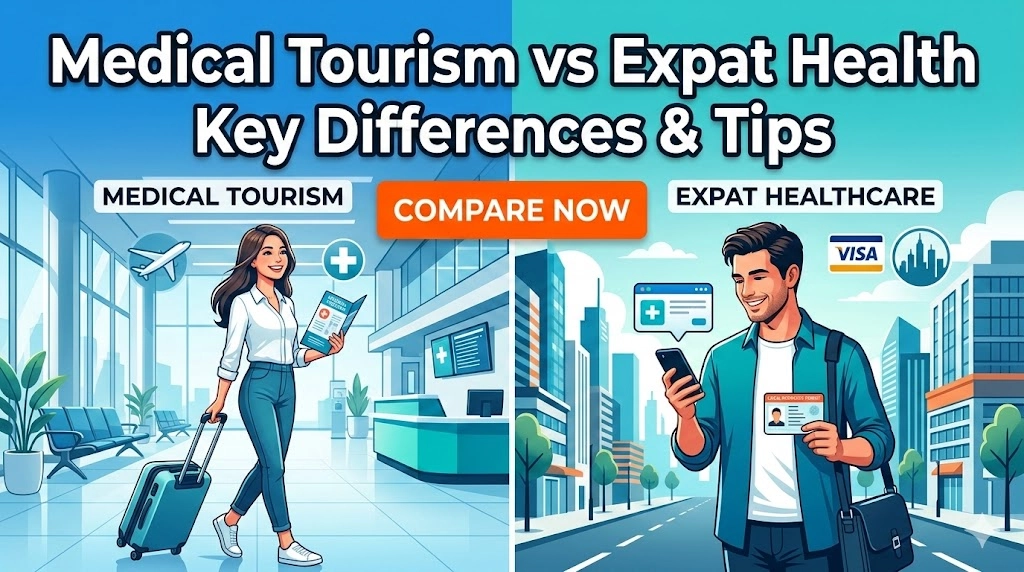
When foreigners interact with the Mexican healthcare system, they generally fall into one of two distinct categories: medical tourists seeking specific procedures, or expatriates living in the country who require ongoing medical integration. Understanding the fundamental differences between these two approaches is critical, as they dictate everything from the clinics you visit to how you pay your medical bills.
The Scope of Medical Tourism
Medical tourism in Mexico refers to the practice of individuals traveling across the border specifically to undergo a medical, dental, or cosmetic procedure. These individuals are not residents of Mexico; they arrive, receive their treatment, complete a brief recovery period, and then return to their home countries. The primary driving force behind this sector is the staggering cost difference. Procedures in Mexico often cost fifty to eighty percent less than they do in the United States or Canada, without sacrificing the quality of the medical technology or the expertise of the physicians.
This sector is highly commercialized and heavily concentrated in border towns like Tijuana and Los Algodones, as well as major resort destinations like Cancún and Puerto Vallarta. Clinics catering to medical tourists operate almost like luxury hospitality businesses. They frequently offer comprehensive packages that include airport transfers, bilingual concierges, hotel accommodations, and the medical procedure itself. The focus is on high-volume, specific interventions, such as bariatric weight-loss surgery, complex dental implants, orthopedic joint replacements, and elective cosmetic surgeries.
Because the patient will only be in the country for a short duration, medical tourism clinics are optimized for speed and efficiency. Diagnostics, consultations, and the surgery itself are often compressed into a timeline of just a few days. While this efficiency is highly convenient for a traveler looking to save money, it is a fundamentally different experience than establishing a long-term relationship with a primary care physician who manages your overall wellness year over year.
The Foundation of Expat Healthcare
Expat healthcare, on the other hand, is the ongoing, holistic medical management of individuals who have chosen to make Mexico their primary or secondary residence. Retirees, digital nomads, and foreign workers living in Mexico need a healthcare strategy that mirrors what they had in their home countries. This involves finding a local general practitioner, managing chronic illnesses, scheduling annual preventative check-ups, and dealing with unexpected ailments like the flu or a sports injury.
Unlike medical tourists who fly in for a single surgery, expats must integrate into the local healthcare infrastructure. This means deciding whether to utilize the public healthcare system, known as the Instituto Mexicano del Seguro Social, or to rely entirely on the private sector. Expats must research local hospitals, understand how local pharmacies dispense medications, and build a network of trusted specialists within their specific city or neighborhood. The focus shifts entirely from a one-off transaction to continuous, preventative health management.
Living in Mexico full-time also means that expats are exposed to different environmental health factors than tourists. They must adapt their immune systems to local water and food, manage seasonal allergies specific to their region, and potentially navigate local tropical diseases if they live on the coast. For those navigating this long-term integration, reviewing a comprehensive overview like Healthcare in Mexico: Complete Guide for Expats Public vs Private provides the necessary groundwork for establishing a safe and sustainable life abroad.
Overlapping Services and Facilities
While the intent and duration of the patient’s stay differ wildly, the physical locations where medical tourists and expats receive care often overlap. Both groups heavily utilize Mexico’s robust private healthcare sector. The top-tier private hospitals in major cities like Monterrey, Guadalajara, and Mexico City are fully equipped to perform complex surgeries for medical tourists while simultaneously serving as the primary emergency and specialist centers for the local expat community.
It is very common to find an expat receiving their routine chemotherapy or managing their diabetes in the exact same state-of-the-art facility where a medical tourist is recovering from a facelift. These premier hospitals employ highly trained, board-certified specialists who often have international training. Because they cater to both wealthy locals and international patients, these facilities maintain rigorous international accreditation standards, such as the Joint Commission International accreditation, ensuring that hygiene, patient safety, and technological capabilities meet global expectations.
However, the way these two groups interact with the hospital administration is completely different. A medical tourist will often be guided through the hospital by a dedicated patient coordinator provided by their medical tourism agency. An expat, conversely, will navigate the hospital independently, booking their own appointments, presenting their own international health insurance cards, and communicating directly with the hospital’s billing department. Understanding these logistical nuances is crucial for navigating Healthcare Costs in Mexico: Doctor Visits Hospital Stays and Surgery Expenses.
Cost Structures and Financial Strategies
The financial mechanisms for paying for healthcare in Mexico differ drastically depending on whether you are a temporary medical visitor or a long-term resident. Medical tourists are typically managing a large, one-time out-of-pocket expense, while expats are balancing ongoing insurance premiums with routine local medical costs.
Out of Pocket Payments for Medical Tourists
The vast majority of medical tourism in Mexico operates on a strict self-pay model. Patients travel abroad precisely because their home country insurance will not cover an elective procedure, or because their domestic deductibles are higher than the total out-of-pocket cost of the surgery in Mexico. Medical tourism clinics require transparent, upfront payments, and usually demand a significant deposit before the patient even crosses the border to secure the operating room and the surgeon’s time.
When dealing with medical bills that range from three thousand to fifteen thousand dollars, managing the logistics of the payment is a significant concern. Using a standard foreign credit card to pay a Mexican clinic often results in steep international transaction fees and highly unfavorable currency conversion rates applied by traditional banks. Carrying large sums of physical cash across the border is incredibly risky and generally discouraged by authorities on both sides.
To circumvent these financial penalties, many savvy medical tourists utilize multi-currency transfer platforms like Wise to pay their clinic invoices. By transferring funds directly from their home bank account to the clinic’s Mexican bank account using the mid-market exchange rate, patients can save hundreds of dollars in hidden banking fees. This ensures that their medical budget is spent entirely on high-quality surgical care rather than enriching financial institutions.
Local and International Insurance for Expats
Expats living in Mexico must take a completely different financial approach, prioritizing long-term risk mitigation over single-procedure discounts. While everyday doctor visits in Mexico are incredibly affordable—often costing the equivalent of thirty to fifty US dollars—a catastrophic accident or the sudden onset of a severe illness like cancer can quickly bankrupt an uninsured expat. Therefore, securing robust health insurance is the absolute cornerstone of expat financial planning.
Many foreign residents choose to purchase premium global health insurance. Policies from providers like Cigna Global are specifically designed for the expatriate lifestyle. These comprehensive plans offer high coverage limits for inpatient surgeries, intensive care, and specialized treatments, allowing the expat to choose any private hospital in Mexico. Furthermore, if the expat travels back to their home country to visit family, their international policy often travels with them, providing seamless global protection.
Deciding between a local Mexican private policy and an international expat policy is a complex decision based on age, pre-existing conditions, and travel habits. Local policies are generally cheaper but feature much smaller provider networks and strict domestic limitations. For a deep comparative analysis of these options, expats should thoroughly review Choosing Private Health Insurance: Local Mexican Plans vs International Coverage to ensure they select a policy that genuinely protects their long-term financial stability.
Hidden Costs in Cross Border Care
When evaluating the cost-effectiveness of medical tourism, the sticker price of the surgery is only one part of the equation. Medical tourists must meticulously budget for hidden logistical costs. These include round-trip international flights, hotel accommodations for a required recovery period before flying is deemed safe, specialized post-operative garments, and the cost of food and local transportation while staying in a foreign city.
Expats, on the other hand, do not face these travel-related healthcare costs because they are already situated in their home environment. However, expats face their own set of hidden medical expenses. For example, maintaining a specialized, imported diet for a chronic health condition can be expensive in Mexico. Many expats rely on ordering specific high-quality nutritional supplements, specialized probiotics, and familiar wellness products through international retailers like iHerb because these exact formulations are often unavailable or prohibitively expensive in local Mexican pharmacies.
Furthermore, expats must consider the cost of medical inflation and rising insurance premiums as they age in Mexico. While a surgery might be cheap today, an expat must plan their retirement budget around the assumption that private insurance premiums will increase annually. Proper financial planning requires looking beyond the immediate cost of a single doctor’s visit and preparing for a lifetime of healthcare needs abroad, a concept further explored in Medical Emergencies in Mexico: What Expats Should Know and Prepare.
Continuity of Care and Long Term Management
The most profound difference between medical tourism and expat healthcare lies in the continuity of care. Medical care is rarely a single event; it requires preparation, execution, and extensive follow-up. How a patient handles the aftermath of a medical procedure defines the safety and success of their healthcare journey.
Short Term Procedures and Recovery
Medical tourism is inherently transactional. A patient arrives, undergoes a complex procedure like a gastric bypass or a full mouth of dental veneers, and stays in a designated recovery hotel for a few days to a week. During this immediate post-operative window, the Mexican clinic provides intense, high-quality monitoring. Nurses check vital signs, surgeons perform brief follow-up examinations, and pain management is strictly controlled.
However, once the patient is cleared to fly and returns to their home country, the continuity of care abruptly severs. If a complication arises three weeks later—such as a localized infection, unexpected swelling, or an issue with a dental implant—the patient faces a severe dilemma. They must either bear the expense and physical pain of flying back to Mexico to see their original surgeon, or they must find a local doctor in their home country willing to take over a complex case initiated by a foreign physician.
Many domestic doctors are highly reluctant to treat complications arising from medical tourism due to liability concerns and a lack of access to the original surgical notes. This discontinuity is the highest risk associated with medical tourism. Patients who choose this route must be extraordinarily proactive, securing all medical records, operative reports, and X-rays before leaving Mexico, and ideally arranging a willing local doctor for follow-up care before they even book their flight. For specific insights into common procedures, reading Dental Care in Mexico: Quality of Service and Costs for Expats can provide realistic expectations regarding follow-up requirements.
Managing Chronic Conditions as a Resident
For expats, continuity of care is the primary goal of their medical strategy. Living in Mexico allows foreign residents to establish deep, ongoing relationships with local medical professionals. If an expat has a chronic condition like hypertension, rheumatoid arthritis, or diabetes, they can see the exact same specialist every few months. This physician comes to understand the patient’s baseline health, their reaction to specific medications, and their personal lifestyle habits.
This ongoing relationship is crucial for adjusting treatments over time. A Mexican specialist can order regular blood work at local laboratories, monitor the progression of a disease, and seamlessly refer the patient to other trusted colleagues within their local network if new symptoms arise. The expat never has to worry about flying across a border to get a prescription refilled or to have a concerning symptom checked; their medical support system is deeply rooted in their own neighborhood.
Managing chronic illnesses abroad requires a proactive approach to sourcing medications. While Mexico has excellent pharmacies, expats must ensure their specific, life-saving drugs are consistently available in the local market. Building a reliable health routine often involves mixing local prescriptions with imported holistic support. Many expats order their daily joint-support supplements, specific vitamin complexes, and organic health foods from iHerb to perfectly complement the medical treatments prescribed by their local Mexican physicians.
Establishing a Local Medical Network
Integrating into the Mexican healthcare system as an expat requires actively building a personal medical network. This process begins by finding a highly recommended General Practitioner or internist who serves as the central hub for your health. A good GP will not only treat your seasonal colds but will act as a trusted advisor, directing you to the best cardiologists, dermatologists, and physical therapists in the city.
Building this network relies heavily on community knowledge. Expats frequently consult local social media groups, neighborhood forums, and international community centers to gather reviews on bilingual specialists and modern diagnostic centers. Once you find a doctor you trust, they become an invaluable resource for navigating the broader, sometimes confusing, medical landscape of the country.
Establishing this network also involves finding a reliable local pharmacy and understanding how emergency services operate in your specific municipality. It is a slow process of trial and error, but the ultimate result is a robust safety net that provides peace of mind. For those just starting this process, utilizing guides like Finding English Speaking Doctors and Specialists in Mexico is an excellent first step in identifying qualified professionals to anchor your new healthcare network.
Navigating Logistics and Legalities
The legal framework and logistical hurdles surrounding healthcare in Mexico differ based on your immigration status and the duration of your stay. From bringing medications across international borders to dealing with medical bureaucracy, tourists and residents face distinct challenges.
Visas and Legal Status for Treatment
Medical tourists typically enter Mexico using a standard tourist permit, officially known as a Forma Migratoria Múltiple. This permit allows visitors from many countries, including the US and Canada, to remain in Mexico for a specified period, typically up to 180 days, though border agents have discretion over the exact length granted. For a standard cosmetic surgery or a week of extensive dental work, a tourist visa is perfectly sufficient, and the clinic will rarely ask about your immigration status.
However, expats living in Mexico must formalize their legal status to access certain tiers of healthcare. If an expat wishes to enroll in the public IMSS healthcare system, they must hold a valid Temporary or Permanent Resident visa and possess a CURP (a unique population registry code). The public healthcare system is entirely off-limits to tourists or those overstaying their visitor permits.
Even in the private sector, holding formal residency has logistical benefits. Many private Mexican health insurance companies require applicants to prove legal residency before issuing a policy. Furthermore, establishing a formal relationship with a primary care doctor is significantly easier when you have a local address, a local phone number, and a recognized legal status in the country, demonstrating that you are a permanent part of the community rather than a transient visitor.
Bringing Prescription Medications Across Borders
Both medical tourists and expats frequently need to transport prescription medications into Mexico, but the regulatory scrutiny can be intense. Mexican customs officials enforce strict rules regarding controlled substances, particularly narcotics, psychotropics, and certain stimulants that may be legal in the US or Canada but are heavily restricted or outright banned in Mexico.
Medical tourists arriving with a short-term supply of pain medication or antibiotics generally face few issues, provided the medication is in its original, clearly labeled prescription bottle. However, expats moving to Mexico with a six-month supply of chronic disease medication will likely trigger a secondary customs inspection. To avoid confiscation, expats must carry formal, translated letters from their home country physicians explaining the exact medical necessity of the large quantity.
Once an expat is settled in Mexico, the goal is to transition entirely away from importing drugs and begin sourcing them locally. A Mexican specialist must evaluate the expat and issue a local Mexican prescription for the required medications. Navigating these customs rules is complex, and anyone planning to transport significant medical supplies should carefully review the protocols detailed in Bringing Prescription Medications from Home: Rules and Tips for Expats.
Language Barriers and Cultural Nuances
Language is one of the most significant logistical barriers in healthcare. The medical tourism industry has largely solved this problem through extreme commercialization. Clinics catering to Americans and Canadians intentionally hire fully bilingual surgeons, nurses, and administrative staff. Every intake form, medical waiver, and post-operative instruction manual is provided in perfect English. The cultural approach is tailored precisely to North American expectations of customer service.
Expats, particularly those living outside of major tourist hubs like Los Cabos or the Riviera Maya, face a much steeper linguistic challenge. While top specialists in cities like Guadalajara or Mérida often speak English, the receptionists, emergency room triage nurses, and local pharmacists almost certainly will not. An expat must learn to navigate the cultural nuances of Mexican medical administration entirely in Spanish.
Furthermore, the bedside manner and cultural expectations of medicine differ in Mexico. Doctors often adopt a more paternalistic, authoritative approach, and family members are expected to be deeply involved in hospital care, often staying in the room to bathe and feed the patient. Expats must learn to advocate for themselves respectfully while adapting to these local norms. Learning specific medical vocabulary and utilizing strategies outlined in Overcoming Language Barriers at the Doctor: Tips for Expats are essential skills for any foreign resident.
Making the Right Choice for Your Health Needs
Deciding whether to utilize Mexico solely as a destination for medical tourism or to fully integrate into its healthcare system as an expat depends entirely on your lifestyle, your medical needs, and your long-term goals. Both approaches offer incredible benefits, but they serve vastly different purposes.
When to Choose Medical Tourism
Medical tourism is the optimal choice for individuals who live full-time in their home country but face insurmountable financial barriers to specific, elective, or non-urgent procedures. If you require a complex dental restoration that your domestic insurance refuses to cover, or if you are seeking cosmetic enhancements that are prohibitively expensive locally, traveling to a reputable Mexican clinic is a highly pragmatic financial decision.
It is also an excellent option for relatively healthy individuals who simply need a one-off intervention and have the logistical support in their home country to manage any potential follow-up care. The key to successful medical tourism is intense, uncompromising research. Patients must vet the clinic’s international accreditations, verify the surgeon’s specific board certifications, and arrange safe, secure payment methods using international transfer tools like Wise to avoid extreme credit card surcharges.
However, medical tourism is never recommended for highly complex oncology treatments, severe neurological conditions, or any illness that requires years of continuous, highly specialized adjustments and monitoring. The sheer logistics of managing a severe chronic illness across an international border are exhausting, expensive, and medically risky.
When Full Expat Healthcare Integration is Best
Full integration into the Mexican healthcare system is necessary for anyone planning to spend more than six months of the year in the country. For retirees relocating to Lake Chapala, digital nomads setting up a base in Mexico City, or families moving to Querétaro, treating Mexico as a medical tourism destination is simply unfeasible. You cannot fly back to your home country every time you get a sinus infection or need a routine blood test.
Expats must fully embrace the local medical infrastructure. This means finding a trusted local doctor, understanding the layout of the nearest private hospital, and securing a comprehensive international health policy from providers like Cigna Global to protect against catastrophic events. It requires a willingness to learn the medical culture, navigate the language barrier, and build a localized support system.
By integrating fully, expats unlock the true benefit of Mexican healthcare: highly personalized, deeply empathetic, and incredibly affordable long-term medical care. They benefit from doctors who give out their personal cell phone numbers, clinics that treat patients like family, and an overall medical culture that prioritizes the human element of healing over the sterile efficiency of corporate medicine.
Preparing for Unforeseen Medical Emergencies
Whether you are in Mexico for a five-day surgical vacation or a twenty-year retirement, unforeseen medical emergencies can and do happen. A car accident, a sudden cardiac event, or a severe bout of food poisoning does not care about your visa status or your planned itinerary.
Medical tourists should never travel without comprehensive travel medical insurance that explicitly covers medical evacuation. If a surgical complication requires emergency airlift back to a US hospital, the out-of-pocket cost can easily exceed fifty thousand dollars. Expats, relying on their international health policies, must ensure they know exactly which local private hospitals accept their insurance for direct billing during a crisis.
Preparation is the ultimate equalizer in foreign healthcare. Keep physical copies of your medical history, a list of your daily medications (and their Spanish equivalents), and your insurance details easily accessible at all times. By understanding the distinct realities of both medical tourism and expat healthcare, you can ensure that your time in Mexico is defined by vibrant health and profound peace of mind.
| Feature | Medical Tourism | Expat Healthcare |
| Primary Focus | Single, specific elective or surgical procedures. | Ongoing, holistic preventative and chronic care. |
| Typical Duration | Days to a few weeks, followed by return home. | Years to decades of continuous residency. |
| Payment Method | Strict out-of-pocket, often requiring upfront deposits. | Mix of affordable out-of-pocket and comprehensive insurance. |
| Continuity of Care | Extremely low. Follow-up is difficult across borders. | Extremely high. Deep relationship with local doctors. |
| Legal Status Needed | Standard tourist visa (FMM) is sufficient. | Temporary or Permanent Residency is highly beneficial. |
| Language Dynamics | Clinics are fully bilingual and cater to English speakers. | Requires navigating local Spanish in neighborhood clinics. |
References
Primary sources (official)
- Centers for Disease Control and Prevention (CDC) – Medical Tourism Guidelines: https://wwwnc.cdc.gov/travel/page/medical-tourism
- Mexican Ministry of Tourism (SECTUR) – Health and Wellness Tourism: https://www.gob.mx/sectur
Other helpful sources
- Patients Beyond Borders – Mexico Overview: https://patientsbeyondborders.com/mexico
- International Medical Travel Journal (IMTJ): https://www.imtj.com/
Disclaimer
The information provided in this article is for educational and informational purposes only and does not constitute medical, financial, or legal advice. Healthcare regulations, hospital protocols, and insurance coverages in Mexico are subject to change without notice. Always consult directly with a qualified, licensed medical professional before undergoing any surgical procedures abroad or altering your long-term healthcare management strategy.