Home Nursing and Caregivers: Options for Elderly Expats in Mexico
Deciding to spend your golden years in Mexico is a dream for many, drawn by the warm climate, vibrant culture, and lower cost of living. However, aging abroad comes with the inevitable reality of declining health and mobility. I have seen fiercely independent expats suddenly realize they can no longer manage their large colonial homes or safely navigate uneven cobblestone streets after a minor fall. This guide breaks down exactly how to hire, manage, and budget for home nursing and caregivers in Mexico, ensuring you or your loved ones can age in place safely and comfortably.
Disclosure: This post may contain affiliate links. We may earn a commission at no extra cost to you if you make a purchase through these links. Read full disclosure.
The Cultural Approach to Elder Care in Mexico
To successfully arrange home care in Mexico, you must first understand how the local culture views aging. The Mexican approach to elder care is fundamentally different from the institutionalized models common in the United States, Canada, or the United Kingdom.
Family-Centric Care vs Institutional Care
In traditional Mexican culture, placing an elderly parent in a nursing home (asilo de ancianos) is historically viewed with deep stigma. Elder care is overwhelmingly a family responsibility, with multiple generations often living under one roof or in close proximity to share the caregiving duties.
Because of this intense family-centric model, the domestic market for large, corporate assisted-living facilities is relatively small, though it is growing in expat-dense areas like Lake Chapala, San Miguel de Allende, and Merida. Instead, the local infrastructure is highly optimized for in-home care. There is a massive, highly accessible workforce of individuals accustomed to providing domestic support and bedside care directly within private residences.
The Rise of Expat-Focused Nursing Services
As the foreign retiree population in Mexico has exploded, a parallel industry has emerged specifically to cater to expats. In major retirement hubs, you will find highly organized, bilingual home-care agencies. These agencies vet their staff, handle all the payroll taxes, and provide reliable scheduling.
However, hiring through an expat-focused agency carries a significant premium. Many veteran expats choose to bypass these agencies and hire local caregivers directly through word-of-mouth recommendations. While direct hiring is drastically cheaper, it requires you to act as the employer, manage the schedule, and navigate cultural and language barriers on your own. To understand how these localized services fit into your broader medical strategy, reviewing Public Healthcare in Mexico: IMSS and IMSS Bienestar Explained for Expats provides essential context on what the government will and will not cover regarding senior care.
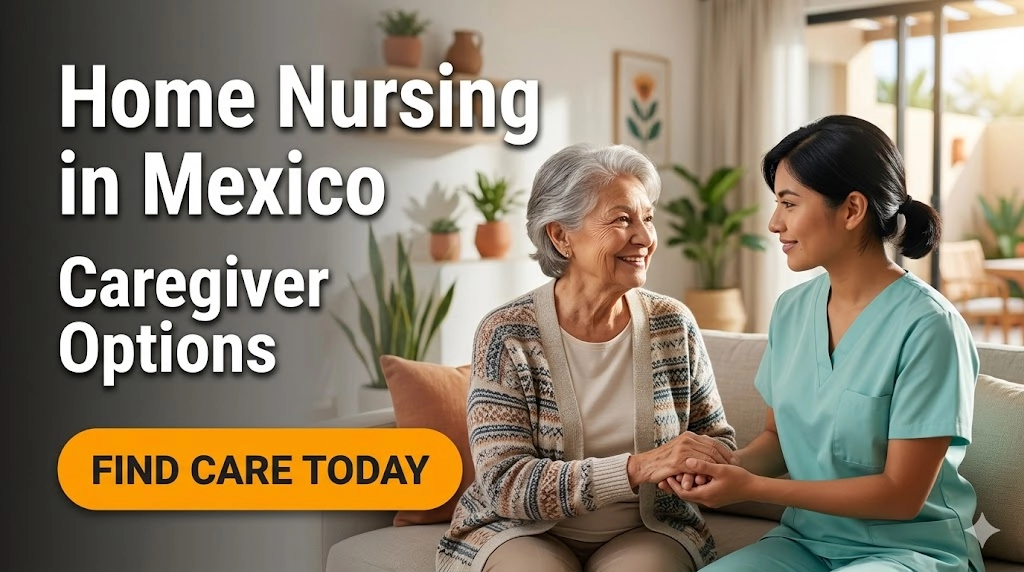
Types of In-Home Care Providers
Not all caregivers are created equal. When building your support team, you must accurately assess your medical needs to avoid overpaying for unnecessary medical credentials or, conversely, hiring an unqualified person for a complex clinical task.
Domestic Helpers (Empleadas Domésticas)
If you are generally healthy but struggling with the physical demands of daily life, a standard domestic helper is often the perfect solution. They are not medical professionals, but they provide invaluable support that allows seniors to maintain their independence.
- Duties: Cooking meals, cleaning the house, doing laundry, grocery shopping, and providing basic companionship.
- Best For: Fully ambulatory seniors who simply need help maintaining their household and running errands safely.
Certified Caregivers (Cuidadores)
A cuidador is the equivalent of a Certified Nursing Assistant (CNA) or a dedicated elder-care companion. They have specific training in handling mobility issues, basic hygiene, and senior safety, but they are not licensed to perform invasive medical procedures.
- Duties: Assisting with bathing and toileting, helping with wheelchair transfers, ensuring daily medications are taken on time, monitoring basic vitals (blood pressure, temperature), and accompanying the patient to doctor’s appointments.
- Best For: Seniors dealing with early-stage dementia, severe arthritis, or those recovering from a minor surgery who need physical assistance but not active medical intervention.
Registered Nurses (Enfermeras Tituladas)
If you require clinical medical care at home, you must hire a fully licensed nurse (enfermera/enfermero). In Mexico, nurses are highly trained and fully capable of managing complex bedside medical needs.
- Duties: Administering IV medications, managing feeding tubes, performing complex wound care, administering intramuscular injections, and monitoring severe chronic illnesses.
- Best For: Bedbound patients, palliative or hospice care, or seniors recovering from major orthopedic or cardiac surgeries.
Costs and Managing the Financial Reality
The affordability of one-on-one, dedicated home care is arguably the greatest advantage of retiring in Mexico. In the United States, 24/7 in-home nursing can easily bankrupt a family within months. In Mexico, it is a realistic option for middle-class retirees.
Estimated Caregiver Costs in Mexico
Caregiver rates vary significantly based on your geographic location (expensive coastal resorts vs. affordable interior highlands), the caregiver’s level of English, and whether you hire through an agency or directly.
Here is a realistic breakdown of what you can expect to pay for in-home care in Mexico (estimated in USD for clarity):
| Type of Care Provider | Direct Hire (Hourly Rate) | Agency Hire (Hourly Rate) | Typical Monthly Cost (Full-Time, 40 hrs/wk) |
| Domestic Helper | $3.00 – $5.00 | $5.00 – $8.00 | $500 – $800 |
| Cuidador (Caregiver) | $4.00 – $7.00 | $7.00 – $12.00 | $700 – $1,200 |
| Registered Nurse | $8.00 – $15.00 | $15.00 – $25.00 | $1,500 – $3,000+ |
Note: Hiring a live-in caregiver (planta) often involves a negotiated flat weekly or monthly rate rather than a strict hourly calculation, and requires providing them with a private room and meals.
Protecting Your Finances with International Insurance
While paying $1,000 a month for a dedicated caregiver is highly manageable for many expats, it creates a dangerous illusion of total medical security. A caregiver can monitor your vitals, but if you suffer a massive stroke or a severe fall that shatters your hip, you will instantly require a private hospital emergency room.
Private hospitals in Mexico ruthlessly demand massive cash or credit card deposits—often between $3,000 and $5,000 USD—before they will admit an elderly patient. Relying entirely on out-of-pocket cash is a massive gamble. Securing a premium international health insurance policy from Cigna Global provides the ultimate catastrophic safety net.
If your caregiver has to call an ambulance, a robust Cigna Global policy ensures you have VIP access to Mexico’s premier private hospitals. The hospital’s international desk will coordinate billing directly with Cigna Global, completely bypassing the terrifying cash deposits that wipe out retirement savings. To fully understand how sudden hospitalizations are billed, review Healthcare Costs in Mexico: Doctor Visits, Hospital Stays, and Surgery Expenses.
Daily Wellness and Medication Management
Aging safely at home requires meticulous management of your daily environment, specifically regarding nutrition and pharmaceuticals.
Navigating Local Pharmacies
Your caregiver will likely be responsible for picking up your medications. You must establish a clear protocol for this, as the Mexican pharmacy system operates differently than in the US or UK. Many blood pressure or cholesterol medications can be purchased over the counter, but strict antibiotics and strong painkillers require physical, stamped prescriptions from a local doctor. You must ensure your caregiver knows exactly which local pharmacy (Farmacias del Ahorro, San Pablo, etc.) stocks your specific brands. To streamline this process, educate yourself and your care team by reading Pharmacies in Mexico: How to Get Medications (OTC vs Prescription).
Supplementing Your Health Routine
While local pharmacies are excellent for standard pharmaceuticals, they severely lack high-quality, specialized nutritional supplements tailored for seniors. Mexican commercial pharmacies rarely stock bioavailable joint-support formulas (like advanced Glucosamine/Chondroitin), high-potency Omega-3s for cognitive health, or specialized multi-strain probiotics needed to maintain a senior’s delicate digestive tract.
To prevent cognitive and physical decline, veteran expats bypass the local supply chain entirely by relying on iHerb. By ordering directly through iHerb, you or your caregiver can secure premium, internationally certified wellness supplements and have them shipped reliably to your Mexican residential address. Building a preventative health regimen with iHerb ensures your body receives the exact nutritional support it needs, drastically reducing your reliance on local emergency rooms and improving your daily quality of life.
Legal and Logistical Considerations for Employers
If you decide to hire a caregiver directly rather than using an agency, you legally become an employer in Mexico. You must respect local labor laws to avoid massive legal liabilities.
The Aguinaldo (Christmas Bonus)
Under Mexican labor law, every employee—including domestic workers and direct-hire caregivers—is legally entitled to an Aguinaldo, or Christmas bonus. This is non-negotiable. The minimum legal requirement is 15 days of their standard pay, and it must be paid in cash before December 20th of every year. Failing to pay the Aguinaldo can result in severe labor disputes.
Clear Contracts and Boundaries
When hiring directly, you must establish clear, written boundaries regarding duties, hours, and expectations.
- Schedule: Will they work a standard 8-hour shift, or are you hiring a live-in (planta)? Live-in caregivers still require mandated rest days (usually one and a half to two days off per week).
- Meals: It is standard cultural practice in Mexico to provide meals for your domestic staff and caregivers while they are on shift in your home.
- Language: If you do not speak Spanish, you must prioritize hiring a bilingual caregiver or establish a highly effective system using translation apps, as miscommunicating medication dosages can be fatal. For more on navigating these linguistic hurdles, review Overcoming Language Barriers at the Doctor: Tips for Expats.
By combining the daily, affordable support of a dedicated local caregiver, the proactive nutritional backing of iHerb, and the ironclad emergency financial protection of Cigna Global, you can build an incredibly robust, dignified support system that allows you to enjoy your Mexican retirement with absolute peace of mind.
References
Primary sources (official)
- Instituto Nacional de las Personas Adultas Mayores (INAPAM): The Mexican federal agency dedicated to the well-being, rights, and inclusion of senior citizens in Mexico. https://www.gob.mx/inapam
Other helpful sources
- Procuraduría Federal de la Defensa del Trabajo (PROFEDET): The federal labor defense office detailing the exact legal rights of domestic workers, including the mandatory Aguinaldo and rest days. https://www.gob.mx/profedet
Disclaimer
The information provided in this guide is for educational, logistical, and informational purposes only and does not constitute formal medical, legal, or financial advice. Mexican labor laws regarding domestic workers and caregivers are legally binding and subject to specific state interpretations. Always consult with a licensed Mexican labor attorney or a formalized nursing agency when drafting employment contracts, and verify your emergency hospital coverage limits directly with your health insurance provider prior to a medical crisis.