What to Do in a Medical Emergency in Mexico
Imagine you’re enjoying a quiet evening in your rental home in Puerto Vallarta when a sudden, sharp chest pain strikes, or perhaps you’re navigating the cobblestone streets of San Miguel de Allende and take a tumble that looks like a broken hip. I remember the sheer, cold panic I felt when my young son had a breathing emergency in a small town outside of Mérida; I realized at that moment that knowing "911" exists wasn't the same as knowing how to get help. This guide solves that terrifying gap by providing a step-by-step protocol for navigating medical emergencies in Mexico, from the first phone call to the final hospital bill.
Disclosure: This post may contain affiliate links. We may earn a commission at no extra cost to you if you make a purchase through these links. Read full disclosure.
Immediate Action: Dialing for Help and the Reality of 911
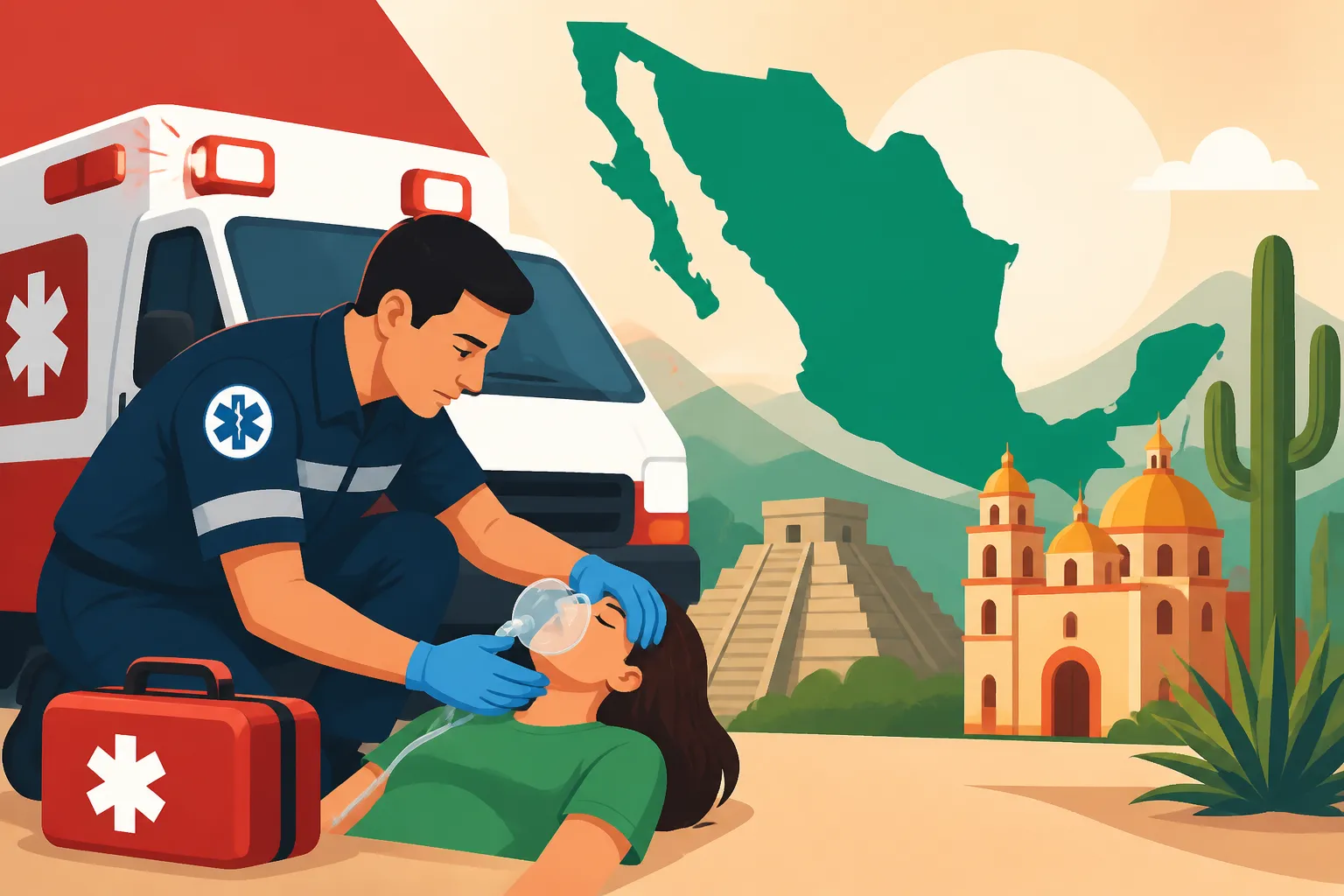
The first thing you need to know is that Mexico does use 911 as its primary emergency number. However, expecting it to function exactly like the dispatch systems in the U.S., Canada, or the UK is a recipe for frustration. When you dial 911 in Mexico, you are connected to a centralized dispatcher who will ask for your location and the nature of the emergency. While major expat hubs like Mexico City or Playa del Carmen often have English-speaking dispatchers, it is never a guarantee. If your Spanish is shaky, this is the moment where the adrenaline-fueled language barrier hits hardest.
You should also be aware of the "Cruz Roja" (Red Cross). In many parts of Mexico, the Red Cross is the primary responder for accidents and trauma. Their services are generally free or donation-based, but they are often stretched thin. In a life-threatening situation, you may find that the quickest way to a hospital is not an ambulance but a private vehicle or a taxi, depending on your location. This is a hard truth many foreigners struggle to accept, but in rural areas or during heavy traffic in places like Guadalajara, waiting for a government-dispatched ambulance can take significantly longer than expected.
Another nuance to consider is the distinction between public and private ambulances. Public ambulances (like those from the Red Cross or the state health services) will almost always take you to a public hospital. If you have private insurance or the means to pay, you generally want to go to a private facility. Many private hospitals maintain their own fleet of ambulances. If you are living in a specific city, you should have the direct phone number for the nearest private hospital’s ER and their ambulance service saved in your phone. This bypasses the 911 queue and ensures you are taken directly to a facility that meets international standards. For a deeper dive into these logistics, read Calling an Ambulance in Mexico: How Emergency Services Operate to understand how to navigate these specific calls.
Choosing the Right Facility: Private vs. Public Hospitals
When you are in the middle of a crisis, the choice of hospital is the most critical decision you will make. Mexico operates a two-tiered healthcare system. On one side, you have the public sector, which includes the IMSS (Instituto Mexicano del Seguro Social) and IMSS-Bienestar. These facilities are often overcrowded, and the wait times for non-life-threatening procedures can be grueling. For an expat, the public system is usually a fallback option. You can learn more about this in Public Healthcare in Mexico: IMSS and IMSS Bienestar Explained for Expats.
On the other side is the private sector. If you are in a major city, hospitals like the ABC Medical Center in Mexico City or the Hospital Ángeles network are world-class. These facilities offer state-of-the-art technology and many doctors who were trained in the U.S. or Europe. However, they function as businesses. In a private ER, the level of care is excellent, but you will be expected to provide proof of payment or insurance immediately upon arrival. For a comparison of what to expect, check out Healthcare in Mexico: Complete Guide for Expats (Public vs Private).
The geographical location of your emergency also dictates your options. If you are in the capital, you should consult Healthcare in Mexico City: Top Hospitals and Clinics for Expats to identify the top-tier trauma centers before you actually need them. If you are further north, Healthcare in Monterrey: What Expats Need to Know provides a similar roadmap for that region's highly advanced medical hub.
| Feature | Private Hospitals | Public Hospitals (IMSS/ISSSTE) |
|---|---|---|
| Wait Times | Minimal to moderate | Can be very long |
| English Speaking Staff | High probability in expat areas | Low probability |
| Upfront Payment | Required (Credit card or insurance) | Minimal if enrolled; variable if not |
| Equipment Quality | Latest international standards | Varies; often basic in rural areas |
| Room Comfort | Private suites common | Wards or shared rooms |
The Financial Side: Payments, Deposits, and Insurance
This is where the "I've-been-there" reality gets uncomfortable. In Mexico, private hospitals will often not admit you—even in an emergency—without a "garantía" (guarantee). This usually means a credit card swipe for a significant deposit, sometimes ranging from $2,000 to $10,000 USD depending on the severity of the situation. It doesn't matter if you have the best insurance in the world; if the hospital doesn't have a direct-billing agreement with your provider, you are the one responsible for the bill in the moment.
This is why having a plan for Health Insurance in Mexico: How Expats Can Get Coverage (2027) is so vital. If you are using a provider like Cigna Global, they often have dedicated coordinators who can work with major Mexican hospitals to issue a "Letter of Guarantee," which can waive that massive upfront deposit. On the other hand, if you are a digital nomad or short-term traveler using SafetyWing, you may need to pay out-of-pocket first and then file for reimbursement later. SafetyWing is excellent for covering unexpected accidents and acute illnesses, but you must keep every single receipt and a detailed medical report from the attending physician.
Understanding the administrative side is just as important as the medical side. You should read Do Mexican Hospitals Require Payment Upfront? How Billing Works for Expats to prepare yourself for the "voucher" system, where the hospital may keep an open charge on your credit card throughout your stay. It feels mercenary when you’re in pain, but it is the standard operating procedure for private healthcare in Mexico. If you are trying to decide between different types of coverage, Choosing Private Health Insurance: Local Mexican Plans vs International Coverage will help you weigh the pros and cons of local insurers like GNP vs. international giants.
Navigating the Language Barrier and Patient Rights
In the heat of a medical crisis, your ability to communicate your symptoms, allergies, and medical history is life-saving. Even in top-tier private hospitals, the nursing staff and administrative clerks may not speak fluent English, even if the doctors do. This can lead to significant misunderstandings regarding your care or your bill. It is highly recommended to have a few key phrases written down or stored on your phone. Better yet, consult Overcoming Language Barriers at the Doctor: Tips for Expats for strategies on how to ensure you are being understood.
You also need to understand your rights as a patient. In Mexico, you have the right to receive a detailed breakdown of your charges—a "factura" (official tax invoice). If you intend to be reimbursed by an international insurer, a simple receipt is not enough; you must ask for a "CFDI" or a formal medical report signed by the doctor. If you find yourself in a situation where the hospital is refusing to release you until the bill is paid (a practice that is technically illegal but still occurs in some areas), having your embassy’s number and your insurance coordinator on speed dial is essential.
Preparation is your best defense. I always tell new expats to keep a "folder of doom" by the front door. This should contain copies of your passport, your residency card, your insurance policy, and a list of any chronic conditions or medications you take. If you are managing a long-term issue, Managing Chronic Illness in Mexico: Access to Medication and Specialists provides excellent context on how to keep your medical records organized for a local doctor. Furthermore, knowing What to Expect During a Hospital Stay in Mexico: A Patient’s Perspective can take some of the mystery and fear out of the process.
Essential Practical Preparation and Prevention
The best way to handle an emergency is to have the groundwork laid out before it happens. This means more than just knowing where the hospital is. It means knowing the route, the parking situation, and even which entrance is the ER entrance (often marked as "Urgencias"). If you have children, you should specifically look for a facility with a 24-hour pediatric emergency wing. You can find more on this in Pediatric Care in Mexico: Healthcare for Expat Children.
Also, consider the "pre-emergency" scenarios. Sometimes a situation is urgent but not a "911" event. In these cases, a "Consultorio" attached to a pharmacy might be your first stop for things like severe dehydration or a minor infection. For more on how these work, read Pharmacies in Mexico: How to Get Medications (OTC vs Prescription). If the situation escalates, you’ll already be in the system of a local medical professional who can recommend a specialist.
Finally, keep a well-stocked first aid kit tailored for the Mexican environment. This should include treatments for Traveler’s Diarrhea (Montezuma’s Revenge): Prevention and Treatment as well as local contact info for the nearest "Cruz Roja" station. For a comprehensive list of what to pack, see Building a First Aid Kit: Essential Medical Supplies for Expats in Mexico. By taking these steps, you transition from a vulnerable foreigner to a prepared resident who can navigate the system with confidence.
Before you find yourself in a high-stress situation, I highly recommend reading Medical Emergencies in Mexico: What Expats Should Know and Prepare to create your personal emergency protocol. Being an expat means embracing the beauty of Mexico, but it also means taking personal responsibility for your safety in a system that operates by its own set of rules.
Disclaimer
This article is for informational purposes only and does not constitute professional medical or legal advice. Healthcare regulations and facility availability in Mexico can change rapidly. Always consult with a qualified healthcare provider or insurance specialist regarding your specific medical needs and coverage options. In a life-threatening emergency, dial 911 or proceed immediately to the nearest emergency room.