How to Find a Good Private Hospital in Mexico
Facing a medical crisis in a foreign country is a unique brand of terror that usually hits when you are at your most vulnerable. I remember frantically searching for an emergency room in Guadalajara at 2 AM while doubled over with what turned out to be a ruptured appendix, realizing I had no idea which "hospital" was actually a high-level trauma center and which was just a small maternity clinic. This guide solves that uncertainty by teaching you exactly how to identify, vet, and choose a high-quality private hospital in Mexico before you ever need one.
Disclosure: This post may contain affiliate links. We may earn a commission at no extra cost to you if you make a purchase through these links. Read full disclosure.
Understanding the Hierarchy of Mexican Private Hospitals
When you first arrive in Mexico, the sheer number of buildings with the word "Hospital" on the front can be misleading. In the private sector, there is a massive spectrum of care ranging from tiny four-bed clinics to massive, world-class medical campuses that rival the best facilities in Houston or Toronto. Knowing the difference is the first step in ensuring your safety.
The Major National Networks
If you are looking for the gold standard of care, you will likely find yourself at one of the major national chains. Names like Hospital Ángeles, Star Médica, and the ABC Medical Center (specifically in Mexico City) are the heavy hitters. These facilities are generally where you want to go for complex surgeries, specialized diagnostic imaging, or major trauma. For example, Hospital Ángeles has a presence in almost every major city, including Puebla, Querétaro, and Juárez. They function much like a high-end US hospital system, with dedicated wings for different specialties and state-of-the-art technology.
The advantage of these large networks is their consistency in administrative procedures. They are much more likely to have experience dealing with international providers like Cigna Global or other major insurers. Because they are large corporations, they have established protocols for everything from patient intake to discharge, which can be a huge relief when you are struggling to communicate in a second language. However, the downside is often a higher price tag and a more "corporate" feel to the medical care.
Independent and Boutique Hospitals
In many expat havens like San Miguel de Allende or Ajijic, you might find smaller, independent private hospitals. These can be excellent for routine procedures or overnight stays, but it is vital to check if they have a fully equipped Intensive Care Unit (ICU) or "Terapia Intensiva." Some smaller hospitals are essentially "surgical centers" that lack the life-support equipment necessary if a routine operation goes sideways. I always tell new arrivals to Navigating Hospitals and Clinics in Mexico: An Expat’s Guide to Medical Care by asking locals specifically where they would go for a heart attack versus where they would go for a broken arm.
Smaller hospitals often offer a much more personalized experience. The nurses might have more time for individual patient care, and the administrative staff might be more flexible with payment plans if you are paying out of pocket. However, you must be your own advocate. If you have a complex chronic condition, you may be better served traveling to a larger city like Guadalajara or Mexico City to access the broader range of specialists found in the major networks.
Key Factors in Vetting a Facility Before You Need It
Don't wait for a fever or a fall to figure out where the good doctors are. You should spend your first month in a new city doing a "medical dry run." This involves more than just looking at Google Maps; you need to look at the credentials that the Mexican government and international bodies use to measure quality.
Accreditations and Certifications
The most important acronym you need to look for is CSG, which stands for the Consejo de Salubridad General. This is a certification from the Mexican federal government that indicates a hospital meets rigorous national standards for safety and quality. It is the Mexican equivalent of being "Joint Commission Accredited" in the United States. Many top-tier hospitals will also carry the JCI (Joint Commission International) seal, which is the global gold standard.
When you walk into a hospital like Médica Sur in Mexico City or Hospital Galenia in Cancún, you will often see these certifications proudly displayed in the lobby. If a hospital cannot confirm they are CSG certified, I would generally recommend using them only for minor issues. High-level accreditation ensures that the facility follows strict sterilization protocols, has a reliable backup power supply, and maintains a certain ratio of qualified nurses to patients. This is a crucial part of Healthcare Quality: Mexico vs Your Home Country – A Comparison.
Evaluating English Speaking Capabilities
There is a common myth that all private doctors in Mexico speak perfect English. While it is true that many specialists did their residencies in the US or Europe, the support staff—nurses, orderlies, and billing clerks—frequently do not. When vetting a hospital, ask if they have an "International Patient Department." Hospitals that cater to tourists and expats often have dedicated bilingual coordinators whose entire job is to translate for you and your family.
If you are in a city with a high concentration of foreigners, such as Puerto Vallarta or Mérida, check out Finding English-Speaking Doctors and Specialists in Mexico. A "good" hospital for an expat is one where the language barrier doesn't lead to a medical error. If the hospital doesn't have a formal translation service, make sure you have a medical translation app or a local friend on speed dial. Even in the best private hospitals, the night shift nursing staff may have limited English, which can be incredibly isolating during a long hospital stay.
| Hospital Network | Primary Strength | Best For | Typical Location |
|---|---|---|---|
| Hospital Ángeles | Massive infrastructure | Trauma and Complex Surgery | Most major cities |
| ABC Medical Center | Academic excellence | Specialized chronic care | Mexico City |
| Star Médica | Modern facilities | Routine surgeries and maternity | High-growth urban areas |
| Médica Sur | International standards | Medical tourism and diagnostics | Mexico City |
| San Javier | Regional expertise | High-tech procedures | Guadalajara / Nayarit |
Practical Logistics: Payment, Insurance, and Deposits
The administrative side of Mexican private healthcare can be a shock to the system. Unlike many Western countries where you might be treated first and billed later, Mexican private hospitals operate on a "pay-as-you-go" or "deposit-first" model. This applies even if you have the best insurance in the world.
The Upfront Deposit Hurdle
Almost every private hospital in Mexico will require a "depósito" upon admission. This can range from $500 USD for a minor observation to $5,000 USD or more for a major surgery. They will literally take your credit card at the ER desk and swipe it before you are assigned a room. This isn't a scam; it's a standard business practice because hospitals have little recourse to collect debt once a foreigner leaves the country.
You should always keep a high-limit credit card specifically for medical emergencies. I’ve seen expats get stuck in administrative limbo because their daily bank limit wouldn't allow the hospital deposit to go through. It’s also helpful to read up on Do Mexican Hospitals Require Payment Upfront? How Billing Works for Expats so you aren't caught off guard during a stressful moment. Once your insurance company issues a "Letter of Authorization" (Garantía de Pago), the hospital will usually refund your deposit, but this can take days or even weeks.
Navigating International Insurance
If you are using a plan from SafetyWing or Cigna Global, the key to a smooth experience is early communication. As soon as you are admitted, or even before if it’s a planned procedure, you must contact your insurance provider to start the "direct billing" process. Not all hospitals accept all insurance providers, although the major ones like Hospital Ángeles generally work with the big international names.
It is a good idea to carry a physical copy of your insurance card and a "Claim Form" from your provider. Some hospitals are more comfortable working with Cigna Global because of their long-standing reputation in the region. For digital nomads using SafetyWing, you might need to pay upfront for smaller visits and file for reimbursement later, but for major hospitalizations, they can often coordinate direct payment with the hospital's billing department. Always verify this with the hospital’s "Convenios" (Agreements) office during your initial vetting process.
Regional Recommendations for Top-Tier Care
The quality of private healthcare in Mexico is excellent, but it is concentrated in major urban centers. If you live in a rural "pueblo," you need to have a plan for which city you will head to if things get serious.
Central Mexico and the Highlands
Mexico City is the undisputed medical capital of the country. Facilities like ABC Santa Fe and Médica Sur are frequently ranked among the best in all of Latin America. If you are in central Mexico, these are your "life-flight" destinations. Guadalajara is a close second, offering incredible value and highly skilled surgeons at places like Hospital Real San José or Hospital San Javier. These cities have the highest density of English-speaking specialists and are often the best places for Finding Cancer Treatment and Specialists in Mexico: What Expats Should Know.
In colonial cities like San Miguel de Allende, the MAC Hospital is the primary choice for many expats. It is modern and clean, though for very advanced neurological or cardiac work, many residents still choose to drive the hour and a half to Querétaro or three hours to CDMX. When you are choosing a home, consider the "Golden Hour"—how long it takes to get from your front door to a high-level private ER.
Coastal Hubs and Resort Cities
In the Riviera Maya, Hospital Galenia and Hospiten are the standout choices. They are very accustomed to dealing with foreigners and international insurance. However, be aware that "tourist pricing" can sometimes creep into the billing at coastal hospitals. Always ask for an itemized "factura" (tax receipt). In Puerto Vallarta, the Joya (formerly Vallarta Medical Center) and Punta Mita Hospital offer high-end care tailored specifically to the North American expat community.
If you are living in Baja, particularly Los Cabos or Tijuana, you have the unique option of cross-border care, but for local emergencies, H+ Los Cabos is a top-tier facility. No matter where you are, it is worth researching Healthcare in Cancún and Riviera Maya: Hospitals and Clinics for Expats or your specific region to see which local facility has the best reputation among the long-term residents who have actually spent time in those beds.
Final Steps to Secure Your Health Plan
Finding a good hospital is only half the battle; the other half is being prepared to use it. I highly recommend making a "Medical Emergency Folder" that you keep in your kitchen or near your front door. It should contain a copy of your passport, your residency card, your Cigna Global or SafetyWing insurance policy, a list of your current medications in Spanish, and the address of your chosen hospital written clearly for a taxi driver or ambulance.
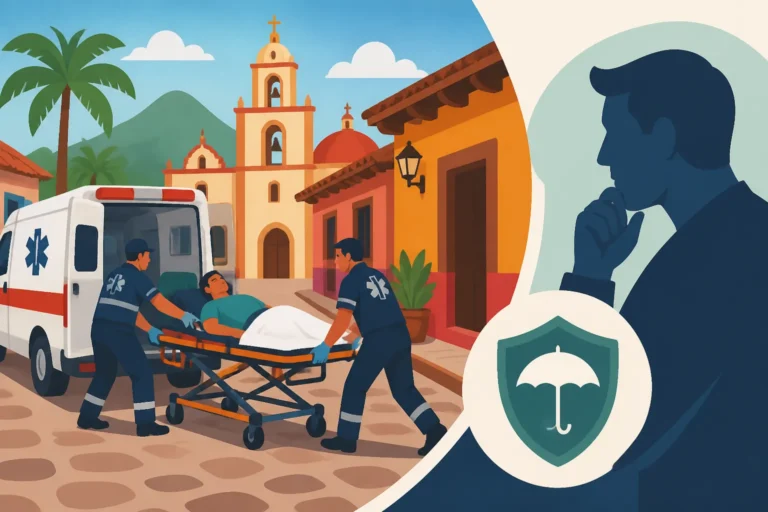
Don't forget to look into Calling an Ambulance in Mexico: How Emergency Services Operate. In many cities, the private hospitals have their own fleet of ambulances which are often much faster and better equipped than the public Red Cross (Cruz Roja) units. Save the direct number for your chosen hospital's ER in your phone today. It takes ten minutes now, but it could save your life later.
Disclaimer
This guide is for informational purposes only and does not constitute medical or legal advice. Healthcare standards and insurance acceptances can change rapidly in Mexico. Always verify the current status, certifications, and insurance policies of any medical facility directly with the provider. In the event of a life-threatening emergency, dial 911 or head to the nearest emergency room immediately.