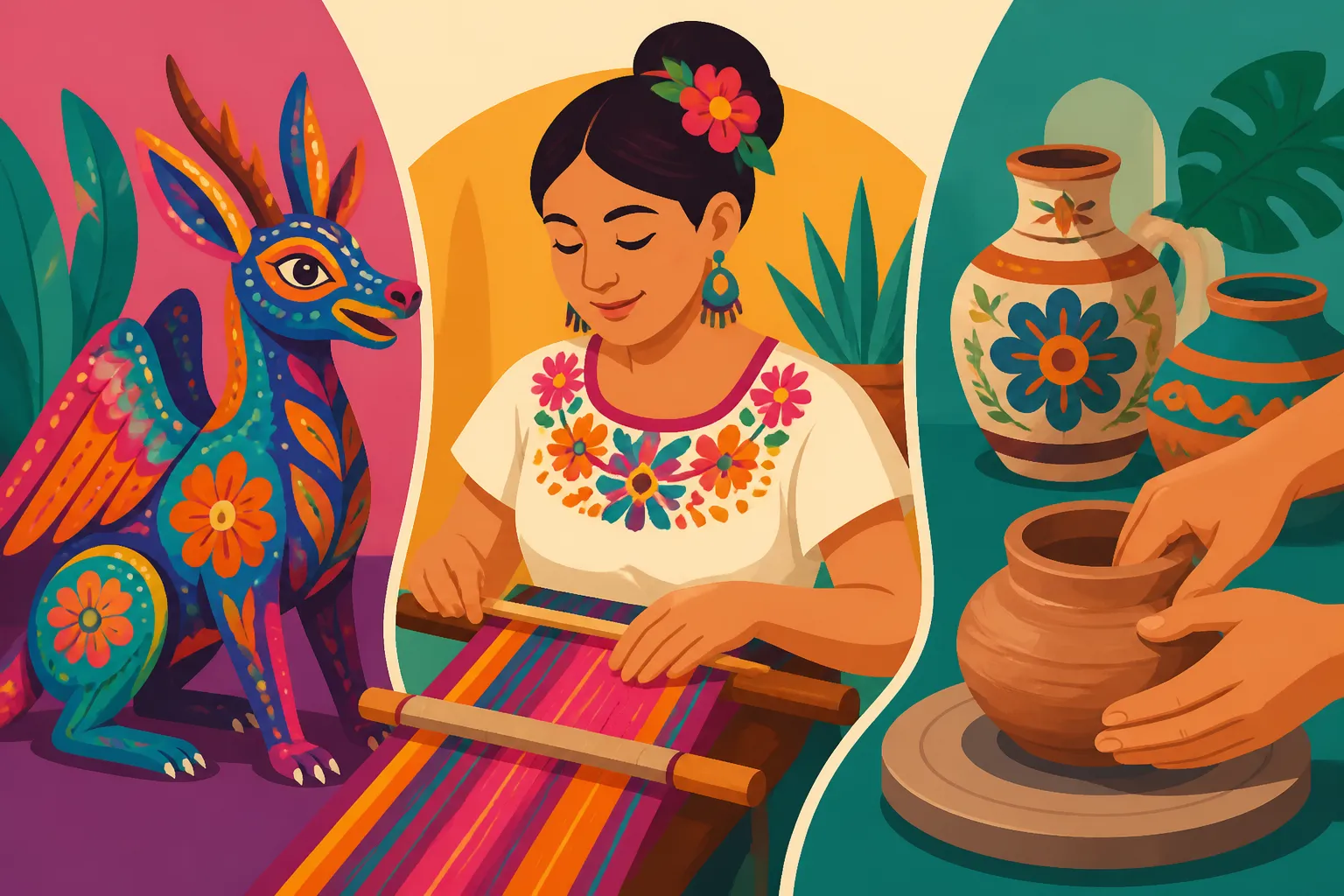
Traditional Craft Workshops: Textiles, Alebrijes, and Pottery Bookings
Most visitors to Oaxaca, Puebla or Chiapas want to sit beside a weaver at her loom or paint an alebrije with the family who carved it. Instead they end up in a roadside showroom with a sales pitch and no hands-on time. This guide shows you where the real workshops are, what each craft involves, and how to book a genuine experience through Viator without wasting a day.
Disclosure: This post may contain affiliate links. We may earn a commission at no extra cost to you if you make a purchase through these links. Read full disclosure.
Why Booking a Craft Workshop Beats Turning Up in a Village
My first attempt at a “pottery experience” in the Valles Centrales of Oaxaca was a mess. I rode a colectivo to San Bartolo Coyotepec with a vague plan to “find a workshop.” I found one. Then I stood in a courtyard for twenty minutes because the family was preparing for a funeral that afternoon. I left with a black clay bowl, a sunburn and no idea how the bowl had been made. Nobody had done anything wrong. I had simply shown up as a stranger, on a bad day, with no introduction and not enough Spanish to ask for what I wanted.
That is the trap with Mexico’s craft towns. They are working communities, not museums. Families run kilns, dye vats and carving benches around harvests, fiestas, orders from wholesale buyers and their own family obligations. A hands-on session, where you actually spin wool, shape clay or paint a carved figure, usually has to be arranged in advance. Someone has to set aside materials and time for you.
The Language and Logistics Wall
Many master artisans speak Spanish as a second language. In Teotitlán del Valle the first language is often Zapotec. In the Chiapas highlands around San Cristóbal de las Casas it is Tzotzil or Tzeltal. Even if your Spanish is decent, the technical vocabulary trips you up fast: mordants, warp threads, firing temperatures, copal wood versus cedar. A booked workshop usually comes with a bilingual guide or a family member who translates. That turns an awkward visit into a real conversation about technique and family history. If language is a worry, see English-Speaking Guides in Mexico: How to Confirm Before Booking before you commit to anything.
Then there is transport. San Martín Tilcajete, San Antonio Arrazola, Santa María Atzompa and Teotitlán are all reachable from Oaxaca City. They sit in different directions, though, and colectivo routes do not connect them neatly. Trying to visit two craft towns in one day by public transport is possible, but it eats hours. Many bookable workshops include round-trip transport from your hotel, which matters more than most people expect.
Finding the Real Makers Instead of the Resellers
Every craft region has resellers: shops full of pieces bought cheaply from many workshops and sold on with a story attached. Some are honest, some are not. Some “demonstrations” are a ten-minute show at the loom before you are walked to the cash desk. A well-reviewed workshop listed on Viator gives you something a random storefront cannot: a record of past participants describing what actually happened. Did they get their hands dirty? Was the family present? Was there pressure to buy? Reading those reviews is the closest thing to a personal recommendation you can get before you arrive. For a wider view of the region these towns belong to, see Oaxaca: Food, Crafts, and Culture.
Mexico’s Three Signature Crafts and Where to Learn Them
Textiles, alebrijes and pottery are the three crafts that most often appear as bookable hands-on experiences. Each has a home region where the technique is passed down through families, and each makes a very different kind of day.
Textiles: Natural Dyes in Teotitlán and Backstrap Looms in Chiapas
Teotitlán del Valle, about half an hour east of Oaxaca City, is famous for its wool rugs. The best workshops still use natural dyes. You will watch, and often help, as a weaver crushes dried cochineal insects in the palm of her hand. A pinch of lime juice shifts the colour from deep crimson to orange, and a pinch of ash shifts it toward purple. Indigo, pecan shell, marigold and pomegranate make up the rest of the palette. A typical session covers carding raw wool, spinning it on a wheel, dyeing a small skein and trying a few passes on the treadle loom. People rarely forget the moment the cochineal changes colour in their hand.
Chiapas offers something different. In the highland communities around San Cristóbal de las Casas, women weave on backstrap looms. One end is tied to a post or tree, the other to a strap around the weaver’s hips. The designs carry community identity, and some patterns are tied to particular villages. Workshops here tend to be run through cooperatives. They are slower and more contemplative, and they often include a meal with the family. If you plan to visit these communities, read How to Be a Respectful Tourist in Indigenous Communities in Mexico first. Rules on photography in places like San Juan Chamula are taken very seriously.
Afterwards, if you want to buy a full-size piece, How to Buy Oaxacan Textiles and Rugs explains how to tell natural dye from synthetic and hand-spun wool from factory yarn.
Alebrijes: Carving and Painting in Tilcajete and Arrazola
Alebrijes are fantastical creatures painted in dense, electric patterns. They began as papier-mâché figures in Mexico City, credited to the cartonero Pedro Linares. In Oaxaca they became something else: figures carved from copal wood, a tradition built up by carvers in San Antonio Arrazola and San Martín Tilcajete. Today both villages are full of family workshops. Some, such as the well-known workshop of Jacobo and María Ángeles in Tilcajete, have become destinations in their own right.
A booked alebrije workshop usually starts with a walk through the process. The family harvests and carves the copal, soaks the figure to keep it from cracking, and dries it for weeks. Then they prime it and paint it, often with natural pigments ground on stone. The hands-on part is almost always painting rather than carving. You get a pre-carved figure and spend an hour or two building up patterns with fine brushes. It sounds simple until you try to paint a straight line of dots on the curve of a jaguar’s tail. Kids love it, and it is one of the best rainy-day activities in the Valles Centrales.
Pottery: Barro Negro, Talavera, and Atzompa Green Glaze
Pottery is the most regionally varied of the three, and the workshops differ hugely depending on where you go.
- Barro negro in San Bartolo Coyotepec, Oaxaca. The village’s black pottery gets its metallic sheen from burnishing the clay with a smooth quartz stone before firing, followed by a low-oxygen firing. Workshops show you the hand-turning technique, done on two stacked plates rather than a wheel, and let you try shaping and burnishing.
- Green-glazed pottery in Santa María Atzompa, Oaxaca. Atzompa is known for its glossy green glaze and for decorative clay figures. It is quieter than Coyotepec and easy to combine with a visit to Monte Albán.
- Talavera in Puebla. Talavera is a tin-glazed earthenware with roots in Spanish technique, and authentic Talavera follows a strict, certified process. Workshops in the historic centre of Puebla show the stages of forming, first firing, glazing and hand painting. Some let you paint your own tile. For buying advice, see How to Shop for Talavera Pottery in Puebla.
- Tlaquepaque and Tonalá near Guadalajara. These two towns are dense with ceramic studios and markets. They suit you if you are based in Jalisco rather than the south.
- Mata Ortiz, Chihuahua. Mata Ortiz is famous for very fine, thin-walled pottery inspired by ancient Paquimé designs. It is remote, so treat it as a special trip rather than a casual add-on.
Here is how the main options compare when you are choosing a workshop.
| Craft | Best Base | Key Villages or Areas | Hands-On Activity | Typical Pace | Good For |
|---|---|---|---|---|---|
| Wool rugs and natural dye | Oaxaca City | Teotitlán del Valle | Carding, spinning, dyeing, loom practice | Half day | Colour lovers, photographers |
| Backstrap weaving | San Cristóbal de las Casas | Highland communities, cooperatives | Basic weaving on a backstrap loom | Half to full day | Slow travellers, culture-focused visitors |
| Alebrijes | Oaxaca City | San Martín Tilcajete, San Antonio Arrazola | Painting a pre-carved copal figure | Two to four hours | Families, first-timers |
| Barro negro | Oaxaca City | San Bartolo Coyotepec | Shaping and burnishing clay | Two to three hours | Hands-on learners |
| Talavera | Puebla | Historic centre workshops | Painting a tile or small piece | Two to three hours | Day-trippers from Mexico City |
| Jalisco ceramics | Guadalajara | Tlaquepaque, Tonalá | Studio demonstrations, some painting | Flexible | Shoppers, city-based visitors |
Many travellers combine two or three of these in a single Valles Centrales loop. For ideas on pairing a workshop with ruins or markets, see Best Day Trips From Oaxaca City.
How to Book a Craft Workshop on Viator Step by Step
I now book almost every hands-on craft session through Viator, for one main reason. It puts the operator details, the inclusions and real participant reviews on a single page I can compare side by side. When you are choosing between three alebrije workshops that all claim to be “family-run and authentic,” those reviews do the filtering for you.
Step-by-Step Booking Process
- Search by town, not just by craft. Typing “Teotitlán weaving” or “Tilcajete alebrije” brings up more specific results than a generic “Oaxaca craft tour.” Specific listings are usually smaller operators with a real connection to one family.
- Read the itinerary for the word “hands-on.” A demonstration is not a workshop. Check that the listing says you will dye, paint, shape or weave yourself, and roughly how long that part lasts.
- Check what is included. Look for transport, materials, a translator, a meal and whether you keep what you make. Alebrije and Talavera sessions usually let you take your piece home. Barro negro pieces sometimes need firing time, so ask whether they can be delivered to your hotel.
- Sort reviews by most recent. Workshops change. A family member retires, a new guide takes over, a cooperative shifts its schedule. Recent reviews tell you how the experience runs now.
- Look for reviews that mention the artisan by name. This is the best signal that you will meet the actual maker rather than a salesperson.
- Confirm group size. Small groups mean more time at the loom or the paint table. Large coach-style tours that “include a workshop stop” rarely give you real hands-on time.
- Read the cancellation terms on the product page. Terms vary by operator, and the exact window is printed on each listing. For general context, see Cancellation Policies on Mexican Tours: What You Get Back and When.
- Message the operator through the platform before your date. Mention dietary needs, mobility limits or a child’s age, and ask about dress or anything to bring. Good operators reply quickly, and a slow reply is useful information too.
- Save your confirmation offline. Signal can be patchy in the Valles Centrales and the Chiapas highlands. Keep the meeting point and operator phone number in your phone’s notes.
Reading a Listing Like a Veteran
After years of doing this, I scan every Viator listing for a few phrases. “Includes stop at a shop” or “artisan market visit” is fine, but it tells you part of the time goes to selling. “Private workshop” or “small-group class with the family” usually means real teaching. Photos matter too. If every image shows finished products on shelves and none shows participants working, be cautious.
Pay attention to the pricing structure rather than just the headline figure. Some workshops charge per person and include materials. Others charge a base price and add materials or transport. Private sessions often cost more per person but give you the artisan’s full attention, which is worth it for serious learners. Check the current price and inclusions on the listing itself, because operators update them.
Platform Versus Direct Booking
Can you book directly with the family and skip the platform? Sometimes, yes. Some workshops in Teotitlán and Tilcajete take bookings by WhatsApp. The trade-off is that you lose the review history, the standardised cancellation terms and the help desk if something goes wrong. For a first visit to a region, I book through Viator. For a return visit to a family I already know, I often contact them directly. Booking Platforms vs Local Operators in Mexico: When Direct Is Cheaper covers this in more depth, and if you are weighing platforms against each other, see Viator vs GetYourGuide for Mexico: Coverage, Price, and Cancellation.
Getting the Most Out of Your Workshop Day
Booking well is half the job. The other half is showing up ready and treating the family as hosts rather than vendors.
What to Wear and Bring
Natural dyes stain, and cochineal especially does not forgive. Wear clothes you do not mind ruining, and leave rings and bracelets at your hotel. For pottery, closed shoes are wise because courtyards can be dusty and uneven. In the highlands of Chiapas, mornings are cold even when afternoons are warm, so bring a layer. In the Valles Centrales of Oaxaca the sun is strong at midday, so a hat and water are essential if your workshop includes walking between villages.
Bring cash in small pesos. Many artisans accept cards in their shop, but tips, small extras, a cold drink from a village store and colectivo fares are all cash. A small padded bag or a few sheets of bubble wrap also helps if you are carrying a fragile barro negro piece back to the city.
Buying Respectfully After the Workshop
Most workshops end in the family’s sales room. You are under no obligation to buy, but if you do, this is where your money goes most directly to the maker. Prices in a family workshop often reflect weeks of work. Heavy haggling is generally out of place here, even though some bargaining happens in public markets. If you want to compare quality across several sellers before committing, see How to Shop for Mexican Artesanías (Crafts). For a larger rug or a big alebrije, ask whether the family ships, since many workshops are used to sending pieces abroad.
Tipping, Photos, and Etiquette
If a translator or guide accompanied you, a tip is customary. The artisan who taught you will also appreciate one if you are not buying anything. For norms on booked experiences, see Tipping Guides and Drivers in Mexico: What’s Expected on a Booked Tour.
Always ask before photographing people, especially elders and children, and especially in Chiapas. Photos of tools, dye pots and your own hands at work are almost always welcome. Faces should wait for a yes. Learn a few words of greeting in Spanish. If you are in a Zapotec-speaking home in Teotitlán, the family will be delighted if you ask how to say “thank you” in their language. Arrive on time. A family has often rearranged its working day around your session.
Building a Craft-Focused Itinerary
If crafts are the heart of your trip, give Oaxaca at least three full days. One day for textiles in Teotitlán, one for alebrijes in Tilcajete combined with barro negro in Coyotepec on the southern road, and one for Atzompa paired with Monte Albán. Add Puebla for Talavera on the way to or from Mexico City. If you are heading south, put the Chiapas highlands on the list. Chiapas: Jungle, Ruins, and Indigenous Culture helps you plan around San Cristóbal. Booking each workshop on Viator ahead of time lets you lock in the dates that work for each family, so you spend your days at the loom and the paint table instead of chasing colectivos and closed doors.
My advice after many years of craft hunting is simple. Pick the one craft that excites you most, read the recent reviews, and book a small-group or private session with a named family through Viator. Then turn up in old clothes, with cash and curiosity. Your trip home will include something you made yourself, and the family who taught you will remember you too.
Disclaimer
This article is for general informational purposes only and does not constitute professional advice. Laws, prices and regulations vary by location and change over time. Consult a qualified professional for guidance on your specific situation.