Maya Ruins in Mexico: Chichén Itzá, Tulum, and Palenque
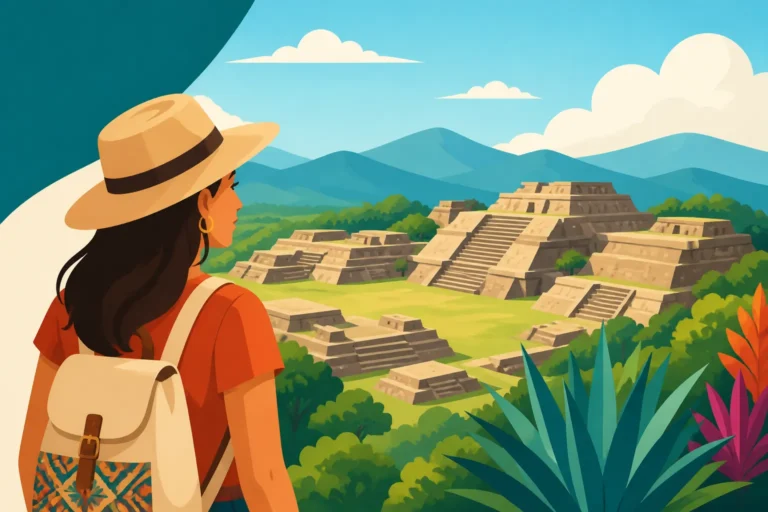
Most travelers arrive at Mexico's famous Maya ruins expecting a serene, Indiana Jones-style exploration, only to be met with sweltering humidity, aggressive souvenir vendors, and confusing transportation logistics. This guide solves the "tourist trap" anxiety by providing veteran expat insights into navigating Chichén Itzá, Tulum, and Palenque with your sanity and budget intact.
Disclosure: This post may contain affiliate links. We may earn a commission at no extra cost to you if you make a purchase through these links. Read full disclosure.
The Logistics of Visiting Ancient Cities
The first thing I tell anyone moving to or visiting Mexico is that the "Maya World" is significantly larger than it looks on a map. You aren't just popping over to a set of ruins; you are entering complex archaeological zones that require a bit of tactical planning. If you are staying in a hub like Playa del Carmen or Mérida, your primary challenge will be the distance. Many people make the mistake of booking the cheapest tour they find on the street, only to spend six hours of their day sitting on a cramped van stopping at every single hotel lobby along the coast.
When you are planning your transit, I highly recommend looking at How to Travel Between Cities in Mexico by Bus to understand the first-class ADO system. It is often much more comfortable than the private shuttles. For those who prefer a more curated experience without the stress of driving, checking options on Viator can help you find early-access tours that get you to the gates before the massive tour buses arrive from Cancún. If you are traveling between regions, perhaps coming from Mexico City to the southeast, using Busbud to compare schedules and prices for long-distance coaches is a life-saver for your wallet and your nerves.
Timing and Crowds: Beating the Heat and the Buses
I cannot stress this enough: if you arrive at 11:00 AM, you have already lost. In the Yucatán Peninsula, the sun is a physical weight that begins to press down on you by noon. By midday, the "Great White Ways" (the ancient limestone roads called sacbeob) reflect the heat directly into your face. To truly enjoy these sites, you need to be standing at the gate at 7:45 AM, waiting for the 8:00 AM opening. This gives you about two hours of relatively cool weather and, more importantly, a window of time where you can take photos without three hundred people in the frame.
The "bus rush" usually happens between 10:30 AM and 11:00 AM. This is when the massive groups from the all-inclusive resorts arrive. If you follow my advice and get there early, you will be heading toward the exit just as the crowds are pouring in. This is also the best time to find a shaded spot for a cold drink. If you are staying overnight nearby, which I always recommend for the larger sites, you can find great boutique hotels on Booking.com that are within walking distance of the ruins, allowing you to beat the traffic entirely.
Navigation and On-Site Services
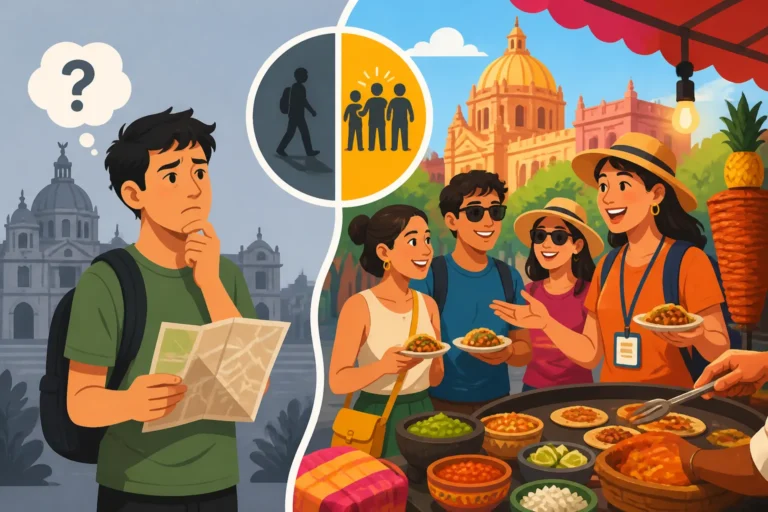
Once you are through the gates, the sheer scale can be disorienting. Most sites have a central "Plaza" but then miles of trails leading to smaller temples hidden in the jungle. I’ve seen countless expats and tourists wander aimlessly because they didn't want to hire a guide. While you can certainly DIY your visit, the Maya ruins are not self-explanatory. The architecture is a literal stone calendar, and without someone to point out the alignment of the sun or the significance of a specific carving, you’re just looking at old rocks.
Expect to pay for everything in cash. While some entrance fees (the federal portion) might take cards, the state tax (the Cultur portion in Yucatán) often requires pesos. There are usually lockers for large bags, but I suggest traveling light. Bring more water than you think you need. Even if you see vendors inside, the prices are inflated, and the walk back to the entrance can feel like a trek through the Sahara if you run out of hydration halfway through.
Chichén Itzá: The New World Wonder
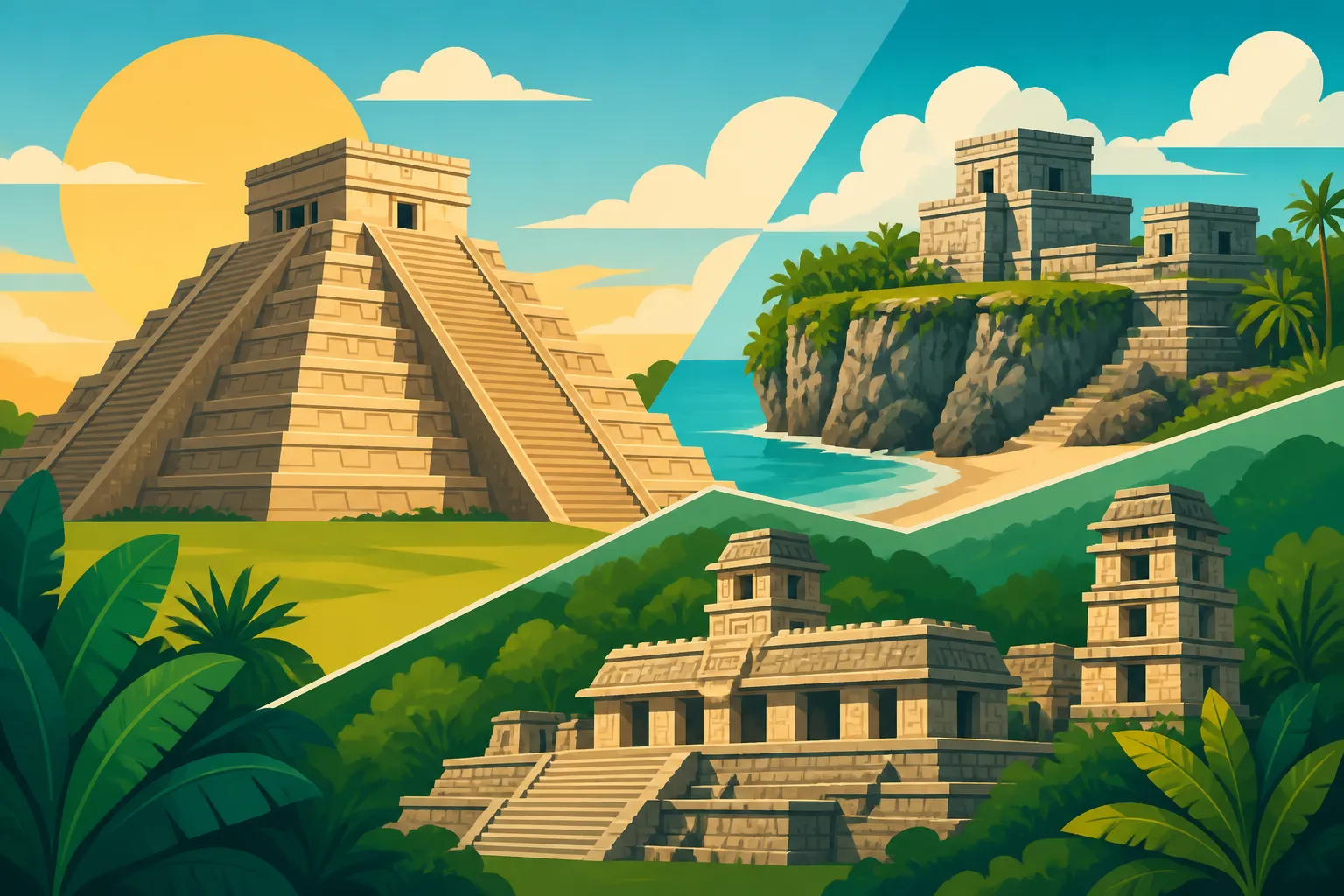
Chichén Itzá is the heavy hitter. It is the site everyone knows, and because of its status as a New Wonder of the World, it is the most visited archaeological site in Mexico. Living here, you hear a lot of "it's too touristy" or "it's a circus." While the number of vendors shouting "one dollar" can be exhausting, the site itself remains a masterpiece of ancient engineering. You simply cannot skip it if you want to understand the height of Maya civilization. The scale of the Kukulkán Pyramid (El Castillo) is something photos never quite capture.
To make the most of this visit, I suggest reading How to Visit Chichén Itzá Without the Crowds before you go. The trick is often staying in the nearby town of Pisté or the colonial city of Valladolid. By being local, you avoid the three-hour drive from the coast. When you stand in front of the Great Ball Court—the largest in Mesoamerica—and realize that a whisper at one end can be heard perfectly at the other, you’ll forgive the crowds and the heat for a moment of genuine awe.
Navigating El Castillo and the Great Ball Court
The Pyramid of Kukulkán is the centerpiece, and while you can no longer climb it (a rule implemented years ago to preserve the structure and for safety), standing at its base during the equinox allows you to see the "serpent" descend the stairs. Even on a normal day, the symmetry is staggering. I always tell my friends to clap their hands in front of the stairs; the echo sounds exactly like the chirp of the Quetzal bird. It’s these little details that make the site magical despite the commercialism.
The Great Ball Court is equally impressive. The acoustics here are a mystery that modern architects still study. It’s a massive, open-air arena where life-and-death games were played. When you walk through, look closely at the relief carvings along the bottom walls. They depict the players and, quite vividly, the sacrificial rituals that followed the matches. It’s a sobering reminder that this wasn't just a sport; it was a cosmic necessity for the Maya.
The Hidden Cenote Connection
One of the most overlooked aspects of Chichén Itzá is its relationship with water. The name itself means "At the mouth of the well of the Itzá." The site was built where it is because of the presence of cenotes (natural sinkholes). The Sacred Cenote at the end of a long sacbe was used for offerings, including gold, jade, and human sacrifice. You can’t swim in this one, but it is a hauntingly beautiful spot surrounded by sheer limestone walls and hanging vines.
After a morning of sweating at the ruins, most expats head to a nearby "swimmable" cenote to cool off. You might find Cenotes in Mexico: What They Are and Where to Swim useful for picking the right one. Cenote Ik Kil is the most famous nearby, and while beautiful, it can get very crowded. I usually look for smaller, less-advertised holes in the ground around Valladolid to get that peaceful, crystal-clear water experience without the tour bus vibes.
Tulum: Ruins by the Sea
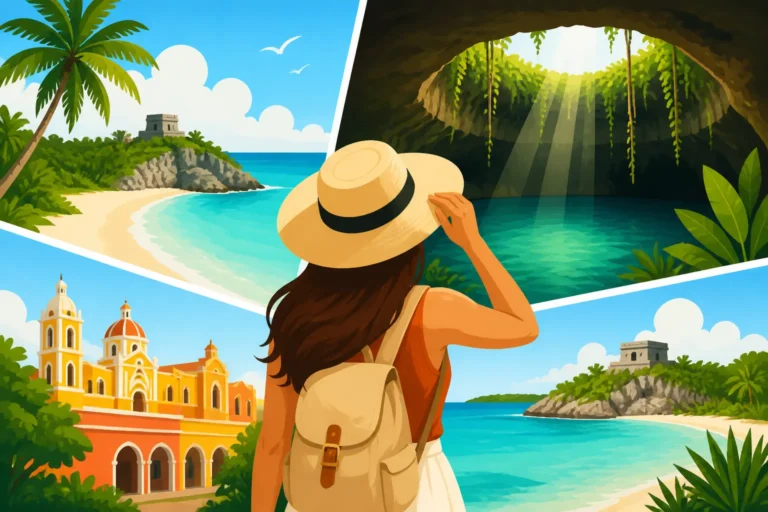
Tulum is the "Instagram" ruin. It is significantly smaller than Chichén Itzá or Palenque, but what it lacks in size, it makes up for with its dramatic location. Built on a cliff overlooking the turquoise waters of the Caribbean, it served as a major port city. Because it's so close to the main tourist corridor of the Riviera Maya, it is incredibly easy to access, which also means it can feel like a crowded shopping mall if you don't time it right.
I often recommend Tulum to people who want "History Lite." You can see the whole site in about ninety minutes and then spend the rest of the day at the beach. However, because the site is so exposed—there is almost zero shade—the sun is particularly brutal here. Check out How to Visit Tulum's Beachside Ruins for a deep dive into the specific entry requirements and where to park, as the parking situation can be a bit of a predatory racket for the unwary.
Logistics of the Cliffside Site
Entering Tulum usually involves a bit of a walk or a ride on a small tractor-train from the parking area to the actual ruins. Beware of the "official" looking people in the parking lot trying to sell you expensive boat tours or "all-in-one" tickets. You can just walk to the gate and buy your ticket there. Once inside, the path is one-way. You’ll see the Temple of the Frescoes, which still has some visible pigment, and then the iconic Castillo that sits right on the edge of the cliff.
The views here are the main event. You can look down from the ancient walls and see sea turtles swimming in the clear water below. There used to be a staircase leading down to a small beach directly under the ruins, but this is frequently closed to protect the nesting turtles or due to high tide/sargassum levels. Even if you can't go down to that specific beach, the vista of the dark grey stone against the neon blue water is one of the most beautiful sights in Mexico.
Combining History with Beach Life
If you’re staying in the hotel zone, you might be wondering Which Is Better for a Beach Holiday: Cancún or Tulum?. Tulum definitely has the more bohemian, albeit more expensive, vibe. After visiting the ruins, you can head south into the "Zona Hotelera" for some of the best beach clubs in the country. Just be prepared for the prices; a taco at a beach club in Tulum can cost more than a full meal in Mexico City.
For a more "expat-style" day, I suggest heading back toward Tulum town (the pueblo) after the ruins. The food is much more authentic, the prices are half of what you find on the beach, and you can get a real sense of the local community. There are some fantastic craft markets where you can find high-quality textiles and ceramics if you know where to look.
Palenque: The Jungle Jewel of Chiapas
If you want the true "lost city" experience, you have to go to Palenque. Located in the state of Chiapas, it is surrounded by lush, emerald rainforest. Unlike the flat, dry scrubland of the Yucatán, Palenque is hilly, misty, and loud with the sounds of howler monkeys. This is the site that most people imagine when they think of Maya ruins. It’s where the tomb of King Pakal the Great was discovered, one of the most significant archaeological finds in the Americas.
Getting here is the real hurdle. It’s not a day trip from the beach. You either need to fly into Villahermosa and drive two hours, or take a long bus ride from Mérida or San Cristóbal de las Casas. I recommend reading How to Visit Chiapas: Palenque, San Cristóbal, and More to plan the route. Most people use Busbud to book a night bus, which is a great way to save on a night of accommodation and wake up in the jungle.
Entering the Kingdom of Pakal
Palenque is famous for its architecture, particularly the Temple of the Inscriptions. This is the pyramid where Pakal was buried. While you can no longer go down into the tomb itself (a replica exists in the on-site museum), the exterior is breathtaking. The site also features the Palace, a complex with a unique four-story square tower that served as an observatory or lookout.
Walking through Palenque feels different because only about 10% of the city has been excavated. As you walk the trails, you can see mounds of earth and trees growing out of what are clearly unexcavated temples. It gives you a profound sense of how massive these cities were and how much is still hidden. If you are interested in the deeper history, How to Visit Palenque in Chiapas covers the best way to hire a local guide who can take you into the jungle sections to see hidden waterfalls and unrestored structures.
The Remote Reality: Getting to Chiapas
Chiapas is one of the most beautiful states in Mexico, but it is also one of the poorest and can have occasional logistical "hiccups" like roadblocks. As an expat, I always tell people to check local forums or ask at your hotel about the current status of the roads between San Cristóbal and Palenque. Often, taking the longer route via Villahermosa is safer and more reliable than the direct mountain road.
Despite the effort it takes to get there, Palenque is often the highlight of any Mexico trip. The humidity is intense, and you will likely get rained on—it’s a rainforest, after all—but the atmosphere is incomparable. There is a sense of peace and mystery here that the more "commercial" sites have lost. For a place to stay, look on Booking.com for eco-lodges in the "La Cañada" area of Palenque town; they offer a great balance of comfort and jungle proximity.
Essential Preparation for the Ruins
Success at any of these sites comes down to preparation. I’ve seen people show up in flip-flops and designer jeans, and they are miserable within twenty minutes. You are going to be walking on uneven stone, climbing steep (and often slippery) steps, and standing in the sun for hours. This isn't a museum with climate control; it's an outdoor endurance test that happens to be very pretty.
Make sure you've read Staying Healthy in Mexico: Essential Tips for Food, Water, and Preventive Care because "ruin sickness" is a real thing—it's usually just severe dehydration and heat exhaustion. I always carry a reusable water bottle and a small bottle of electrolyte salts. Also, don't forget the bug spray, especially for Palenque. The mosquitoes there are legendary and don't care about your "all-natural" lemon oil.
Comparison of Major Maya Sites
| Site | Location | Best For | Vibe | Difficulty |
|---|---|---|---|---|
| Chichén Itzá | Yucatán | Grandeur & History | Busy/Grand | Moderate (Distance) |
| Tulum | Quintana Roo | Views & Beach | Trendy/Easy | Easy (Flat) |
| Palenque | Chiapas | Jungle & Mystery | Wild/Quiet | Hard (Remote) |
| Uxmal | Yucatán | Architecture | Elegant/Calm | Moderate |
Cultural Etiquette and Respecting the Sites
As an expat living in Mexico, I feel a strong responsibility to remind visitors that these sites are not just tourist attractions; they are sacred ground for the modern Maya people. You will see people trying to climb on structures that are roped off or taking "silly" photos on sacrificial altars. Please don't be that person. Respecting the boundaries ensures these sites stay open for future generations.
You should also be aware of Mexican Customs, Etiquette, and Social Life when interacting with vendors and guides. A polite "No, gracias" goes a long way. If you do hire a guide, remember that this is their livelihood. Tipping is expected and appreciated. Most guides have gone through extensive certification processes and can provide insights you won't find in any guidebook.
Avoiding Common Scams and Pitfalls
Every major tourist site in the world has people looking to make a quick buck off the uniformed, and Mexico is no different. The most common scam at the ruins involves "parking assistants" who tell you the main lot is full and redirect you to a private lot that costs four times as much. Always try to drive all the way to the official gate first. If it's truly full, then look for alternatives.
Another thing to watch out for is the "certified guide" who isn't actually certified. Real guides carry a federated ID card from the Secretary of Tourism (SECTUR). If you want to be sure you’re getting a quality experience, booking ahead through Viator is a safe bet because you can read reviews from other travelers before you commit.
Staying Comfortable: Gear and Attire
I always wear a wide-brimmed hat (not a baseball cap, which leaves your ears to burn) and light, breathable linen or "wicking" athletic gear. Footwear is the most important choice. You need shoes with good grip. The limestone at these sites has been polished by millions of feet over the years and becomes incredibly slick, especially if there’s a light drizzle.
Finally, consider the sun. Sunscreen is a must, but if you plan on visiting a cenote afterward, many locations require "biodegradable" sunscreen or ask that you shower it off before entering the water to protect the delicate ecosystem. I prefer wearing a long-sleeved "sun shirt" (rash guard) which provides 50+ UPF protection without the need for greasy lotions that wash off the moment you start sweating.
Disclaimer
The information provided in this guide is based on personal expat experiences and current travel conditions in Mexico as of 2026. Travel regulations, entrance fees, and site accessibility can change without notice. Always check with official government sources or the National Institute of Anthropology and History (INAH) before planning your visit. This content is for informational purposes only and does not constitute professional travel or legal advice.