How to Visit Chiapas: Palenque, San Cristóbal, and More
Planning a trip to Chiapas often feels like trying to solve a complex puzzle while someone keeps changing the shape of the pieces. Between the rumors of road blockades, the drastic shifts in altitude, and the sheer density of indigenous history, many travelers get overwhelmed and stick to the easier paths of the Yucatán. This guide breaks down the logistical hurdles and cultural nuances of visiting Chiapas, ensuring you experience the magic of Palenque and San Cristóbal without the common headaches.
Disclosure: This post may contain affiliate links. We may earn a commission at no extra cost to you if you make a purchase through these links. Read full disclosure.
Mapping Out Your Arrival: The Tuxtla vs. Villahermosa Debate
When you first look at a map of Chiapas, your instinct might be to fly directly into the state capital, Tuxtla Gutiérrez. This is generally the right move if your primary goal is to reach San Cristóbal de las Casas quickly. The Aeropuerto Internacional Ángel Albino Corzo (TGZ) is a modern facility situated about an hour’s drive from San Cristóbal. Most travelers catch a colectivo or a private taxi directly from the arrivals terminal. It is a scenic, winding climb into the mountains that will immediately test your inner ear if you are prone to motion sickness.
However, if your heart is set on the ruins of Palenque first, flying into Villahermosa in the neighboring state of Tabasco is often the "pro tip" shared among veteran expats. The drive from Villahermosa to Palenque is roughly two hours on relatively flat, well-maintained roads. Compare this to the five-to-nine-hour journey from San Cristóbal to Palenque, which involves hundreds of topes (speed bumps) and potential mountain delays, and you can see why the Villahermosa route is a strategic winner for jungle-first itineraries.
For those traveling overland from other parts of Mexico, the ADO bus system remains the gold standard for reliability and comfort. You can easily use Busbud to check schedules and book seats in advance, which I highly recommend during peak seasons like Semana Santa or the winter holidays. Taking an overnight bus from Oaxaca to San Cristóbal is a rite of passage for many, though be warned: those mountain curves are no joke at 2:00 AM.
San Cristóbal de las Casas: The Cultural Heartbeat
San Cristóbal de las Casas, or "Sancris" as the locals and long-term expats call it, is a place that traps people. You go for three days and stay for three months. At over 7,000 feet in elevation, the air is crisp and the mornings are cold enough to make you regret not packing a real jacket. The city is defined by its "andadores"—pedestrian-only streets like Real de Guadalupe and Francisco I. Madero—where the smell of roasting Chiapaneco coffee competes with the scent of woodsmoke.
When deciding where to stay, I suggest using Booking.com to find a traditional posada or a boutique hotel in the Barrio de Jovel or near the Templo de Santo Domingo. Staying central allows you to walk everywhere, which is essential because the narrow cobblestone streets were never designed for modern traffic. Once settled, your first task should be to find a local cafe and adjust to the "Chiapas pace." Life moves slower here, and trying to rush a waiter or a shopkeeper is a fast way to get ignored.
A critical part of the San Cristóbal experience is visiting the surrounding indigenous villages, specifically San Juan Chamula and Zinacantán. This is where you need to be on your best behavior. In Chamula, the local church is a sacred space where photography is strictly, often aggressively, prohibited. You will see people kneeling on pine-needle-covered floors, surrounded by thousands of candles, practicing a unique syncretism of Catholicism and Maya ritual. To navigate these interactions respectfully, it helps to brush up on Mexican Social Etiquette for Visitors: Greetings and Warmth before you arrive.
Navigating the Road to Palenque: The Ocosingo Reality
The most beautiful and most frustrating part of a Chiapas itinerary is the transit between the highlands and the jungle. The direct route from San Cristóbal to Palenque passes through Ocosingo. On paper, it’s a four-hour drive. In reality, it is a journey through one of the most socially complex regions of Mexico. This road is frequently subject to "bloqueos" or unofficial roadblocks where local communities may ask for a small fee to pass or close the road entirely to protest local issues.
As a veteran of these roads, my advice is simple: never drive this route at night. If you are uncomfortable navigating potential blockades in a rental car, your best bet is to book a day tour through a reputable platform like Viator. These tour operators are in constant communication with each other and know which roads are open and which are blocked. They often combine the transit with stops at the stunning Agua Azul and Misol-Ha waterfalls, making the long day feel much more productive.
If you are a solo traveler or on a budget, you might find yourself How to Travel Between Cities in Mexico by Bus using the larger ADO or OCC coaches. While they are safer and more comfortable, they sometimes take the "long way" via Villahermosa if the Ocosingo road is deemed too unstable. This adds hours to the trip but significantly reduces your stress levels. Always check the current status of the road with your hotel concierge the night before you depart.
Exploring the Ruins of Palenque and the Selva Lacandona
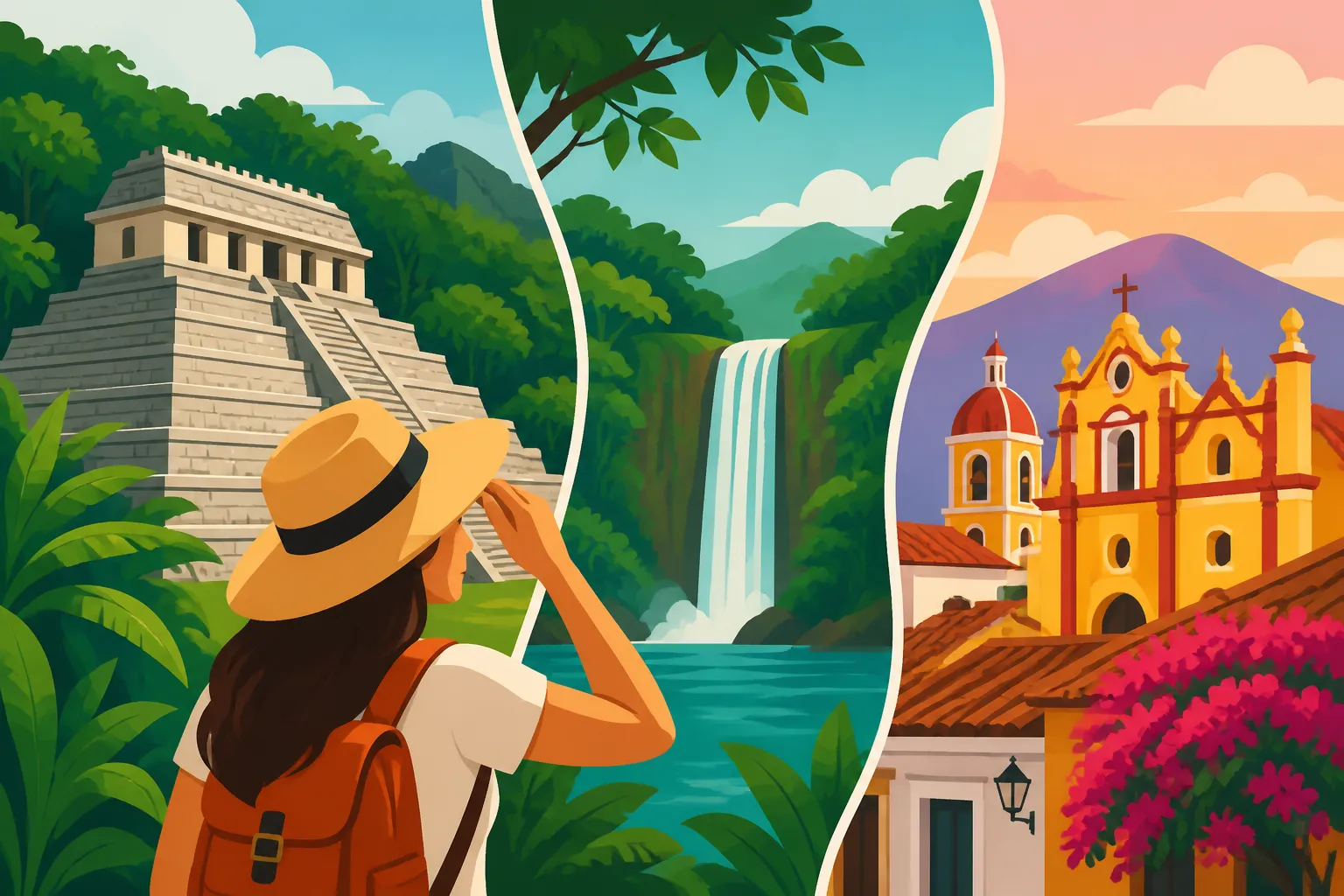
Once you descend from the mountains into the humid heat of Palenque, the vibe shifts entirely. You are now in the Lowland Maya world. The archaeological site of Palenque is, in my humble opinion, the most beautiful in all of Mexico. Unlike the flat landscapes of Chichén Itzá, Palenque is tucked into the foothills of the Tumbalá mountains, overlooking the swampy plains of Tabasco.
To get the most out of the ruins, arrive at the gate the moment they open at 8:00 AM. Not only will you beat the crushing humidity, but you’ll also hear the terrifying, guttural roars of the howler monkeys echoing through the trees—a sound that makes you feel like you’ve stepped into a Jurassic Park movie. While you can explore on your own, hiring a local guide at the entrance is worth every peso to understand the history of Red Queen and Pakal the Great. For more context on how this site fits into the broader Maya world, see our guide on Maya Ruins in Mexico: Chichén Itzá, Tulum, and Palenque.
For those with an extra two or three days, don't stop at Palenque. Push deeper into the Selva Lacandona (Lacandon Jungle) to visit the ruins of Bonampak and Yaxchilán. Yaxchilán is only accessible by a longboat (lancha) ride down the Usumacinta River, which forms the border with Guatemala. It is one of the few places left where you can truly feel like an explorer. Because of the remote nature of these sites, many people use Booking.com to find eco-lodges run by the Lacandon people, providing a unique opportunity to learn about jungle conservation firsthand.
Comparing the Chiapas Experience: Highlands vs. Lowlands
| Feature | San Cristóbal (Highlands) | Palenque (Lowlands) |
|---|---|---|
| Climate | Cold mornings, temperate days, high altitude | Hot, humid, tropical jungle |
| Primary Attraction | Indigenous culture, markets, textiles | Ancient Maya ruins, waterfalls, jungle |
| Best Food | Sopa de Pan, Tamales, Artisan Bread | Fresh tropical fruits, Mocharra, Cacao |
| Essential Gear | Warm layers, walking boots, rain shell | Bug spray, lightweight linen, hat |
| Vibe | Bohemian, intellectual, cozy | Adventurous, steamy, ancient |
Practical Logistics: Health, Safety, and Money
One of the biggest concerns for travelers in Chiapas is safety. While the state has a reputation for political activism, tourists are rarely the target of anything more than an inconvenient roadblock. However, basic precautions apply. You should definitely read up on Staying Safe in Mexico: Practical Tips for Travelers to understand the nuances of rural travel. The "mordida" or bribe culture is less of an issue for tourists here than "bloqueos," which are handled with patience and a few twenty-peso notes.
Health-wise, the change in altitude and diet can be a shock. Many visitors find themselves dealing with stomach issues in the first few days. While it’s tempting to try every taco stand in the market, you should ask yourself Is Street Food Safe to Eat in Mexico? and perhaps start slow. Stick to bottled or filtered water—never tap—and keep a small medical kit with rehydration salts.
Lastly, Chiapas is very much a cash-heavy economy. While higher-end hotels in San Cristóbal and Palenque will accept credit cards, the markets, colectivos, and small-town pharmacies will not. You will want to consult our guide on Money for Travel in Mexico: Cash, Cards, and ATMs to plan your withdrawals. ATMs in San Cristóbal can sometimes run out of cash during busy festival weekends, so always have a "stash" of pesos hidden in your luggage for emergencies.
Maximizing Your Time: Beyond the Famous Sites
If you have more than a week, Chiapas has plenty of "hidden" gems that don't make it into every guidebook. The Cañón del Sumidero is a spectacular boat trip through walls that rise up to 1,000 meters, located just outside Tuxtla Gutiérrez. It’s an easy half-day trip that can be done on your way in or out of the state.
Further south, near the border with Guatemala, are the Lagunas de Montebello and the El Chiflón waterfall. El Chiflón is particularly impressive, featuring a series of turquoise pools culminating in a massive 120-meter drop called "Velo de Novia." It requires a bit of a hike, so make sure you’ve learned How to Pronounce Common Mexican Place Names so you can correctly tell your colectivo driver where you want to go.
Communication can also be a hurdle. While English is spoken in the main tourist centers, it disappears quickly once you head into the mountains or the jungle. I highly recommend learning Survival Spanish for Travelers in Mexico: Key Phrases and having a backup plan, such as knowing How to Use a Translation App Offline in Mexico, for those moments when you’re trying to negotiate a boat ride in the middle of the jungle.
A Veteran’s Disclaimer on Chiapas Travel
Chiapas is not a "easy" destination. It requires more planning, more patience, and more resilience than a week in a Cancun resort. You will get bitten by bugs, you will probably be cold at 4:00 AM, and your bus might be two hours late because of a protest on the highway. But the rewards are unparalleled. Watching the mist rise off the temples of Palenque or hearing the bells of the San Cristóbal cathedral at dusk provides a deep, soulful connection to Mexico that you simply cannot find anywhere else.
Approach this state with an open mind and a sense of humor. When things go "wrong"—like a road closure—it usually turns into a story about a hidden taco shop you found in a tiny village or a conversation with a local weaver you never would have met otherwise. That is the true "magic" of Chiapas.
Disclaimer
This guide is for informational purposes only. Travel conditions in Chiapas, particularly regarding road safety and political demonstrations, can change rapidly. Always consult local news and official travel advisories before your trip. The author is a long-term resident of Mexico but is not a professional travel agent or legal advisor. Stay safe and travel responsibly.