Pharmacies in Mexico: Prescriptions and Over-the-Counter Medicine
Standing in front of a pharmacy counter, trying to explain a throbbing sinus infection in broken Spanish while the line behind you grows increasingly impatient, is a rite of passage every expat in Mexico eventually faces. I remember my first month in Querétaro, clutching an empty bottle of blood pressure medication and feeling completely overwhelmed by the neon signs of three different pharmacy chains on the same block. This guide simplifies the complex world of Mexican farmacias, ensuring you can access both life-saving prescriptions and everyday over-the-counter remedies without the stress.
Disclosure: This post may contain affiliate links. We may earn a commission at no extra cost to you if you make a purchase through these links. Read full disclosure.
Understanding the Different Types of Pharmacies in Mexico
One of the first things you’ll notice in Mexico is that not all pharmacies are created equal. Unlike the monolithic drugstores often found in the US or Canada, Mexico offers a tiered system of pharmacies that cater to different needs and budgets. Understanding which door to walk through can save you both money and a significant amount of time.
The Major National Chains
When you need a reliable, well-stocked experience, the big names are your go-to. Farmacias del Ahorro, Farmacias Benavides, and Farmacias Guadalajara are the "Big Three." These establishments are the closest thing to a CVS or Walgreens. Farmacias Guadalajara is particularly unique because it operates as a superfarmacia, selling everything from prescription heart medication to fresh bread, milk, and electronics. It is often the only place open at 3:00 AM in many mid-sized towns.
These chains generally offer high-quality, name-brand medications as well as their own generic lines. They are also the most likely to have a computerized system that tracks your purchases, which can be incredibly helpful if you lose your box and forget the exact dosage you were taking. If you have a plan through Cigna Global, these larger chains are often the easiest to deal with when you need to provide itemized receipts for reimbursement.
Discount and Generic Specialists
If you have spent any time in a Mexican town plaza, you have undoubtedly seen a dancing mascot known as Dr. Simi. This is the face of Farmacias Similares. Their slogan, "Lo mismo pero más barato" (The same but cheaper), tells you everything you need to know. These pharmacies specialize almost exclusively in generic medications (similares). While some expats are initially wary of the low prices, these medications are regulated by the Mexican government and are effective for common ailments.
For those managing chronic conditions on a budget, these pharmacies can reduce your monthly medical spend by 70% or more. However, they may not carry the most specialized, cutting-edge medications. For those more complex prescriptions, you will likely need to head back to a major chain or a hospital-affiliated pharmacy. Regardless of where you buy, understanding Healthcare Costs in Mexico: Doctor Visits, Hospital Stays, and Surgery Expenses helps you keep your overall medical budget in perspective.
Supermarket Pharmacies and Independent Shops
Most major grocery stores like La Comer, Chedraui, Soriana, and Walmart have extensive pharmacy departments. The advantage here is convenience and the ability to pay with a credit card easily while doing your weekly shopping. For expats living in smaller, more rural "Pueblos Mágicos," you might only have access to a small, family-owned farmacia de barrio. These independent shops may have more limited stock, but the pharmacists often provide a level of personal service and community knowledge that the big chains lack.
Navigating Prescriptions What You Actually Need
A common misconception among newcomers is that you can buy absolutely anything over the counter in Mexico. While it is true that many items requiring a prescription elsewhere—like high-dose ibuprofen, birth control, or certain cholesterol medications—are sold freely here, Mexico has tightened its regulations significantly over the last decade.
Medications Requiring a Strict Prescription
Since 2010, the most important rule to remember is that antibiotics require a physical prescription from a doctor licensed in Mexico. You cannot simply walk in and ask for Amoxicillin because you have a sore throat. This regulation was put in place to combat antibiotic resistance, and pharmacies are strictly audited on this. They will take your prescription, stamp it, and often keep it or record the details in a ledger.
Controlled substances, including strong painkillers (opioids), stimulants for ADHD, and many psychotropic medications (like Xanax or Valium), require a special type of prescription called a receta médica. These often have a barcode and can only be issued by specialists with specific state authorization. If you are moving to Mexico and rely on these, it is vital to read about Bringing Prescription Medications from Home: Rules and Tips for Expats to ensure you don't run out before finding a local specialist.
Using Foreign Prescriptions in Mexico
Legally, a Mexican pharmacy cannot fill a prescription written by a doctor in the US, Canada, or Europe. The pharmacist needs a prescription with a Mexican doctor's professional registration number (Cédula Profesional). However, bringing your foreign prescription or the original bottle is still incredibly useful. It serves as proof of your diagnosis for a local doctor, making it much easier for them to write a Mexican equivalent.
I have found that most local doctors are happy to transcribe a foreign prescription after a brief consultation, provided the medication is available in the country. If you are using International Health Insurance for Expats in Mexico, keep in mind that your insurer will often require a local prescription and a formal invoice (factura) to process your claim.
Finding a Doctor for a Fast Prescription
If you find yourself with an earache or a sudden infection and need an antibiotic prescription quickly, you don't necessarily need to book an appointment at a major hospital. This is where the uniquely Mexican "Consultorio" system comes in, which we will explore in the next section. For more complex issues, however, you should prioritize Finding English-Speaking Doctors and Specialists in Mexico to ensure nothing is lost in translation during your diagnosis.
The Consultorio System On-Site Pharmacy Doctors
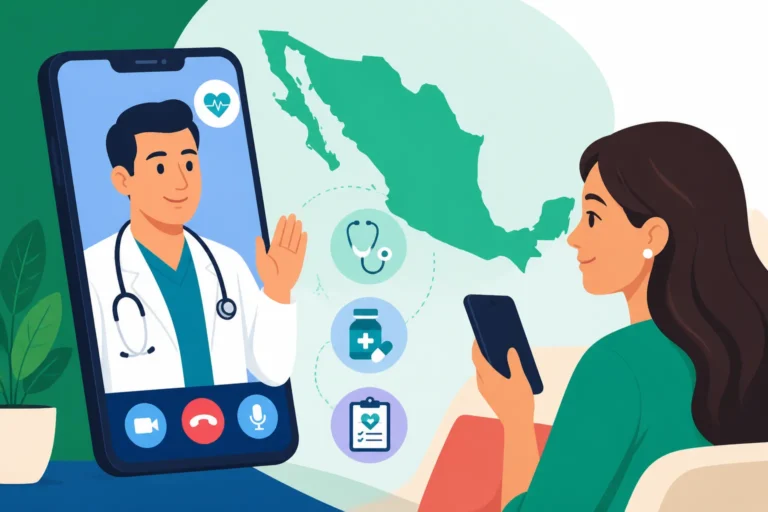
One of the most convenient aspects of the Mexican healthcare landscape is the presence of a small medical clinic attached to almost every major pharmacy. These are known as consultorios. They provide a vital bridge between the pharmacy and the patient, offering low-cost, walk-in medical care.
How the Pharmacy Consultation Works
The process is remarkably simple. You walk into the pharmacy, look for the door marked Consultorio, and sign your name on a list. There is no need for an appointment. When it is your turn, you’ll see a licensed general practitioner who can perform basic exams, check your vitals, and diagnose common illnesses like respiratory infections, skin rashes, or stomach bugs.
The doctor will then write you a prescription that you can take ten feet away to the pharmacy counter to be filled. For an expat, this eliminates the "what do I need?" guesswork. If you are a digital nomad covered by SafetyWing, these consultations are often so inexpensive that they fall well below your deductible, making them a great out-of-pocket solution for minor issues.
Costs and Wait Times
The cost of a consultation at a pharmacy like Farmacias del Ahorro or Similares is shockingly low, usually ranging from 50 to 150 Mexican Pesos (roughly $3 to $8 USD). In some cases, the consultation is even free, provided you buy the medication at that specific pharmacy. Wait times vary; in the morning or early evening, you might wait 30 minutes, but during the middle of a workday, you can often see a doctor in less than five.
Limitations of the Consultorio
It is important to manage your expectations. These doctors are there for primary care and "quick fixes." They are not meant for managing complex chronic diseases, and they do not have access to advanced diagnostic equipment like X-ray machines or labs. If you are experiencing something serious, you should skip the pharmacy doctor and head to a facility equipped for Medical Emergencies in Mexico: What Expats Should Know and Prepare. The consultorio is a tool for convenience, not a replacement for a long-term relationship with a specialist.
| Pharmacy Type | Best For | Typical Cost | Consultation Available? |
|---|---|---|---|
| Farmacias Guadalajara | 24/7 needs, groceries, name-brand meds | Moderate | Often |
| Farmacias del Ahorro | Reliable chain, loyalty program | Moderate | Yes (Consultorio) |
| Farmacias Similares | Generics, budget-friendly | Very Low | Yes (Consultorio) |
| Hospital Pharmacies | Specialized/Rare medications | High | No (Must see hospital MD) |
| Supermarket (Walmart) | Convenience, credit card points | Moderate | Sometimes |
Over-the-Counter Medicine and Common Equivalents
Walking into a Mexican pharmacy to find "Tylenol" or "Advil" can be confusing because the branding is often different. While some US brands like Motrin or Aleve are available, you will often find local versions that are identical in chemical composition.
Pain Relief and Fever Management
Paracetamol is the standard term for Acetaminophen (Tylenol) in Mexico. It is available everywhere and is very inexpensive. If you need Ibuprofen (Advil/Motrin), you can find it in various strengths, often up to 800mg, without a prescription. Naproxeno (Aleve) is also common. One thing to note is that Mexicans often use "combined" medications—for example, you might find a pill that combines Paracetamol with Caffeine or a muscle relaxant. Always check the active ingredients on the box if you have sensitivities.
Digestive Health and Traveler's Stomach
Living in Mexico means your digestive system will eventually face a challenge. Pharmacies are well-prepared for this. For general acidity or heartburn, you’ll find familiar names like Tums or Alka-Seltzer, but also local favorites like Estavane or Riopan (a liquid antacid that works wonders). If you are dealing with a more serious case of Traveler’s Diarrhea (Montezuma’s Revenge): Prevention and Treatment, you can find Electrolyte solutions (Suero) in every flavor imaginable, which is crucial for staying hydrated in the Mexican heat.
Cold, Flu, and Allergy Management
For allergies, Loratadina (Claritin) and Cetirizina (Zyrtec) are available over the counter and are very affordable. Cold and flu medications like Antiflu-Des are staples in every Mexican household; they typically contain an antihistamine, a decongestant, and paracetamol. Be aware that medications containing pseudoephedrine are highly regulated and often difficult to find or require a prescription due to their use in manufacturing illegal substances.
Safety Quality and Avoiding Counterfeit Medications
A common fear for tourists and new expats is the quality of medication in Mexico. While there have been news reports about tainted medications in certain tourist border towns, the reality for an expat living in a standard Mexican city is quite different.
Regulatory Oversight (COFEPRIS)
The Federal Commission for the Protection against Sanitary Risk (COFEPRIS) is Mexico's equivalent to the FDA. They regulate the manufacturing, importation, and sale of all medications. As long as you are shopping at established pharmacy chains (Ahorro, Benavides, Guadalajara, etc.) or supermarket pharmacies, the risk of receiving counterfeit medication is extremely low. These chains have strictly controlled supply chains.
Recognizing Genuine Medication
All legitimate medication in Mexico comes in a box with a holographic seal, a lot number, and an expiration date (fecha de caducidad). If a pharmacy tries to sell you "loose" pills out of a jar, walk away. This is not standard practice in reputable establishments. Additionally, the price is often printed directly on the box by the manufacturer to prevent price gouging.
For those concerned about long-term care and high-quality medication, maintaining a comprehensive policy with a provider like Cigna Global ensures you have the financial backing to seek care at the best hospitals, which have their own highly regulated pharmacies.
The Role of Insurance in Pharmacy Costs
Most Mexican private insurance plans and international expat plans work on a reimbursement basis for medications. This means you pay at the counter and then submit your claim. To do this successfully, you must ask the pharmacist for a "Factura Electrónica." You will need to provide your RFC (Tax ID) for this. Without a formal factura, your insurance company will likely deny the claim. If you are still setting up your life here, understanding Health Insurance in Mexico: How Expats Can Get Coverage (2027) is essential for navigating these administrative requirements.
Practical Tips for a Smooth Pharmacy Experience
After years of living here, I've learned that a little bit of preparation goes a long way. The pharmacy culture in Mexico is friendly, but it operates with its own set of unwritten rules.
Essential Spanish Phrases
While many pharmacists in expat-heavy areas like San Miguel de Allende or Puerto Vallarta speak some English, knowing basic Pharmacy Spanish: Phrases to Help You Buy Medicine in Mexico is a game changer.
- ¿Tiene algo para el dolor de garganta? (Do you have something for a sore throat?)
- ¿Es de marca o genérico? (Is it name-brand or generic?)
- ¿Cuántas veces al día debo tomar esto? (How many times a day should I take this?)
- Necesito una factura, por favor. (I need a tax invoice, please.)
Payment Methods and Loyalty Programs
Almost all pharmacies in Mexico accept major credit cards, though some smaller ones might have a minimum purchase amount for card use. Always carry some cash (pesos) just in case. If you plan on living in Mexico long-term, sign up for the loyalty programs. Farmacias del Ahorro has a "Monedero del Ahorro" card that gives you points back on every purchase, and every few months, you might find your entire prescription is covered by your accumulated points.
24-Hour Pharmacies and Home Delivery
The convenience of Mexican pharmacies is hard to beat. Many locations of Farmacias Guadalajara are open 24/7, which is a literal lifesaver when a fever spikes at midnight. Furthermore, many pharmacies offer home delivery (servicio a domicilio). You can call them or use their apps, and a delivery driver on a motorcycle will bring your medication to your door for a very small fee. This is incredibly helpful when you are too sick to leave the house.
If you are just starting your journey as an expat, I highly recommend Staying Healthy in Mexico: Essential Tips for Food, Water, and Preventive Care to minimize your trips to the pharmacy. But when you do need to go, rest assured that the system is efficient, affordable, and generally very high-quality.
Disclaimer
This guide is for informational purposes only and does not constitute medical advice. Always consult with a qualified healthcare professional before starting or changing any medication or treatment plan. Regulations and availability of medications in Mexico are subject to change.