Is Mexico Safe for Residency? Addressing Safety Concerns for Visa Applicants
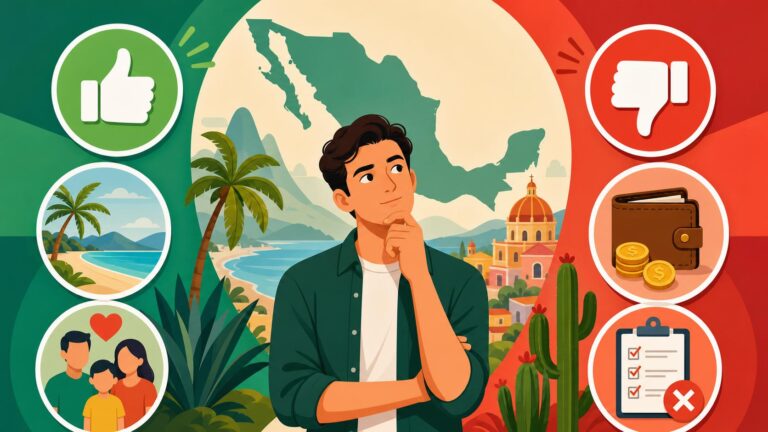
Deciding to trade your suburban routine for a life in Mexico often triggers a wave of "Are you crazy?" comments from well-meaning friends and family. I remember the paralyzing anxiety I felt staring at my half-completed visa application while a sensationalized news report about cartel violence played in the background. This guide settles the "Is Mexico safe?" debate once and for all by addressing the nuanced reality of long-term residency.
Disclosure: This post may contain affiliate links. We may earn a commission at no extra cost to you if you make a purchase through these links. Read full disclosure.
The Perception vs Reality Gap in Mexican Safety
When you are a tourist, safety is often a matter of which resort you choose or which tour guide you trust. As a resident, your relationship with safety changes fundamentally. You aren't just passing through; you are building a life, which means you need to look past the clickbait headlines and understand the structural nature of crime in the country. The biggest frustration for most expats is the "broad brush" treatment Mexico receives in international media, where an incident in a border town 1,500 miles away is used to characterize the safety of a quiet colonial village in the highlands.
Understanding the statistics is the first step toward reclaiming your peace of mind. While it is true that Mexico has high homicide rates in specific regions, a deep dive into the data reveals that the vast majority of violent crime is localized, targeted, and related to inter-cartel conflicts. For a resident living a standard lifestyle, the risks are often comparable to—or lower than—those found in major U.S. or European cities. You can find more granular details in our guide on Safety in Mexico: What Expats Need to Know About Staying Safe. The reality is that the most common "crimes" residents face are opportunistic petty thefts or administrative "mordidas" (bribes), which, while annoying, are a far cry from the sensationalized violence seen on TV.
Media sensationalism creates a psychological barrier for visa applicants. I have spoken to dozens of retirees who almost canceled their move because of a single viral video. What the news doesn't show you are the millions of expats and locals walking to the local tianguis (market) every morning without a second thought. To live here happily, you must learn to distinguish between general national statistics and the "boots-on-the-ground" reality of your specific neighborhood. This mental shift is essential for anyone navigating the Mexico Temporary Resident Visa: Comprehensive Guide for Expats (2026 Update) process.
Identifying Safe Neighborhoods for Long-Term Residency
Safety in Mexico is hyper-local. You can be in a neighborhood where you feel perfectly comfortable walking your dog at 10:00 PM, and just three blocks away, you might enter an area where locals know to keep their car doors locked. This is the "block-by-block" reality of Mexican urban planning. For those applying for residency, choosing the right home base is the single most important safety decision you will make.
Regional variations are massive. The state of Yucatán, for instance, consistently ranks as the safest state in Mexico, with crime statistics that rival or beat many Canadian provinces. If you are looking for colonial charm and a high degree of security, you might find yourself Living in Mérida: The Expat Guide to Yucatán’s Colonial Gem is the perfect fit. Conversely, certain border states or specific coastal corridors require a much higher degree of situational awareness. When I first moved, I spent weeks talking to "old-timer" expats in local Facebook groups to find out which streets flooded and which ones were prone to "break-ins" before signing a lease.
Many foreigners opt for the "Fraccionamiento" or gated community lifestyle. These developments offer a controlled environment with 24/7 security guards, perimeter walls, and controlled entry. While some find this "gilded cage" approach a bit sterile, for many new residents, it provides a necessary buffer while they adjust to the culture. You can weigh the benefits of these communities in our analysis of Gated Communities vs Traditional Neighborhoods: Choosing a Home in Mexico. If you prefer a traditional neighborhood, look for "Vecinos Vigilantes" (Watchful Neighbors) signs, which indicate a tight-knit community that looks out for one another.
Practical Security Measures for Your Mexican Home
Once you’ve settled on a location, the physical security of your residence is your next priority. Mexican homes are built differently than those in the North. You will quickly notice that "curb appeal" often takes a backseat to security. High walls topped with decorative ironwork, broken glass, or electric fencing are standard, not a sign that the neighborhood is "war-torn." These are simply the traditional architectural choices for privacy and security in Latin America.
Installing protecciones (iron bars) on windows and sturdy deadbolts on all entry points is the baseline for any resident. I spent my first month in Mexico feeling claustrophobic behind window bars until I realized they allowed me to leave my windows open for the cross-breeze at night without a worry in the world. Modern residents are also increasingly turning to smart home technology. Ring cameras and motion-sensor lighting are becoming common in expat hubs like San Miguel de Allende and Lake Chapala. For a deeper dive into these requirements, check out Home Security in Mexico: Tips for Securing Your House or Apartment.
Another overlooked aspect of security is the community you build with your household staff. In Mexico, it is common and affordable to have a regular maid or gardener. These individuals often become your eyes and ears on the street. A trusted employee who knows the neighborhood can warn you about suspicious characters or local scams before they ever reach your front door. Learning the etiquette of these relationships is vital, as detailed in our post on Hiring Domestic Help in Mexico: Maids, Gardeners, and Etiquette. Trust is earned over time, but a loyal staff member is one of the best security investments you can make.
Personal Safety and Social Etiquette for Residents
The way you carry yourself in public significantly impacts your safety profile. The goal for a resident is to "blend in," even if you clearly look like a foreigner. This means avoiding "rich tourist" behaviors—like wearing expensive jewelry at the local market or flashing large wads of cash at a taco stand. Situational awareness is your best friend.
Transportation is a frequent concern for visa applicants. While driving your own car gives you freedom, it also brings responsibilities. Driving at night on rural highways is a big "no-no" in many parts of Mexico due to "topes" (massive speed bumps), livestock on the road, and the occasional "unofficial" checkpoint. In the city, using ride-sharing apps is generally considered much safer than hailing a "libre" taxi off the street because the apps track the GPS and the driver's identity. We cover this extensively in Are Taxis Safe in Mexico? Using Cabs vs Ride-share Apps and Using Uber and Ride-Sharing Apps: A Guide for Expats in Mexico.
You must also be aware of common psychological scams. Extortion phone calls are a persistent frustration where scammers call and claim to be a family member in trouble or a cartel member demanding "protection" money. The golden rule is: if you don't recognize the number, don't answer it. If you do answer and it’s a threat, hang up immediately. These are almost always "virtual" kidnappings intended to scare you into a quick wire transfer. Learning the local "rules of the road" for social interaction will help you avoid being an easy target. More tips can be found in Street Safety: Tips for Avoiding Pickpockets and Scams in Mexico.
Health and Administrative Safeguards for Peace of Mind
True safety isn't just about avoiding crime; it's about having a safety net when things go wrong. For many expats, the real "danger" in Mexico isn't a cartel—it's a sudden medical emergency in a country where you don't fully understand the healthcare system. Having a robust plan for medical care is the ultimate peace of mind.
This is where your choice of coverage becomes a safety issue. While local IMSS coverage is an option, many residents prefer the "gold standard" of international private insurance. Having a policy through Cigna Global ensures that if you face a major illness or accident, you have access to the best private hospitals in Mexico City, Guadalajara, or Monterrey without a massive out-of-pocket financial hit. For those navigating their first year, understanding the landscape of Health Insurance in Mexico: How Expats Can Get Coverage (2027) is as critical as choosing a safe neighborhood.
Administrative safety also involves the security of your documents. Losing your residency card or passport can be a bureaucratic nightmare. During your visa application process, you will need to handle sensitive documents like bank statements and criminal background checks. To ensure your paperwork is accepted by the INM without delays or "lost in translation" errors, using a certified service like RushTranslate for your official documents is a smart move. They provide the certified translations required for many administrative hurdles, ensuring your legal status remains secure. You can learn more about this in our guide on How to Translate Documents for Your Mexican Visa Application (Certified Translations).
Emergency Preparedness and Resource List
A prepared expat is a safe expat. One of the biggest mistakes newcomers make is assuming that 911 works exactly the same way it does back home. While 911 is the national emergency number in Mexico, response times can vary wildly depending on your location. It is always better to have the direct number for your local municipal police, your neighborhood association's private security, and the nearest private hospital's ER.
| Type of Emergency | Recommended Action | Resource/Contact |
|---|---|---|
| Medical Emergency | Call the direct line of a private hospital rather than 911 if you have private insurance. | Medical Emergencies in Mexico: What Expats Should Know |
| Police/Crime | Call 911 for immediate reporting, but follow up with your local embassy for serious issues. | Emergency Numbers in Mexico: How to Call Police, Fire, or Ambulance |
| Roadside Assistance | Look for the "Angeles Verdes" (Green Angels) on major highways. | Dial 078 for free roadside help |
| Administrative/Legal | Contact a reputable immigration lawyer or your consulate. | Do You Need an Immigration Lawyer for Mexico? DIY vs Professional Help |
Being proactive about your safety means more than just locking your doors. It means having your "folder of life" ready with copies of your residency card, passport, and insurance policy from Cigna Global in a fireproof safe. It means knowing how to say "I need help" (Necesito ayuda) and "Call an ambulance" (Llame a una ambulancia) in Spanish without stuttering. When you have these systems in place, the "danger" of Mexico recedes into the background, allowing you to enjoy the vibrant culture and stunning landscapes that drew you here in the first place.
Navigating the Bureaucracy of Safety
Sometimes the biggest "threat" to an expat is the confusion caused by shifting immigration rules. In 2026, the INM has streamlined many processes, but that doesn't mean it's without stress. I remember the panic of my first renewal, worrying that a tiny error on my form would result in a deportation order. This is why having your paperwork translated perfectly by RushTranslate is so vital—it removes the "human error" element that often leads to uncomfortable interactions with officials.
Your legal status is your primary shield. A resident with a valid card and a registered CURP is far less likely to be harassed or targeted than someone trying to "skirt the system" on perpetual tourist runs. By following The Ultimate Guide to Mexico's Visa and Residency Options (2027 Edition) and maintaining your status, you signal that you are a legitimate member of the community. In the eyes of local authorities, a legal resident is someone worth protecting, whereas a "perpetual tourist" is often viewed with skepticism.
Safety in Mexico is a proactive choice, not a passive guarantee. It requires a blend of common sense, cultural respect, and solid administrative planning. By choosing a safe region like Mérida or the Lake Chapala area, securing your home with local "common sense" measures, and ensuring your medical and legal bases are covered with Cigna Global and RushTranslate, you can build a life that is not just safe, but deeply rewarding. Mexico is waiting for you—don't let the headlines keep you from your future.
Disclaimer
This article is for informational purposes only and does not constitute legal, financial, or professional security advice. Safety conditions in Mexico can change rapidly. Readers are encouraged to monitor official government travel advisories and consult with local experts before making residency decisions.