Can Permanent Residents Work in Mexico Without Additional Permits?
Navigating the Mexican immigration system can feel like trying to solve a Rubik's Cube that fights back. The first time I stood in a sweltering INM line in Mexico City, I was terrified that taking a small freelance project would get me deported. This guide clears up the confusion regarding your legal right to work as a permanent resident and the specific administrative steps you must take to stay compliant.
Disclosure: This post may contain affiliate links. We may earn a commission at no extra cost to you if you make a purchase through these links. Read full disclosure.
Understanding Your Rights as a Residente Permanente
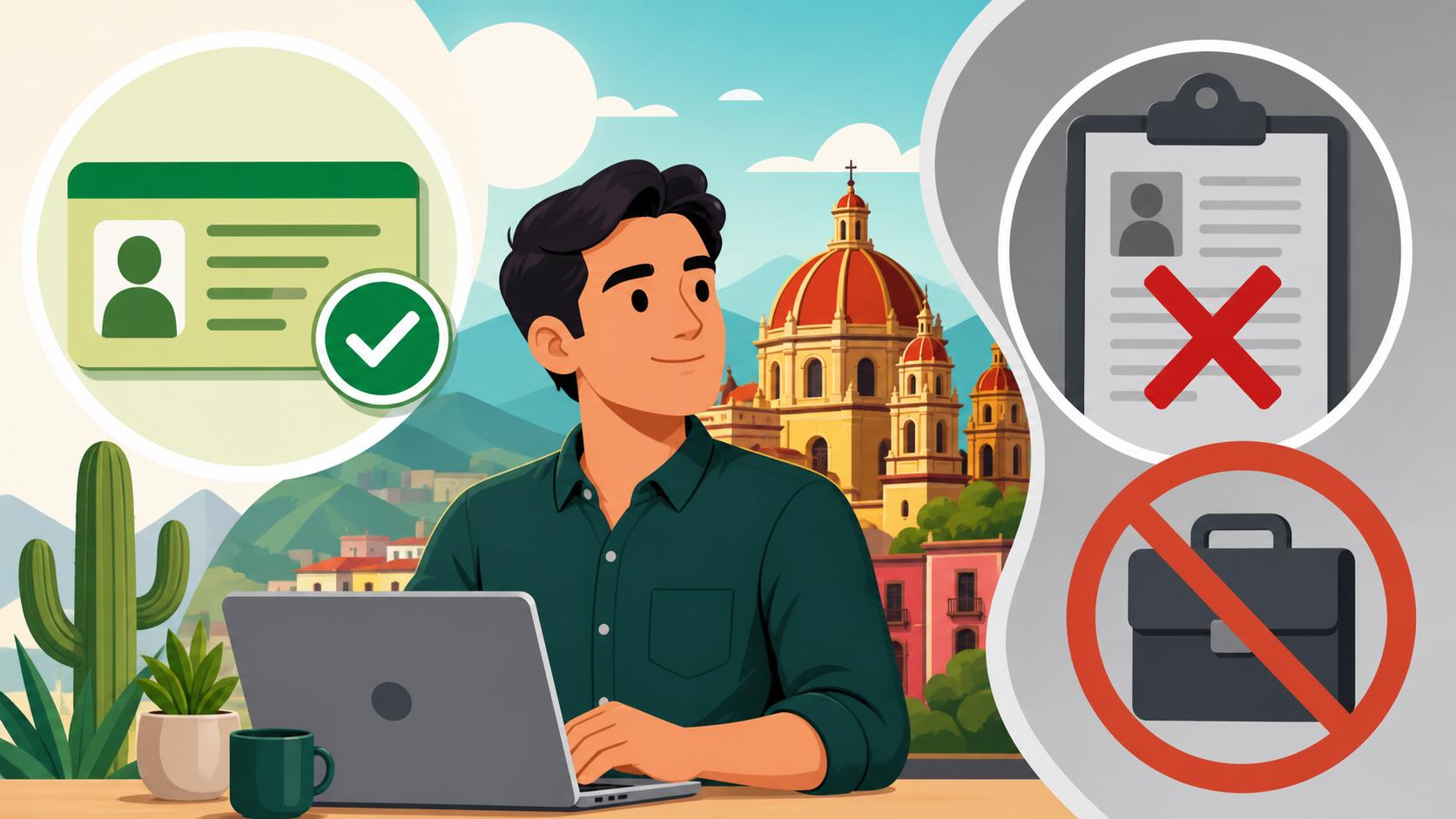
The short answer is yes: if you hold a Residente Permanente card, you have the inherent right to engage in "lucrative activities" (working for pay) in Mexico. Unlike many other countries where residency and work permits are strictly bifurcated, Mexico simplifies the process for its permanent residents. However, "simplified" in Mexico still involves a fair amount of paperwork and specific legal nuances that you need to respect to keep your status pristine.
The Lucrativa vs No Lucrativa Distinction
In the world of Mexican immigration, "lucrativa" refers to the ability to earn money within the country. When you are a temporary resident, your card often specifies whether you have the right to work. For permanent residents, this right is generally "built-in." You do not need to apply for a separate "Permiso para Trabajar" sticker or a secondary authorization from the Instituto Nacional de Migración (INM) just to accept a job offer. This is one of the most significant Rights and Benefits of Permanent Residents in Mexico because it removes the employer-sponsorship hurdle that often kills job opportunities for foreigners.
I remember talking to a friend who was offered a marketing director role at a firm in Guadalajara. Because she had her permanent residency, she was able to sign her contract and start on Monday. If she had been a temporary resident, the company would have had to provide a letter of intent, and she would have had to wait weeks for a permit update. The peace of mind that comes with this card is substantial, but you must remember that while the visa allows work, it doesn't bypass the tax or professional licensing requirements of the Mexican state.
Comparing Permanent and Temporary Residency Rights
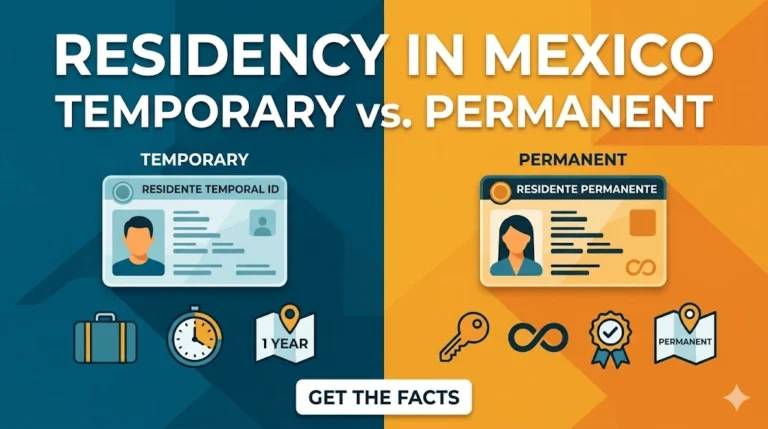
The jump from temporary to permanent status is a total game-changer for your career prospects. As a temporary resident, your ability to work is often tied to a specific employer or a specific "lucrative" authorization that you had to prove financial solvency for or pay extra fees to obtain. If you lose that job, your legal right to work can become murky. Permanent residency detaches your legal status from your employment status. You are free to be an employee, a business owner, or a freelancer without asking for permission first.
For a deeper dive into these differences, you might want to look into Temporary vs Permanent Residency in Mexico: Key Differences and Benefits. Essentially, as a permanent resident, you are treated almost like a Mexican citizen in the labor market, with very few exceptions. You don't have to renew your card every year, and you don't have to worry about "resetting" your work rights if you decide to switch from being a digital nomad to opening a physical coffee shop in Mérida.
The Mandatory Notification Process
While you don't need a "permit" to work, you do have a legal obligation to keep the INM informed about what you are doing. This is where many expats get tripped up. They hear "you don't need a permit" and assume that means "the government doesn't need to know." In reality, Mexican law requires all residents to notify the INM of changes in their "civil status," address, and employment within 90 days of the change.
Notifying the INM of Employment Changes
If you start a new job or change employers, you must submit a "Notificación de Cambios" to your local INM office. This isn't a request for permission; it is a formal update to your file. You will need to fill out the online form (the pieza), print it, and bring it to the office along with a copy of your residency card and a basic letter from your employer or a statement of your new activities if you are self-employed. If you are submitting foreign documents to support your professional standing, using a service like RushTranslate can ensure your documents meet the certified translation standards often required by Mexican authorities.
I once missed this 90-day window because I thought my employer would handle it. They didn't. I ended up having to pay a "multa" (fine) and spent three hours in a very uncomfortable plastic chair explaining my oversight to an immigration officer. It wasn't the end of the world, but it was an avoidable headache. Staying compliant is much easier than fixing a lapse after the fact.
Timeline and Required Documentation
The timeline for these notifications is strict. If you are starting as an independent contractor, you should notify them as soon as you have your tax ID (RFC) and start issuing invoices. The documentation is usually straightforward: your original residency card, a copy of your passport, the printed "solicitud" from the INM website, and proof of address (like a CFE electric bill).
| Requirement | Description | Timeline |
|---|---|---|
| INM Notification | Formally informing the INM of your new employer or self-employment status. | Within 90 days of starting. |
| RFC (SAT) | Registering with the tax authority to pay income tax. | Before you receive your first paycheck. |
| CURP Update | Ensuring your Unique Population Registry Code is active and linked to your residency. | Automatic with residency, but verify it is "linked." |
| Employer Letter | A simple document stating your role, salary, and start date. | Provided by your employer upon hiring. |
Administrative Paperwork You Cannot Skip
Even though your residency card says you can work, a Mexican HR department cannot legally put you on the payroll without two specific alphanumeric codes: the CURP and the RFC. Without these, you are essentially a ghost in the Mexican financial system.
Getting Your RFC and CURP
Your CURP (Clave Única de Registro de Población) is usually assigned to you when you receive your residency card. However, you should check that it is "validada por el registro civil." If it isn't, you might have trouble with some government websites. More importantly, you must obtain your RFC (Registro Federal de Contribuyentes) from the SAT (the Mexican equivalent of the IRS). Getting a SAT appointment can be notoriously difficult—sometimes requiring weeks of checking the website at midnight or joining "waiting lists" (fila virtual).
When I first moved here, I underestimated the importance of the RFC. I thought my residency card was enough. It turns out, even as a permanent resident, you cannot legally receive a "nómina" (paycheck) without an RFC. You also need this number to open a high-tier bank account. If you're wondering about the nitty-gritty of the initial setup, check out Mexico Immigration Terminology 101: FMM, CURP, RFC and Other Essentials to get a handle on the alphabet soup of Mexican bureaucracy.
Opening a Local Bank Account for Payroll
Once you have your residency and your tax ID, you’ll need a place for that money to go. Most Mexican employers require you to have a local bank account for "dispersión de nómina." While you can use international services like Wise for some things, a local account is essential for traditional employment. Be prepared for a bit of a "catch-22": some banks want to see your employment contract to open the account, but your employer needs the bank account to finalize the contract.
In these situations, having your permanent residency card is your golden ticket. It shows the bank that you are a long-term resident, which significantly lowers their perceived risk. I found that bringing a "comprobante de domicilio" (proof of address) that matches the address you gave the INM is the most critical piece of the puzzle. If you are still setting up your life, reading through How to Open a Bank Account in Mexico: Requirements and Tips can save you several wasted trips to the bank branch.
Professional Licensing and Regulated Industries
The biggest caveat to the "permanent residents can work" rule involves regulated professions. Just because Mexico gives you the right to be in the country and earn a living doesn't mean they automatically recognize your foreign medical degree or law license. This is a separate legal track known as "revalidación de estudios."
The Cédula Profesional Requirement
For professions like medicine, engineering, law, or architecture, you must obtain a Cédula Profesional. This is a federal professional license issued by the Secretaría de Educación Pública (SEP). The process involves having your foreign transcripts and diplomas "apostilled" in your home country and then translated by a certified translator in Mexico. Again, companies like RushTranslate are invaluable here for getting the initial paperwork ready before you seek the official Mexican certification.
I’ve known several expat nurses and teachers who were surprised to find that while they could legally work as consultants or administrators on their residency card, they couldn't practice their specific clinical or classroom roles until they went through the "homologación" process. This can take a year or more, so if you plan to work in a regulated field, start the paperwork the moment your residency is approved. You might find more context on this in Are Doctors in Mexico Properly Qualified? Understanding Medical Training, which explains the high standards Mexican professionals are held to.
Working as a Freelancer or Independent Contractor
If you aren't working for a Mexican company but instead want to work as a freelancer (either for local or international clients), the permanent residency card makes this incredibly easy. You simply register with the SAT as "Persona Física con Actividad Empresarial" or under the "RESICO" (Simplified Trust Regime), which offers very low tax rates for lower income brackets.
As a freelancer, you become your own boss in the eyes of the law. You will still need to send your "Notificación de Cambios" to the INM stating that you are now self-employed. This gives you the freedom to work with multiple clients and even hire local help. If you decide to go this route, Self-Employment in Mexico: Visa Options for Freelancers and Entrepreneurs is an excellent resource to help you understand the nuances of being your own boss in a foreign land.
Health Insurance and Employee Benefits
One of the perks of being a permanent resident working for a Mexican company is that you are entitled to the same labor rights as locals. This includes "Aguinaldo" (a mandatory Christmas bonus), vacation days, and enrollment in the IMSS (the public social security and healthcare system). While IMSS is great for basic needs and is a legal requirement for employers, many expats choose to supplement this with international coverage to ensure access to private hospitals.
Navigating the Healthcare System as a Worker
When you are officially on a Mexican payroll, your employer deducts a small amount for IMSS. This gives you and your family access to public clinics and hospitals. However, the wait times can be long, and the facilities are often crowded. Many of my colleagues kept a private policy like Cigna Global even while paying into the public system. This "hybrid" approach ensures that you have the legal safety net of the Mexican state but the comfort and speed of private care for major emergencies.
For those curious about how the public system works compared to what you might be used to, I highly recommend reading Public Healthcare in Mexico: IMSS and IMSS Bienestar Explained for Expats. It’s important to know your rights; as a permanent resident employee, you cannot be denied these benefits. If an employer tries to hire you "off the books" to avoid paying into IMSS, they are violating your rights and potentially putting your residency at risk if the INM finds out you are working without proper tax reporting.
Final Thoughts on Working Legally
The transition to permanent residency is one of the best moves you can make if you plan to build a long-term life in Mexico. The freedom to work without a specific "permit" allows you to integrate into the local community and economy in a way that temporary residency doesn't quite match. Just remember: stay on top of your SAT obligations, notify the INM of any major changes, and keep your Mexico Temporary Resident Visa: Comprehensive Guide for Expats (2026 Update) knowledge in your back pocket in case friends ask for advice on the earlier stages of the journey.
Working in Mexico has been one of the most rewarding experiences of my life. It isn't just about the money; it’s about the "convivencia"—the shared life with colleagues, the long lunches, and the unique business culture that values relationships as much as results. By following the rules and getting your administrative ducks in a row, you can enjoy that culture without a hint of legal anxiety. For more on the lifestyle side of things, don't miss our Living in Mexico: Cultural and Practical Guide for New Expats.
Disclaimer
This guide is for informational purposes only and does not constitute legal, financial, or immigration advice. Mexican immigration laws and SAT tax regulations are subject to frequent changes. Always consult with a certified immigration attorney or a professional accountant (contador) in Mexico to confirm current requirements and ensure your specific situation is handled correctly. This content reflects the general landscape as of 2026.