Is Mexican Citizenship Right for You? Pros and Cons for Expats
Many expats find themselves stuck in a state of permanent residency limbo, wondering if the extra paperwork for a passport actually provides any real-world benefits. I remember the exact moment in a crowded Mexico City government office when I realized that being a resident simply wasn't enough to truly protect my long-term interests in this beautiful country. This guide solves that dilemma by detailing the tangible pros and cons of Mexican citizenship.
Disclosure: This post may contain affiliate links. We may earn a commission at no extra cost to you if you make a purchase through these links. Read full disclosure.
The Path from Resident to Citizen
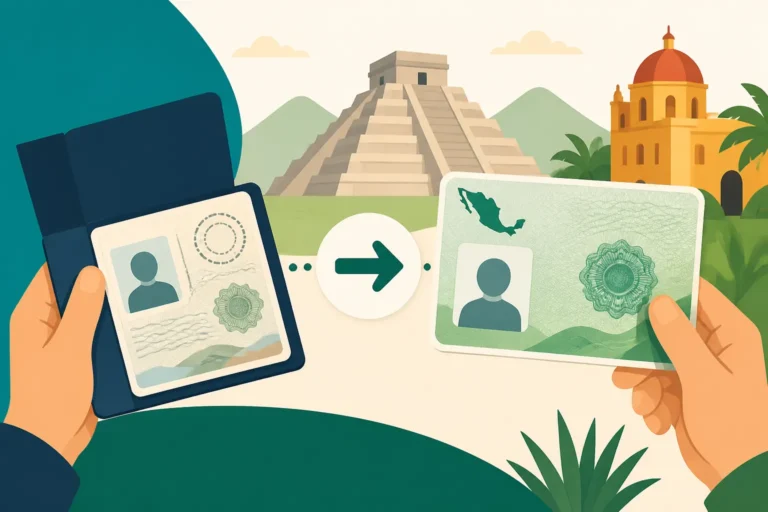
The journey to naturalization is not a sprint; it is a marathon of patience and bureaucratic persistence. Most foreigners start this journey by obtaining a temporary visa and eventually moving toward Mexico Permanent Residency Explained: A Complete Guide (2027) before even considering the passport. To apply for citizenship, you generally need to have lived in Mexico as a legal resident for at least five years, though this can be reduced to two years if you are married to a Mexican citizen or have Mexican-born children.
The transition from being a guest to being a compatriot involves a deep dive into Navigating Mexico's Immigration System: Visas, INM Procedures, and Regulations. Unlike residency, which is handled by the Instituto Nacional de Migración (INM), citizenship applications are processed through the Secretaría de Relaciones Exteriores (SRE). This shift in jurisdiction means a whole new set of offices, a different set of officials, and a significantly higher standard of document scrutiny.
One of the most critical steps in the early stages is ensuring your foreign documents are perfectly prepared. The SRE will not accept a simple photocopy of your birth certificate from back home. You will need apostilled or legalized originals, and the translations must be impeccable. Many expats rely on professional services like RushTranslate to ensure that every word of their foreign legal history is rendered into perfect Spanish that meets the exacting standards of the SRE. A single typo in a translated name can set your application back by months.
The Advantages of Mexican Citizenship
The most immediate benefit of becoming a Mexican citizen is the sense of absolute security. While permanent residents have many rights, they are still subject to the whims of immigration policy changes. As a citizen, your right to remain in the country is constitutional and irrevocable. You are no longer "visiting" at the pleasure of the government; you are part of the sovereign body of the nation.
Direct Property Ownership in the Restricted Zone
For many, the primary driver for naturalization is the ability to own land directly. Under Mexican law, foreigners cannot technically own property within 50 kilometers of the coast or 100 kilometers of the borders—an area known as the Restricted Zone. To get around this, residents must use a Fideicomiso (a bank trust) or a Mexican corporation. This is a common part of Buying Property in Mexico: Comprehensive Guide for Foreign Buyers, but it comes with annual bank fees and a lack of direct title ownership.
Once you become a citizen, the need for a Fideicomiso vanishes. You can hold the "Escritura" (title) in your own name, just like any other Mexican. This simplifies your estate planning and saves you thousands of dollars in bank fees over the course of your lifetime. If you are planning to retire on the shores of Puerto Vallarta or the cliffs of Baja, this benefit alone often justifies the effort of the naturalization process.
Full Political Participation and Voting Rights
As a resident, you are legally barred from participating in Mexican politics. In fact, Article 33 of the Mexican Constitution specifically prohibits foreigners from getting involved in the political affairs of the country. Becoming a citizen grants you the "Voto," allowing you to have a say in local, state, and federal elections.
This political inclusion is more than just a symbolic gesture. It allows you to advocate for your community, join local councils, and influence the policies that affect your daily life, from infrastructure projects to tax laws. Having a voice in the room where decisions are made provides a level of integration that residency simply cannot match. You also gain the right to hold certain government positions and work in sectors of the economy that are reserved exclusively for Mexican nationals.
Hassle-Free Travel and the Mexican Passport
The Mexican passport is surprisingly powerful, offering visa-free or visa-on-arrival access to over 150 countries, including the entire Schengen Area in Europe. For many expats, especially those from countries with less "travel-friendly" passports, this is a massive upgrade. Furthermore, when entering Mexico, you no longer have to stand in the long lines for foreigners or worry about the expiration of your residency card.
When you travel as a citizen, you are no longer tracking your days out of the country to ensure you don't lose your status. You simply walk through the "Mexicanos" line at the airport, scan your passport, and go home. This ease of movement is a significant relief for those who split their time between Mexico and their home country or for those who travel extensively for business.
The Challenges and Drawbacks of Naturalization
While the benefits are numerous, the process is not without its thorns. The administrative gauntlet of the SRE is legendary among the expat community. You are required to pass a history and culture exam, as well as a Spanish proficiency test. If your Spanish is currently limited to ordering "dos tacos de pastor," you have a significant amount of work ahead of you.
The Naturalization Exam and Language Barrier
The exam is not a formality. It covers everything from pre-Hispanic civilizations and the War of Independence to modern Mexican literature and art. You will need to know who wrote the national anthem, the significance of the Battle of Puebla, and the names of the "Niños Héroes." For many, this requires months of dedicated study.
This is where the How to Become a Mexican Citizen: The Complete Naturalization Guide becomes an essential resource. Failing the exam often means a mandatory waiting period before you can attempt it again, which can be demoralizing. Furthermore, the interview process with SRE officials is conducted entirely in Spanish. They are looking to see if you can navigate complex social and legal conversations, ensuring you can truly integrate into the fabric of the nation.
Documentation and Professional Translation Requirements
The sheer volume of paperwork required can be overwhelming. You will need to provide a complete history of your exits and entries into the country, your tax records from the SAT (Servicio de Administración Tributaria), and certified copies of your foreign identity documents. Because the SRE is incredibly picky, many foreigners use RushTranslate to handle their birth certificates and marriage licenses. Having a "certified" translation isn't just a suggestion; it's a mandatory requirement that can stop your application in its tracks if not handled by a recognized professional.
Potential Loss of Certain Home Country Protections
While Mexico allows for dual nationality, the legal reality can be complex. You must research Dual Citizenship in Mexico: Can You Keep Your Original Nationality? to understand how your country of origin views the acquisition of a second passport. For US citizens, for example, the US government recognizes dual nationality but still requires you to use your US passport to enter and exit the United States.
There is also the matter of consular protection. If you find yourself in legal trouble in Mexico, your original home country’s embassy may have a limited ability to intervene on your behalf if you are also a Mexican citizen. In the eyes of the Mexican government, you are a Mexican, and your other nationality is essentially invisible while you are on Mexican soil.
Comparing Residency vs Citizenship
To help you decide which path is right for your specific situation, it is helpful to look at the practical differences side-by-side. Many people find that permanent residency provides 90% of what they need, while citizenship provides that final 10% of total security and freedom.
| Feature | Permanent Resident | Mexican Citizen |
|---|---|---|
| Right to Work | Included | Included |
| Voting Rights | No | Yes |
| Direct Coastal Land Ownership | No (Fideicomiso Required) | Yes |
| Passport | Home Country Only | Mexican + Home Country |
| Expiring Documents | Card never expires, but status can be lost | Passport expires, Citizenship is forever |
| Airport Lines | Foreigners / Residents | Mexicanos |
| Consular Protection | From Home Country | Limited from Home Country |
| Exam Required | No | Yes (History, Culture, Spanish) |
Health and Financial Considerations During the Transition
One often overlooked aspect of naturalizing is the shift in how you view your long-term health and financial stability. As a resident, you might still feel like your "real" life is back in your home country. Once you become a citizen, your center of gravity shifts. You might find that your previous travel insurance or temporary health plans are no longer sufficient for someone who is now a full-time, permanent member of Mexican society.
Managing Long-Term Health Coverage
As a citizen, you gain the right to access the public healthcare system (IMSS) more easily, but many expats prefer to maintain private coverage to ensure access to top-tier facilities in cities like Mexico City or Monterrey. This is where a plan from Cigna Global becomes invaluable. Even as a Mexican citizen, having international private medical insurance ensures that you aren't tied solely to the local system and can seek specialized treatment anywhere in the world.
Maintaining a high level of Health Insurance in Mexico: How Expats Can Get Coverage (2027) is crucial because the naturalization process itself doesn't change the underlying costs of private medical care. If you are over a certain age or have pre-existing conditions, you want to ensure your transition to citizenship doesn't leave a gap in your coverage. Cigna Global offers the portability that allows you to move between your new home and your old one without losing access to your doctors.
The Financial Burden of the "Trámite"
The naturalization process is not free. Between SRE fees, the cost of What is an Apostille, and Do You Need It for Mexican Immigration Documents?, and professional translation services, you can expect to spend several thousand dollars. You will also need to be in good standing with the tax authorities. Before you start the process, make sure you are familiar with Mexico Immigration Terminology 101: FMM, CURP, RFC and Other Essentials so you aren't surprised by requests for your RFC or proof of tax compliance.
Working with professionals who understand the nuances of the "trámite" (process) is essential. Whether it is using RushTranslate for your legal documents or consulting with a specialized immigration lawyer, trying to "DIY" your citizenship application can often lead to more expenses in the long run due to errors and re-filing fees.
Is It Right for You
Ultimately, the decision to become a Mexican citizen is as much emotional as it is practical. If you have built a life here, bought a home, and feel a deep connection to the culture and the people, naturalization is the ultimate way to honor that bond. It removes the last remaining barriers between you and your chosen home.
However, if you only spend a few months a year in Mexico or if the idea of studying Mexican history and taking a language exam feels like an insurmountable chore, staying as a permanent resident is a perfectly valid and common choice. You will still have the right to live and work indefinitely, and for many, that is more than enough.
Before you make your final decision, spend some time talking to other "naturalizados" in your local community. Ask them about their experience at the SRE and whether they feel their daily life has changed. Most will tell you that while the process was a headache, the feeling of finally belonging is worth every minute of the struggle.
Disclaimer
This guide is for informational purposes only and does not constitute legal, financial, or immigration advice. Mexican immigration laws and SRE requirements are subject to change, and you should always consult with a qualified immigration attorney or the official website of the Secretaría de Relaciones Exteriores (SRE) before beginning any naturalization process. The experiences of expats may vary based on individual circumstances and local administrative interpretations.