What Happens to Your Residency if Your Passport Expires?
Staring at an expiration date on your passport can trigger a unique kind of panic when you live abroad. I remember the first time I realized my home country passport was expiring six months before my residency card; I spent a week convinced I’d be deported the moment my passport turned into a pumpkin. This guide solves the mystery of the "passport-residency mismatch" and outlines the exact steps you need to take with Mexican authorities to keep your legal status pristine.
Disclosure: This post may contain affiliate links. We may earn a commission at no extra cost to you if you make a purchase through these links. Read full disclosure.
Does an Expired Passport Invalidate Your Mexican Residency
The most important thing to breathe in right now is that your residency status in Mexico—whether you are a Residente Temporal or a Residente Permanente—is not tethered to the "life" of your passport in the way a tourist permit is. In the eyes of the Mexican government, your residency is a legal right granted to you that exists independently of your travel document. However, while your status remains valid, your ability to prove that status and travel freely depends on keeping your records synchronized.
When your passport expires, your residency card remains a valid piece of identification within Mexico. You can still use it to pick up packages at the post office or enter domestic flights. But the moment you attempt to cross an international border, the discrepancy between your old passport number (which is on file with immigration) and your new passport becomes a hurdle. Think of your residency card as your "permission to stay" and your passport as your "permission to move." When the latter changes, you have a legal obligation to tell the Instituto Nacional de Migración (INM) that the two are still linked to the same person.
The legal framework for this is found within the Navigating Mexico's Immigration System: Visas, INM Procedures, and Regulations guidelines. Specifically, residents are required to notify INM of changes in nationality, name, civil status, or—most commonly for us—passport updates. Failure to do so doesn't mean you lose your residency immediately, but it creates a "broken link" in the system that can lead to fines, delays at the airport, or complications when it finally comes time to renew your card.
The 90 Day Notification Rule and Why It Matters
Mexico is a land of deadlines, and the "Notificación de Cambio" (Notification of Change) is no exception. According to the law, you have 90 natural days from the date you receive your new passport to notify the INM office. This is a crucial window. I’ve seen expats wait until their residency renewal a year later to mention their new passport, only to be met with a "multa" (fine) that can range from a few thousand pesos to significantly more depending on the agent's discretion and how long you've delayed.
This notification is a formal administrative process. It isn't just about showing a clerk your new book; it involves filing a specific set of paperwork to ensure your Mexico Immigration Terminology 101: FMM, CURP, RFC and Other Essentials records are all updated. When you get that new passport from your embassy, the clock starts ticking. Even if you are currently outside of Mexico when you receive the new document, you should prioritize this update as soon as you return.
If you are a frequent traveler, this notification is your best friend. When you scan your residency card at an e-gate or present it to an officer at the airport, the system pulls up your registered passport number. If that number doesn't match the one in your hand, you’re looking at a secondary inspection room and a lot of explaining. Keeping your Mexico Temporary Resident Visa: Comprehensive Guide for Expats (2026 Update) profile current ensures that your entries and exits are logged correctly, which is vital if you ever plan to apply for naturalization later.
Step by Step Guide to the INM Notification Process
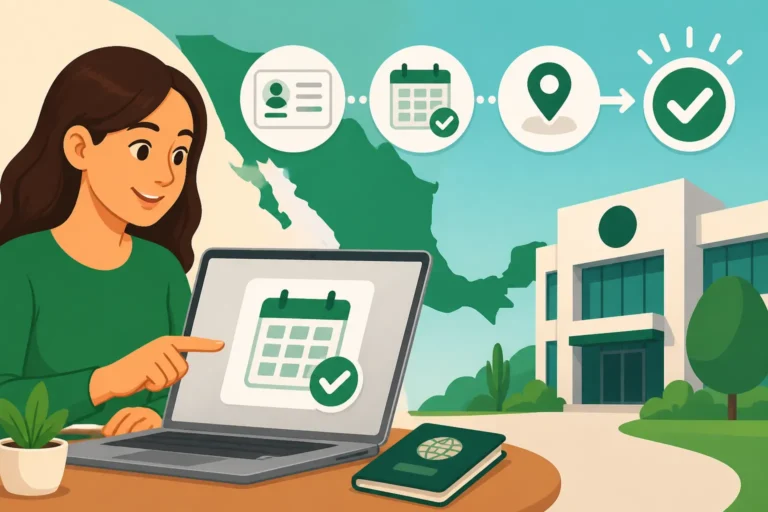
Once you have your shiny new passport in hand, the real work begins. You don't need a lawyer for this, but you do need patience and a very specific folder of documents. The process is technically called a Notificación de Cambio de Pasaporte. You will need to visit the INM office that corresponds to your registered address.
First, you’ll need the Formato para solicitar trámite migratorio de estancia, which is an online form you fill out and print. You’ll select the option for "Notificar cambios." Along with this, you need a "Carta de Notificación." This is a simple letter, written in Spanish, where you formally inform the INM that you have a new passport. I always recommend having a local friend double-check your Spanish or using a service if you aren't confident, as the "trámite" culture in Mexico thrives on perfect paperwork.
The document checklist usually looks like this:
- The original and a color copy of your new passport.
- A copy of the identification page of your old expired passport.
- Your original residency card and a color copy (both sides).
- The printed confirmation of the online form.
- The signed letter of notification in Spanish.
In some cases, if your name changed or there are significant discrepancies in how your name is printed on the new passport vs. the old one, you might need a certified translation. This is where a service like RushTranslate can be invaluable. They provide the certified translations that Mexican officials often demand for any document not in Spanish. Always keep your How to Translate Documents for Your Mexican Visa Application (Certified Translations) requirements in mind, as a simple error here can result in a "regresó" (being sent back) to try again another day.
| Requirement | Temporary Resident | Permanent Resident |
|---|---|---|
| Notification Deadline | 90 Days from receipt | 90 Days from receipt |
| INM Fee | Generally no fee (Free) | Generally no fee (Free) |
| Document Translation | Required if names differ | Required if names differ |
| Bank Notification | Highly Recommended | Highly Recommended |
| Travel Impact | Risk of entry denial | Risk of entry denial |
Handling Travel While Between Passports
One of the most stressful scenarios is needing to travel internationally while your old passport is expired but you haven't yet completed the INM notification for the new one. If you find yourself in this "limbo," the general rule of thumb is to carry both passports and your residency card. When you exit Mexico, show the airline and the immigration officer both documents.
However, be warned: some airline gate agents are more familiar with Mexican immigration law than others. I’ve had friends nearly denied boarding in Houston because the airline's computer system showed a mismatch. This is why having your INM Office Visits: What to Expect When Processing Your Visa in Mexico experience documented is so important. Once you have submitted your notification, the INM will give you a "pieza" or a tracking number. This piece of paper is your legal shield until the system is fully updated.
For those with Health Insurance in Mexico: How Expats Can Get Coverage (2027), remember to update your insurance provider as well. Companies like Cigna Global often use your passport number as a primary identifier for your policy. If you were to have a medical emergency abroad and your passport doesn't match your insurance records, it could cause a headache you don't need during a crisis. Always send a quick scan of your new passport to your insurance broker the same day you get it.
Updating Your CURP and Financial Records
Your passport is linked to more than just your residency card; it is the foundation for your entire "paper trail" in Mexico. Most notably, it is linked to your CURP (Clave Única de Registro de Población). While your CURP number itself usually stays the same, the underlying data held by RENAPO (the national registry) may need to be refreshed to reflect your new passport details. You can read more about why this matters in our guide on How to Get a CURP as a Foreigner: The Mexican ID Number Explained.
Banks are another critical stop on your "new passport tour." Mexican banks are notoriously strict about "Know Your Customer" (KYC) regulations. If your bank has an expired passport on file, they may eventually freeze your account or prevent you from performing certain over-the-counter transactions. Take your new passport, your residency card, and your most recent bank statement to your local branch and ask to speak with an executive to "actualizar mis datos."
Doing this ensures that your Banking in Mexico: Complete Guide for Foreigners experience remains smooth. While you’re at it, check if your utility bills or your RFC (tax ID) need updates. Most people forget the RFC, but if you are an entrepreneur or homeowner, having your tax ID linked to an expired document can complicate the sale of a property or the filing of annual taxes.
What Happens if You Miss the 90 Day Window
Life happens. Maybe you were back in your home country for four months dealing with family issues and your 90-day window slammed shut. If you miss the deadline, do not try to hide it. Mexican immigration officers are generally much more forgiving if you come to them voluntarily than if they catch the error during a random check or at the airport.
When you go to the INM office past the deadline, you will likely be directed to the "Jurídico" (legal) department within the office. They will start a small administrative procedure. You’ll have to write a letter explaining why you were late (the "Letter of Apology"). After a few days or weeks, they will issue a resolution and a fine. Once the fine is paid at a local bank, they will proceed with the update.
This process can be tedious, but it is necessary to clear your record. If you leave the "multa" unpaid, it stays on your immigration file. This can lead to your Understanding Mexico's Resident Visa Cards: Temporary vs Permanent Design being flagged, which might result in a denial when you eventually try to renew your residency or apply for permanent status. It is always better to pay the fine and have a clean file than to live with the "immigration ghost" haunting your records.
Final Practical Tips for a Smooth Update
After living through several passport renewals in Mexico, I’ve developed a few "pro-tips" that the official manuals won't tell you. First, always make three copies of everything. If the clerk asks for a copy you don't have, the nearest "copiadora" is always five blocks away and has a line out the door. Second, bring a black pen. Mexican bureaucracy has a strange, unspoken love for black ink over blue.
Third, verify your information on the new residency system if your state uses it. Some INM offices are moving toward digital records where you can see your status online. Ensure the clerk has typed your new passport number correctly before you leave the window. A single transposed digit can cause as much trouble as an expired passport.
Lastly, keep a digital folder on a secure cloud drive with scans of your old passport, your new passport, your residency card, and your stamped notification of change from INM. If you ever lose your physical documents, having these scans will make the replacement process ten times faster. Living in Mexico is a beautiful adventure, but it requires a bit of "administrative hygiene" to keep the gears turning. Treat your passport renewal as a multi-step project, and you’ll find that the "Mexican Shuffle" between offices isn't so bad when you know exactly where you’re going.
Disclaimer
The information provided in this guide is for informational purposes only and does not constitute legal advice. Mexican immigration laws and procedures are subject to frequent changes. Always consult with the official Instituto Nacional de Migración (INM) website or a qualified immigration professional for the most up-to-date requirements.