Emergency Services in Mexico: 911, Cruz Roja, and Ambulances
Imagine waking up at 3:00 AM in a dark bedroom in Ajijic or Playa del Carmen with a sharp, localized pain in your abdomen that you just can't ignore. I remember the paralyzing fear during my first year here, staring at my phone and wondering if the dispatcher would understand my panicked, broken Spanish. This guide provides the exact roadmap you need to navigate 911, the Red Cross, and the complex world of Mexican ambulances so you are never left guessing in a crisis.
Disclosure: This post may contain affiliate links. We may earn a commission at no extra cost to you if you make a purchase through these links. Read full disclosure.
Understanding the Emergency Response Landscape in Mexico
The first thing you need to accept as an expat is that the emergency infrastructure here is a patchwork quilt of public services, non-profit organizations, and aggressive private enterprises. Unlike the centralized, high-resource systems in the US or Canada, Mexico’s response depends heavily on your specific location, your ability to communicate, and your financial resources. Understanding this hierarchy is the difference between a thirty-minute wait and a ten-minute response.
The 911 System: Expectations vs. Reality
Mexico officially consolidated its emergency numbers into 911 several years ago, moving away from the old 060 and 066 prefixes. On paper, it works just like it does back home; in practice, it is a dispatch relay system. When you dial 911, your call is routed to a local C5 (Command, Control, Computing, Communications, and Citizen Contact) center. These centers monitor city-wide cameras and dispatch police, fire, or medical units.
However, the reality for foreigners is that English-speaking dispatchers are not always available, especially in smaller municipalities or rural "pueblos." Even in major hubs like Mexico City or Guadalajara, you might find yourself on hold or struggling to convey a complex location. It is vital to realize that 911 will often prioritize public ambulances, which are frequently under-equipped or tied up with high-trauma calls in low-income areas. If you are in a gated community or a high-end neighborhood, the response time for a public 911 unit can be frustratingly slow. This is why many veteran residents keep the direct numbers for private services on their fridge.
The Critical Role of Cruz Roja Mexicana
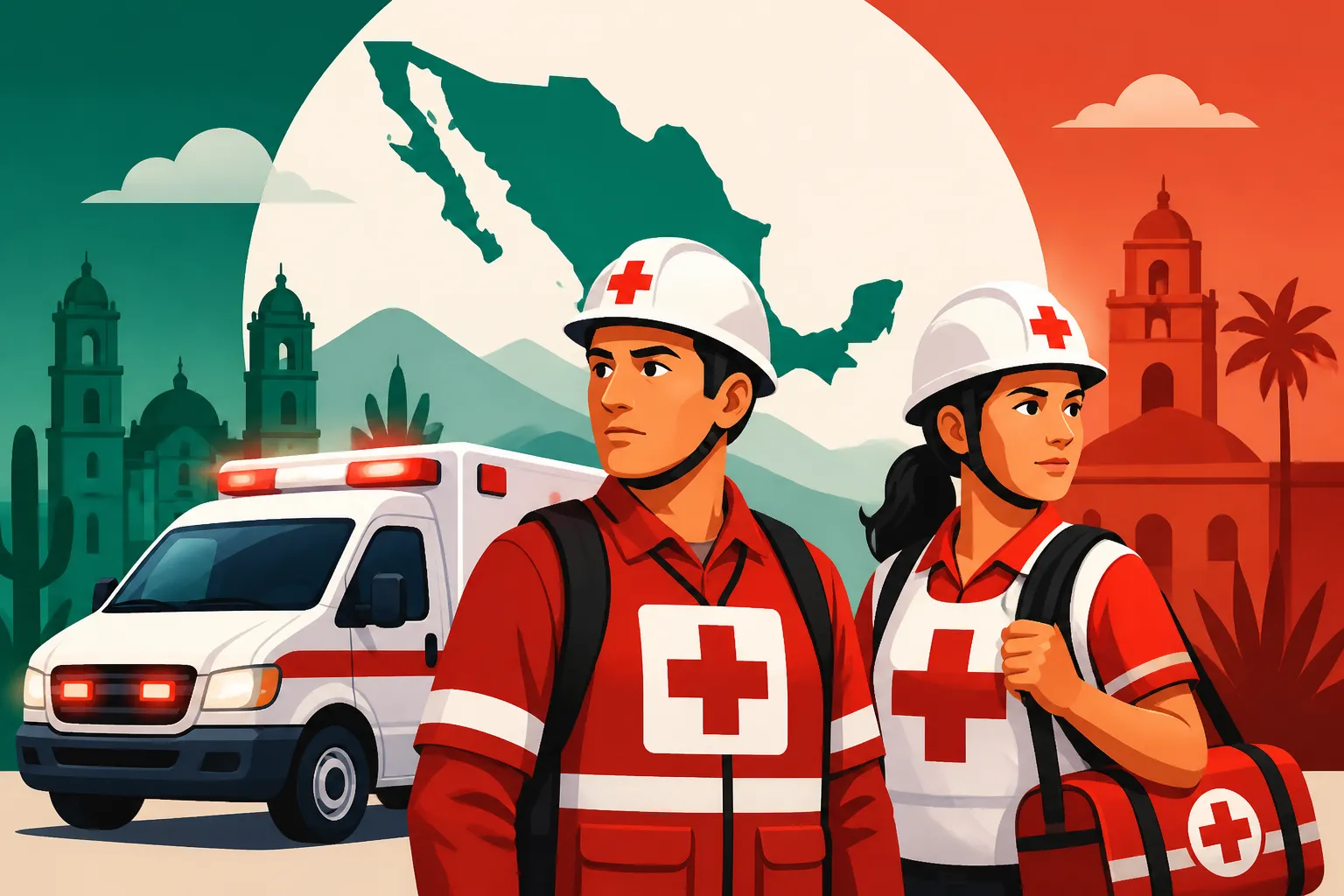
The Cruz Roja (Red Cross) is a pillar of Mexican society, but it is not a government agency. It is a non-profit organization that provides the bulk of emergency medical care in the country. In many towns, the Cruz Roja is the only game in town when it comes to ambulances. They operate on donations and a passion for service, but their equipment can vary wildly.
When you call for a Cruz Roja ambulance, you are getting paramedics who are often incredibly experienced because they see everything. However, they are also working with limited budgets. In a major medical crisis, they will usually transport you to the nearest public hospital unless you can prove you have the means to pay for a private facility. I’ve seen cases where a Cruz Roja crew saved a life on the sidewalk, but the transition to a hospital became a bureaucratic hurdle. It is a noble service, but you should understand that they are often stretched thin.
Identifying Public vs. Private Emergency Responders
In many Mexican cities, you will see a variety of ambulances racing through the streets. Some are marked "UMH" (Unidad Médica de Hiperbaria), others are "Protección Civil," and some are purely private companies like "Critical Care" or "EMME." In a phenomenon that surprises many newcomers, private ambulances often listen to police scanners. If they hear a 911 call near their location, they might beat the public ambulance to the scene.
While these private units are often better equipped with advanced life support (ALS) technology, they are businesses. They want to know how the bill will be settled before they pull away from the curb. This is where having a plan—and Medical Emergencies in Mexico: What Expats Should Know and Prepare—becomes essential. If a private ambulance arrives, they will likely insist on taking you to a specific private hospital where they have an established relationship. If you have premium coverage through a provider like Cigna Global, these private units are generally your best bet for high-quality care, but you must be prepared for the "payment discussion" early on.
How to Call an Ambulance and What to Say
When the clock is ticking, your brain will likely go into "flight or fight" mode. The language barrier becomes a wall, and suddenly you can't remember the name of the cross-street where you've lived for three years. Preparation is the only antidote to this panic. You need to be able to communicate three things clearly: Who is hurt, where are they, and what is the nature of the emergency.
Language Barriers: Navigating Spanish Dispatchers
Unless you are in a massive tourist zone like the Cancún Hotel Zone, assume the dispatcher speaks only Spanish. You don't need to be fluent, but you do need a script. If you cannot speak Spanish, the most important phrase to learn is: "Hablo poco español, ¿hay alguien que hable inglés?" (I speak little Spanish, is there someone who speaks English?). If the answer is "No," do not hang up.
Use short, punchy keywords. "Ambulancia," "Infarto" (Heart attack), "Accidente," and "Sangre" (Blood) are universal. A very helpful tip I learned from a local paramedic is to have your address and the nearest "cruce" (cross-street) written in Spanish on a card near your phone. Read it exactly as it's written. If you are using a VoIP phone (like Vonage or MagicJack), 911 might not detect your location correctly, so always lead with your city and neighborhood (colonia). For those living in more remote areas, knowing how to Calling an Ambulance in Mexico: How Emergency Services Operate involves understanding that you might need to meet the ambulance at a recognizable landmark, like an OXXO or a church.
Essential Information You Must Provide
Mexican dispatchers will ask questions that might seem redundant, but they are trying to determine which level of care to send. Be prepared to provide the following:
- The Number of Patients: This is crucial if there has been a car accident or a multi-person illness.
- A Phone Number: They will often call you back if they can't find the house.
- Specific Symptoms: Is the patient conscious (consciente)? Are they breathing (respirando)?
- Landmarks: "The house with the red gate across from the park." In Mexico, addresses aren't always logical, so landmarks are the gold standard for navigation.
If you have Finding English-Speaking Doctors and Specialists in Mexico already on your contact list, tell the dispatcher you have a preferred physician. Sometimes, they can coordinate the intake with a specific hospital while the ambulance is en route.
Using Private Ambulance Services Directly
Many expats choose to bypass 911 and the Cruz Roja entirely by subscribing to a private ambulance service. Companies like EMME (mostly in the north) or various local "Servicios de Urgencias" offer a membership model. For a monthly fee, you get a direct number to their dispatch center. These dispatchers are much more likely to speak English, and they already have your address and medical history on file.
The advantage here is speed and comfort. These ambulances are essentially mobile ER rooms. They are also much more likely to accept international insurance plans like SafetyWing for the initial stabilization and transport costs. If you have a chronic condition, this is not just a luxury; it’s a life-saving investment. You avoid the "first available" hospital lottery and get taken directly to a facility that meets your standards.
The Cost of Emergencies: Billing and Insurance
This is the section where reality hits the hardest. In Mexico, medical care is a service that must be paid for, and the concept of "treating now and billing later" is much more flexible in the public sector than in the private one. You must understand the financial mechanics of a medical crisis before you are in the back of a speeding van.
Upfront Payments and Garantías
If a private ambulance picks you up, they may ask for a credit card or cash before they even depart for the hospital, or immediately upon arrival. This can range from 3,000 to 15,000 pesos depending on the equipment used and the distance. Even more critical is the hospital "garantía" (guarantee). Private hospitals in Mexico will often require a significant deposit—sometimes thousands of dollars—before admitting a patient.
This is a major shock for many expats. They expect that showing an insurance card is enough. However, many hospitals will not "verify" insurance in the middle of the night. They want a credit card on file first. This is where Healthcare in Mexico: Complete Guide for Expats (Public vs Private) becomes a vital read. You should always keep a high-limit credit card specifically for medical emergencies. Once you are stabilized and the sun is up, the hospital's billing department will work with your insurance provider to handle the long-term costs.
How International Insurance Works in a Crisis
If you are carrying international coverage such as Cigna Global, you have a powerful tool in your pocket, but you have to know how to use it. These companies often have 24/7 emergency hotlines. If you are able, call your insurance provider while you are waiting for the ambulance or have a family member do it. They can sometimes issue a "Letter of Guarantee" directly to the hospital, which may waive the need for a massive cash deposit.
For digital nomads or those on shorter stays using SafetyWing, the process is often a "pay and claim" model for smaller emergencies, but for major hospitalizations, they provide coordination. The key is documentation. Every receipt, every "factura," and every medical report must be saved. Without a formal "factura" (tax receipt), your insurance will almost certainly deny the claim. Ensure you have your RFC (tax ID) ready if you have one, or use the generic foreign resident code.
| Service Type | Estimated Cost (MXN) | Best For | Payment Expectation |
|---|---|---|---|
| Cruz Roja | Donation-based (approx. $500 – $2,000) | General trauma, accidents, rural areas | Pay after arrival or donation |
| 911 Public | Free / Low cost | Street accidents, crime scenes | N/A (transport to public hospital) |
| Private Membership | Monthly fee ($200 – $600/mo) | Home emergencies, chronic illness | Pre-paid or insurance |
| Private On-Call | $3,000 – $15,000 per trip | Speed, specialized equipment, private hospitals | Immediate credit card/Cash |
Public Hospital vs. Private Clinic Admissions
If you are transported to a public hospital (like those run by the SSA or IMSS), the cost will be significantly lower, but the wait times can be extreme. If you are an expat who has not enrolled in Public Healthcare in Mexico: IMSS and IMSS Bienestar Explained for Expats, you will be charged a "recovery fee," which is still very affordable compared to US prices. However, the level of "comfort"—including private rooms, English-speaking staff, and modern diagnostic machines—will be much lower.
Private clinics and hospitals (like the Hospital Ángeles network or Star Médica) offer world-class care but at a price. They function like five-star hotels with operating rooms. If your ambulance driver asks where to go, and you have Health Insurance in Mexico: How Expats Can Get Coverage (2027), name your preferred private hospital clearly. If you don't name one, they will take you to the one that pays them a "referral fee" or simply the nearest one, which might not be where you want to be.
Practical Tips for Medical Crisis Management
Over time, you'll realize that the "Mexican way" of doing things requires a bit more personal responsibility and "pre-gaming" than you might be used to. You can't just rely on the system to catch you; you have to build your own net.
Setting Up Your Emergency Portfolio
I recommend every expat keeps a physical "Emergency Folder" near the front door. This isn't just for you; it's for the paramedics who might find you unconscious or the spouse who is too panicked to think. This folder should contain:
- Copies of Passports and Residency Cards: Hospitals need these for identification.
- Insurance Cards: Both local and international (e.g., Cigna Global).
- List of Medications: Use the Spanish names for the active ingredients, not just the brand names. Consult Pharmacies in Mexico: How to Get Medications (OTC vs Prescription) to find the local equivalents.
- Allergy List: Especially for antibiotics like Penicillin.
- Emergency Contacts: Both in Mexico and back home.
- A "Factura" Information Sheet: Your RFC and legal name for tax receipts.
Navigating Roadside Emergencies: Angeles Verdes
If your emergency happens on a highway (carretera), your best friend is the "Angeles Verdes" (Green Angels). While 911 still works, dialing 078 connects you to this specialized fleet of green trucks operated by the Ministry of Tourism. They provide free mechanical assistance and basic first aid.
They patrol the major toll roads (cuotas) daily. If you have a medical emergency on the road, they are often faster and better equipped for roadside triage than a standard ambulance coming from the nearest town. Just keep in mind that they only operate during daylight hours. For nighttime emergencies on the road, you are back to the 911 system. If you are concerned about being stranded, ensuring you have Medical Evacuation Insurance: Do Expats in Mexico Need Airlift Coverage? is a smart move if you do a lot of cross-country driving.
Handling Hospital Transfers
Sometimes, the ambulance takes you to a "stabilization clinic" because you are in critical condition, but you need to be moved to a specialized facility for surgery or long-term care. This is a common pain point. Public ambulances rarely perform "inter-hospital transfers" for private patients. You will likely have to hire a private ambulance to move you.
This is where your insurance coordination becomes vital. Moving a patient on a ventilator or with a broken hip requires specialized care. Before agreeing to a transfer, verify if your insurance covers the second ambulance trip. If you are in a remote area and need a transfer to a major city like Mexico City or Houston, this is where a policy like SafetyWing with medevac benefits becomes literally worth its weight in gold.
Essential Preparation Checklist for Expats
Living in Mexico is a dream, but don't let it become a nightmare because of a lack of preparation. Take these steps this week:
- Program your phone: Save the local 911, the direct number for the nearest Cruz Roja, and the number for a private ambulance service.
- Locate your nearest "Urgencias": Drive to the nearest private hospital. Know exactly where the emergency entrance is. Sometimes it’s around the back or down a side street.
- Find your "Doctor de Cabecera": Having a primary care physician who knows you is invaluable. Learn How to Find an English-Speaking Doctor in Mexico before you actually need one.
- Check your credit limit: Ensure you have at least $5,000 USD of available credit for emergency deposits.
- Learn the basic Spanish phrases: Practice saying your address and "Tengo una emergencia médica" until it's muscle memory.
Mexico’s emergency services are operated by some of the most hardworking, dedicated people I’ve ever met. They do a lot with a little. By knowing how to work with the system—knowing when to call 911, when to call a private service, and how to handle the bill—you can enjoy your life in the sun with the peace of mind that you’re ready for whatever comes your way. Whether you are seeking Mental Health Resources: Finding English-Speaking Therapists in Mexico or a trauma surgeon, the key is knowing who to call and having the resources to back up that call. Stay safe, be prepared, and remember: in Mexico, the proactive expat is the one who gets the best care.
Disclaimer Regarding Medical Advice and Emergency Services
This guide is for informational purposes only and does not constitute professional medical, legal, or financial advice. Emergency service protocols and costs in Mexico are subject to change without notice and vary significantly by region and municipality. Always consult with a qualified healthcare provider or insurance specialist regarding your specific medical needs and coverage. In the event of a life-threatening emergency, dial 911 or your local emergency number immediately. The author and publisher assume no liability for the actions taken by readers or the services provided by the entities mentioned in this article.