Cycling and Scooters: Alternative Transport Options for City Expats
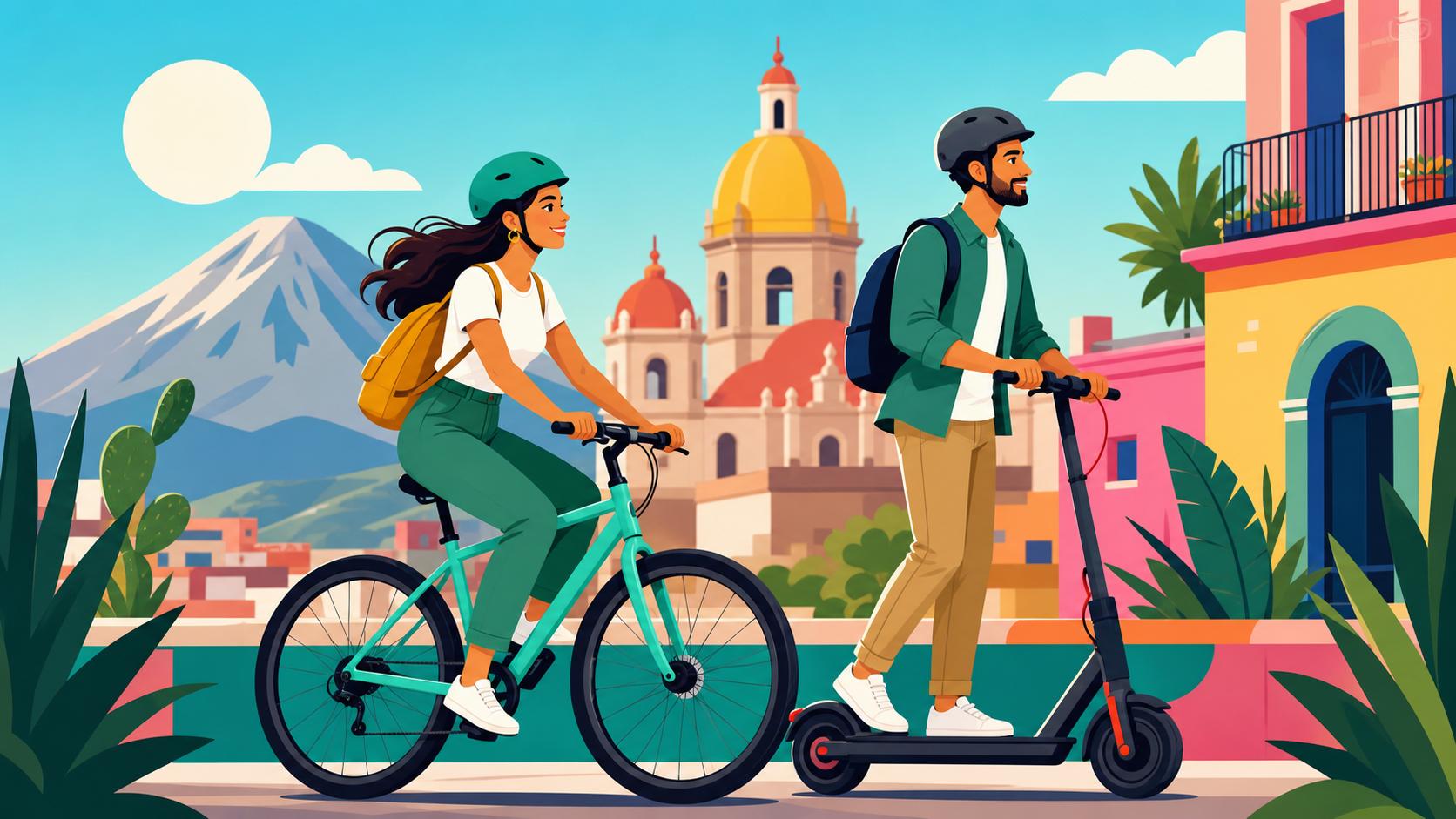
Getting stuck in a two-hour gridlock while trying to cross just three kilometers in Mexico City is a rite of passage every newcomer eventually faces. I remember sitting in a taxi near Chapultepec, watching a grandmother on an old cruiser bike breeze past me while I hadn't moved an inch in twenty minutes. This guide explains how cycling and electric scooters offer the ultimate "cheat code" for navigating Mexico's vibrant but congested urban centers.
Disclosure: This post may contain affiliate links. We may earn a commission at no extra cost to you if you make a purchase through these links. Read full disclosure.
Navigating the Urban Jungle: Why Bikes and Scooters Make Sense
The primary draw for alternative transport in Mexico is the sheer liberation from the "tránsito." In cities like Mexico City, Guadalajara, and Monterrey, the traditional morning and evening rushes aren't just inconvenient; they are lifestyle-defining. When you are Living in Mexico City: An Expat's Guide to Neighborhoods and Lifestyle, your quality of life often scales with how little time you spend inside a car. Micromobility allows you to bypass the stagnant lines of vehicles, turning a stressful commute into a brisk, invigorating journey.
Beyond the time savings, there is a profound psychological benefit. Being trapped in a car or a packed Metro bus can feel isolating and draining. On a bike or a scooter, you are connected to the street level. You smell the tamales cooking on the corner, you notice the colonial architecture of a hidden plaza, and you feel the pulse of the city. This connection is a huge part of Living in Mexico: Cultural and Practical Guide for New Expats, as it forces you to engage with your environment rather than observing it through a tinted window.
Financially, the move to two wheels is almost always a win. Even with the rising Cost of Living in Mexico: 2026 Comprehensive Guide, the price of a monthly public bike share or the electricity to charge a personal scooter is negligible compared to gas, parking fees, and the inevitable "mordidas" or fines that come with car ownership. For many expats, the goal is to live in a "walkable" neighborhood like Roma Norte, Condesa, or Americana in Guadalajara, where a car becomes more of a burden than an asset.
Beating the Gridlock in Major Hubs
In the heart of Mexico’s biggest cities, the infrastructure was simply not built for the volume of cars currently on the road. Navigating the "Periférico" or "Avenida Vallarta" during peak hours is a lesson in patience that most foreigners find exhausting. By opting for a bike or scooter, you effectively opt-out of the city's greatest stressor. You can often predict your arrival time within a five-minute margin, something that is impossible when relying on Uber or private cars.
I have found that the "last-mile" problem is where scooters really shine. Perhaps you live a bit too far from the Metro or your favorite coworking space to walk comfortably in the heat, but taking a car seems overkill. A quick scooter ride bridges that gap perfectly. Many digital nomads staying at a Selina location find that these hubs are perfectly positioned near bike-friendly corridors, making it easy to hop on a shared ride for a quick coffee meeting or a trip to the gym without ever needing to look for a parking spot.
The Cost-Effectiveness of Micromobility
When you sit down to calculate your monthly budget, the savings from switching to alternative transport are startling. A yearly subscription to a public bike-sharing system like EcoBici costs less than two full tanks of gas in a mid-sized sedan. There are no insurance premiums, no yearly "tenencia" (vehicle tax), and no expensive mechanic bills. For those on a fixed income or a startup budget, these savings can be diverted toward better housing or travel.
Maintenance for a personal bike or scooter is also remarkably affordable in Mexico. Almost every neighborhood has a "taller de bicicletas" (bike shop) where a local mechanic can fix a flat tire or adjust your brakes for the price of a fancy latte. This accessibility makes it easy to keep your equipment in top shape without the bureaucratic headaches of dealing with car dealerships or specialized parts.
Safety and Infrastructure: What to Expect on Mexican Streets
Safety is the number one concern for most expats, and rightfully so. The "Ley de la Selva" (Law of the Jungle) often applies to Mexican traffic, where larger vehicles tend to claim the right of way. However, the situation has improved drastically over the last decade. It is essential to consult Safety in Mexico: What Expats Need to Know About Staying Safe to understand the general security landscape, but road safety requires a specific type of vigilance.
Potholes (baches) are perhaps a cyclist's greatest enemy in Mexico. They can appear overnight after a heavy rain and are often deep enough to bend a rim or cause a nasty fall. You must learn to "scan" the road about ten feet ahead of you at all times. Additionally, while dedicated lanes are increasing, you will often find delivery motorcycles or even the occasional street food cart parked in them. Flexibility and a calm demeanor are your best tools for staying safe.
The cultural shift toward respecting cyclists is underway, but it is not universal. You should never assume a driver sees you, even if you have a green light. Defensive riding is mandatory. This means high-visibility gear, constant mirror checks, and a healthy dose of skepticism regarding turn signals. While it sounds daunting, thousands of expats navigate these streets daily without incident by simply remaining alert and predictable.
Ciclovías and Dedicated Lanes
The "Ciclovía" system is the backbone of safe urban cycling in Mexico. In Mexico City, the lanes along Paseo de la Reforma are world-class, protected by concrete barriers and featuring their own traffic lights. When you are Living in Guadalajara: Pros, Cons, and Tips for Expats, you will find similar efforts along Avenida Vallarta and other major arteries. These lanes provide a "safe bubble" that makes cycling accessible even to those who aren't seasoned road warriors.
However, the quality of these lanes can vary wildly once you leave the posh neighborhoods. Some may end abruptly or transition into "shared lanes" marked only by a painted bicycle on the asphalt. It is a good idea to scout your route using Google Maps' cycling layer before you head out. Knowing where the protected lanes are allows you to plan a commute that minimizes your time spent fighting for space with buses and taxis.
The Realities of Sharing the Road
When you do have to share the road, you need to understand the hierarchy. Heavy "Camiones" (buses) and "Peseros" (minibuses) are the kings of the road and often stop suddenly to pick up passengers. Give them a wide berth. Taxis and Ubers are also unpredictable, as they may veer toward the curb at any moment if they spot a fare. Keeping a "buffer zone" of at least a meter from parked cars is also vital to avoid being "doored."
Night riding adds another layer of complexity. Street lighting can be inconsistent, making those aforementioned potholes even harder to see. If you are curious about Is It Safe to Drive at Night in Mexico? Road Safety Tips for Expats, many of the same rules apply to cyclists: stick to well-lit, familiar routes and ensure your lights are bright and charged. Using a service like Airalo ensures you always have a data connection for your GPS, which is critical if you find yourself in an unfamiliar neighborhood after dark and need to find the nearest Ciclovía.
| Feature | Public Bike Share (EcoBici/MiBici) | Personal Electric Scooter | Private Bicycle |
|---|---|---|---|
| Initial Cost | Very Low (Annual Fee) | Moderate to High | Low to High |
| Maintenance | Included in fee | Owner's responsibility | Owner's responsibility |
| Theft Risk | Zero (if docked correctly) | High (needs to be taken inside) | High (needs heavy locks) |
| Flexibility | High (one-way trips) | High (can carry into buildings) | Moderate (must park) |
| Best For | Short commutes/City center | Last-mile/Office workers | Long distances/Exercise |
Choosing Your Ride: Rental Services vs. Owning
One of the first decisions you'll make is whether to buy your own equipment or rely on the city's shared systems. For many, the public bike-share programs like EcoBici in CDMX or MiBici in Guadalajara are the perfect entry point. They are incredibly cheap and take the "theft" variable out of the equation. You pick up a bike near your house and drop it off near your office. If it rains, you can just leave it at the dock and take an Uber home.
However, if you live outside the service area or want something faster, an electric scooter (monopatín) or a private bike might be better. Many expats choose to buy their own gear through Amazon Mexico because it allows them to read reviews and get specific safety equipment delivered right to their door. Owning your ride means you aren't tethered to docking stations, which can be full (or empty) during peak hours. Just remember that if you own it, you must have a plan for where to store it securely both at home and at your destination.
Public Bike-Sharing Systems
The EcoBici system in Mexico City is one of the largest and most successful in the world. Recently upgraded with modern tech-forward bikes and better docking stations, it is the gold standard for expat transport. Registration is straightforward, often requiring just a valid ID and a credit card. It is a brilliant way to test the waters of city cycling without committing to a purchase.
The main drawback of shared systems is the "service area." They are fantastic for the central "colonias" like Juarez, Cuauhtemoc, and Polanco, but if you live in a more residential area further out, you might find yourself in a "dead zone." Additionally, during the 8:00 AM rush, stations in popular residential areas can empty out quickly, leaving you stranded if you don't get there early.
Electric Scooters and App-Based Solutions
App-based electric scooters have had a rocky history in Mexico, with various companies entering and exiting the market. When they are available, they are the height of convenience. You find one on the sidewalk, scan the code, and zip away. They are particularly popular among the "digital nomad" crowd who might only be in town for a few months and don't want to deal with the logistics of buying a bike.
The downside is the cost. Per-minute fees add up quickly, and if you use them twice a day for a commute, you'll soon realize you could have bought your own scooter for the same price. If you decide to buy your own, look for models with larger wheels to handle the uneven Mexican pavement. A scooter with tiny, solid rubber wheels will vibrate your teeth out on a cobblestone street in Guadalajara or San Miguel de Allende.
Investing in Your Own Equipment
For the serious commuter, nothing beats having a high-quality bicycle that is fitted to your proportions. Whether it's a sleek road bike for Sunday rides on Reforma or a sturdy mountain bike for the potholed side streets, owning your ride offers a level of comfort and speed that shared bikes can't match. You can also customize your bike with racks and panniers, making it easier to handle Grocery Shopping in Mexico: Supermarkets vs Local Markets.
When buying locally, be prepared for "expat pricing" at high-end boutiques. Many veterans recommend checking out the "Mercado de Granaditas" or specific bike districts for better deals, though Amazon Mexico remains a favorite for accessories like high-quality U-locks and helmets. A good rule of thumb: spend at least 20% of the bike's value on the lock. Bike theft is a common issue, and a cheap cable lock will be snipped in seconds.
Practical Tips for the Expat Cyclist
Living and riding in Mexico requires a few lifestyle adjustments. First, there is the altitude. If you are in Mexico City or Toluca, the thin air will leave you winded much faster than at sea level. It takes about two to three weeks for your body to produce more red blood cells to compensate. Check Staying Healthy in Mexico: Essential Tips for Food, Water, and Preventive Care for more on how to manage the physical transition to high-altitude living.
Second, there is the air quality. On high-pollution days, strenuous exercise can be hard on the lungs. It is worth checking the "Indice de Aire y Salud" (Air and Health Index) app before heading out for a long ride. Some cyclists choose to wear filtered masks on particularly smoggy days. For more on this, read Air Pollution in Mexico: What Expats Should Know About Air Quality to understand the seasonal patterns of smog in the valley.
Dealing with Theft and Security
Theft is an unfortunate reality in most major Mexican cities. The general rule is: never leave your bike outside overnight, regardless of how many locks you have. Even during the day, try to park in "estacionamientos" (parking lots) that have a dedicated bike section and a security guard. Many office buildings and apartment complexes now have "bici-estacionamientos" specifically to cater to the growing number of cyclists.
If you are using a scooter, the best security is "portability." Buy a model that folds easily so you can carry it into your favorite café or under your desk at work. Most businesses are very accommodating to people bringing their scooters inside as long as they aren't blocking pathways. This "take it with you" approach is the only 100% effective way to prevent theft in an urban environment.
Weather and Seasonal Challenges
Mexico's weather is generally bike-friendly, but the rainy season (May to October) presents a challenge. In the afternoons, the heavens usually open up for a torrential downpour. These aren't light drizzles; they are "streets-turning-into-rivers" type events. If you are commuting during these months, a high-quality raincoat and "fender" (salpicaderas) for your wheels are non-negotiable.
The heat can also be intense, especially in the northern cities or during the "Canícula" (mid-summer heatwave). If you are cycling to work, you will likely arrive sweaty. Many expats carry a "commuter kit" with a change of shirt and body wipes. Alternatively, the rise of e-bikes has been a game-changer, allowing people to get the benefits of cycling without the physical exertion that leads to a soaked dress shirt.
Legal Requirements and Local Etiquette
The legal framework for "micromobility" in Mexico is still catching up to the reality on the ground. Generally, bikes and scooters have the same rights as vehicles, meaning you should not be on the sidewalk. Riding on the sidewalk is a common point of friction with pedestrians and can actually lead to fines in some municipalities. Stick to the road or the Ciclovía.
There is also a social etiquette to master. A quick "gracias" or a wave goes a long way when a driver lets you merge. In many neighborhoods, the "claxon" (horn) is used as a communication tool, not just an expression of anger. A short "beep-beep" might just be a driver letting you know they are passing on your left. Learning to decipher these sounds is part of the charm and the challenge of navigating Mexico.
Rules of the Road for Non-Motorized Transport
While enforcement can be lax, you are technically required to follow all traffic signals. One specific Mexican quirk is the "vuelta continua" (right turn on red). Even if the light is red for cars going straight, they are often allowed to turn right. Cyclists need to be extremely careful at these intersections, as drivers may be looking at oncoming traffic and not at the cyclist in their immediate right-hand lane.
Helmets are not always legally mandated for cyclists in every city, but they are strongly recommended. For electric scooter riders, the rules are often stricter because of the higher speeds involved. Always check the local "Reglamento de Tránsito" for your specific city, as Monterrey might have different requirements than Mérida.
Cultural Nuances of the "Bici" Life
One of the most beautiful aspects of cycling in Mexico is the "Paseo Dominical" (Sunday Ride). Major cities like CDMX and Guadalajara close their main boulevards to cars every Sunday morning, turning them into massive parks for cyclists, skaters, and runners. It is a fantastic community event and a great way for new expats to explore the city safely. You’ll see everyone from elite athletes to toddlers on tricycles enjoying the car-free streets.
Joining a local "rodada" (group ride) is also an excellent way to make friends. Many neighborhoods have night-riding clubs that tour the city in large, protected groups. It’s a safer way to see the city at night and a fast track to social integration. Engaging with these groups is one of the best ways to overcome the initial isolation of moving to a new country and truly start feeling like a local.
Disclaimer
This guide is provided for informational purposes only. Traffic laws and safety conditions in Mexico are subject to frequent changes. Always wear appropriate safety gear, follow local traffic regulations, and remain aware of your surroundings. The author and publisher are not responsible for any accidents, injuries, or legal issues arising from the use of alternative transport in Mexico.