Air Pollution in Mexico: What Expats Should Know About Air Quality
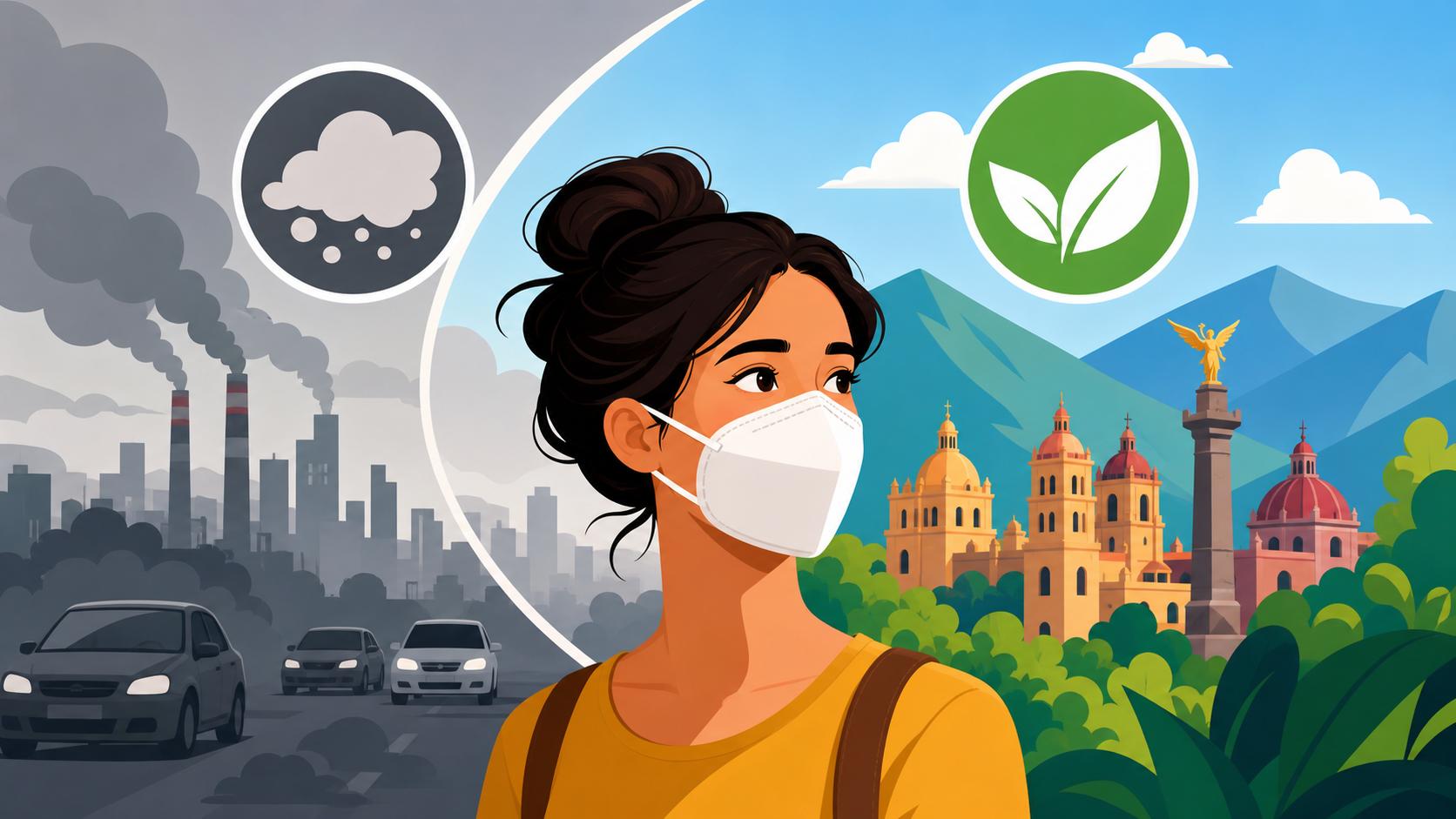
Living in the high-altitude valley of central Mexico often means waking up to a stunning sunrise filtered through a stubborn, gray haze that isn't just morning mist—it's heavy smog that can leave your throat scratchy and your eyes watering. I remember my first spring in Mexico City, wondering why I had a persistent "cold" that only seemed to flare up on sunny afternoons. This guide solves the mystery of Mexico’s air quality challenges and provides the battle-tested strategies you need to protect your lungs while enjoying expat life.
Disclosure: This post may contain affiliate links. We may earn a commission at no extra cost to you if you make a purchase through these links. Read full disclosure.
The Reality of Air Quality in Major Mexican Hubs
When we talk about air pollution in Mexico, we have to talk about geography. Mexico City, for example, sits in a literal bowl. Surrounded by mountains and volcanoes, the city suffers from what meteorologists call "thermal inversions." Cold air gets trapped under a layer of warm air, acting like a lid on a pot, keeping all the vehicle emissions and industrial fumes right at street level. I’ve stood on my balcony in Polanco and watched that gray lid descend; it’s a sobering sight that every resident eventually learns to respect.
It isn't just the capital, though. Industrial powerhouses face their own sets of challenges. If you are Living in Monterrey: An Expat Guide to Mexico's Industrial Hub, you’ll quickly notice that the combination of heavy industry and the surrounding Sierra Madre mountains creates a similar trapping effect. Monterrey often records some of the highest particle matter counts in the country, particularly during the dry winter months when there is no rain to "wash" the air.
The source of the pollution is varied. While vehicle emissions are the primary culprit in urban centers, agricultural burning (roza, tumba y quema) plays a massive role in the spring. From March to May, farmers across southern and central Mexico burn fields to prepare for the planting season. This smoke can travel hundreds of miles, blanketing even the most pristine-looking mountain towns in a fine, irritating soot. Understanding these cycles is essential for Staying Healthy in Mexico: Essential Tips for Food, Water, and Preventive Care.
Health Strategies for Navigating the Smog
For many of us, the first sign of poor air quality isn't a news report; it's a physical sensation. You might experience the "CDMX cough," a dry, tickling sensation in the back of the throat, or a dull headache that won't quit. For those with pre-existing conditions like asthma or chronic bronchitis, these days aren't just uncomfortable—they are dangerous. It is vital to have your medical ducks in a row, perhaps by reviewing Health Insurance in Mexico: How Expats Can Get Coverage (2027) before the peak of the dry season hits.
Monitoring the air quality index (AQI) becomes a daily ritual, much like checking the weather. Mexico uses a system called IMECA (Índice Metropolitano de la Calidad del Aire), though most expats prefer the global AQI standard found on common apps. When you’re out exploring new neighborhoods or traveling between cities, having a reliable data connection via Airalo ensures you can check real-time pollution levels before deciding to walk five miles across town. If the numbers climb above 150, that’s your cue to move your workout indoors or postpone that rooftop brunch.
If you do find yourself feeling the effects of a high-pollution day, don't just "tough it out." Local pharmacies are well-stocked with saline nasal sprays and lubricating eye drops that provide immediate relief. However, if your symptoms escalate to chest pain or significant shortness of breath, you should know how to navigate Medical Emergencies in Mexico: What Expats Should Know and Prepare immediately. The private hospital system in Mexico is excellent, and they are very used to treating respiratory distress during "contingencia" (smog alert) days.
Creating a Safe Haven: Tools and Tech for Your Home
Since you can't control the air outside, your priority as an expat is to turn your home into a clean-air sanctuary. Most Mexican homes are designed for "natural ventilation," which is a fancy way of saying they have lots of gaps around doors and windows. While this is great for a breeze in the summer, it’s a disaster during a smog alert. My first step in any new apartment is to use weather stripping to seal those gaps.
The most important investment you will make is a high-quality HEPA air purifier. Do not settle for the cheap "ionizers" found in local supermarkets; they often produce ozone, which can actually irritate your lungs further. I personally order my units and replacement filters through Amazon Mexico because they carry the international brands that are proven to scrub PM2.5 particles from the air. Running a purifier in your bedroom overnight can be the difference between waking up refreshed or waking up with a "pollution hangover."
Beyond tech, your daily habits can mitigate exposure. On high-pollution days, keep your windows closed tightly, especially between 1 pm and 7 pm when ozone levels typically peak due to sunlight reacting with car exhaust. If you must go out during a "Fase 1" contingencia, consider wearing an N95 or KN95 mask. While it might feel a bit much, your lungs will thank you. For those who are Living in Mexico City: An Expat's Guide to Neighborhoods and Lifestyle, you'll notice that many locals have adopted this habit on particularly hazy days.
| Air Quality Category | AQI Range | Recommended Expat Action |
|---|---|---|
| Good | 0 – 50 | Open windows, exercise outdoors, enjoy the views. |
| Moderate | 51 – 100 | Sensitive individuals should limit prolonged outdoor exertion. |
| Unhealthy for Sensitive Groups | 101 – 150 | Close windows in the afternoon; use air purifiers in bedrooms. |
| Unhealthy | 151 – 200 | Avoid all outdoor exercise; wear a mask if walking long distances. |
| Very Unhealthy | 201+ | Stay indoors with air purification; avoid commuting if possible. |
Geographic Safe Havens: Where the Air is Crisper
If you find that the urban smog is significantly impacting your quality of life, it might be time to look at different regions. Not all of Mexico is shrouded in haze. Generally speaking, the coastlines are much clearer. The constant sea breezes prevent the stagnant air buildup that plagues the highlands. If clear lungs are a top priority, you might find a better fit Living in Puerto Vallarta: Coastal Living Guide for Expats or exploring the Caribbean side.
The Yucatán Peninsula is another excellent option for those with respiratory sensitivities. Because the terrain is flat and there is very little heavy industry, the air quality remains consistently "Good" to "Moderate" year-round. When the smog gets too thick in the central highlands, I often see digital nomads heading to a Selina location in Tulum or Playa del Carmen to work in a fresher environment for a few weeks. It’s a great way to "reset" your system. You can learn more about this lifestyle in Living in Mérida: The Expat Guide to Yucatán’s Colonial Gem.
However, even "clean" cities have their quirks. In coastal areas, you may deal with high humidity and mold, which can be just as irritating to the lungs as smog. In smaller colonial towns, the smoke from wood-burning stoves (leña) used in traditional cooking can create localized pockets of smoke in the evenings. It is always a trade-off, and the key is to spend a few weeks in a location before committing to a long-term lease.
Navigating the Contingencia System
Mexico City has a very specific "Contingencia Ambiental" protocol that every expat needs to understand. When ozone or particulate matter reaches a certain threshold, the government declares a state of emergency. This isn't just a health warning; it has legal implications. The "Hoy No Circula" program, which restricts certain cars from driving based on their hologram and license plate number, often expands during these days.
If you own a car, you must stay informed. Driving on a restricted day can result in heavy fines and your vehicle being impounded. This is where the local "I've-been-there" experience really matters—don't assume that because you have a foreign plate or a newer car you are exempt. The rules can change overnight. Beyond driving, the government may also restrict outdoor activities at schools and public parks.
For more information on the logistical side of managing your health and legal status in the country, I highly recommend reading through Healthcare in Mexico: Complete Guide for Expats (Public vs Private). Being informed is your best defense. Air pollution is a reality of modern life in many parts of the world, and while Mexico has its challenges, they are manageable with the right tools and a bit of veteran expat "know-how."
Essential Disclaimer
This article is for informational purposes only and does not constitute professional medical advice, diagnosis, or treatment. Air pollution can have serious impacts on individuals with pre-existing respiratory or cardiovascular conditions. Always seek the advice of a qualified healthcare provider in Mexico regarding any medical concerns or before making significant lifestyle changes. Local air quality regulations and driving restrictions (such as Hoy No Circula) are subject to change by municipal and federal authorities without notice; always verify current alerts through official government channels.