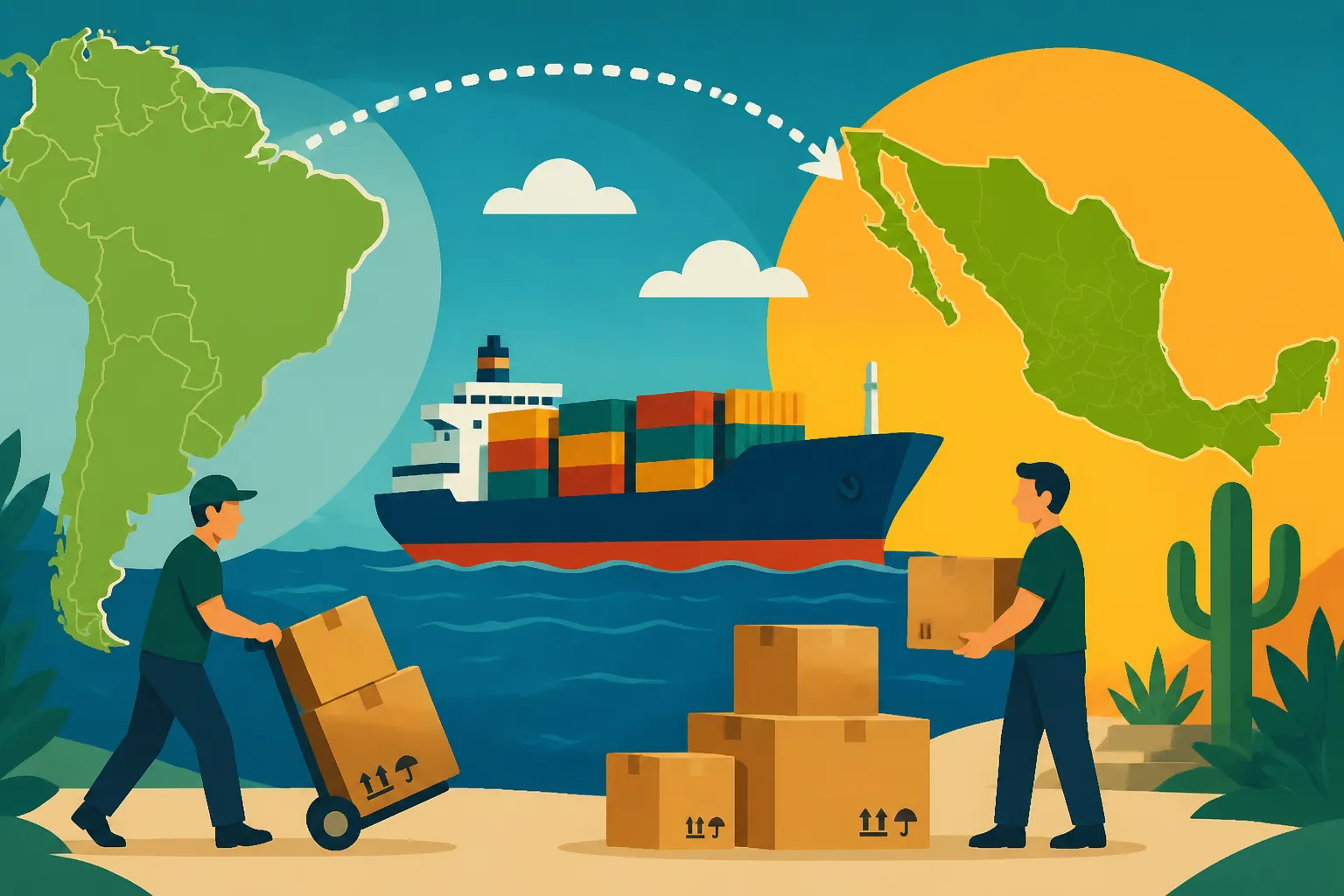
Moving to Mexico from Brazil: Atlantic Freight and Realistic Timelines
Moving from Brazil to Mexico is far more than just changing countries; it's a transatlantic logistical marathon, a bureaucratic maze, and a deep dive into two distinct Latin American cultures. If you’re dreaming of swapping the beaches of Copacabana for the pyramids of Teotihuacán, prepare yourself for a journey that will test your patience and planning skills. This guide is here to walk you through the realistic timelines, the unavoidable challenges, and how to conquer this epic move, making the often overwhelming process smoother by leveraging smart solutions, like using a platform such as Sirelo, to connect with reliable international movers, including specialists like Atlantic Freight.
Disclosure: This post may contain affiliate links. We may earn a commission at no extra cost to you if you make a purchase through these links. Read full disclosure.
The Initial Hurdles: Why Moving Across Continents is a Different Beast
Let's be real: moving from one continent to another is a beast of its own, and the Brazil-Mexico corridor presents unique challenges. You're not just crossing a border; you're navigating different legal systems, languages, and logistical networks. It's easy to feel overwhelmed before you even begin, but understanding these hurdles upfront is half the battle.
Navigating Visa and Immigration Realities
Before you even pack a single box, your absolute first step is securing your legal right to live in Mexico. This isn't a simple tourist hop; you're looking at residency visas. For most expats, this means applying for a Mexico Temporary Resident Visa: Comprehensive Guide for Expats (2026 Update) at a Mexican consulate in Brazil. This process can be lengthy, often taking several weeks or even months from your initial appointment to receiving the visa stamp in your passport. Don't expect to walk in and walk out with your visa. You’ll need to prove financial solvency, which can be tricky, especially if your income or savings are in a mix of Brazilian Reais and other currencies.
Once you land in Mexico with your visa, the journey isn't over. You'll then have to complete the "canje" process at the National Institute of Migration (INM) in Mexico to exchange your visa stamp for a physical Temporary Resident card. This involves more appointments, more documents, fingerprinting, and photos. It’s a multi-step dance that can feel like two steps forward, one step back. Trust me, learning to deal with the inevitable delays and quirks of Dealing with Bureaucracy in Mexico: Tips for Handling Paperwork and Appointments is an essential skill you’ll need to develop quickly.
Understanding Brazilian and Mexican Customs Regulations
Shipping your life across oceans means grappling with two sets of customs regulations: Brazil's export rules and Mexico's import requirements. Each country has its own list of prohibited items, restricted goods, and specific documentation needed. This is where many expats hit a wall, as a single missing document or incorrect declaration can lead to lengthy delays, hefty fines, or even your belongings being seized.
For Mexico, you'll need to prepare a detailed inventory (menaje de casa) of all your household goods. This document, often needing to be translated and notarized, proves your items are for personal use and not for commercial resale. It’s a crucial step in avoiding import duties. Getting an What is an Apostille, and Do You Need It for Mexican Immigration Documents? on key Brazilian documents will also be essential. Without proper guidance, this phase can feel like trying to solve a Rubik's Cube blindfolded. This is precisely why engaging with experienced international movers, especially those found through platforms like Sirelo, is non-negotiable. They understand these nuances and can guide you through the maze of paperwork, ensuring a smoother transition for your precious belongings from Brazil to Mexico.
Realistic Timelines for Your Move: What to Expect
Let's talk timelines. Forget what you think you know about moving within your own city. Moving from Brazil to Mexico is a different ballgame. Patience isn't just a virtue here; it's a necessity.
The Pre-Move Planning Phase
This phase is extensive and should not be rushed. I'm talking about 3 to 6 months, easily.
- Research & Decision Making (1-2 months): This involves deep dives into The Ultimate Guide to Mexico's Visa and Residency Options (2027 Edition), figuring out where in Mexico you want to live (Mexico City? Guadalajara? Mérida? Puebla?), and assessing the Cost of Living in Mexico: 2026 Comprehensive Guide. You’ll also want to start looking into what a typical Renting a Home in Mexico: Complete Expat Guide to Leases, Deposits, and More entails.
- Visa Application (2-3 months): As mentioned, securing your residency visa from a Mexican consulate in Brazil is the bottleneck. Schedule your appointments early and have all your documents ready, including apostilled birth certificates, marriage certificates, and financial proof. Don't be surprised by waiting lists.
- Downsizing & Inventory (1 month): This is the painful part. Go through everything. What truly needs to come with you? What can be sold, donated, or tossed? Creating a meticulous inventory list is crucial for customs and for your moving company. This is also when you'd decide on special items, like if you're Bringing Pets to Mexico: Import Requirements and Pet Care Tips.
- Finding a Mover (1 month): This runs concurrently with your visa application. You'll want to get quotes from several international moving companies. This is where Sirelo shines. You can submit your moving details once and get multiple quotes from vetted movers specializing in the Brazil-Mexico route, like Atlantic Freight. It simplifies the comparison process immensely.
The Shipping and Transit Timeframe with Atlantic Freight
Once your belongings leave your home in Brazil, the actual transit time needs to be considered.
- Packing and Collection (1-2 weeks): The moving company, such as Atlantic Freight, will come to your home to professionally pack and prepare your goods for international shipment. This can take several days depending on the volume.
- Ocean Freight (4-8 weeks): This is the longest leg of the journey. A full container (FCL) will likely be faster than a shared container (LCL). Your belongings will travel by ship from a major port like Santos or Rio de Janeiro, across the Atlantic, through the Panama Canal, and up to a Mexican port like Veracruz or Manzanillo. Remember, this is transit time only.
- Customs Clearance in Mexico (2-4 weeks): Once the ship arrives, your items will sit in port awaiting customs clearance. This can be notoriously slow. Having all your menaje de casa documents in perfect order, as guided by your mover (e.g., Atlantic Freight), is vital here to minimize delays. Any missing paperwork will grind things to a halt.
- Delivery to Your New Home (1 week): After clearing customs, your goods will be transported to your final destination in Mexico.
So, from the moment your boxes leave Brazil until they arrive at your new address in Mexico, you're realistically looking at 2 to 3.5 months. This is why timing your arrival in Mexico with your shipment is key – you don't want to be paying for storage unnecessarily.
Post-Arrival Logistics and Settling In
Congratulations, you've made it to Mexico! But the journey of settling in has just begun.
- INM Card Processing (1-2 weeks): As discussed, converting your visa sticker to a physical residency card is a mandatory step.
- Finding a Home (2-4 weeks): Even if you've done virtual tours, you'll want to see your new place in person. Renting a Home in Mexico: Complete Expat Guide to Leases, Deposits, and More can be different than in Brazil or your home country, with different contract structures and payment expectations.
- Setting Up Utilities (2-4 weeks): Getting electricity (How to Set Up Electricity (CFE) in a Mexican Home), water, internet (How to Get Internet Installed in Mexico), and gas can take time. Mexico's systems are robust but sometimes require multiple visits or phone calls.
- Getting Your Mexican Tax ID (RFC) and CURP (1-2 months): Once you have your resident card, you’ll need to apply for these essential identification numbers. Your CURP (Clave Única de Registro de Población) is like a national ID number, and your RFC (Registro Federal de Contribuyentes) is your tax ID. You'll need an RFC for almost everything, from opening a bank account to getting a cell phone plan. Without these, you'll feel perpetually stuck. Understanding Do You Need an RFC Number? Why a Tax ID Matters for Expats' Finances is critical for everyday life.
Overall, truly feeling "settled" can take anywhere from 3 to 6 months after you've arrived. Be patient with yourself and the process.
Freight Forwarding and Logistics: Your Best Bet
This is where the rubber meets the road. Getting your belongings from Brazil to Mexico safely and efficiently requires specialized knowledge and reliable partners. Trying to DIY this part of an international move is a recipe for disaster.
Choosing the Right Shipping Method (Sea vs. Air)
When moving across continents, you generally have two main options for shipping your household goods:
- Sea Freight (Ocean Cargo): This is by far the most common and cost-effective method for moving an entire household.
- Pros: Significantly cheaper, especially for larger volumes. Environmentally friendlier.
- Cons: Much slower transit times (as outlined above). Less flexible with delivery dates. Requires robust packing to withstand the long journey.
- Best for: Most people moving their primary residence, wanting to bring furniture, appliances, and a substantial amount of personal effects.
- Air Freight:
- Pros: Much faster transit times (days to a couple of weeks). More precise delivery dates.
- Cons: Significantly more expensive, often prohibitively so for large volumes. Weight and size restrictions.
- Best for: Small, essential items you need quickly, high-value items, or documents. You might ship a few critical boxes by air and the rest by sea.
For a full household move from Brazil to Mexico, sea freight is almost always the chosen method. You’ll want to discuss both options with the moving companies you get quotes from, perhaps even sending a few crucial items via air freight (think Building a First Aid Kit: Essential Medical Supplies for Expats in Mexico or important work documents) while the bulk of your belongings travel by sea.
Why a Platform Like Sirelo is Indispensable for International Moves
Navigating the world of international movers, especially for a complex route like Brazil to Mexico, can feel like you're lost at sea. How do you find reputable companies? How do you compare quotes fairly? How do you know who to trust with your entire life's possessions?
This is precisely where a platform like Sirelo becomes your absolute hero. Sirelo acts as a central hub, connecting you with verified, professional international moving companies. Instead of spending weeks researching and contacting individual movers, you simply enter your moving details once on Sirelo, and they do the heavy lifting for you. You'll receive multiple, no-obligation quotes from different companies, allowing you to easily compare prices, services, and read reviews from other expats.
Here's why Sirelo is a game-changer:
- Saves Time and Stress: No more endless phone calls or filling out repetitive forms. Sirelo streamlines the quote process.
- Vetted Movers: Sirelo works with pre-screened moving companies, giving you peace of mind that you're dealing with professionals who understand international logistics.
- Transparent Comparisons: You get a clear overview of different offers, making it easier to make an informed decision based on your budget and needs.
- Customer Reviews: Learn from other expats' experiences. Reviews offer invaluable insight into a company's reliability and service quality.
- Expert Resources: Sirelo also provides a wealth of information and guides on international moving, helping you prepare every step of the way.
Imagine having to individually contact Brazilian and Mexican moving companies, explain your unique needs for a move across continents, and then try to compare vastly different quotes. With Sirelo, that entire headache is minimized, allowing you to focus on other crucial aspects of your move.
Partnering with Experienced Movers like Atlantic Freight
Once you've narrowed down your options through Sirelo, you'll want to choose a mover that has a strong track record on transatlantic routes. Companies like Atlantic Freight are often highlighted for their experience in handling complex international shipments. They understand the intricacies of customs in both Brazil and Mexico, the specific documentation required, and how to properly pack and secure your belongings for a long voyage.
A good moving company, like Atlantic Freight, will offer:
- Door-to-Door Service: This means they handle everything from packing at your home in Brazil to delivering and unpacking at your new home in Mexico.
- Customs Expertise: They’ll guide you through preparing your menaje de casa and all other necessary paperwork to minimize customs delays and issues.
- Insurance Options: They will offer various insurance packages to protect your belongings during transit. Always, always get insurance.
- Communication: They should keep you updated on the status of your shipment.
Working with a company that understands the specific logistics of shipping from Brazil to Mexico is paramount. They can foresee potential issues and provide solutions before they become major problems, turning a potential nightmare into a manageable project. When you get quotes through Sirelo, be sure to ask about their experience with this specific route.
Common Pitfalls and How to Avoid Them
Even with the best planning, moving to Mexico from Brazil will have its moments. Here are some common pitfalls and how to navigate them with grace (and perhaps a strong cup of café de olla).
The Paperwork Avalanche: Don't Underestimate It
This is where many expats falter. The sheer volume of documents required for visas, customs, and eventually settling in Mexico is staggering. Birth certificates, marriage certificates, bank statements, utility bills, apostilles, translations, copies of everything… it's a lot. And Mexico loves original documents.
How to avoid it:
- Start Early: As soon as you decide to move, begin collecting and organizing your documents.
- Make Multiple Copies: Keep digital copies (scanned and cloud-stored) and physical copies of everything. Store them in different places.
- Get Certified Translations and Apostilles: Any official document not in Spanish will need a certified translation. For international recognition, many will also require an apostille from Brazil. This can take time and money.
- Keep a "Go-Bag" of Essentials: Have a separate bag with crucial original documents, medications, a Building a First Aid Kit: Essential Medical Supplies for Expats in Mexico, important contacts, and a few changes of clothes for your immediate arrival.
Budgeting Beyond the Obvious
The cost of living in Mexico might be lower than in some parts of Brazil or other developed countries, but the cost of moving internationally is significant. Many expats underestimate hidden fees.
Consider these often-overlooked costs:
- Visa Application Fees: Consulate fees, processing fees.
- Shipping Insurance: Essential for peace of mind.
- Temporary Accommodation: You'll likely need a place to stay while your belongings are in transit and you're looking for a permanent home.
- Initial Setup Costs: Deposits for rent, Home Utilities in Mexico: Setting Up Electricity, Water, Gas, and Internet, buying essentials you didn't ship.
- Customs Duties (if applicable): If your menaje de casa isn't perfectly processed, you could face duties.
- Storage Fees: If your shipment arrives before you're ready to receive it.
- Travel Costs: Flights to Mexico, internal travel to INM appointments, etc.
- Professional Help: Immigration lawyers (often wise for complex cases), certified translators, and tax consultants.
Be realistic with your budget. Add a 20-30% buffer for unexpected expenses. Sirelo helps you get competitive moving quotes, but remember to factor in all the other costs of establishing your new life.
Preparing for Culture Shock and Integration
Moving from Brazil to Mexico is exchanging one vibrant, complex Latin American culture for another. While there are similarities, there are also significant differences that can lead to culture shock. Everything from meal times to social etiquette, from how business is conducted to the pace of life, can be subtly (or not-so-subtly) different.
Tips for smoother integration:
- Learn Spanish: While many Mexicans in tourist areas speak English, daily life, administrative tasks, and truly connecting with locals will require Spanish. Even basic Learning Spanish in Mexico: Top Tips and Resources for Expats can make a huge difference.
- Embrace the Differences: Don't expect Mexico to be just like Brazil or your home country. Go in with an open mind and a willingness to learn. Read up on Mexican Customs, Etiquette, and Social Life.
- Connect with Expats and Locals: Seek out expat groups for support and advice. More importantly, try to build friendships with Mexicans. They are incredibly welcoming and can help you understand the nuances of their culture.
- Be Patient with Yourself: It's okay to have bad days. Adjusting takes time. Give yourself grace and celebrate the small victories.
Moving from Brazil to Mexico is an adventure of a lifetime, but it demands meticulous planning and a resilient spirit. By understanding the bureaucratic hurdles, setting realistic timelines, and leveraging powerful tools like Sirelo to find trusted moving partners such as Atlantic Freight, you can transform a daunting challenge into an exciting new chapter. Boa sorte na sua nova aventura mexicana!
Disclaimer
The information provided in this guide is for general informational purposes only and does not constitute legal, financial, or immigration advice. While we strive to provide accurate and up-to-date information, regulations and procedures in Mexico can change frequently. It is essential to consult with qualified professionals, such as immigration lawyers, financial advisors, and moving specialists, for advice tailored to your specific situation. We are not responsible for any decisions made based on the information presented herein.