Drawing a 401(k) or IRA From Mexico: Transfer Setup and FX Timing
Oh, the joys of retirement abroad, right? You've landed in Mexico, picturing serene mornings with a cafecito and the gentle breeze, only to be hit with the perplexing reality of drawing funds from your 401(k) or IRA. It’s not just about getting your money; it’s about navigating arcane tax codes, battling atrocious exchange rates, and understanding transfer fees that seem designed to drain your hard-earned savings. This guide is here to untangle that mess for you, making sure your retirement funds reach your Mexican bank account efficiently and with minimal fuss, so you can actually enjoy those serene mornings.
Disclosure: This post may contain affiliate links. We may earn a commission at no extra cost to you if you make a purchase through these links. Read full disclosure.
Understanding Your US Retirement Accounts While Living in Mexico
Moving to Mexico brings a whole new layer of complexity to managing your finances, especially when it comes to your US-based retirement accounts. It’s not enough to just set up a local bank account; you need a solid strategy for actually getting your money down here. Trust me, I’ve seen countless expats get blindsided by unexpected fees or tax issues because they didn't have a clear plan.
The Basics of 401(k) and IRA for Expats
Let's quickly refresh what we're talking about here, because even if you've been contributing to these accounts for decades, managing them from el extranjero (abroad) feels like a different ballgame. Your 401(k) is typically an employer-sponsored plan, while an IRA (Individual Retirement Account) is something you set up yourself. Both are designed to help you save for retirement with significant tax advantages, meaning your money grows without being taxed each year.
The core idea is that you get a tax break now (for traditional accounts) or tax-free withdrawals later (for Roth accounts), in exchange for keeping your money locked away until you're older. What many expats don't fully grasp is that while you're physically in Mexico, these accounts are still very much tied to US regulations and the US tax system. It can be incredibly frustrating trying to get information or make changes when you're thousands of miles away, dealing with time zone differences and customer service reps who might not understand your international living situation. You’ve worked hard for these funds, and the last thing you want is for them to be eaten up by unforeseen hurdles.
Key Considerations for Early Withdrawals
Now, if you're not yet 59½, taking money out of your 401(k) or IRA usually comes with a pretty hefty price tag: a 10% early withdrawal penalty on top of regular income taxes. It's a bitter pill to swallow, especially if you had to tap into those funds unexpectedly. However, there are a few exceptions to this rule, though they're often specific and might not apply to your current situation in Mexico.
For instance, you might be able to avoid the penalty for certain medical expenses, if you become totally and permanently disabled, or even for a first-time home purchase (though buying a house in Mexico as a foreigner has its own set of rules and complexities). Another common exception is if you separate from service with your employer in or after the year you turn 55 (the "Rule of 55" for 401(k)s), or through a series of substantially equal periodic payments (SEPP). It's crucial to consult with a financial advisor who understands international expat finances before making any early moves. They can help you navigate these exceptions and ensure you don’t needlessly incur penalties. Believe me, the tax authorities on both sides of the border aren't shy about taking their cut if you get it wrong.
Required Minimum Distributions (RMDs) for Retirees
If you're already past a certain age (currently 73, though it's been creeping up over the years and is set to increase to 75 by 2033 under the SECURE Act 2.0), the US government insists you start taking money out of most traditional retirement accounts, whether you need it or not. These are called Required Minimum Distributions, or RMDs, and they're non-negotiable. If you miss an RMD, the penalty can be a staggering 25% (or even 10% if corrected promptly) of the amount you should have withdrawn. Yikes!
For expats, this means you absolutely must have a reliable system in place to receive these funds. You can’t just ignore it because you’re living the good life in Mexico. Setting up your RMDs to transfer directly to your Mexican bank account, or at least to a US account that can then forward funds efficiently, is paramount. This isn't just about avoiding penalties; it's about ensuring your financial stability and access to your retirement income while enjoying your new home. Many US custodians are set up to send these withdrawals, but the challenge often lies in the international leg of the journey and the associated costs, which we’ll delve into shortly.
Navigating the Tax Labyrinth: US and Mexican Tax Implications
One of the biggest headaches for expats drawing retirement funds is the dual tax system. You’re dealing with Uncle Sam and Hacienda (Mexico’s tax authority), both wanting a piece of your pension. It’s like being caught in a financial tug-of-war, and without the right strategy, you could end up paying more than you should.
US Tax Obligations on Retirement Withdrawals
Even though you’re living in Mexico, the US Internal Revenue Service (IRS) generally considers you a US citizen or Green Card holder, which means you’re taxed on your worldwide income. Retirement withdrawals from your 401(k) or traditional IRA are typically taxed as ordinary income in the US, just like a regular paycheck. This can come as a shock to some expats who assume that once they’ve left the US, their tax obligations disappear. They don't.
Many retirement account custodians will automatically withhold a certain percentage for federal taxes when you take a distribution, usually 10% for non-periodic payments or based on specific instructions for periodic payments. While this helps cover some of your tax liability, it might not be enough, or it could be too much, leading to complications when you file your annual US tax return. The Foreign Earned Income Exclusion (FEIE), which allows US expats to exclude a significant portion of their earned income (like salary) from US taxes, does not apply to passive income such as retirement distributions. This is a common misunderstanding that can lead to unexpected tax bills. You’ll still need to declare these withdrawals on your Form 1040. If you're managing your overall finances in Mexico, you'll find other relevant insights in our guide to Taxes in Mexico for Expats: A Complete Guide to Income Tax and More.
Mexican Tax Residency and Income Tax on Foreign Pensions
Here’s where it gets really interesting. If you spend more than 183 days in Mexico during a calendar year, you typically become a tax resident of Mexico. As a Mexican tax resident, Mexico then has the right to tax your worldwide income, which includes your foreign retirement pensions and IRA distributions. This is often where the fear of "double taxation" sets in.
Mexico's income tax, known as ISR (Impuesto Sobre la Renta), is levied on a progressive scale. While there are deductions and allowances, your foreign pension income will be factored into this. It's not uncommon for expats to mistakenly believe that since their money is coming from a US account, Mexico won't touch it. That’s a risky assumption. Mexico is keen to collect taxes from its residents, regardless of where the income originates. Understanding your obligations here is key, and if you have other sources of income, you'll definitely want to read up on Declaring Foreign Income in Mexico: Tax Rules for Expats.
The US-Mexico Tax Treaty: A Lifeline for Retirees
Thankfully, there's a saving grace in this dual-taxation dilemma: the income tax treaty between the United States and Mexico. This treaty is a lifeline for expats, designed specifically to prevent individuals from being taxed twice on the same income. For retirement distributions, the treaty generally states that pensions and other similar remuneration (like 401(k) or IRA withdrawals) "derived from sources within one of the Contracting States by a resident of the other Contracting State shall be taxable only in that other State."
In plain English, this often means that if you are a tax resident of Mexico, your US retirement distributions are primarily taxable only in Mexico, not in the US, or vice versa, depending on specific circumstances and how you apply the treaty. However, the exact interpretation and application can be complex. You need to file specific forms (like Form W-8BEN with your US custodian) to claim treaty benefits and ensure the US doesn't withhold taxes unnecessarily, and you'll definitely need proper documentation for Hacienda. Consulting with a cross-border tax specialist who understands both US and Mexican tax laws is not just recommended, it's practically mandatory. They can help you properly claim treaty benefits and ensure you’re compliant on both sides, saving you a lot of grief and potentially a lot of money. This treaty is a critical component in how Double Taxation Treaties: How Expats Can Avoid Paying Taxes Twice truly work for you.
Setting Up Your Retirement Account Transfers from Mexico
Once you've wrapped your head around the tax implications, the next big hurdle is physically getting your money from your US retirement accounts into your Mexican bank account. This isn't always as straightforward as it sounds, and it's where many expats run into hidden fees and frustrating delays.
Direct Deposit vs. International Wire Transfers
When it comes to receiving your retirement funds in Mexico, you essentially have two primary routes: direct deposit or international wire transfers.
Direct Deposit from your US custodian might seem like the simplest option. If your US retirement custodian offers direct deposit to an international bank account, that's usually the most convenient. However, many US custodians are limited to domestic direct deposits within the US. If they do offer international direct deposit, it's typically through the ACH network, which can be slow and may still involve intermediary bank fees and less-than-favorable exchange rates once the funds hit a Mexican bank. Plus, setting it up can be a bureaucratic nightmare, requiring specific routing numbers and swift codes, and sometimes your Mexican bank might charge a receiving fee.
International Wire Transfers are another common method. Your US custodian initiates a wire transfer from your US account to your Mexican bank account. While wires are generally faster than ACH, they are notoriously expensive. You'll likely pay a fee from your US bank (the sending fee), and your Mexican bank will almost certainly charge a fee to receive an international wire. The biggest hit, however, often comes from the exchange rate. Banks typically use their own inflated exchange rates, which can be significantly worse than the real market rate, meaning you lose a chunk of your money before it even converts to pesos. These charges can really add up, especially if you're making regular withdrawals.
This is precisely the kind of financial friction that inspired services like Wise. They saw the problem of costly and opaque international transfers and built a solution.
The Challenge of Currency Exchange and High Bank Fees
Let’s be honest: traditional banks are not your friends when it comes to international money transfers. They make a killing on foreign exchange. They’ll advertise "zero fees" on transfers, but then bury a hefty markup in their exchange rate. This means that for every dollar you transfer, you get fewer pesos than you should, and you might not even realize it because it’s not an explicit fee.
Imagine you're transferring $2,000 every month. If your bank gives you an exchange rate that's even just 2% worse than the real mid-market rate, you're losing $40 on that transfer alone. Over a year, that's almost $500, essentially money vanishing into thin air that could have paid for a nice meal out or helped cover your Healthcare Costs in Mexico: Doctor Visits, Hospital Stays, and Surgery Expenses. Add to that the $25-$50 sending and receiving fees from both banks, and you can see how quickly your retirement savings erode.
This frustration is why many expats, myself included, have turned to services like Wise (formerly TransferWise). Wise was created to tackle this exact problem. Instead of using traditional correspondent banking networks with their layers of fees and poor exchange rates, Wise uses a smart system that effectively routes money locally in both countries. This means they can offer significantly lower fees and, crucially, use the real mid-market exchange rate – the one you see on Google or Reuters – rather than their own marked-up version. It’s transparent, it’s fair, and it saves you actual money. If you're looking for ways to cut costs living in Mexico, understanding Currency Exchange in Mexico: Getting the Best Rates on Pesos is vital, and Wise shines here. For a broader look at transfer options, check out Using PayPal, Wise, or Western Union: Comparing Money Transfer Options.
Step-by-Step: Receiving Your Funds via Wise
So, how does this work in practice? Receiving your retirement funds through Wise is surprisingly straightforward once you get the hang of it. It’s designed to be intuitive, even for those of us who aren't tech gurus.
-
Set Up Your Wise Account: First things first, you'll need to create an account on the Wise website or through their mobile app. The sign-up process is quick and usually involves verifying your identity, which is standard procedure for any financial service. You'll link your existing US bank account (the one your retirement custodian can send money to) and your Mexican bank account (where you want to receive your pesos). This might involve providing bank statements or other proof of address.
-
Initiate a Transfer from Your Retirement Custodian: This is the slightly trickier part. Your retirement custodian in the US won't directly send money to Wise. Instead, you'll instruct your custodian to send a domestic ACH transfer or a domestic wire transfer to your own US bank account. This is the same process you’d use if you were just moving money between two US banks you own. This eliminates the international wire fees and poor exchange rates that banks charge for cross-border transfers.
-
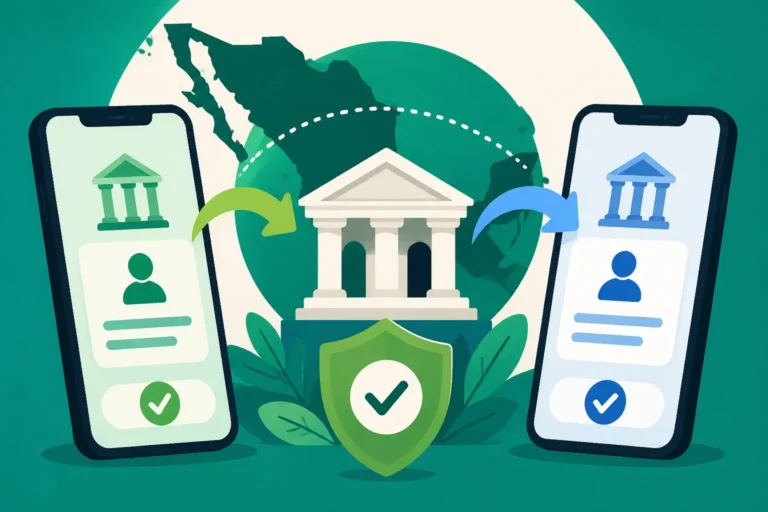
Transfer from Your US Bank to Wise: Once the funds are in your linked US bank account, you’ll log into your Wise account. You'll set up a transfer from your linked US bank account to your linked Mexican bank account. Wise will show you upfront the exact exchange rate they're using (the real mid-market rate!), the small fee they charge, and precisely how many pesos will arrive in your Mexican account. No surprises, no hidden markups.
-
Receive Funds in Your Mexican Bank: After you confirm the transfer, Wise does its magic. They take your USD from their US pool of funds and then deposit the equivalent amount in MXN from their Mexican pool of funds directly into your Mexican bank account. Most transfers arrive within hours, sometimes even minutes, but typically within 1-2 business days.
Using Wise for your transfers simplifies the process, cuts down on fees, and ensures you get more pesos for your dollars. It takes a little setup on the front end, but the long-term savings and peace of mind are absolutely worth it. It’s a game-changer for budgeting for your retirement in Mexico, as every peso saved on transfers means more for your actual living expenses. You can even open a How to Open a Bank Account in Mexico: Requirements and Tips to receive these Wise transfers.
Timing Your Transfers: Navigating Exchange Rates and Volatility
Once you've got your transfer mechanism down, the next frontier for optimizing your retirement income is understanding and strategically timing your currency exchanges. The US dollar-Mexican peso exchange rate can be volatile, and a few percentage points swing can make a noticeable difference in your monthly budget.
Understanding the Mexican Peso-US Dollar Exchange Rate
The exchange rate between the US dollar (USD) and the Mexican peso (MXN) is influenced by a multitude of factors, both global and local. We're talking about everything from interest rate decisions by central banks (the Federal Reserve in the US and Banxico in Mexico) to commodity prices (especially oil, given Mexico's status as a producer), political stability, economic growth figures, and even international trade relations. When the US economy is strong, or interest rates are higher in the US, the dollar might strengthen against the peso. Conversely, if there's good news out of Mexico, like robust economic growth or tourism numbers, the peso might gain ground.
For expats living on a fixed income in Mexico, this volatility can be a source of constant anxiety. A strong peso means your USD buys fewer pesos, effectively reducing your purchasing power. A weaker peso means your dollars stretch further. Keeping an eye on these trends without becoming obsessive is crucial for financial planning. It's a key part of Managing Your Money in Mexico: Budgeting, Saving, and Currency Tips.
Strategies for Optimal FX Timing
So, how do you play the game to your advantage? While nobody has a crystal ball, there are strategies to mitigate risk and potentially gain a little extra.
- Don't Try to "Hit the Peak" Every Time: This is probably the most important piece of advice. Trying to perfectly time the market is a fool's errand. It's incredibly stressful and rarely works consistently. Instead, aim for consistency and avoiding the absolute lows.
- Averaging: If you're transferring funds regularly (say, monthly), you'll naturally average out the highs and lows over time. This is a simple, low-stress strategy that smooths out volatility.
- Set Rate Alerts: Most good money transfer services, including Wise, offer rate alerts. You can set a target exchange rate, and they'll notify you when the market hits it. This allows you to transfer when the rate is favorable without constantly checking the market. For instance, if you usually see rates around 17 pesos to the dollar, you might set an alert for 17.2 or 17.5.
- Transferring When the Peso is Weaker: Generally, you want to convert your USD when the peso is weaker relative to the dollar. This means your dollars buy more pesos. Keep an eye on economic news; sometimes, a dip in the peso offers a good opportunity.
The beauty of using a service like Wise is that you’re always getting the real mid-market rate. This transparency means you can make informed decisions based on market data, not on a bank's inflated rate. When you see the rate is good, you know you're getting the best available. This contrasts sharply with traditional banks where even if the market rate is good, their markup still eats into your conversion.
Batching Transfers vs. Regular Withdrawals
This decision often boils down to balancing convenience, fees, and exchange rate risk.
Batching Transfers (Larger, Less Frequent): Some expats prefer to withdraw larger amounts from their retirement accounts less frequently (e.g., quarterly or even semi-annually).
- Pros: This might reduce the number of individual transaction fees if you're using traditional wire transfers. It also means fewer times you have to think about the transfer process. You can potentially "lock in" a good exchange rate for a larger sum if you catch a favorable market moment.
- Cons: It exposes a larger sum of money to the risk of a sudden, unfavorable exchange rate swing. If you transfer a big chunk when the peso is strong, you've essentially bought fewer pesos with a significant portion of your income for that period. It also means you’re holding more cash in pesos for longer, which could be less secure or less efficient if you don't need all that cash immediately.
Regular Withdrawals (Smaller, More Frequent): This typically means monthly or bi-weekly transfers, aligning with your usual budget.
- Pros: This approach provides more consistent cash flow, aligning better with day-to-day expenses. It also naturally averages out the exchange rate fluctuations over time, reducing the impact of any single bad day. With platforms like Wise, the fees are so low and transparent that making smaller, more frequent transfers is highly cost-effective, effectively eliminating one of the main downsides of this strategy with traditional banks. You’re not getting hammered by $25+ fees every time.
- Cons: If you're using a service with high fixed fees per transaction, this could add up. However, with Wise, this isn’t a significant concern due to their percentage-based, low fee structure.
Ultimately, for most expats on a retirement budget, the regular, smaller transfers via a service like Wise offer the best balance of cost-effectiveness, risk mitigation, and consistent access to funds. It allows you to budget more accurately, as detailed in our guide on Budgeting on a Fixed Income: Financial Tips for Retirees in Mexico.
Practical Tips and Avoiding Common Pitfalls
Moving your financial life to a new country is inherently challenging, and there are always unforeseen snags. A little foresight can save you a lot of grief.
Communication with Your Retirement Account Custodian
Maintaining a good line of communication with your US retirement account custodian (like Fidelity, Vanguard, Charles Schwab, etc.) is absolutely critical. Do not assume that because you’re no longer in the US, they don’t need to hear from you.
- Update Your Contact Information: Make sure they have your current mailing address in Mexico, a reliable email address, and an international phone number. Many institutions still rely on physical mail for important notices.
- Set Up Online Access: If you haven't already, ensure you have full online access to your accounts. This allows you to monitor balances, initiate withdrawals, and access statements without relying on snail mail or expensive international calls. Set up strong two-factor authentication for security.
- Inform Them of Your International Status: While some custodians won't specifically "flag" you as an expat, it's good to ensure they know you reside abroad. This can sometimes prevent issues with suspicious activity flags when large international transfers begin.
- Power of Attorney: Consider establishing a limited Power of Attorney with a trusted individual in the US, especially for situations where you might need someone to act on your behalf for financial matters that require a US presence or signature. This is a big step, so only do it if you have complete trust in the individual and consult with legal counsel.
The biggest challenge here can be the lack of understanding from customer service representatives who are trained for domestic clients. Be patient, be persistent, and be ready to explain your situation clearly.
Maintaining Financial Records and Documentation
When you’re juggling tax obligations in two countries, meticulous record-keeping isn't just a good idea; it's a necessity. Hacienda and the IRS both want their paperwork in order, and you don’t want to be caught unprepared.
- Keep Everything: Save all statements from your retirement accounts, confirmation notices of withdrawals, and records of all international transfers. This includes statements from your US bank and your Mexican bank, showing the flow of funds.
- Exchange Rate Records: When converting money, particularly if you’re doing it through multiple steps, keep records of the exchange rates used. Services like Wise make this easy by detailing it in every transaction. This is crucial for proving how much peso income you actually received from your dollar withdrawals for Mexican tax purposes.
- Tax Forms: Retain all US tax forms (e.g., Form 1099-R for retirement distributions) and any Mexican tax filings.
- Professional Advice: As mentioned earlier, navigating the US-Mexico tax treaty and specific reporting requirements is complex. It’s highly advisable to work with an accountant who specializes in cross-border taxation for expats. They can ensure you’re claiming treaty benefits correctly and meeting all reporting deadlines in both countries. For more on this, check out Do You Need an Accountant? Navigating Tax Filing as an Expat in Mexico.
Being organized from the start will save you countless headaches during tax season, which can be an absolute nightmare if your records are scattered.
Diversifying Your Transfer Methods and Emergency Funds
Putting all your eggs in one basket, especially when it comes to international money transfers, is a risky business. Technology fails, banks have outages, and sometimes unforeseen issues arise.
- Have Backup Transfer Options: While Wise is often the most efficient and cost-effective solution, it’s smart to have a backup plan. This could be knowing how to initiate a traditional wire transfer if absolutely necessary, or exploring other reputable money transfer services. Don't find yourself in a bind with no way to access your funds.
- Emergency Funds in Both Currencies: It’s a good practice to keep an accessible emergency fund in both USD (in your US bank) and MXN (in your Mexican bank). This provides a buffer against unexpected expenses, sudden exchange rate dips, or temporary transfer delays. Aim for at least 3-6 months of living expenses.
- Access to Cash: Always keep a small amount of cash on hand in both currencies. Mexico is still very much a cash-based society for many transactions, especially outside major cities.
- Credit Cards for Emergencies: Ensure you have at least one or two reliable credit cards that work internationally for unexpected expenses, and always inform your credit card company that you are living abroad to avoid having your card flagged for fraud.
By diversifying your methods and having easily accessible funds, you create a robust financial safety net, allowing you to focus on enjoying your retirement in Mexico rather than worrying about financial logistics. For broader financial strategies, our guide on Money-Saving Tips: How Expats Can Cut Costs Living in Mexico has some excellent ideas.
Comparison of Transfer Methods: Traditional Bank vs. Wise
To really drive home the difference, let’s lay out a quick comparison between using a traditional bank for international transfers and leveraging a modern solution like Wise. This isn't just theoretical; it's a real impact on your monthly budget.
| Feature | Traditional Bank Wire Transfer | Wise (formerly TransferWise) |
|---|---|---|
| Exchange Rate | Bank's retail rate (often marked up 2-5% from mid-market) | Real mid-market rate (the one you see on Google) |
| Transfer Fees (Sending) | Typically $25-$50 per international wire | Low, percentage-based fee (e.g., 0.5% – 1%), usually less than $10 for most transfers |
| Transfer Fees (Receiving) | Mexican bank may charge $10-$30 for incoming international wires | No receiving fees from Wise for standard bank deposits |
| Transparency | Often opaque; final cost of exchange rate markup is unclear | Fully transparent upfront; shows exact rate, fees, and amount received |
| Speed | 1-5 business days (can be longer with intermediaries) | Usually within hours to 1-2 business days, often same day |
| Ease of Setup | Can be cumbersome for US custodians to initiate international wires | Straightforward online setup; links to your US and Mexican bank accounts |
| Ideal Use Case | Infrequent, very large transfers where fee impact is minimal | Regular, smaller to medium transfers for day-to-day living, RMDs |
As you can see, for expats living on a fixed income and making regular withdrawals, the advantages of using Wise are pretty clear. It's built for exactly this kind of scenario, prioritizing transparency and cost-efficiency.
Drawing funds from your 401(k) or IRA while living in Mexico can seem like an overwhelming task, fraught with tax complexities, hidden fees, and the ever-present anxiety of fluctuating exchange rates. But with a clear understanding of the rules, careful planning, and the right tools, it doesn't have to be a nightmare. By leveraging modern financial services like Wise, you can cut down on exorbitant bank fees and get more pesos for your dollars, ensuring that your hard-earned retirement savings stretch further and work harder for you. So go ahead, set up your transfers, automate those payments, and get back to those serene mornings. Your vibrant life in Mexico awaits, uninterrupted by financial headaches.
Disclaimer
The information provided in this guide is for general informational purposes only and does not constitute financial, legal, or tax advice. While we strive to provide accurate and up-to-date information, laws and regulations regarding retirement accounts, taxation, and international transfers can change frequently. It is essential to consult with qualified financial advisors, tax professionals specializing in US-Mexico cross-border taxation, and immigration lawyers to address your specific situation before making any financial decisions. We are not responsible for any actions taken based on the information presented herein.