How to Set Up Electricity (CFE) in a Mexican Home
Imagine unlocking the door to your new colonial home in Mérida or a sleek condo in Playa del Carmen, only to find yourself standing in pitch-black silence because the power was cut. I remember my first week in Mexico, huddled over a single candle because I hadn't realized the previous tenant left a massive unpaid debt on the meter. This guide solves the administrative maze of the Comisión Federal de Electricidad (CFE), ensuring your lights stay on from day one.
Disclosure: This post may contain affiliate links. We may earn a commission at no extra cost to you if you make a purchase through these links. Read full disclosure.
Understanding the CFE Monopoly in Mexico
In Mexico, electricity is a state-run affair. The Comisión Federal de Electricidad, universally known as the CFE, is the sole provider of electricity for the entire country. Unlike in the US, Canada, or Europe, where you might have a choice between various private providers with competing rates, here you are dealing with a massive government entity. This means the rules are standardized, but the bureaucracy can feel monolithic. When you move into a new place, you aren't just "switching providers"; you are entering into a formal legal relationship with the Mexican state.
The CFE is both a blessing and a source of constant "expat frustration." On one hand, their digital infrastructure has improved significantly over the last few years. On the other, the physical infrastructure in many neighborhoods is aging, leading to those infamous "apagones" (blackouts) during the rainy season. Understanding that the CFE operates on its own timeline is the first step toward sanity. You cannot rush the process, but you can certainly prepare so that you aren't sent to the back of the line for missing a single photocopy of your residency card.
When coordinating your move with international movers like Sirelo, it is vital to time your CFE setup carefully. You don't want your household goods arriving at a house where the electric gate won't open or the ceiling fans aren't moving the stifling tropical air. Most veterans will tell you to handle the electricity contract at least two weeks before your actual move-in date to account for any "trámites" (procedures) that might go sideways.
Establishing a New Contract for a New Build
If you are the first person to live in a property, or if a property has been abandoned for a long time and the meter has been pulled, you will need a "Contrato Nuevo." This is the most labor-intensive version of the process. You cannot simply call a number and expect a technician to show up the next day. You must visit a CFE "Centro de Atención a Clientes" in person. Before you go, ensure you have your Getting a CURP as a Foreigner in Mexico ready, as this unique ID number is foundational for almost all utility contracts in the country.
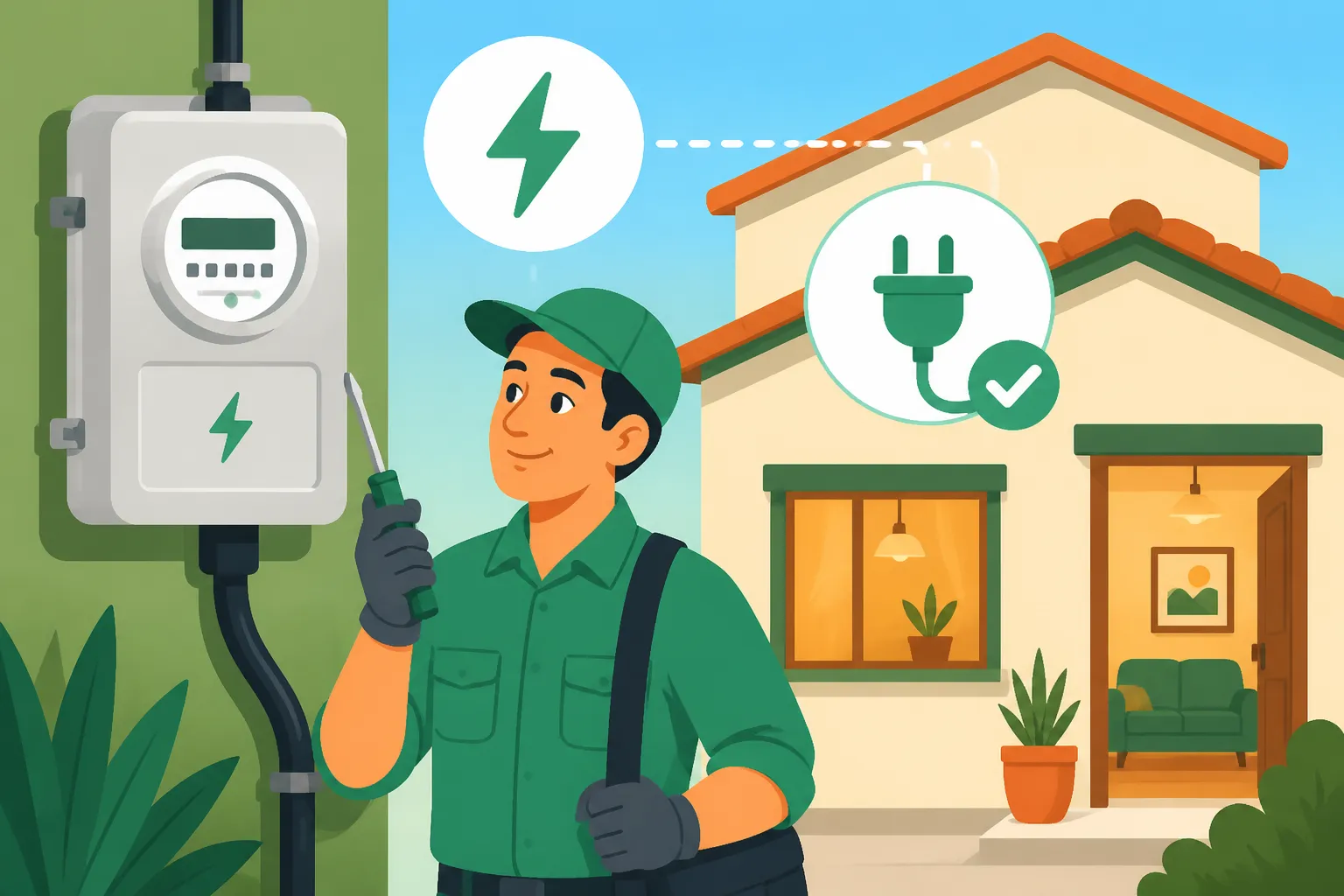
The CFE has very specific requirements for the physical setup of the property before they will even consider installing a meter. This is where many expats get tripped up. You are responsible for providing the "mufa" (the metal weather-head and pipe that receives the power line) and the "base para medidor" (the meter socket). If these are not installed according to CFE’s exact technical specifications—including the height from the sidewalk and the diameter of the pipe—the inspector will simply walk away without a word. I learned the hard way that hiring a local electrician who knows the "normas de CFE" is worth every peso.
Once the physical structure is ready, you’ll head to the office with your folder of documents. You will need your rental or purchase contract, a valid ID (passport and residency card), and a "comprobante de domicilio" (usually a water bill or a bill from a neighbor to prove the exact location). If you are still waiting for your permanent internet to be installed, having a reliable eSIM from a provider like Airalo is a lifesaver, as you’ll likely need to look up locations or translate technical terms on the fly while standing in the CFE lobby.
Physical Requirements for Meter Installation
| Requirement | Specification | Responsibility |
|---|---|---|
| Mufa (Weather-head) | Must be 4.8 meters above ground level | Homeowner/Landlord |
| Meter Base | Circular 4-terminal base for 127V | Homeowner/Landlord |
| Grounding Rod | Copper rod 1.5m deep with #8 wire | Homeowner/Landlord |
| Location | Visible from the street (not behind gates) | Homeowner/Landlord |
| The Meter | Digital or Analog CFE standard | CFE |
Transferring an Existing Account (Cambio de Titular)
For most expats, the home will already have power, but the bill will be in the name of the landlord, a previous tenant, or a developer. Many people choose to simply leave the bill in the landlord's name and pay it at the local OXXO. However, if you plan on using your CFE bill as a "comprobante de domicilio" for things like Opening a Bank Account in Mexico as a Foreigner or your permanent residency application, the bill must be in your name.
The process of "Cambio de Titular" (Change of Ownership) requires the cooperation of the previous owner or the landlord. You will need a letter of authorization from them, a copy of their ID, and the same set of your own documents used for a new contract. Be warned: if there is an outstanding balance on the account, the CFE will not process the name change until it is paid in full. I have seen expats get stuck with 20,000 peso bills from a previous tenant who ran the AC 24/7. Always check the meter reading and the last "recibo" (receipt) before signing your lease.
Understanding the nuances of your lease is critical here. Before you agree to take over a utility account, read our guide on How to Understand a Mexican Rental Contract to see who is legally responsible for prior debts. If the landlord refuses to clear the debt, you may find yourself in a stalemate with the utility company that could take weeks to resolve, often requiring a "finiquito" (final settlement) of the old account before a new one can be opened.
Deciphering the CFE Bill and the DAC Trap
The Mexican electricity bill is a masterpiece of complexity. It isn't just about how much energy you use; it’s about how you are categorized. Most residential homes start on a subsidized rate (Tarifa 1). However, if your average consumption over a rolling 12-month period exceeds a certain threshold—which varies by region and climate—you are automatically bumped into the "Tarifa DAC" (Doméstica de Alto Consumo). This is the "Expat Trap" because it removes all government subsidies, often tripling or quadrupling your bill overnight.
When you are looking at Cost of Living in Mexico: 2026 Comprehensive Guide, the difference between a subsidized bill and a DAC bill can be the difference between $40 USD and $400 USD per month. To avoid this, you must be vigilant about your AC usage. In the heat of a Mexican summer, it is tempting to keep the house at a crisp 20°C, but that is a one-way ticket to DAC status. The CFE bill will show a graph of your last several months of usage; if you see those bars creeping up toward the red line, it’s time to invest in some heavy curtains and high-efficiency fans.
The bill also includes a small fee for "DAP" (Derecho de Alumbrado Público), which is a tax for street lighting, and IVA (Value Added Tax). Note that the CFE bills "bimestralmente" (every two months) in most regions, though some major cities have moved to monthly billing. If you are used to monthly budgeting, remember to set aside double the amount for your "luz" every other month. You can find more specific payment strategies in our article on Paying Utility Bills in Mexico: Methods and Tips for Expats.
Strategies to Avoid the DAC Rate
- Install "Inverter" technology air conditioners, which use significantly less power.
- Seal gaps around doors and windows to keep the "frío" inside.
- Use LED bulbs throughout the home; they handle the frequent voltage fluctuations better than old incandescent ones.
- Monitor your meter weekly. If you know your limit is 500 kWh per month, don't wait for the bill to find out you hit 800.
- Consider solar panels. Mexico has incredible net-metering laws where the CFE will actually give you credit for the power you pump back into the grid.
Navigating the CFE Contigo App and Payments
One of the most modern aspects of living in Mexico is the "CFE Contigo" app. I highly recommend every expat download this immediately. It allows you to see your current balance, download PDF versions of your past bills, and—most importantly—pay with a credit or debit card. In the past, you had to stand in long lines at the "CFE-mático" (automated kiosks), which were frequently broken or out of paper.
If the app isn't working—which happens occasionally during system updates—you have plenty of other options. You can take your bill to any OXXO, 7-Eleven, or major supermarket like Chedraui or Walmart. They charge a small convenience fee (usually around 10-15 pesos), but it is often faster than driving to a CFE office. For those who prefer a more detailed breakdown of these locations, check out How to Pay Your CFE Electricity Bill in Mexico.
If you are a digital nomad staying at a place like Selina while waiting for your home utilities to be sorted, you won't have to worry about this. But once you have your own roof, missing a payment is risky. The CFE is surprisingly efficient at cutting power. Unlike water companies, which are legally restricted from cutting off residential supply entirely, the CFE will pull your fuse or remotely disconnect your smart meter within days of a missed deadline. Reconnection can take anywhere from 24 to 72 hours and requires a "reconexión" fee on your next bill.
Dealing with Power Outages and Voltage Surges
Living in Mexico means accepting that the power grid is a living, breathing, and occasionally temperamental entity. "Apagones" are common during the rainy season when lightning hits transformers or overgrown palm fronds short out lines. If your power goes out, the first thing to do is look outside. If the streetlights are off and your neighbors are also in the dark, it’s a grid issue. If their lights are on, you’ve likely blown a "fusible" (cartridge fuse) in your own box.
Mexican homes often use old-fashioned pull-out fuse blocks rather than modern circuit breakers. Keeping a spare set of "fusibles" and a pair of insulated pliers in your tool drawer is a veteran move. If it is a grid-wide issue, you can report it by calling 071 from any phone or using the "Reporte" feature in the CFE Contigo app. You will need your "Número de Servicio," which is a 12-digit number found at the top of your bill.
Voltage surges are perhaps even more dangerous than outages. The "luz" in Mexico can fluctuate wildly, which is a death sentence for expensive electronics. Every expat should invest in "reguladores" (voltage regulators) for their refrigerator, television, and computer. A simple surge protector strip is often not enough to handle the "picos" (peaks) of the Mexican grid. For more tips on managing your Mexican home’s unique infrastructure, see our guide on Household Quirks in Mexico: Water Cisterns, Gas Tanks, and More.
Long-term Sustainability and Solar Energy
Given the high cost of the DAC rate, many long-term residents eventually turn to solar power. Mexico is one of the best countries in the world for solar energy due to the sheer number of sunny days. The process involves installing panels and then requesting a "Medidor Bidireccional" (Bi-directional meter) from the CFE. This meter tracks how much power you take from the grid and how much you contribute. At the end of the billing cycle, you only pay the "net" difference.
This is a legal process that requires a certified electrician to submit a "diagrama unifilar" (wiring diagram) to the CFE for approval. It can take a few months for the CFE to come out and swap your meter, but once it's done, your bill can drop to the "cargo mínimo" (minimum charge), which is usually around 50 to 70 pesos. If you are planning on Building a Home in Mexico: What Expats Need to Consider, integrating solar from the start is the single best financial decision you can make.
Managing your electricity is part of the "initiation" into Mexican life. It requires patience, a bit of technical knowledge, and the ability to navigate a bureaucracy that doesn't always value your time. But once you have that first bill in your name, you aren't just a guest anymore—you are a resident with the receipts to prove it.
Disclaimer
This guide is for informational purposes only. Utility regulations and CFE policies in Mexico are subject to change without notice. While we strive to provide the most current information for 2026, always verify specific requirements with your local CFE office or a licensed Mexican electrician before performing any electrical work or signing contracts.