Power Outages in Mexico: How to Prepare for Electrical Blackouts
You are sitting in your living room, perhaps mid-zoom call or finally relaxing after a long day, when the ceiling fan slows to a crawl and the lights flicker out into a heavy, silent darkness. I still remember my first week in Playa del Carmen when the power cut out during a tropical storm; I sat there in the sweltering humidity, realized my phone was at 4%, and had absolutely no idea if the outage would last ten minutes or ten hours. This guide solves that exact uncertainty by providing a battle-tested roadmap for navigating Mexico's electrical quirks, ensuring you stay cool, connected, and calm when the grid inevitably takes a break.
Disclosure: This post may contain affiliate links. We may earn a commission at no extra cost to you if you make a purchase through these links. Read full disclosure.
Understanding the Mexican Power Grid and Why Blackouts Happen
To live successfully in Mexico, you have to make peace with the fact that the electrical infrastructure is managed by a single state-owned entity: the Comisión Federal de Electricidad (CFE). While the CFE is generally efficient at restoring power, the sheer scale of the country and the intensity of its climate mean the grid is under constant pressure. If you are still in the early stages of your move, Home Utilities in Mexico: Setting Up Electricity, Water, Gas, and Internet will give you the foundational knowledge of how the system is structured, but for blackouts, we need to go deeper into the "why."
Seasonal Stressors and the CFE Infrastructure
In many parts of Mexico, particularly the coastal regions and the northern deserts, summer temperatures regularly soar above 40°C (104°F). This leads to a massive surge in air conditioning usage, which can overload local transformers. I have spent summers where the power "browns out"—dropping to a lower voltage—before cutting out entirely just as everyone in the neighborhood turns their AC units to full blast. This is why Living in Mérida: The Expat Guide to Yucatán’s Colonial Gem often includes warnings about the sheer intensity of the summer heat on the local grid.
Beyond the heat, Mexico’s geography makes it prone to extreme weather. From the June-to-November hurricane season on the coasts to the heavy summer rains in the central highlands, lightning strikes and falling tree limbs are the most common culprits for sudden outages. If you haven't yet, you should definitely read up on Hurricane Season Prep: Tips for Expats Living on the Coast because a blackout during a storm is a much more complex animal than a simple grid failure on a sunny day.
Local Neighborhood Factors and Infrastructure Age
Not all neighborhoods are created equal when it comes to power stability. In older "colonias" with beautiful colonial architecture, the wiring is often decades old and strung precariously across narrow streets. Conversely, newer gated communities (fraccionamientos) often have underground wiring, which makes them significantly less susceptible to wind-related outages. When you are Renting a Home in Mexico: Complete Expat Guide to Leases, Deposits, and More, it is worth asking potential neighbors how often the power goes out.
Sometimes, the outage isn't the grid's fault at all, but rather a "balanced load" issue on your specific street. In rapidly developing areas, the CFE might not have upgraded the transformer to handle the three new apartment buildings that just went up on your block. This leads to localized failures where your side of the street is dark while the other side is glowing with light. This is a common frustration that you will eventually learn to take in stride.
Immediate Steps to Take During a Power Outage
When the lights go out, your first instinct might be to wait it out, but there are a few proactive steps you should take within the first five minutes to protect your home and your sanity. I’ve learned the hard way that a little immediate action saves a lot of money on fried electronics later.
Communication and Connectivity
The first thing to check is whether the outage is just your house or the whole block. Look out the window at the streetlights or your neighbors' homes. If you are the only one in the dark, it might be a tripped breaker or—more frustratingly—an issue with your CFE account. If you need help navigating the payment system to ensure you aren't cut off for a late bill, check out Paying Utility Bills in Mexico: Methods and Tips for Expats.
If the whole neighborhood is out, your home Wi-Fi will be down. This is where having a backup plan is vital. I always keep an eSIM active on my phone via Airalo so that I can immediately switch to cellular data without relying on a potentially sluggish local SIM during a crisis. In a widespread blackout, local towers can become congested, but having that secondary data source has saved my work day more than once. If you are living the Digital Nomad Life in Mexico: Remote Work Living Guide, this kind of redundancy isn't just a luxury; it's a professional necessity.
Protecting Your Electronics from Voltage Spikes
The most dangerous part of a Mexican power outage isn't the darkness; it's the moment the power comes back on. When the CFE restores the connection, it often arrives with a massive voltage spike that can "fry" the motherboards of refrigerators, computers, and AC units.
The moment the power goes out, go through your house and unplug everything that isn't connected to a high-quality surge protector. This includes your coffee maker, your TV, and especially your microwave. I once lost a brand-new iMac because I was too lazy to get up and unplug it during a brief flicker. Don't be like me. If the outage seems serious, you might even consider turning off your main breaker until you see the streetlights return to a steady, non-flickering glow.
Essential Gear for Blackout Preparedness
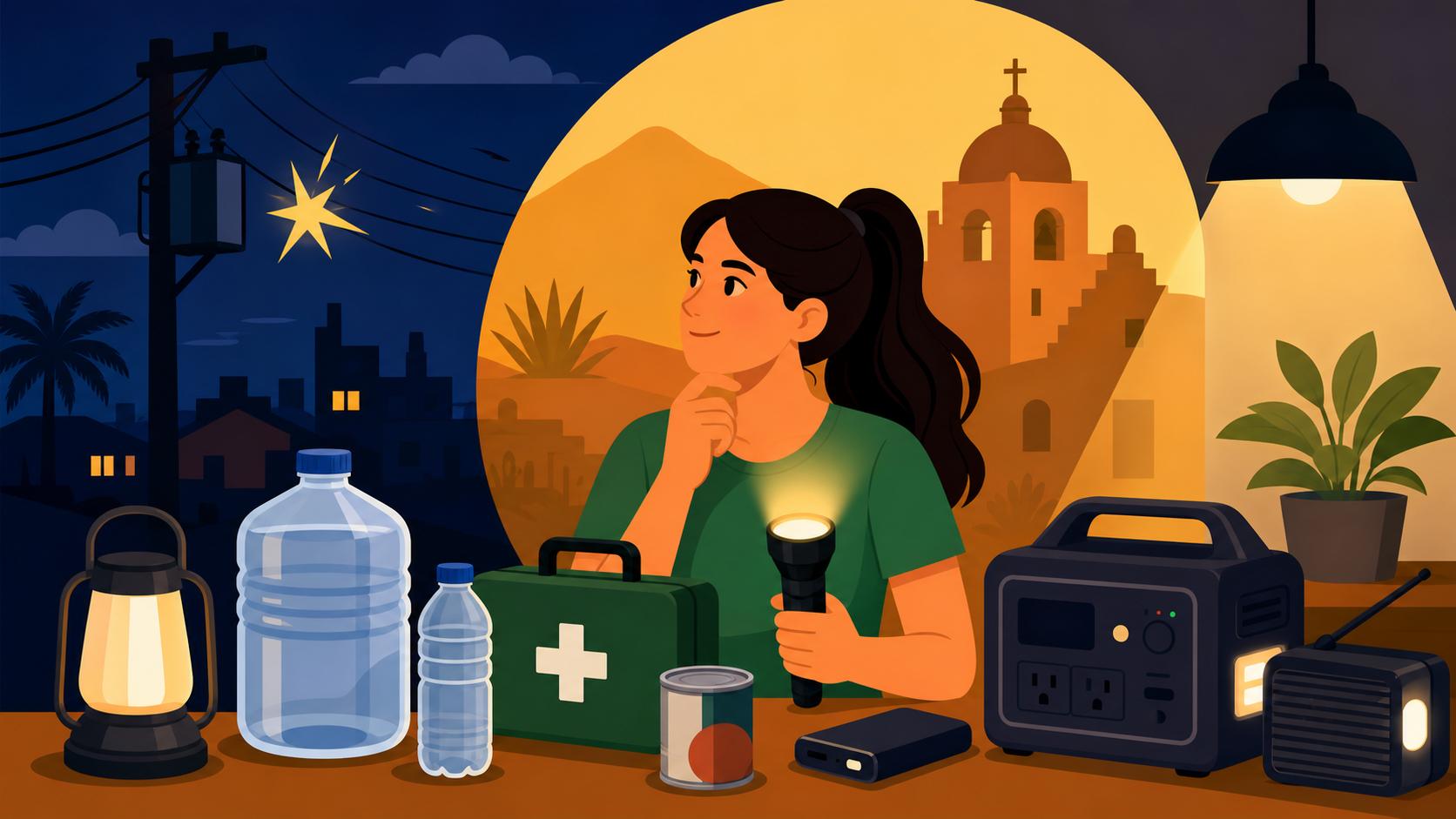
You cannot control the CFE, but you can control your environment. Over the years, I have built a "blackout kit" that makes an evening without power feel like a cozy indoor camping trip rather than a stressful emergency. You can find almost all of these items on Amazon Mexico, which is a lifesaver for getting specific tech delivered to your door without hunting through local hardware stores.
Backup Power Solutions and No-Breaks
In Mexico, a surge protector is often called a "No-Break" or a UPS (Uninterruptible Power Supply). These are battery-backed surge protectors that give you about 15-30 minutes of power—enough to save your work and safely shut down your computer. Every expat should have at least one for their router and their main workstation.
For longer outages, you might want to look into portable power stations. These are essentially giant lithium batteries that can run a fan and charge your laptop for several hours. If you are truly in a remote area or a place with frequent failures, a small gasoline generator might be necessary, though the noise and maintenance can be a hassle for those in city apartments.
| Equipment Type | Best For | Typical Run Time | Price Range (Pesos) |
|---|---|---|---|
| UPS (No-Break) | Routers, Desktop PCs | 15 – 30 Minutes | $1,500 – $4,000 |
| Power Bank | Smartphones, Tablets | 2 – 4 Full Charges | $500 – $1,500 |
| Power Station | Laptops, Fans, Small Lights | 4 – 12 Hours | $6,000 – $20,000 |
| Gas Generator | Fridge, Multiple Fans, TV | Continuous (with fuel) | $10,000+ |
Lighting and Food Safety Essentials
Flashlights are great, but for a comfortable evening, you want "ambient" light. I highly recommend rechargeable LED lanterns that you can find on Amazon Mexico. They provide a soft glow that fills a room, making it much easier to read or cook. Headlamps are also a "pro-tip" for when you need to navigate the kitchen or check the breaker box with both hands free.
Regarding your fridge: keep it closed! A closed refrigerator will keep food safe for about 4 hours, and a full freezer can maintain its temperature for 48 hours if you don't open the door. If you live in a particularly hot climate, keep a few frozen jugs of water in your freezer; they act as "ice blocks" during an outage to extend the cooling time. For more tips on maintaining your household during localized challenges, see Living in Mexico: Cultural and Practical Guide for New Expats.
Long-Term Strategies for Reliable Living in Mexico
If you find that your specific area has power issues every time a cloud appears in the sky, it might be time to think about more permanent solutions. Living in Mexico is a joy, but chronic infrastructure failures can wear down even the most patient soul.
Choosing the Right Neighborhood and Building
When you are looking for your next home, pay attention to the density of the wires overhead. If they look like a tangled nest of spaghetti, you are in for trouble. Ask about the history of the "transformadores" (transformers) in the area. Often, a neighborhood will have one specific transformer that blows every time it rains.
Furthermore, consider the "ventilation" of the house. A home designed with cross-ventilation and high ceilings will be much more bearable during a power outage than a modern "glass box" condo that relies entirely on AC. If the power goes out in a poorly designed building, it becomes an oven within twenty minutes. This is a key detail often overlooked in Expat Housing in Mexico: Navigating Neighborhoods, Utilities, and Services.
Investing in Solar Energy and Community Backups
Mexico has some of the best solar potential in the world. Many expats are now installing solar panels not just to save on their CFE bills, but to add battery backup systems (like the Tesla Powerwall) that keep the house running seamlessly when the grid drops. While the initial investment is high, the peace of mind of having the only lights on in the neighborhood is priceless.
If you are a digital nomad and the power goes out at home, don't forget that brands like Selina often have robust backup systems and high-speed internet specifically designed for remote workers. If my home power is out for more than two hours, I grab my laptop and head to the nearest Selina or a high-end hotel lobby. They almost always have industrial-grade generators that can keep you productive while the CFE works on the lines. For more on finding these workspaces, check out Best Cities in Mexico for Digital Nomads: Connectivity and Lifestyle.
Knowing Who to Call
If the outage is widespread and doesn't resolve within an hour, you should report it. You can dial 071 from any phone to reach the CFE. You will need your "Service Number" (Número de Servicio) which is found on your last bill. Even if your Spanish is basic, just saying "No hay luz" (There is no light) and giving your address is often enough. For a full list of who to contact in various situations, keep Emergency Numbers in Mexico: How to Call Police, Fire, or Ambulance bookmarked on your phone.
Living in Mexico requires a bit more resilience than living in a suburban bubble in the US or Canada, but that’s part of the adventure. Once you have your No-Break installed, your Airalo data ready, and your LED lanterns charged, a power outage stops being a crisis and becomes just another evening in paradise—perhaps with a few more stars visible in the sky than usual.
Disclaimer
This guide is for informational purposes only. Electrical work and the use of generators or high-capacity batteries involve inherent risks, including fire and electrical shock. Always consult with a certified electrician in Mexico before installing solar panels, backup systems, or high-voltage equipment. The author and publisher are not responsible for any damages or injuries resulting from the use of the information provided in this article.