Driving Restrictions (Hoy No Circula) in Mexico City: What Expats Need to Know
Imagine waking up for a critical meeting in Santa Fe only to realize your vehicle is legally a two-ton paperweight for the day because of its license plate ending. I once spent three hours in a frantic loop with a traffic officer on a Tuesday because I had no idea my "0" hologram didn't grant me immunity during a sudden pollution spike. This guide demystifies the "Hoy No Circula" rules, ensuring you never face the nightmare of an impounded car while Living in Mexico City: An Expat's Guide to Neighborhoods and Lifestyle.
Disclosure: This post may contain affiliate links. We may earn a commission at no extra cost to you if you make a purchase through these links. Read full disclosure.
Understanding the Basics of Hoy No Circula
The "Hoy No Circula" (HNC) program is a mandatory vehicle restriction system designed to manage the heavy air pollution in the Mexico City metropolitan area. If you are new to the city, the sheer complexity of the schedule can feel like learning a second language, but it is a fundamental part of Settling in Mexico: Step-by-Step Guide to Your First 30 Days as an Expat. The program applies to all 16 boroughs of Mexico City (CDMX) and 18 specific municipalities in the State of Mexico (Edomex). The logic is simple: by forcing a percentage of cars off the road each day, the city attempts to lower ozone levels and particulate matter.
For most expats, the realization that you cannot drive your car whenever you want is a major culture shock. Unlike the occasional "smog check" in the US or Canada, the HNC is an everyday reality that dictates when you can go grocery shopping, drop the kids at school, or head out for a weekend trip. Before you commit to a vehicle, you must understand how this affects the Cost of Living in Mexico City (2026): Detailed Expat Budget Guide, as the wrong choice of car can lead to expensive fines or the need for frequent ride-shares.
The program operates on two main factors: the "Hologram" (sticker) your car receives during its semi-annual emissions test (Verificación) and the last digit of your license plate. These two elements combined determine which day of the week—and which Saturdays of the month—your car must stay parked. Ignoring these rules isn't just a minor risk; it is a guaranteed way to meet the local police and potentially lose access to your vehicle for days.
How the Hologram System Dictates Your Driving Life
The heart of the HNC program is the "Hologram" system. Every six months, you are required to take your car to a "Verificentro" (testing center) to check its emissions. Based on how clean your car runs, you are assigned a sticker that acts as your driving passport. If you are debating Bringing Your Car vs Buying in Mexico: Pros and Cons for Expats, the hologram you can realistically obtain should be your primary concern.
Hologram 00 and 0: The Expat Holy Grail
Cars with a "00" or "0" sticker are generally exempt from the daily restrictions. The "00" (Double Zero) is usually reserved for new, highly efficient vehicles and is valid for two years, renewable once. The "0" (Zero) is for older but well-maintained cars that meet strict emission standards. With these stickers, you can drive every day of the week, including all Saturdays. However, even these vehicles can be restricted during an "Environmental Contingency" (contingencia ambiental), which I will explain later.
Hologram 1 and 2: The Restricted Reality
If your car is older or less efficient, it will likely receive a Hologram 1 or 2. Hologram 1 cars must stay off the road one day during the week and two Saturdays per month. Hologram 2 cars are the most restricted; they cannot drive one day during the week and are banned from the road every single Saturday. If you find yourself with a Hologram 2 car, you'll need to rely heavily on Using Uber and Ride-Sharing Apps: A Guide for Expats in Mexico to maintain your social life on the weekends.
The Saturday Schedule
Saturday restrictions are often what trip up expats the most. The rule follows the last digit of your plate. For Hologram 1:
- First and third Saturday of the month: Odd numbers (1, 3, 5, 7, 9) are restricted.
- Second and fourth Saturday of the month: Even numbers (0, 2, 4, 6, 8) are restricted.
If there is a fifth Saturday in a month, only Hologram 2 cars are restricted. Keeping track of this is much easier if you have a reliable data plan from a provider like Airalo to check local apps or websites for the current status before you leave the house.
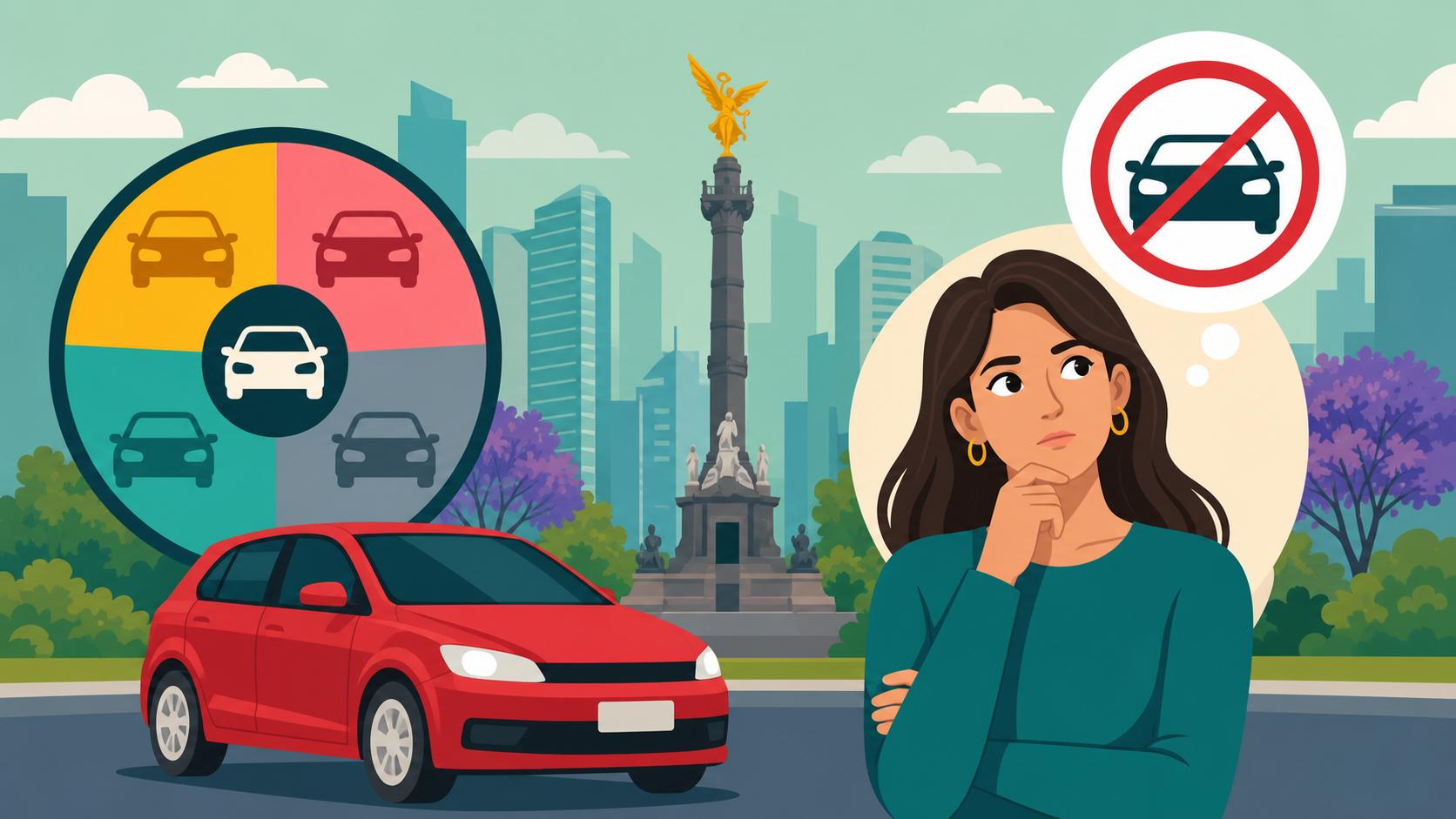
| Plate Last Digit | Sticker Color | Day Restricted | Weekday Ban Hours |
|---|---|---|---|
| 5 or 6 | Yellow | Monday | 5:00 AM – 10:00 PM |
| 7 or 8 | Pink | Tuesday | 5:00 AM – 10:00 PM |
| 3 or 4 | Red | Wednesday | 5:00 AM – 10:00 PM |
| 1 or 2 | Green | Thursday | 5:00 AM – 10:00 PM |
| 9 or 0 | Blue | Friday | 5:00 AM – 10:00 PM |
Special Rules for Foreign Plates and Expats
If you are an expat driving a car with foreign plates (US, Canadian, etc.), the city treats you with a high level of suspicion regarding emissions. By default, any vehicle with foreign plates or plates from a state that does not have a reciprocity agreement with CDMX is treated as a Hologram 2 vehicle. This means you cannot drive one day a week (based on your plate number), you cannot drive any Saturday, and you are strictly banned from the roads every weekday morning between 5:00 AM and 11:00 AM.
This "foreign plate" rule is a massive headache for those who have a Temporary Import Permit (TIP) for Cars: What Residents Should Know. To avoid being a target for transit police, many expats apply for a "Pase Turístico" (Tourist Pass). This pass allows foreign-plated vehicles to be exempt from HNC rules for up to 14 days per semester. However, this is only available for vehicles no older than 15 years, and it cannot be used if you have already registered the car in Mexico.
If you plan on living in the capital long-term, the best advice I can give—from one expat to another—is to buy a local car or a hybrid. Hybrid and electric vehicles are granted a special "Exento" (Exempt) sticker, which means you never have to worry about the HNC or the biannual verification process. While the upfront cost is higher, you can find great deals on accessories and car tech via Amazon Mexico to keep your local ride in top shape. If you aren't ready to buy, staying at a well-located hub like Selina in neighborhoods like Roma or Condesa can make you much less dependent on a car anyway.
Environmental Contingencies and the "Doble" Hoy No Circula
The most frustrating part of the HNC program is the "Contingencia Ambiental." When the Air Pollution in Mexico: What Expats Should Know About Air Quality hits a certain threshold—usually due to a lack of wind and high heat—the government declares a Phase 1 or Phase 2 contingency. During these times, the city implements a "Doble Hoy No Circula."
When a "Doble" is active, even cars with Hologram 0 and 00 may be banned from the road. Typically, the restriction follows the plate color or digit of the day plus an additional group. You might wake up on a Wednesday to find that not only are "Red" plates restricted, but also 50% of the "Zero" hologram cars. The announcement is usually made the evening before around 8:00 PM.
Missing this announcement is how I ended up with a massive fine. I highly recommend following the "Secretaría del Medio Ambiente" (SEDEMA) on social media or downloading a local weather app. Having a constant connection through an Airalo e-SIM ensures you get these notifications in real-time, preventing you from driving into a trap. During these high-pollution days, it is often safer and healthier to stay indoors and order what you need from Amazon Mexico rather than braving the smog and the traffic police.
Dealing with Penalties, Fines, and the Corralón
If you are caught driving on a day you shouldn't be, the consequences are swift and expensive. In Mexico City, the transit police (identified by their neon green vests or markings) have the authority to stop you. The fine for violating HNC is measured in "UMA" (Unit of Measure and Standardization), and it typically ranges from 2,000 to 3,000 pesos. But the fine is the least of your worries.
The real "death sentence" for your afternoon is the "Corralón" (impound lot). In many cases, the police are required to tow your car to a government lot. Retrieving a car from the corralón is a bureaucratic odyssey that requires you to prove ownership, show a valid driver's license, and ensure you have no outstanding unpaid fines (infracciones) or verification debts. If you don't know What to Do If You’re Pulled Over by Police in Mexico, this process can take days of standing in lines.
Be very wary of Dealing with Corruption: Should Expats Pay “Mordida” (Bribes)? in this situation. While it may be tempting to "settle" the matter on the spot, the city has been cracking down on this, and body cameras are increasingly common. The best defense is a good offense: know your plate's color, its day, and never risk driving during a contingency. If you find yourself stranded without a car, the city has an extensive network of Metro and Metrobus lines, which are often faster than a car anyway during peak hours.
Practical Strategies for Navigating CDMX Without a Car
Given the complexity of the HNC, many expats find that the best way to live in Mexico City is to simply not drive every day. This is especially true if you are sensitive to Is It Safe to Drive at Night in Mexico? Road Safety Tips for Expats or the general chaos of Chilango traffic.
- The Hybrid Loophole: If you can afford it, a hybrid car is the ultimate "get out of jail free" card. Not only do you skip the HNC, but you also skip the verification lines and the annual "Tenencia" (car tax) in many cases.
- Strategic Housing: Choosing to live in a walkable neighborhood can change your life. If you stay at a Selina coworking space or apartment, you are usually within walking distance of everything you need, making your car's restricted days a non-issue.
- The "Two Car" Strategy: Some wealthy residents keep two cars with different plate endings. While effective, this is expensive and adds the headache of two verifications.
- Reliable Communication: Always have the Emergency Numbers in Mexico: How to Call Police, Fire, or Ambulance saved in your phone. If you are ever stopped and feel you are being targeted unfairly because of your foreign status, calling for official help is better than arguing on the street.
In the end, the Hoy No Circula program is a test of patience and organization. It forces you to plan your life a bit more carefully, but it is also a reminder of the collective effort needed to keep this massive, beautiful city breathing. Stay informed, keep your verification up to date, and always have a backup plan for those days when your car has to stay home.
Disclaimer
The information provided in this guide is for educational and informational purposes only and does not constitute legal or professional advice. Driving laws, emissions standards, and "Hoy No Circula" schedules in Mexico City are subject to frequent change by municipal and federal authorities. While we strive to keep this information accurate as of 2026, always verify current restrictions via official government channels such as SEDEMA or the CDMX official portal. The author and publisher are not responsible for any fines, vehicle impoundments, or legal issues arising from the use of this information.