What Happens on Mexican Independence Day (September 16)?
Many visitors and new residents in Mexico get confused about when the real independence party starts, often missing the high-energy "Grito" on the night of the 15th or wondering why the streets are eerily empty on the 16th. This guide breaks down the traditions, timing, and cultural etiquette of Mexican Independence Day to ensure you celebrate like a local.
Disclosure: This post may contain affiliate links. We may earn a commission at no extra cost to you if you make a purchase through these links. Read full disclosure.
The Great Confusion: September 15th vs. September 16th
One of the most common mistakes I see expats make during their first year in Mexico is showing up to the party a day late. While the official statutory holiday is September 16th, the emotional and social climax of the celebration actually occurs on the night of September 15th. This is when the "Grito de Dolores" (the Cry of Independence) takes place. If you wait until the morning of the 16th to head out looking for a festival, you will find a country that is largely nursing a collective hangover or preparing for a formal military parade.
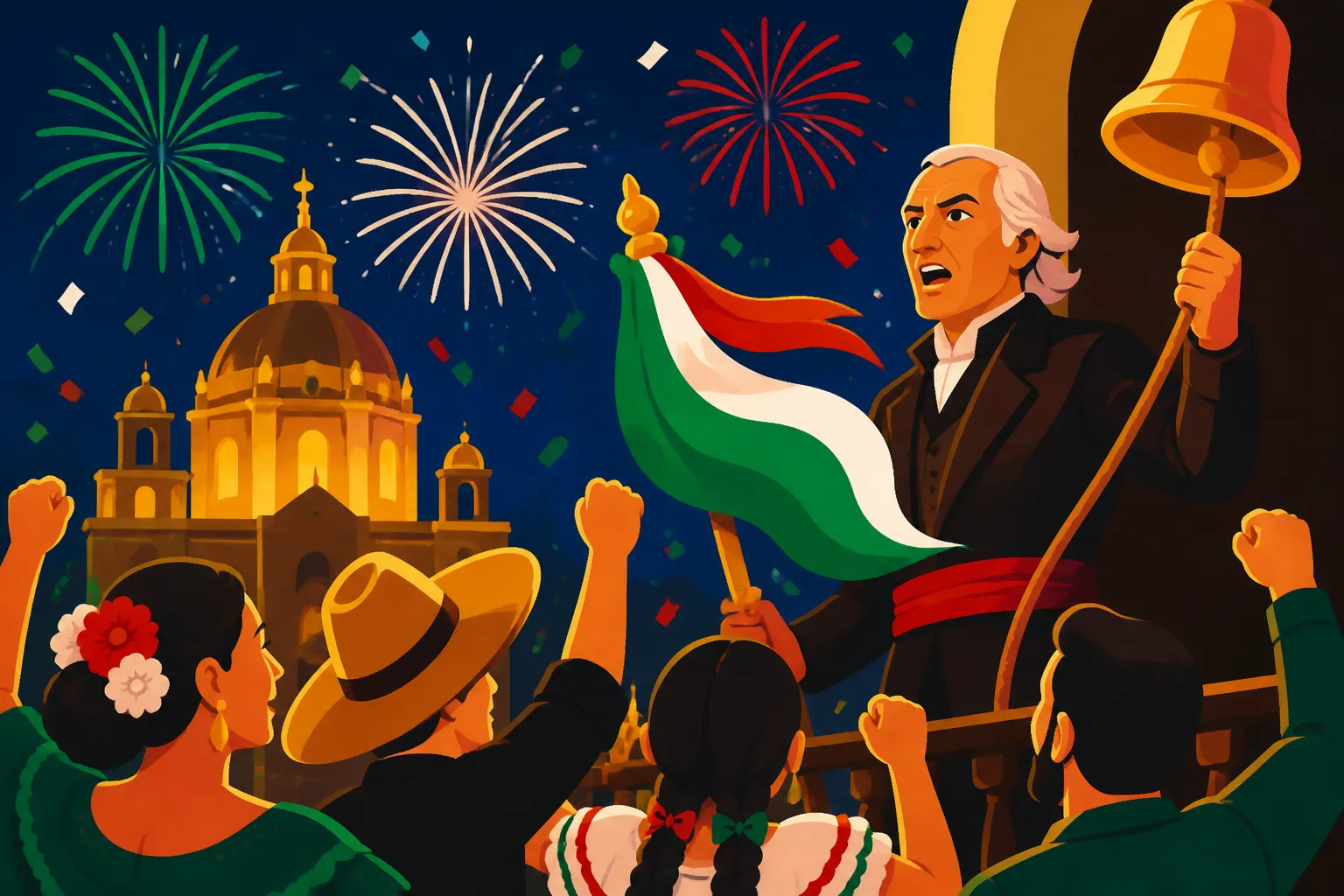
The tradition stems from the historical events of 1810. Father Miguel Hidalgo y Costilla rang the church bell in the town of Dolores, Guanajuato, in the early hours of September 16th to call the people to arms against Spanish rule. However, since the late 19th century, Mexican presidents have chosen to kick off the celebration on the night of the 15th. In every town square (Zócalo) across the country, from tiny villages to the massive heart of Mexico City, the local leader—be it the President, a Governor, or a Mayor—appears on a balcony at 11:00 PM. They ring a symbolic bell, wave the flag, and shout the names of the fallen heroes of the revolution, ending with a triple "¡Viva México!"
As an expat, participating in the Grito is a rite of passage. It is loud, it is crowded, and it is intensely patriotic. You will see families who have occupied their spots in the plaza since the afternoon. For those living in smaller towns, the experience is often more intimate but no less passionate. If you are planning to travel to a historic center like San Miguel de Allende or Dolores Hidalgo for the festivities, I highly recommend checking Mexican Independence Day and El Grito to understand the regional variations you might encounter.
The Morning of the 16th: The Military Parade
Once the fireworks of the 15th have faded and the tequila bottles are empty, the tone of the celebration shifts dramatically. September 16th is a "día feriado," meaning it is a mandatory day of rest. Banks are closed, government offices are shuttered, and even many grocery stores operate on limited hours. This is the day of the Grand Military Parade.
In Mexico City, the parade is a massive display of national pride that marches from the Zócalo, down the iconic Paseo de la Reforma, toward the Bosque de Chapultepec. It features thousands of soldiers, sailors, and members of the National Guard, along with impressive displays of military hardware and flyovers by the Mexican Air Force. It is not just about the military, though; the parade often includes the "Charros" (traditional Mexican horsemen) and various civil organizations.
If you are staying in a hotel along the parade route, which you can easily find through Booking.com, you might have a front-row seat from your balcony. For everyone else, it means navigating significant street closures. I remember my first 16th of September; I tried to take a taxi across town and ended up walking three miles because the entire city center was cordoned off. It’s a day to stay local, watch the parade on television if you don't like crowds, and enjoy the relative quiet of the residential neighborhoods. To better understand the flow of the year, you can refer to our guide on Festivals, Holidays, and Traditions in Mexico.
The Culinary Soul of Independence Month
You cannot talk about September in Mexico without talking about the food. This is the month of "Patria" (the homeland), and the kitchen reflects that. The star of the season is undoubtedly "Chiles en Nogada." This dish is a culinary representation of the Mexican flag: a green poblano chili stuffed with "picadillo" (a mixture of meat, dried fruits, and spices), covered in a white walnut-based cream sauce (nogada), and topped with bright red pomegranate seeds and green parsley.
Finding the perfect Chile en Nogada is a sport for expats and locals alike. Every grandmother and every high-end chef claims to have the original recipe from Puebla. It’s a complex, sweet-and-savory dish that is only available during this time of year because that is when pomegranates and walnuts are in season. Beyond the Chiles, you will find "Pozole" at every family gathering. Whether it is Rojo (red), Blanco (white), or Verde (green), this hearty hominy soup is the ultimate communal meal.
When dining out during the festivities, keep in mind Mexican Breakfast and Meal Times Explained because the "Comida" on the 15th often stretches well into the evening as a prelude to the Grito. Also, expect restaurants to be packed. If you are planning a special dinner, book weeks in advance. During this time, I often suggest exploring Tequila 101: How to Taste and Where to Visit since a high-quality tequila or mezcal is the standard accompaniment to any Independence Day meal.
| Activity | September 15th (The Eve) | September 16th (The Day) |
|---|---|---|
| Main Event | El Grito (11:00 PM) | Military Parade (Morning) |
| Atmosphere | Party, Fireworks, High Energy | Formal, Patriotic, Quiet Streets |
| Food Focus | Antojitos, Pozole, Tequila | Family Breakfast, Leftover Pozole |
| Business Status | Open (mostly), late closing | Closed (Statutory Holiday) |
| Crowd Level | Extreme in town squares | High along parade routes |
Navigating Logistics and Transport
Travel during the "Puente" (bridge/long weekend) of Independence Day requires forward planning. Since this is one of the biggest holidays of the year, millions of Mexicans travel to visit family or head to the "Pueblos Mágicos." This means that bus stations will be chaotic and highways will be congested. If you are looking to move between cities, using a service like Busbud to secure your tickets in advance is non-negotiable. Trying to buy a ticket at the station on the afternoon of the 15th is a recipe for frustration.
Within the cities, public transport schedules are often modified. In Mexico City, the Metro station "Zócalo/Tenochtitlan" usually closes several days before the 15th for security reasons. If you are relying on ride-sharing apps, be prepared for "surge pricing" and significant delays. I’ve found that the best strategy is to arrive at your destination early in the day and stay put. If you want a curated experience without the stress of navigating the crowds alone, you can find various historical walking tours on Viator that explain the significance of the sites in the historic center.
For those venturing into the crowds, Staying Safe in Mexico: Practical Tips for Travelers is an essential read. While the atmosphere is generally celebratory, the sheer density of people in the Zócalo can be overwhelming for some. Keep your valuables in front-of-body pockets and have a designated meeting point for your group in case you get separated, as cell service often fails when tens of thousands of people are trying to upload videos of the fireworks simultaneously.
Cultural Etiquette for Expats
As a foreigner, you are more than welcome to join the festivities, but there are a few nuances to keep in mind. First, understand that this is a deeply prideful moment for Mexicans. It is not "Mexican Halloween" or a generic carnival; it is the celebration of the birth of a nation. Wearing traditional clothing is seen as a gesture of respect and integration, provided it is done tastefully. You will see many locals wearing "huipiles" or traditional embroidered shirts.
When the "Grito" happens, join in! Even if you don't know all the names being shouted, the final "¡Viva México!" is universal. However, be mindful of the "cohetes" (firecrackers). Mexico loves noise, and during September, it can feel like a war zone in some neighborhoods. If you have pets, make sure they are secure indoors, as the constant explosions can be very distressing for them.
Regarding social invitations, if a Mexican friend invites you to a "Noche Mexicana," it is usually a long affair. Expect lots of food, music (often a Mariachi band), and plenty of singing. It is polite to bring a bottle of good tequila or a traditional dessert. For more on how to navigate these social waters, check out Mexican Customs, Etiquette, and Social Life. Being a good guest in a Mexican home during Independence Day is the fastest way to turn acquaintances into lifelong friends.
The Regional Differences in Celebration
While the President’s Grito in Mexico City is the one broadcast on every channel, the heart of the revolution lies in the state of Guanajuato. In the town of Dolores Hidalgo, the celebration feels much more historical. The town is the "Cradle of Independence," and the energy there is unmatched. Thousands gather in front of the very church where Father Hidalgo made his stand. If you are interested in the history, you might want to look into Ancient Ruins, History, and Archaeology in Mexico to see how the colonial past still shapes these modern celebrations.
In coastal areas like Puerto Vallarta or Cancun, the celebrations are often blended with the tourist industry. You will find big parties at resorts, but for the authentic experience, you still need to head to the municipal Zócalo. In contrast, in Northern Mexico, the celebrations might feel slightly different than in the Southern indigenous heartlands. To understand these geographic nuances, see Mexican Regional Cuisine: How Food Changes Across Mexico, as the celebratory dishes will change as you move from the border to the Yucatan.
Regardless of where you are, the common thread is the "Tianguis" (street markets) that pop up everywhere. These markets sell everything from plastic trumpets and green-white-and-red wigs to some of the best seasonal street food you will ever taste. If you've never experienced a true Mexican street market, this is the perfect time to start. I recommend reading Street Food in Mexico: Tacos, Tamales, and More so you know exactly what to order when you find yourself surrounded by the enticing smells of a festive night market.
Preparing Your Home and Schedule
If you are a resident, you need to prepare for the "shutdown." On the 15th, many people work a half-day, but the 16th is a hard stop. Do your grocery shopping by the 14th to avoid the madness. Also, be aware that "Ley Seca" (Dry Law) is sometimes implemented in certain municipalities. This is a ban on the sale of alcohol during major holidays or elections. While it’s less common now for Independence Day in major tourist hubs, it still happens in various neighborhoods of Mexico City and smaller towns. Check local news or ask your neighbors a few days in advance so you aren't left without your celebration supplies.
Finally, remember that the noise won't stop at midnight. The 15th of September usually turns into the early hours of the 16th with music and revelry. If you live near a plaza or a popular "cantina," don't expect much sleep. It’s part of the magic of living in this country. Instead of fighting the noise, I’ve found it’s much better to grab a plate of pozole, pour a drink, and enjoy the fact that you get to witness one of the world's most vibrant displays of national identity. For more advice on settling into your new life, our guide on Long-Distance Buses in Mexico: ADO and Premium Lines can help you plan your getaways during these busy holiday periods.
Disclaimer
This guide is intended for informational purposes only. Local regulations regarding street closures, public health measures, and the "Ley Seca" (alcohol ban) can change at the municipal level with very little notice. Always verify specific event times and local restrictions with your municipal government or neighborhood association before making final travel plans. The author is a long-term resident, not a government official, and while every effort is made to provide accurate data, the reality on the ground in Mexico is often fluid and subject to the "vibe" of the moment.