Festivals, Holidays, and Traditions in Mexico
Navigating Mexico’s rich calendar of holidays, street festivals, and regional traditions can easily overwhelm new residents and first-time travelers. What seems like an ordinary Tuesday can suddenly transform into a neighborhood-wide street party with brass bands and fireworks, leaving you wondering why the local bank is locked and the grocery store closed. This comprehensive guide breaks down Mexico’s major national holidays, sacred religious observances, and vibrant community traditions so you can plan your life, travel smoothly, and participate respectfully.
Disclosure: This post may contain affiliate links. We may earn a commission at no extra cost to you if you make a purchase through these links. Read full disclosure.
Understanding the Rhythm of Mexican Holidays and Cultural Traditions
To comfortably live in or travel through Mexico, you must learn to read the ebb and flow of its festival calendar. Festivities here are not merely marked on paper; they dictate the flow of traffic, the opening hours of businesses, and the emotional beat of every community. Coming from countries where holidays are often relegated to a single day off work, many expats are surprised by how deeply cultural celebrations reshape daily routines.
Understanding these cycles helps you avoid logistical headaches while opening the door to some of the most memorable cultural experiences you will ever have. When you align your expectations with the local rhythm, an unexpected road blockade becomes an invitation to watch a colorful parade rather than an exercise in frustration.
National vs Regional Celebrations
Mexico operates on two distinct tiers of celebration: official national holidays mandated by federal law, and an almost infinite array of regional, state, and village-level festivals. Statutory national holidays, known locally as días feriados or días asuetos, result in closed government offices, banks, and schools across the entire republic. These dates often celebrate pivotal historical events, such as independence or revolution, and are strictly observed nationwide.
Regional celebrations, on the other hand, are tied to local history, indigenous harvests, or town patron saints. A quiet village in Oaxaca might completely shut down for three days in July for a local radish festival or community dance, while the neighboring town five miles away carries on business as usual. Navigating these regional events requires local curiosity and a willingness to ask neighbors what is coming up on the community calendar.
Understanding the distinction is vital when planning errands, administrative tasks, or travel routes. While you can count on federal offices being closed on official national holidays, regional fiestas require a bit more groundwork. Checking local bulletin boards, asking neighborhood store owners, or consulting community forums will keep you ahead of localized disruptions.
The Interplay of Catholicism and Indigenous Heritage
To truly grasp Mexican traditions, one must understand that almost every major festival is a syncretic blend of pre-Hispanic indigenous beliefs and Roman Catholicism brought by Spanish colonizers. When Catholic missionaries arrived, they found deeply rooted indigenous agricultural and spiritual calendars. Rather than erasing these traditions entirely, religious practices merged over centuries, creating a spiritual culture unique to Mexico.
This cultural blending is evident in rituals surrounding death, harvest, and community worship. Pre-Columbian reverence for ancestors morphed into Catholic observances for All Saints’ Day, while indigenous deities were often associated with Catholic saints holding similar patronages over rain, agriculture, or protection. The visual expressions of these festivities—featuring vibrant marigold flowers, copal incense, masked dancers, and elaborate altars—carry symbolism that spans thousands of years.
As an expat or visitor, recognizing this duality enriches your experience immensely. You begin to notice that a village procession for a saint often follows the ancient movements of an indigenous rain dance, and that sacred offerings contain elements from both Christian theology and ancient cosmology. Respecting this deep-rooted spiritual history is fundamental to engaging with local communities meaningfully.
What Closes and What Happens to Daily Infrastructure
When a major holiday hits Mexico, daily infrastructure shifts dramatically. On official civic holidays, public transit systems often operate on reduced Sunday schedules, municipal administrative offices close down entirely, and primary banking services pause. While major supermarket chains and tourist-facing businesses usually remain open, smaller family-owned abarrotes (grocery shops), local markets, and professional services will lock their doors so owners can celebrate with their families.
During regional or town-level festivals, physical access becomes the main operational challenge. Neighborhood streets are routinely closed off to make room for carnival rides, food stalls, and procession routes. Power grid adjustments or temporary water line disruptions can occasionally occur in smaller communities hosting massive crowds. Understanding What Closes During Mexican Public Holidays? allows you to stock up on essentials, pull cash from ATMs ahead of time, and adjust your personal schedule.
Long-distance travel also experiences major surges during extended holiday weekends, known locally as puentes (bridges). Highways leading out of major urban centers become congested, and long-distance bus terminals fill to capacity. Learning to anticipate these shifts transforms potential travel nightmares into manageable, well-timed journeys.
Autumn and Winter Traditions: From Remembrance to New Beginnings
The transition from late autumn into winter marks one of the most visually stunning and socially active periods in the Mexican calendar. As the rainy season draws to a close, the country prepares for a sequence of deeply moving family gatherings, religious pageants, and street festivals that span from late October through early January.
For many foreigners living in Mexico, this seasonal stretch provides the clearest window into the core values of Mexican culture: family unity, reverence for history, generous hospitality, and a joy in communal celebration.
THE WINTER CELEBRATION SEQUENCE
Oct 31 – Nov 2 : Día de Muertos (Day of the Dead offerings, cemetery vigils, & altars)
Dec 12 : Día de la Virgen de Guadalupe (Nationwide pilgrimages & festivities)
Dec 16 – Dec 24 : Las Posadas (Nine nights of neighborhood processions & piñata breaking)
Dec 24 – Dec 25 : Nochebuena & Navidad (Family Christmas Eve feast & Christmas Day)
Dec 31 – Jan 1 : Año Nuevo (New Year’s Eve rituals, 12 grapes, & late-night celebrations)
Jan 6 : Día de los Reyes Magos (Three Kings Day, gift-giving, & Rosca de Reyes)
Feb 2 : Día de la Candelaria (Candlemas, tamale feast hosted by Rosca figurine finders)
Day of the Dead (Día de Muertos) Across the Country
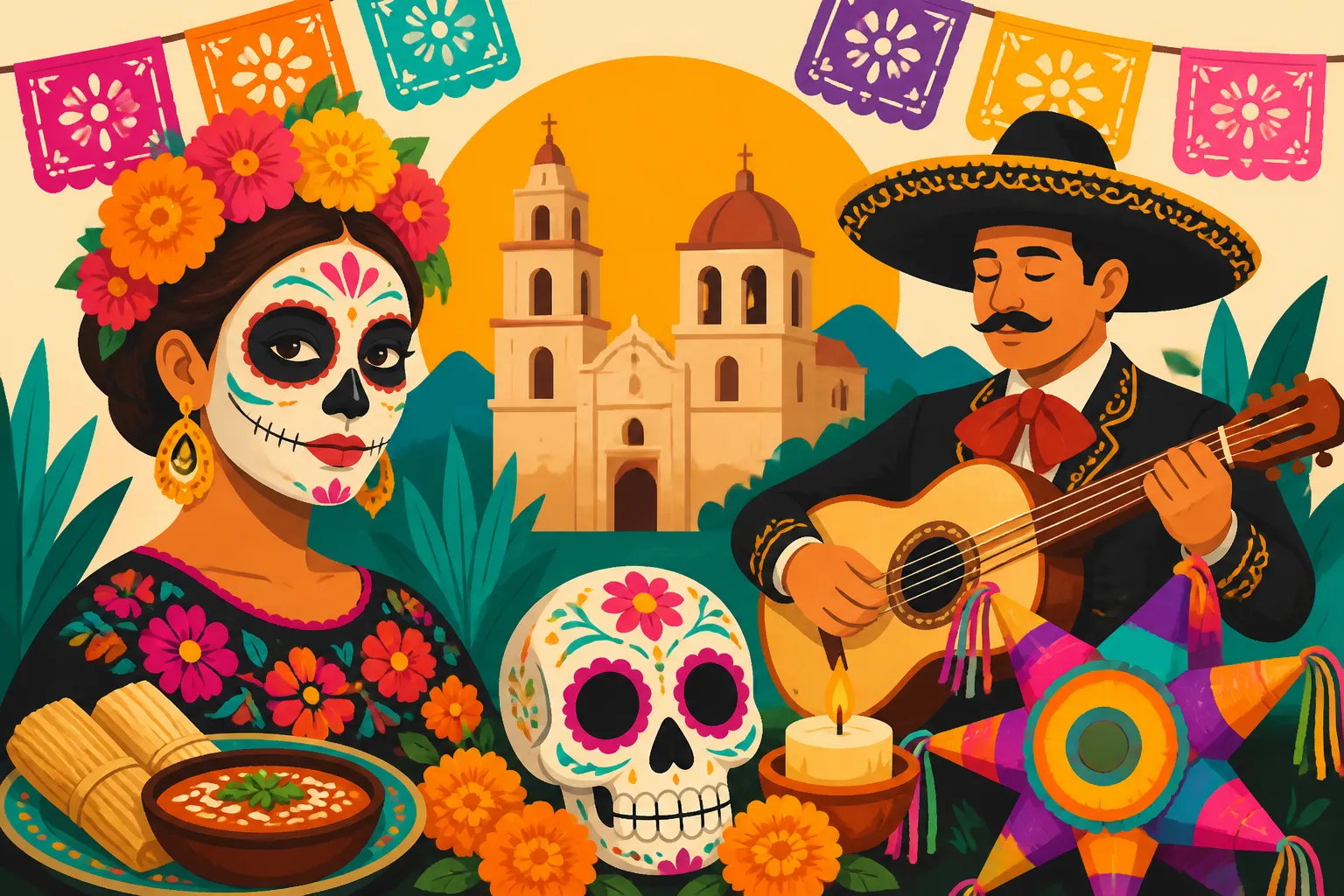
Occurring annually between October 31st and November 2nd, Día de Muertos is arguably Mexico’s most internationally recognized cultural tradition. Far from a somber or spooky event akin to Halloween, it is a joyful, poignant reunion between the living and the spirits of departed loved ones. Families construct elaborate ofrendas (altars) in their homes and public spaces, adorned with orange marigolds (cempasúchil), woven paper banners (papel picado), sugar skulls, burning incense, and the favorite foods and drinks of those who have passed.
The way this tradition is observed varies significantly depending on where you are in the country. In southern and central regions like Oaxaca, Michoacán, and Chiapas, celebrations remain deeply intimate and rooted in indigenous customs. Families gather in community cemeteries for overnight vigils, illuminated by thousands of candles, sharing stories, music, and food alongside the graves. In contrast, large urban centers like Mexico City host grand civic events, including massive street parades featuring giant skull puppets and acrobats.
If you are planning to travel during this time, thorough advance planning is essential. Popular destinations like Janitzio Island in Lake Pátzcuaro or the historic center of Oaxaca book out months ahead. You can research regional tour arrangements and local guides on platforms like Viator to find respectful, culturally immersive excursions that honor local etiquette without intruding on private family moments. To learn more about navigating this season, read our comprehensive guide on Día de Muertos in Mexico: A Visitor’s Guide.
The December Marathon: From Las Posadas to Nochebuena
The holiday stretch known informally as the Maratón Guadalupe-Reyes begins on December 12th with the Feast Day of Our Lady of Guadalupe. Millions of pilgrims travel on foot, bicycle, and bus to the Basilica in Mexico City, while towns across the nation hold joyous street parties, complete with traditional Aztec dancers and brass bands. This event officially launches a month-long period of continuous celebration.
From December 16th to the 24th, communities host Las Posadas, a series of nine evening re-enactments commemorating Mary and Joseph’s journey from Nazareth to Bethlehem in search of shelter. Neighbors form processions carrying candles and clay figurines, marching from house to house singing traditional songs requesting entry. Once admitted, the host family welcomes the procession with hot ponche (a spiced fruit punch), tamales, and the breaking of star-shaped paper-mâché piñatas filled with seasonal fruits and candies.
The grand finale of this sequence takes place on Christmas Eve, known as Nochebuena. Unlike in English-speaking nations where Christmas morning is the primary focal point, Mexican families celebrate late into the night on December 24th with a festive late-night feast. Traditional dishes like bacalao (salted cod), romeritos (rosemary sprigs in mole), roasted turkey, and sweet tamales grace the dinner table. Christmas Day itself (Navidad) is typically a quiet day reserved for resting and enjoying leftovers (el recalentado).
Reyes Magos and Candlemas: Closing the Holiday Loop
The holiday season does not end with New Year’s celebrations. On the evening of January 5th and throughout January 6th, Mexican families celebrate Día de los Reyes Magos (Three Kings Day). Traditionally, it is the Three Wise Men—Melchior, Caspar, and Balthazar—who bring gifts to children, rather than Santa Claus, though many modern families now observe both traditions. Children leave their shoes near the window or altar, alongside hay and water for the camels, waking up to find toys and sweets.
A central element of this holiday is the sharing of the Rosca de Reyes, an oval-shaped sweet bread decorated with candied fruits, symbolizing a royal crown. Tucked inside the bread are small plastic figurines representing the baby Jesus. Everyone present takes turns slicing their own piece of bread. If your slice contains a figurine, custom dictates that you are named a godparent of the baby Jesus and must host a party for the group on February 2nd (Día de la Candelaria or Candlemas), serving homemade tamales and atole (a warm, corn-based beverage).
This interconnected cycle ensures that social and family bonds are continually renewed over several months. For expats, participating in a Rosca de Reyes gathering is a wonderful way to connect with local neighbors and colleagues. Embracing these culinary and social obligations shows a genuine appreciation for Mexican domestic traditions.
Springtime Observances: Reflection, Passion, and Community
Spring in Mexico brings warm, dry weather and a shift toward outdoor religious observances, spring solstice celebrations, and vibrant community carnivals. The major anchor of this season is Holy Week, a period when the entire country seems to pause routine daily work to engage in solemn religious rituals or flock to coastal beach towns.
Navigating spring travel requires a keen understanding of local movements, as internal tourism reaches its absolute peak during this time of year.
Semana Santa and Easter Week
Semana Santa (Holy Week) and the following week, Pascua, represent one of the most important holiday periods in the Mexican calendar. Stretching from Palm Sunday to Easter Sunday, Holy Week is characterized by elaborate public passion plays, solemn street processions, and vivid re-enactments of the Stations of the Cross. Cities like Taxco, San Cristóbal de las Casas, and San Luis Potosí are renowned for their dramatic, highly emotional processions, where penitents walk the cobbled streets in silence.
During this fortnight, schools close across the entire country, and a massive proportion of the working population takes annual leave. Major metropolitan areas like Mexico City, Guadalajara, and Monterrey empty out significantly as urban residents head toward coastal resorts and mountain retreats. Consequently, beach towns experience massive crowds, packed restaurants, and premium lodging rates.
If you plan to travel between regions during Holy Week, securing transport well in advance is critical. Utilizing ticketing aggregators like Busbud allows you to compare schedules across major Mexican bus lines like ADO or ETN and reserve intercity routes before seats sell out. For detailed advice on navigating these weeks smoothly, check out our guide on Semana Santa and Easter in Mexico.
SEMANA SANTA IMPACT & PLANNING MATRIX
| URBAN CENTERS (Mexico City, Guadalajara) | Major streets empty; easier local transit; reduced |
|---|---|
| commercial hours for small businesses. | |
| COASTAL RESORTS (Cancún, Vallarta, Sayulita) | Massive internal crowds; premium hotel rates; heavy |
| traffic on coastal access roads. | |
| COLONIAL CITIES (Taxco, Oaxaca, San Luis) | High cultural activity; solemn processions; heavy |
| foot traffic around central plazas. | |
| TRANSPORTATION & INFRASTRUCTURE | Intercity buses and flights fully booked; high tolls; |
| government offices shut down entirely. |
Carnival Season Across Coastal and Inland Towns
In the weeks leading up to the solemnity of Lent, several regions in Mexico blow off steam with exuberant Carnival (Carnaval) celebrations. Taking place in late February or early March, these multi-day festivals feature elaborate parades, glittering costumes, live salsa and banda music, street dancing, and the ceremonial burning of bad spirits or unpopular public figures in effigy.
The coastal port cities of Mazatlán and Veracruz host two of the largest and most famous Carnivals in the country. Mazatlán’s celebration stretches for miles along its coastal boulevard (malecon), drawing hundreds of thousands of revelers for nightly fireworks, brass band competitions, and grand parade floats. In contrast, smaller inland carnivals, such as those in Tepoztlán or Huejotzingo, highlight indigenous interpretations of carnival, featuring costumed dancers wearing heavy wooden masks (Chinelos) who dance rhythmically through the streets for hours.
Attending Carnival offers a fantastic, high-energy contrast to the more introspective religious observances that follow later in spring. It is a time when social barriers melt away, streets turn into open-air dance floors, and communities celebrate life with uninhibited passion.
Spring Equinox Gatherings at Ancient Sites
On or around March 21st, thousands of people gather at ancient archaeological sites across Mexico to mark the Spring Equinox. Rooted in pre-Columbian agricultural calendars, this event celebrates renewal, light, and the alignment of human life with natural cosmic cycles. Participants often wear white clothing, sometimes with red sashes, to absorb positive energy as the sun reaches its zenith.
The most famous equinox gathering occurs at the Maya pyramid of Chichén Itzá in the Yucatán Peninsula. On this day, the afternoon sun creates a series of shadows along the balustrade of the main pyramid (El Castillo), forming the visual illusion of a giant feathered serpent (Kukulcán) slithering down the stone steps to fertilize the earth. Other major equinox gatherings occur at Teotihuacán near Mexico City, Dzibilchaltún, and El Tajín.
If you plan to visit an archaeological site during the equinox, prepare for intense heat, long security lines, and very large crowds. Arriving early in the morning, carrying ample water and sun protection, and maintaining patience will ensure you enjoy this fascinating intersection of ancient astronomical science and modern spiritual practice.
Patriotic Holidays and Civic Pride
Civic identity in Mexico is deeply felt and expressed through bold public ceremonies, vibrant street decorations, and military parades. Patriotic holidays commemorate the nation’s long, complex struggle for sovereignty, independence, and political reform.
Unlike some religious traditions that focus heavily on family home altars, civic holidays take place squarely in public squares (zócalos), bringing citizens together in a shared expression of national pride.
El Grito de Dolores and Independence Day
Mexico’s Independence Day, celebrated on September 16th, is the paramount civic event of the year. The festivities begin on the night of September 15th with El Grito de Dolores (The Cry of Dolores). This ceremony commemorates the night in 1810 when Father Miguel Hidalgo rang his church bell and called upon the people to rise up against Spanish colonial rule. Every town square across Mexico, from tiny mountain villages to the massive Zócalo in Mexico City, hosts a re-enactment led by the local mayor, governor, or president.
At precisely 11:00 PM on September 15th, civic leaders step onto government balconies holding the Mexican flag. They chant a series of patriotic calls honoring national heroes, culminating in a thunderous “¡Viva México!” echoed in unison by thousands of people in the square below. The ceremony triggers ringing bells, massive fireworks displays, and lively concerts featuring mariachi ensembles.
The following day, September 16th, is an official national holiday featuring civic and military parades down major avenues. Food plays a massive role in Independence Day celebrations; families feast on Chiles en Nogada—poblano chiles stuffed with spiced meat, covered in a white walnut cream sauce, and sprinkled with red pomegranate seeds, perfectly reflecting the green, white, and red of the national flag. To read more about attending these midnight events safely, explore our guide on Mexican Independence Day and El Grito.
Cinco de Mayo: Separating Myth from Mexican Reality
There is perhaps no Mexican holiday more misunderstood internationally than Cinco de Mayo (May 5th). Outside of Mexico, particularly in the United States, May 5th is often mistakenly assumed to be Mexico’s Independence Day and is celebrated with commercial street parties. Within Mexico itself, Cinco de Mayo is actually a relatively minor regional holiday.
The date commemorates the Battle of Puebla in 1862, where an outnumbered Mexican army achieved an unlikely victory over the invading forces of the Second French Empire. While it is an official national observance where schools close and military recruits take their oaths, public celebrations are largely confined to the state and city of Puebla. There, locals put on dramatic historical re-enactments of the battle, accompanied by large civic parades.
Throughout the rest of Mexico, May 5th passes like almost any other standard workday. Banks, supermarkets, and restaurants operate normally without special events. Understanding this distinction saves many new expats from the confusion of expecting country-wide fiesta activities on a date that carries little fanfare outside of Puebla.
Revolution Day and Civic Parades
Observed annually on the third Monday of November (commemorating the official start date of November 20, 1910), Día de la Revolución marks the decade-long social revolution that overthrew dictator Porfirio Díaz and established the country’s modern constitution. The Revolution shaped modern Mexican identity, labor rights, agrarian reforms, and public education.
Because the federal government moved the official day off to the nearest Monday, Revolution Day creates a reliable long weekend (puente). Cities celebrate with colorful parades featuring school children performing gymnastics, traditional folk dancers in historic clothing, and equestrian demonstrations by local charros (Mexican cowboys).
The long weekend also coincides with El Buen Fin, Mexico’s national equivalent to Black Friday, where commercial stores offer major sales and promotional discounts. Consequently, city centers experience high foot traffic as locals combine civic parade viewing with holiday shopping.
Patron Saint Fiestas and Hyper-Local Neighborhood Celebrations
Beyond the national calendar lies the beating heart of Mexican community life: the fiesta patronal (patron saint festival). Every town, village, neighborhood (colonia), and municipal market in Mexico has a patron saint assigned to protect its inhabitants. Once a year, on that saint’s designated feast day, the local community throws a festival that can last anywhere from a single weekend to two full weeks.
For expats living in residential areas, these hyper-local celebrations offer an incredibly authentic, intimate look at neighborhood solidarity, traditional arts, and grassroots religious devotion.
How Gremiosa and Mayordomías Organize Local Fiestas
Organizing a patron saint festival is a colossal civic undertaking managed entirely by community volunteers through traditional systems known as mayordomías or gremios (guilds). A mayordomo is an individual or family selected by the community to oversee, plan, and fund a significant portion of the year’s festivities. Serving as a mayordomo is considered a high honor, though it carries substantial financial and logistical responsibilities.
THE MAYORDOMÍA COMMUNITY STRUCTURE
MAYORDOMO (Festival Sponsor) –> Coordinates logistics, finances, & main feast offerings
GREMIOS (Trade Guilds) –> Organize distinct daily processions, banners, & masses
DANZANTES (Traditional Dancers)–> Perform historical & religious dances over multiple days
COMMUNITY VOLUNTEERS –> Construct flower arches, cook communal meals, & manage booths
The gremios—representing distinct trade groups like butchers, drivers, market vendors, or carpenters—take turns sponsoring individual days of the festival. Each guild organizes its own procession through the neighborhood, carrying elaborate floral banners, statues of the saint, and gifts to the local church.
This cooperative system strengthens community ties across generations. When you see neighbors spending days constructing massive decorative arches (portadas) made of flowers and seeds over the church entrance, you are witnessing an age-old tradition of shared civic labor (tequio) that keeps Mexican neighborhood culture vibrant and tightly knit.
Fireworks, Cohetes, and Street Closures
If you live in Mexico during a local patron saint festival, you will quickly become familiar with cohetes—loud, unadorned aerial firecrackers set off manually at regular intervals throughout the day and night. Cohetes are not designed for visual light displays; rather, their booming sound acts as an auditory prayer, signaling to the heavens that the community is honoring its patron and alerting neighbors that a sacred moment or procession is occurring.
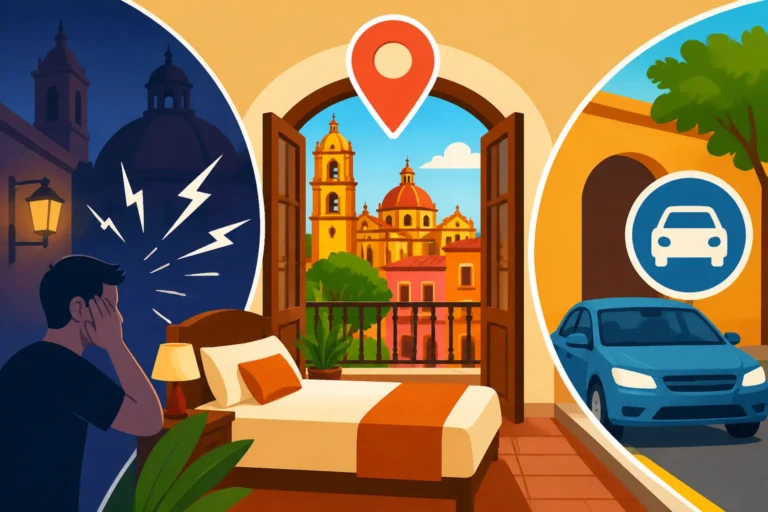
For foreign residents unused to these sudden, loud booms, cohetes can initially be startling, especially for pet owners. It is common to hear them going off as early as 5:00 AM to announce the morning singing of Las Mañanitas (the traditional Mexican birthday song) to the saint. Accepting cohetes as part of the cultural landscape is a rite of passage for every expat.
Alongside cohetes, evening celebrations often feature castillos (towers) and toritos (little bulls)—intricate bamboo frameworks mounted with colorful, spinning fireworks. A bravery-filled highlight of any local fiesta is when a runner strapped into a spark-emitting pyrotechnic bull dances through the cheering crowd. To read more about adjusting to neighborhood noise and customs, see our guide on Local Fiestas and Patron Saint Festivals in Mexico.
Music, Dance, and Regional Costumes
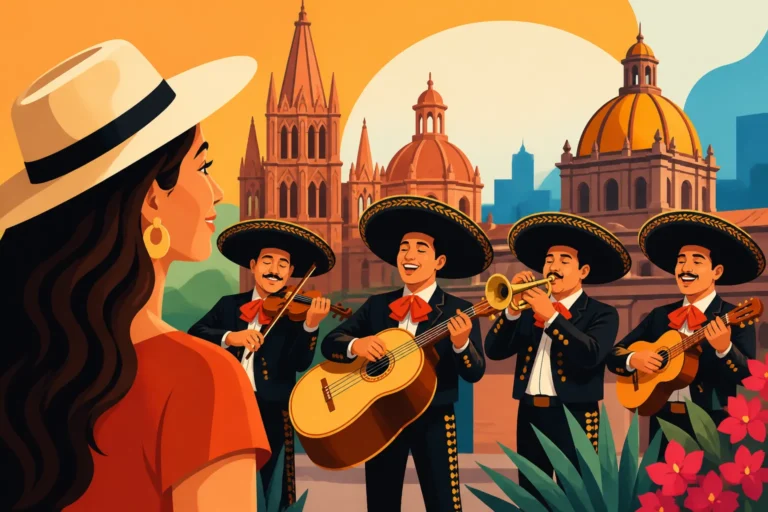
No local fiesta is complete without continuous live music and traditional dance performances. Depending on the region, music may be provided by mariachi groups, banda brass ensembles, marimba bands, or traditional string trios. The music starts early in the morning and routinely continues late into the night, filling the central square with celebratory energy.
Dancers perform traditional folklorico routines, wearing intricate costumes that tell stories of local history, indigenous legends, or colonial resistance. Dancers might wear heavy wooden masks, embroidered velvet skirts, feather headdresses, or rattling seed bells attached to their ankles.
REGIONAL DANCE & MUSIC VARIATIONS AT FIESTAS
| JALISCO & CENTRAL MEXICO | Mariachi music; jarabe tapatío dancing; bright ribbon dresses. |
|---|---|
| OAXACA & SOUTH | Guelaguetza traditions; Danza de los Plumas; marimba rhythms. |
| SINALOA & NORTHWEST | Banda brass ensembles; fast-paced zapateado street dancing. |
| VERACRUZ & GULF COAST | Son jarocho harp music; dancers in pristine white lace attire. |
| MICHOACÁN & HIGHLANDS | Danza de los Viejitos (Dance of the Old Men); wooden mask dancing. |
Observing these performances gives you a direct link to the cultural soul of the region you inhabit. The precision of the footwork (zapateado) and the deep pride displayed by dancers of all ages showcase how vital these creative expressions remain in everyday Mexican life.
Practical Tips for Experiencing Mexican Festivals as an Expat or Visitor
Participating in Mexican festivals offers extraordinary insights into local culture, but navigating them comfortably requires realistic preparation and cultural sensitivity. Crowds, altered schedules, and intense sensory input are all part of the experience.
With a few practical adjustments, you can navigate these vibrant events smoothly, ensuring your memories are filled with joy rather than logistical frustration.
Managing Logistics, Transport, and Accommodation
The primary rule when traveling during major Mexican festivals is to book accommodation and transportation far in advance. During high-demand events like Day of the Dead in Oaxaca or Carnival in Mazatlán, hotels sell out months before the festival begins. Utilizing lodging reservation portals like Booking.com early allows you to secure centrally located accommodations, enabling you to walk to major events and avoid congested road traffic.
Local transportation within fiesta zones often requires flexibility. Street closures mean taxis and ride-share services will be unable to access central plazas or hotel fronts. Be prepared to walk long distances over uneven cobblestones, and always carry a physical map or offline navigation app on your phone, as mobile cellular networks can become overloaded in dense festival crowds.
When moving between cities on holiday weekends, avoid driving on toll roads during peak exit and entry hours (typically Friday afternoon and Sunday evening). Expect longer queues at highway toll booths (casetas) and build generous buffers into your itinerary to accommodate unexpected delays.
Cultural Etiquette and Respectful Participation
While Mexican festivals are famously welcoming and inclusive, visitors should always remember that many celebrations carry deep spiritual significance for local families. In solemn settings—such as cemetery vigils on Día de Muertos or Holy Week religious processions—maintain a respectful presence. Keep your voice low, avoid blocking procession paths, and always ask for explicit permission before taking close-up photographs of individuals, altars, or grave sites.
When attending open-air neighborhood street parties or patron saint fiestas, adopting an open, polite attitude goes a long way. Simple gestures like greeting people with a warm “Buenas tardes” or “Con permiso” as you navigate crowds demonstrate basic respect. To dive deeper into local social norms, consult our resource on Mexican Social Etiquette for Visitors: Greetings and Warmth.
Participating in shared customs, such as buying a paper bag of churros from a street vendor, placing a small donation in a church offering box, or clapping warmly for local dance performers, shows community support. Embracing the collective spirit of the fiesta is the fastest way to feel like a welcomed guest rather than an outside observer.
Safety, Crowds, and Cash Preparedness
Festival environments require practical situational awareness. Large public gatherings anywhere in the world can attract opportunistic pickpockets. Keep your valuables secured in zippered front pockets or an under-clothing neck pouch, leave unnecessary credit cards or expensive jewelry at home, and keep a firm grip on your mobile phone when taking photos in densely packed crowds.
Cash remains king at Mexican festivals. Street food vendors, artisan market stalls, and local fair games rarely accept credit cards. Pull pesos from a bank-attached ATM a day or two before the festival starts, as ATMs located near major festival plazas frequently run out of cash during high-traffic holiday weekends. Be sure to request or break your money into smaller bill denominations ($20, $50, and $100 peso notes), as small vendors often struggle to make change for large $500 peso bills.
Lastly, take care of your personal physical well-being. Stay hydrated by drinking bottled or purified water, wear comfortable walking shoes, carry sun protection during daytime parades, and bring earplugs if you are sensitive to the loud pyrotechnics common at neighborhood street parties.
Essential Overview of Mexico’s Major Annual Festivals
To help you plan your year, the following reference table outlines the primary national and regional festivals celebrated across Mexico, detailing when they occur, where to experience them, and what operational impact to expect.
| Festival / Holiday | Date / Season | Primary Locations | Expected Infrastructure Impact | Key Cultural Highlights |
|---|---|---|---|---|
| Día de los Reyes Magos | January 6 | Nationwide | Minor; bakery queues for Rosca de Reyes | Gift-giving for kids, cutting the Rosca bread |
| Carnaval | Feb / March (Pre-Lent) | Mazatlán, Veracruz, Tepoztlán | Heavy street closures in coastal ports | Costumed parades, live music, street dancing |
| Equinoccio de Primavera | March 20–22 | Chichén Itzá, Teotihuacán | High traffic near archaeological parks | Dressed in white, absorbing sun energy at ruins |
| Semana Santa & Pascua | March / April (Variable) | Nationwide (Taxco, Coastal resorts) | Major closures; peak travel delays nationwide | Solemn processions, passion plays, beach travel |
| Batalla de Puebla | May 5 | Puebla (Minimal elsewhere) | Localized closures in Puebla state | Military parades, battle re-enactments |
| Guelaguetza | Last two Mondays of July | Oaxaca City | High tourist density; booked hotels | Indigenous regional dance & textile displays |
| Fiestas Patrias (El Grito) | Sept 15–16 | Nationwide (All town zócalos) | Total civic shutdown on Sept 16; night crowds | Balcony cry, fireworks, Chiles en Nogada feast |
| Día de Muertos | Oct 31 – Nov 2 | Oaxaca, Michoacán, Mexico City | Sold-out hotels; cemetery foot traffic | Graveyard vigils, altar building, marigolds |
| Día de la Revolución | 3rd Monday of November | Nationwide | Statutory bank holiday; parade closures | Civic parades, equestrian shows, retail sales |
| Día de la Virgen de Guadalupe | December 12 | Mexico City (Basilica), Nationwide | Massive pedestrian pilgrim processions | Church vigils, Aztec dancers, midnight singing |
| Las Posadas & Nochebuena | December 16–25 | Nationwide (Domestic homes) | Reduced retail hours on Dec 24/25 | Neighborhood nightly pageants, piñatas, feast |
Navigating Fiestas in Major Expat Hubs vs Rural Pueblos
How you experience a festival depends greatly on whether you are located in a major expat destination or a traditional rural village. In established expat hubs like San Miguel de Allende, Puerto Vallarta, or Ajijic at Lake Chapala, celebrations are often organized with international visitors in mind. You will find bilingual event schedules, organized spectator seating, and tourist-friendly assistance, making navigation straightforward for newcomers.
In smaller, rural pueblos, celebrations are profoundly communal and uncommercialized. There are rarely printed schedules or English information booths; timing is fluid, and events unfold according to local consensus. While this requires more patience and flexibility, it rewards you with an incredibly raw, deeply moving window into local heritage away from tourist crowds.
Both settings offer tremendous value. Starting your festival explorations in larger, well-structured environments can help build your confidence before venturing into smaller rural town celebrations where you rely entirely on personal observation and conversational Spanish.
How to Stay Informed About Local Event Schedules
Because regional and patron saint festival dates can shift slightly based on church calendars or local council decisions, staying informed requires proactive effort. Local municipal websites (Ayuntamientos) and municipal culture departments routinely post event schedules (carteleras culturales) on their official social media channels a few weeks prior to major festivals.
Neighborhood posters taped to church doors, local bakery windows, or municipal kiosks are classic sources of information in smaller towns. Simply striking up a friendly conversation with local shopkeepers, market vendors, or taxi drivers by asking “When does the neighborhood fiesta start?” will yield accurate, real-time advice on street closures, parade times, and fireworks displays.
Building a flexible mindset is ultimate secret to enjoying festival life in Mexico. When you give up the need for rigid schedules and embrace the spontaneous beauty of street music, vibrant colors, and warm community hospitality, living alongside Mexico’s timeless traditions becomes the most rewarding aspect of your foreign journey.
Disclaimer
This article is for general informational purposes only and does not constitute professional advice. Laws, prices and regulations vary by location and change over time. Consult a qualified professional for guidance on your specific situation.