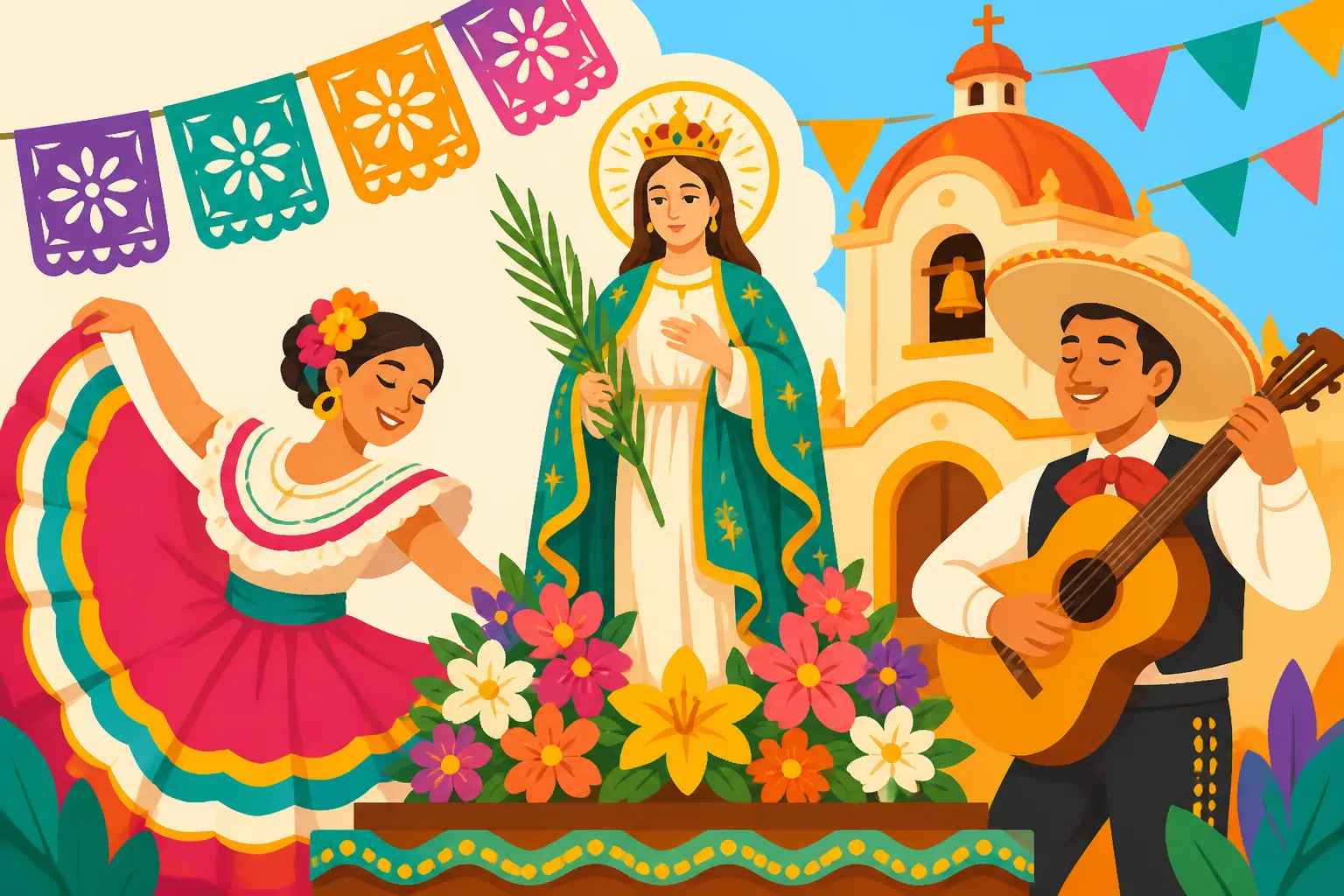
Local Fiestas and Patron Saint Festivals in Mexico
You arrive in a small Mexican town and find the streets blocked by a brass band, the church wrapped in paper flags and a bamboo tower being loaded with fireworks in the plaza. Nobody at your hotel mentioned it. Patron saint fiestas are among the most memorable experiences in Mexico, yet they rarely appear in guidebooks. This guide explains what they are, where to find them and how to enjoy them respectfully.
Disclosure: This post may contain affiliate links. We may earn a commission at no extra cost to you if you make a purchase through these links. Read full disclosure.
What a Patron Saint Fiesta Is
Every town, village and urban neighbourhood (barrio) in Mexico has a patron saint or a particular image of the Virgin Mary or Christ, and once a year the community celebrates that patron with a fiesta. Some last a single day; others stretch over a week or more. The first time I stumbled into one, in a village outside Puebla, I thought I had arrived on a national holiday. In fact, the next village over was going about its normal business. That is the charm: fiestas are deeply local.
Origins in Two Traditions
The patron saint fiesta is a product of Mexican history. When Spanish missionaries founded towns in the colonial period, they gave each one a patron saint, and the saint’s feast day became the most important date in the community calendar. Many towns still carry the saint in their name, such as San Miguel de Allende, Santiago Tuxtla or San Cristóbal de las Casas.
But the fiestas also absorbed much older indigenous traditions. Dances, music, offerings, communal meals and the timing of agricultural cycles were blended into the Catholic celebrations. The result is something neither purely Spanish nor purely indigenous: a uniquely Mexican mix of solemn processions and loud, joyful street parties.
Who Organises the Fiesta
A fiesta does not organise itself. In many communities, especially in indigenous regions such as Oaxaca, Chiapas and the highlands of central Mexico, the organisation follows a traditional system of community responsibility. Individuals or families accept the role of mayordomo (steward) for a year, taking on the costs and work of the celebration: paying for the band, the fireworks, the flowers and the food that is shared with the community. It is an enormous financial and social commitment, and carrying it out well brings great prestige.
In larger towns and cities, the parish, neighbourhood committees and the town hall often share the organisation, and local businesses sponsor parts of the programme. Either way, the fiesta belongs to the community, and visitors are guests.
Why Every Town Has Its Own
Because each community has its own patron, there are thousands of fiestas across Mexico every year. Some saints are widely venerated, so their feast days are celebrated in many places at once. Others are linked to one specific image in one specific church. Neighbourhoods inside a city often have their own patrons, so in a city like Oaxaca or Puebla, there may be a fiesta somewhere almost every week. This is why paying attention to posters, church notice boards and conversations with locals can lead you to celebrations that no tour company advertises.
What Happens at a Typical Fiesta
No two fiestas are identical, but most combine a religious programme with a popular celebration in the streets.
The Religious Side
The fiesta usually begins days before the feast day itself with a novena, nine days of prayers in the church. On the morning of the feast day, many communities sing “Las Mañanitas”, the traditional birthday song, to the patron at dawn, often accompanied by a band or mariachis. There will be special masses, sometimes celebrated by a bishop, and the church is decorated with flowers, candles and papel picado, the cut paper flags that stretch across the streets.
The high point for many believers is the procession, when the image of the saint is carried through the streets on a platform, accompanied by music, prayers and people carrying candles or flowers. Pilgrims may arrive from other towns, sometimes on foot or by bicycle, to fulfil a promise (manda) made to the saint.
The Street Celebration
Around the church, the town turns into a fairground. You can expect:
- Brass bands (bandas de viento) playing for hours, sometimes several competing in different corners of the plaza
- Traditional dances, such as the Danza de los Concheros, dances of the Moors and Christians, or the chinelos of Morelos with their elaborate costumes and hopping steps
- Fireworks, including the castillo, a tall tower of bamboo and fireworks lit at night section by section, and toritos, bull-shaped frames covered in fireworks that are carried through the crowd
- Fair rides and games set up by travelling fairground operators
- Food stalls selling regional dishes, sweets, elotes, tamales, buñuelos and drinks
- Rodeo events (jaripeo) and horse parades in rural areas
- Dances (bailes) in the evening with live bands playing cumbia, banda or regional music
A Typical Fiesta Day
While every community has its own programme, a main fiesta day often runs like this:
- Before dawn, fireworks and church bells announce the feast day.
- At dawn, the community sings Las Mañanitas to the patron in the church or atrium.
- During the morning, masses are celebrated and pilgrims arrive.
- Around midday, families share meals, sometimes a community meal offered by the mayordomos.
- In the afternoon, the procession carries the image of the saint through the streets, with dancers and bands.
- In the early evening, dance groups perform in the atrium or the plaza.
- At night, the castillo is lit, followed by the toritos.
- Late into the night, the baile continues with live music.
Notable Patron Saint Festivals Across Mexico
The following table lists some of the best-known patron saint and religious fiestas in Mexico. Feast days are fixed in the Church calendar, but the main events of a fiesta are often held on the nearest weekend, and programmes change from year to year, so always check the local programme before you travel.
| Festival | Place | Patron or occasion | Time of year | Highlights |
|---|---|---|---|---|
| Fiesta Grande de Enero | Chiapa de Corzo, Chiapas | San Sebastián and other saints | January | The Parachicos dancers in carved wooden masks, recognised by UNESCO as intangible cultural heritage |
| Fiesta de la Candelaria | Tlacotalpan, Veracruz | Virgen de la Candelaria | Early February | Procession of the Virgin on the river, son jarocho music and fandango |
| Feast of the Holy Cross | Many towns, especially among construction workers | Santa Cruz | Early May | Decorated crosses on building sites, fireworks and meals |
| Fiesta de San Isidro Labrador | Rural communities across Mexico | San Isidro, patron of farmers | May | Blessing of animals and farm equipment, parades of decorated oxen and tractors |
| Fiesta de San Juan Bautista | Many towns named San Juan | San Juan Bautista | Late June | Processions, bathing traditions and fairs |
| Guelaguetza | Oaxaca City and surrounding communities | Linked to the Virgen del Carmen and older harvest traditions | July | Dances from all regions of Oaxaca, parades and regional food |
| Fiesta de Santiago Apóstol | Many towns named Santiago | Santiago Apóstol | Late July | Dances of the Moors and Christians and horseback events |
| Fiesta de la Asunción | Many towns across Mexico | Virgen de la Asunción | August | Processions and fairs; in Huamantla, Tlaxcala, the festivities for the Virgen de la Caridad around the same time bring carpets of coloured sawdust and flowers and an all-night procession |
| Fiestas de San Miguel Arcángel | San Miguel de Allende, Guanajuato | San Miguel Arcángel | Late September | Processions, dancers from across the region and huge fireworks |
| La Llevada de la Virgen de Zapopan | Guadalajara and Zapopan, Jalisco | Virgen de Zapopan | October | A massive pilgrimage carrying the Virgin from Guadalajara Cathedral to the Basilica of Zapopan |
| Fiesta de la Virgen de Juquila | Santa Catarina Juquila, Oaxaca | Virgen de Juquila | December | Pilgrims from across Oaxaca and beyond |
| Día de la Virgen de Guadalupe | Mexico City and the whole country | Virgen de Guadalupe | December | Millions of pilgrims at the Basilica in Mexico City; celebrations in every parish |
| Fiesta de la Virgen de la Soledad | Oaxaca City | Virgen de la Soledad, patron of Oaxaca | December | Processions, regional dances and fireworks around the basilica |
Fiestas in Central Mexico
Central Mexico, including the states of Mexico, Puebla, Tlaxcala, Morelos, Hidalgo and Querétaro, has an extraordinary density of fiestas. In Morelos, the chinelos dance at almost every celebration. Puebla’s villages are known for elaborate castillos and decorated church facades. The celebrations for the Virgin of Guadalupe at the Basilica in Mexico City are an experience on a different scale entirely, with pilgrims arriving for days before and after the feast.
Fiestas in Oaxaca and Chiapas
Oaxaca and Chiapas are where indigenous traditions are most visible. In Oaxaca, the Guelaguetza is technically not a single patron saint fiesta, but it grew from older community celebrations and is now the region’s biggest festival; see Guelaguetza, Cervantino, and Regional Festivals: Where to Base Yourself for planning tips. The neighbourhoods of Oaxaca City and the villages of the central valleys each have their own fiestas, often with calendas, nighttime parades with giant puppets, bands and lanterns. Oaxaca City Guide: Markets, Mezcal, and Art is a good starting point for exploring the region.
In Chiapas, the Fiesta Grande de Enero in Chiapa de Corzo fills the town with Parachicos, and the highland communities around San Cristóbal de las Casas hold celebrations that mix Catholic and Maya traditions. Be especially respectful of photography rules there, as many communities restrict or forbid photos in churches.
Fiestas in Western and Northern Mexico
In Jalisco, La Llevada of the Virgin of Zapopan is one of the largest religious processions in the country, accompanied by dance groups. In Guanajuato, San Miguel de Allende’s fiesta for its patron is famous for its dancers and fireworks. In the north, fiestas often feature rodeo events, norteño music and regional food, and towns named after saints celebrate their patrons with fairs that combine religion, livestock and agriculture.
Fiestas on the Gulf Coast and the Yucatán
On the Gulf Coast, Tlacotalpan’s celebration of the Virgen de la Candelaria combines a river procession with son jarocho music and fandango, the traditional dance and music gathering. In the Yucatán peninsula, many towns celebrate their patrons with vaquerías, festive dances in traditional dress, and with bullfights or rodeos in improvised wooden arenas.
How to Find and Plan for a Local Fiesta
Because fiestas are local, they are easy to miss. Here is how I find them and plan around them.
Finding Fiestas
- Ask locals. Hotel staff, market vendors, taxi drivers and your neighbours know when the next fiesta is. Ask: “¿Cuándo es la fiesta del pueblo?” or “¿Hay alguna fiesta patronal cerca?”
- Look at the church. Parish notice boards and posters on church doors list the programme of the novena and the fiesta.
- Watch for posters. Colourful posters on walls and in shops advertise fiestas, bands and dances in nearby towns.
- Follow the town hall. Many municipalities publish the fiesta programme on their official social media pages.
- Check the saints’ calendar. If a town is named after a saint, its fiesta will usually be around that saint’s feast day.
- Listen for fireworks. In my experience, rockets fired in the early morning almost always mean a fiesta somewhere nearby.
More tips are in How to Find Local Fiestas During Your Trip to Mexico.
Getting There
Many fiestas take place in small towns that are reached by bus. Long-distance buses connect most cities and towns, and regional lines and colectivos cover the rest. Platforms like Busbud let you compare bus routes and buy tickets for many intercity lines in advance, which is useful when demand rises during the biggest fiestas. For local connections, you may need to buy tickets at the terminal. How to Travel Between Cities in Mexico by Bus explains how the system works.
Remember that major fiestas, especially those that coincide with national holidays, can bring heavy traffic and full buses. How to Plan Travel Around Mexican Holidays has practical advice.
Where to Stay
Small towns may have only a few hotels, and they fill up quickly during the fiesta. Book early, ideally as soon as you know the dates. Booking.com lists accommodation in many small towns, but in some villages, the only options are family guesthouses that you book by phone or in person. Alternatively, stay in a nearby city and travel in for the day, keeping in mind that the castillo and the baile happen late at night.
Joining a Tour
For the larger festivals, organised tours can take care of transport and give context. Platforms like Viator offer tours to some of the best-known events, such as cultural visits around the Guelaguetza, and to towns near major cities. A good local guide can explain the history and meaning of what you are seeing, and help you understand the etiquette. For smaller village fiestas, you will usually have to go independently.
Practical Planning Table
| What to plan | Tips |
|---|---|
| Dates | Check the local programme; the main events may be on the nearest weekend rather than the feast day |
| Transport | Buy bus tickets early for big fiestas; plan your return for late-night events |
| Accommodation | Book early in small towns or stay in a nearby city |
| Cash | Bring small bills and coins for food stalls and rides |
| Clothing | Comfortable shoes, layers for cool nights and modest clothing for church |
| Language | A few phrases in Spanish make a big difference; see Survival Spanish for Travelers in Mexico: Key Phrases |
Etiquette and Safety at Fiestas
Fiestas are joyful and open, but they are also religious and community events. A little awareness goes a long way.
Respecting the Community
- Dress modestly in church. Cover your shoulders and avoid beachwear.
- Ask before photographing people, especially in indigenous communities and during religious rituals. Some communities forbid photography in churches entirely.
- Do not interrupt processions. Step aside, and do not walk through the procession to cross the street.
- Accept hospitality graciously. If you are offered food or a drink by the mayordomos or a family, accepting is a sign of respect. If you cannot eat or drink something, decline politely.
- Contribute if you can. In some communities, visitors are welcome to leave a donation in the church or buy food from local stalls, which supports the fiesta.
- Be patient. Programmes rarely run on time. That is part of the experience.
Staying Safe
Fiestas are generally safe and welcoming, but crowds, alcohol and fireworks bring some risks.
- Keep a safe distance from fireworks. The castillo and toritos are spectacular, but sparks fly into the crowd. Watch where locals stand and keep children close.
- Protect your valuables. Carry only what you need, keep your phone and wallet in a front pocket and use small bills. Money for Travel in Mexico: Cash, Cards, and ATMs has more tips.
- Drink in moderation. Alcohol is part of many fiestas, but it can make crowds unpredictable late at night.
- Plan your return. Late-night transport from small towns can be limited, so arrange it before the fiesta.
- Check your insurance. Some travel insurance policies exclude incidents related to crowds, alcohol or fireworks; read Festival and Nightlife Incidents in Mexico: What Insurance Won’t Touch before you go.
Fiestas Compared With National Holidays
Local fiestas are different from national holidays such as Independence Day, Day of the Dead or Holy Week, which are celebrated across the country. National holidays can overlap with local fiestas, and both can fill transport and accommodation. For the major national celebrations, see Día de Muertos in Mexico: A Visitor’s Guide and Semana Santa and Easter in Mexico. For a wider overview of Mexico’s festive calendar, read Festivals, Holidays, and Traditions in Mexico.
Final Thoughts
Patron saint fiestas are the heartbeat of Mexican community life. Each town and neighbourhood honours its patron with a mix of novenas, masses and processions, alongside brass bands, dances, food, fair rides and spectacular fireworks. The table above gives you some of the best-known celebrations, from the Fiesta Grande de Enero in Chiapa de Corzo to the Virgin of Guadalupe in December, but the real magic is often in the small fiesta you discover by chance. Ask locals, check church notice boards, plan your transport and accommodation early, and approach each celebration with respect. You will come away with memories no guidebook can give you.
Disclaimer
This article is for general informational purposes only and does not constitute professional advice. Laws, prices and regulations vary by location and change over time. Consult a qualified professional for guidance on your specific situation.