Emergency Medical Services in Rural Mexico: Challenges and Tips for Expats
If you suffer a massive heart attack, a severe stroke, or a catastrophic car accident on a rural dirt road, you cannot simply dial 911 and expect a fully equipped, English-speaking paramedic team to arrive at your doorstep in eight minutes. The safety net you took for granted in your home country simply does not exist in the Mexican countryside. This comprehensive guide breaks down the harsh, unfiltered realities of emergency medical services (EMS) in rural Mexico. We will explore the critical logistical challenges you will face, the immense distances separating you from life-saving care, the financial threats of medical evacuation, and the exact, non-negotiable steps you must take to protect your life when you are miles away from a major hospital.
Disclosure: This post may contain affiliate links. We may earn a commission at no extra cost to you if you make a purchase through these links. Read full disclosure.
1. The Reality of the Rural EMS Infrastructure
The Mexican emergency response system is highly fragmented and heavily dependent on municipal budgets. While major cities like Mexico City, Guadalajara, and Monterrey boast fleet systems of modern, highly regulated private and public ambulances, rural municipalities operate on entirely different, drastically underfunded paradigms. Understanding who is actually coming to save you is the first step in rural preparedness.
The 911 System and Regional Dispatch
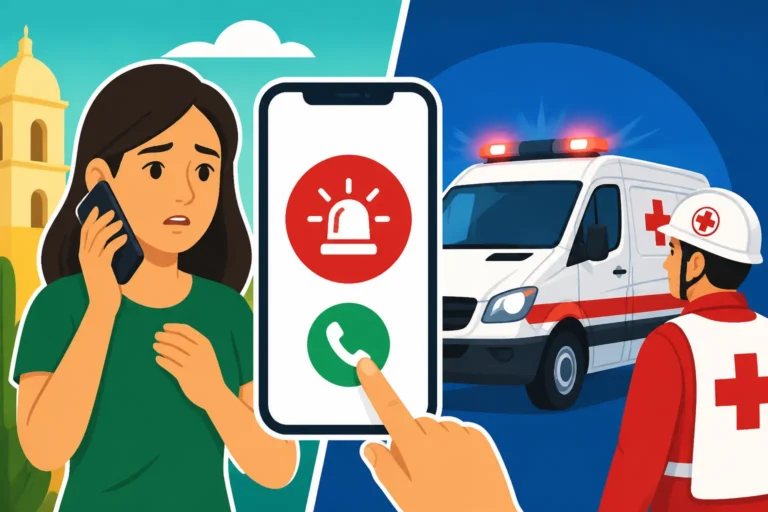
Mexico successfully transitioned to a nationwide 911 emergency number several years ago, consolidating various legacy emergency numbers into a single system. However, dialing 911 in a rural area connects you to a regional dispatch center (often a state-level C4 or C5 command center). These dispatchers almost exclusively speak Spanish.
If you call in a panic, speaking only English, the dispatcher will struggle to understand the nature of your emergency, let alone locate your exact position on an unnamed dirt road. Critical minutes will be lost as they attempt to find a bilingual colleague or simply try to guess your location based on cell tower triangulation, which is notoriously inaccurate in rural topographies.
The Lifeline: Cruz Roja Mexicana and Protección Civil
In the vast majority of rural towns and villages, the primary—and sometimes only—first responders are the Cruz Roja Mexicana (Mexican Red Cross) or local civil protection units (Protección Civil).
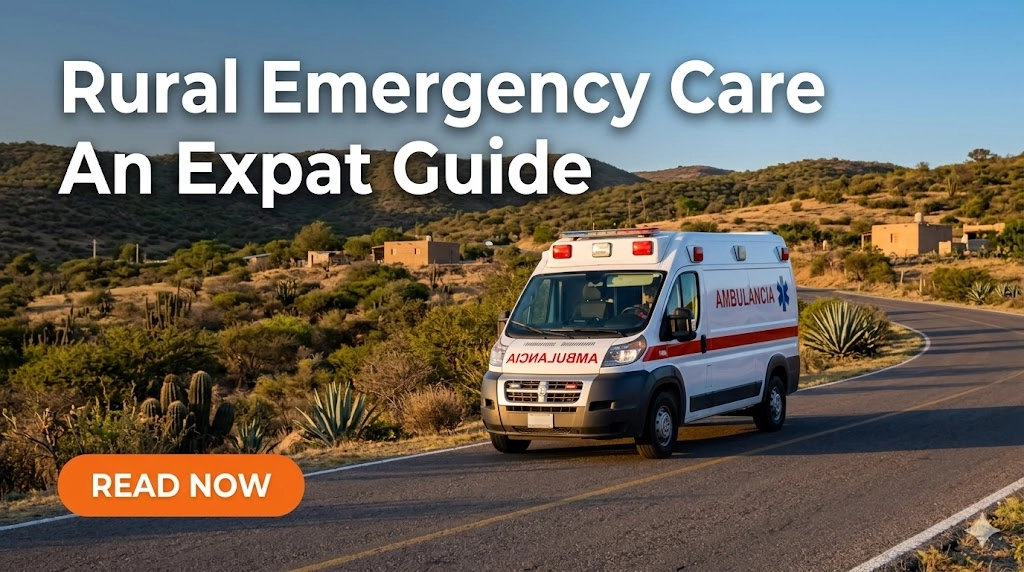
The Mexican Red Cross is an incredible, heroic institution, but it operates largely independently of government funding. It relies heavily on community donations, annual collection drives (colectas), and the dedication of volunteers. Consequently, their rural ambulances are often older models. They are essentially basic transport vans equipped with a stretcher, basic bandages, and oxygen tanks. They are rarely Advanced Life Support (ALS) units equipped with cardiac monitors, defibrillators, or complex trauma gear.
Furthermore, the personnel manning these rural ambulances are often basic EMTs (Técnicos en Urgencias Médicas – Nivel Básico), not highly trained paramedics capable of administering intravenous cardiac drugs or performing emergency surgical airways in the field. Their primary protocol is “scoop and run”—getting you into the vehicle and driving as fast as possible to the nearest medical facility.
To understand the exact mechanics of this dispatch system and the legal boundaries of these responders, you must review Calling an Ambulance in Mexico: How Emergency Services Operate.
2. The Geography of Survival: Time and Distance
In trauma medicine, the concept of the “Golden Hour” is a foundational principle. It represents the critical 60-minute window following a severe injury or the onset of a major medical event (like an ischemic stroke or a myocardial infarction) where rapid, specialized medical intervention drastically increases the survival rate. In rural Mexico, the Golden Hour is almost always consumed entirely by transit time.
The Illusion of Distance
When looking at a map, a Level 3 hospital might only be 60 kilometers away from your remote coastal home. In the United States or Europe, 60 kilometers on a well-maintained, multi-lane highway might take 40 minutes. In rural Mexico, 60 kilometers can easily take two to three hours.
Rural infrastructure introduces massive variables that delay emergency transport. You must account for:
- Unpaved and Mountainous Roads: Heavy rains can wash out dirt roads, create severe mudslides (deslaves), or render paths impassable for anything other than a high-clearance 4×4 vehicle.
- Topes (Speed Bumps): Mexican roadways, even federal highways passing through small towns, are infamous for topes. An ambulance cannot speed smoothly at 100 km/h; it must constantly brake to a near-halt to navigate these aggressive speed bumps, jarring the patient inside and doubling the travel time.
- Livestock and Agricultural Traffic: Rural roads are frequently blocked by slow-moving tractors, wandering cattle, or local festivals.
If you are living an hour and a half outside of a major hub like Puerto Vallarta, Merida, or San Miguel de Allende, an ambulance must first drive an hour and a half to reach you, spend 15 minutes stabilizing you, and then drive an hour and a half back to the hospital. If the single local ambulance is already dispatched to another call on the other side of the municipality, you have absolutely no backup. You are entirely on your own.
3. Rural Clinics vs. Level 3 Trauma Centers
A common misconception among incoming expats is that the small, brightly painted medical clinic in their village will be able to save them in an emergency. You must clearly understand the medical hierarchy in Mexico.
The Capabilities of a Centro de Salud
Rural public clinics, known as Centros de Salud or rural IMSS-Bienestar outposts, are designed to handle primary care and minor, non-life-threatening ailments. They are staffed by dedicated doctors (often young physicians completing their mandatory social service year) and nurses.
A rural clinic is excellent for:
- Stitching up a simple, clean laceration.
- Dispensing basic antibiotics for a sinus infection.
- Treating mild cases of food poisoning or dehydration.
- Providing initial stabilization (basic IV fluids) and assessing your vital signs.
- Administering local antivenom for scorpion stings or snake bites (if they happen to have it in stock, which is never guaranteed).
What Rural Clinics Cannot Do
A rural clinic is absolutely not equipped to handle severe, systemic medical failures. They do not have MRI machines, CT scanners, or sometimes even functional, high-resolution X-ray machines. They do not have emergency cardiologists, neurologists, or orthopedic surgeons on standby. They do not have a fully stocked blood bank to provide emergency transfusions if you are suffering from severe internal bleeding.
If you suffer a massive heart attack, the rural clinic will merely attempt to stabilize your blood pressure, give you aspirin, and put you right back in an ambulance for a grueling, high-speed drive to a Level 3 trauma hospital in the nearest major city. Every minute spent detouring to a poorly equipped rural clinic during a major cardiac event is a minute of heart muscle dying. Knowing when to bypass the local clinic and head straight for the city is a critical survival skill.
4. The Supply Chain Crisis: Building Your Medical Fortress
Living off the grid requires you to adopt a proactive, almost survivalist mindset regarding your physical health and medical supplies. You must become your own first responder.
The Limitations of Rural Pharmacies
Local rural pharmacies (farmacias) are incredibly useful for basic, daily needs. You can easily find paracetamol, basic bandages, and standard blood pressure medications. However, their inventory is tightly limited by local demand and the challenges of the rural supply chain.
In a rural setting, you absolutely cannot rely on the corner pharmacy to stock specialized trauma gear, premium burn gels, advanced hemostatic agents (to stop severe bleeding), or medical-grade electrolytes if you are battling severe, dehydrating dysentery. If you develop a severe gastrointestinal infection that leaves you unable to keep water down, the local pharmacy might only offer sugar-heavy sports drinks, which can actually worsen diarrhea.
Bypassing Local Shortages with iHerb
This is precisely why veteran rural expats build extensive, highly specialized home trauma and wellness kits by ordering through iHerb. Because iHerb ships a massive, globally curated catalog of premium, certified wellness products and first-aid staples directly to residential addresses in Mexico, you can completely bypass the sparse, unreliable local supply chain.
By proactively stocking up on iHerb, you can transform your home into a secure medical outpost. You must prioritize ordering:
- Medical-Grade Activated Charcoal: Essential for managing severe, sudden food poisoning or accidental toxin ingestion when a stomach pump is hours away.
- Advanced Electrolyte Complexes: High-potency, zero-sugar hydration powders to combat severe tropical dehydration or Dengue fever symptoms.
- Premium Wound Care: Specialized Manuka honey ointments, advanced colloidal silver gels, and high-quality waterproof bandaging that local shops simply do not carry.
- Multi-Strain Probiotics: Crucial for rebuilding your gut biome after suffering through severe traveler’s diarrhea or after taking harsh, broad-spectrum antibiotics dispensed by a rural doctor.
- Immune Support: High-absorption liposomal Vitamin C, Zinc, and Vitamin D to keep your baseline immunity incredibly strong, preventing minor infections from escalating into emergencies in the first place.
Having these advanced tools safely stored in your pantry ensures you have the exact clinical resources necessary to manage an escalating situation while you wait hours for transport. For a full, exhaustive checklist of what to keep in your remote home, you must consult Building a First Aid Kit: Essential Medical Supplies for Expats in Mexico.
5. The Financial Threat of Air Evacuation
If a rural emergency is so severe that a ground ambulance cannot transport you safely—such as a major spinal injury from an ATV accident, a severe ischemic stroke, or a traumatic brain injury—you will require an air ambulance (either a helicopter or a fixed-wing medical jet). This is the terrifying reality of off-grid living.
The Cost of Saving Your Own Life
Here is a candid reality check that every expat must accept: The Mexican public health system will not dispatch a free medical helicopter to save a foreign resident. If you require air extraction, you must arrange a private, commercial medical evacuation.
Private air ambulances in Mexico operate strictly as for-profit entities. Depending on the distance, the required flight crew (specialized trauma nurses or respiratory therapists), and the type of aircraft, a private medical evacuation routinely costs between $15,000 and $40,000 USD out-of-pocket.
More terrifyingly, these aviation companies will not spin their rotors or file a flight plan until that money is paid upfront, usually via a massive wire transfer or a maxed-out credit card hold. If you cannot produce the funds immediately, you will remain trapped in the rural clinic, regardless of your physical deterioration.
The Ultimate Safety Net: Cigna Global
This is precisely where carrying a premium international health insurance policy from Cigna Global becomes the absolute most vital piece of your rural survival plan. Trying to self-insure the risk of an air evacuation while living rurally is an exercise in extreme financial roulette.
A robust Cigna Global policy explicitly includes comprehensive medical evacuation and repatriation benefits. If you are trapped in a remote village with a life-threatening condition, Cigna Global transforms from a financial tool into a logistical rescue operation.
You or your emergency contact simply call their 24/7 multilingual emergency response hotline. The Cigna Global medical dispatch team takes over immediately. They will consult with the local doctors, determine that air transport is medically necessary, coordinate the complex aviation logistics, dispatch the helicopter, and—most importantly—cover the exorbitant upfront costs. They will fly you directly to an elite, JCI-accredited hospital in Mexico City, Guadalajara, or Monterrey, and issue a Guarantee of Payment to that receiving hospital so you bypass the massive admissions deposit.
If you are currently living in a rural area without this level of catastrophic coverage, you are dangerously exposed. To deeply understand how these catastrophic policies work and why local insurance plans often fail in these exact scenarios, you must read Choosing Private Health Insurance: Local Mexican Plans vs International Coverage.
6. Comparing Urban vs. Rural EMS Readiness
To truly contextualize the risk you are undertaking by moving away from the city centers, you must look at the hard data regarding emergency readiness. Here is a stark breakdown of what to expect based on your geographic location:
| Operational Feature | Urban Hubs (CDMX, Guadalajara, Monterrey) | Rural Towns / Off-Grid Coastal Areas |
| Average Response Time | 10 – 25 minutes | 45 minutes to 2+ hours (if available at all) |
| Ambulance Type | Advanced Life Support (ALS) private units readily available | Basic Life Support (BLS) transport vans; often Red Cross volunteers |
| Paramedic Expertise | Highly trained paramedics capable of advanced cardiac life support | Basic EMTs trained primarily in trauma stabilization and transport |
| Language Accessibility | Moderate chance of English-speaking paramedics or dispatchers | Spanish only; absolute necessity to translate yourself |
| Hospital Destination | Immediate access to JCI-accredited Level 3 private hospitals | Local stabilization clinic, followed by a long, painful city transfer |
| Financial Deposit | Required upon hospital arrival, but easily managed via direct-billing networks | Upfront cash required locally; massive hurdles for arranging private transport |
7. The Rural Expat Emergency Master Plan
You cannot control the local municipal budget, you cannot pave the dirt roads, and you cannot force the local clinic to buy an MRI machine. However, you have absolute control over your own logistical preparedness. If you choose to live rurally, you must treat emergency planning like a second job. Here are the non-negotiable steps you must take to secure your life.
Step 1: Map Your Own Extraction Route
Do not blindly assume that an ambulance driver can find your remote dirt road, especially in the dark. You must physically drive the route from your home to the nearest major, fully equipped hospital. Time the drive during the day, and time it at night.
Know exactly where the massive potholes are, where the road floods during the rainy season, and where the aggressive speed bumps (topes) are located. In many critical scenarios—such as a severe allergic reaction or heavy bleeding—waiting two hours for an ambulance is a fatal mistake. Having a neighbor drive you in the back of a comfortable, high-clearance SUV at high speeds is often vastly faster and safer than waiting for the system to rescue you.
Step 2: Build a Community Evacuation Network
Rural survival requires a village. You must form tight alliances with your immediate neighbors, both expats and locals.
- Identify who possesses a reliable 4×4 vehicle that can act as a makeshift ambulance.
- Identify who is fully bilingual and willing to act as your translator during a crisis.
- If you live in a gated rural community, ensure multiple people know how to manually open the security gates if the power grid fails during a storm, allowing an ambulance to enter.
- Exchange spare keys and emergency contact information with at least two trusted households.
Step 3: Pre-Program Private Dispatch Numbers
If you live within an hour of a mid-sized town, physically go into that town and research private ambulance companies. Walk into their offices, ask about their response radius, and save their direct, 24-hour dispatch numbers into your phone. Save them as “Ambulance 1,” “Ambulance 2,” etc. Do not rely solely on the regional 911 dispatch center to coordinate your rescue. When a crisis hits, you must be able to bypass the middleman and call private transport directly.
Step 4: Draft a Bilingual Emergency Medical Dossier
Since rural paramedics and local clinic doctors will almost certainly not speak English, your medical history must speak for you. You must create a comprehensive, physical dossier translated into formal clinical Spanish.
This document must include:
- Your full legal name, date of birth, and blood type.
- A list of all chronic medical conditions (e.g., Hypertension, Type 2 Diabetes, Atrial Fibrillation).
- A list of all severe allergies, particularly to common medications like Penicillin or specific anesthetics.
- A detailed inventory of your daily maintenance medications, utilizing the exact pharmacological active ingredients, not just foreign brand names.
- Your international insurance policy numbers and the direct emergency hotline for Cigna Global.
Laminate this document. Keep one copy secured to your refrigerator, one in the glove compartment of your vehicle, and one in your daily bag.
Step 5: Prepare for the Immediate Financial Reality
Even after surviving the brutal rural transit and arriving at a private city hospital, the financial gauntlet begins. If your Cigna Global policy is still processing the Guarantee of Payment, the admissions desk may demand an immediate deposit to secure your trauma room. You must have premium emergency credit cards with high limits immediately accessible, and you must notify your home-country bank that large medical charges in Mexico should never be blocked for fraud protection. For a stark, detailed look at these aggressive billing practices and how to circumvent them, review Medical Emergencies in Mexico: What Expats Should Know and Prepare.
Step 6: Maintain Communication Redundancies
Cellular service in rural Mexico is notoriously unreliable, frequently dropping out during severe storms or power grid failures. If you cannot make a phone call, you cannot summon an ambulance. You must invest in communication redundancies. Ensure you have high-speed satellite internet (such as Starlink) connected to a battery backup system (UPS) so you can make Wi-Fi calls or use WhatsApp even when the local cellular towers fail. In extremely remote locations, keeping a registered satellite phone or a GPS emergency beacon is a wise investment for absolute worst-case scenarios.
Living in rural Mexico offers unparalleled peace, profound cultural immersion, and a deep connection to nature. However, that beauty comes with the inherent risk of geographical isolation. By acknowledging the severe limitations of the local EMS infrastructure, aggressively stocking your home with specialized iHerb supplies, and shielding your finances with Cigna Global, you can transform yourself from a vulnerable foreigner into a prepared, resilient resident.
References
Primary sources (official)
- Cruz Roja Mexicana: The official national portal of the primary first-responder and volunteer medical organization operating in rural and semi-urban Mexico. https://www.cruzrojamexicana.org.mx/
Other helpful sources
- Sistema de Atención Médica de Urgencias (SAMU): The federal government’s official guidelines and structural oversight regarding emergency medical care, triage protocols, and regional hospital transfer mandates. https://www.gob.mx/salud
Disclaimer
The information provided in this extensive guide is for educational, logistical, and informational purposes only and does not constitute formal medical, legal, or financial advice. Rural emergency response times, the availability of advanced life support, cellular network reliability, and private air evacuation costs vary drastically by specific region, municipal budget, and seasonal weather conditions across Mexico. Always consult with local civil authorities regarding the specific emergency dispatch protocols in your municipality, and rigorously verify your medical evacuation limits and direct-billing networks directly with your health insurance provider prior to a crisis.