Wheelchair-Accessible Hotels in Mexico: The Filters That Matter
Navigating Mexico with mobility challenges can feel like an Olympic sport sometimes, especially when you're trying to figure out if that charming hotel really is as "accessible" as it claims online. It's a common frustration for expats and tourists alike, but don't despair! This guide is here to cut through the confusion and show you exactly how to use tools like Booking.com to confidently find genuinely wheelchair-accessible hotels across this beautiful country.
Disclosure: This post may contain affiliate links. We may earn a commission at no extra cost to you if you make a purchase through these links. Read full disclosure.
The Realities of Accessibility in Mexico and Why It's Tricky
Let's be real for a moment. Mexico is an incredible place, vibrant and full of life, but it wasn't exactly designed with universal accessibility in mind from the get-go. While progress is being made, especially in larger cities and newer developments, the everyday reality can be a bit of a mixed bag.
The Good, the Bad, and the Bumpy: Understanding Mexico's Infrastructure
Imagine a beautiful colonial town: cobblestone streets, narrow sidewalks, and historic buildings with grand, often stepped, entrances. Charming, right? But for someone using a wheelchair, it's a minefield. You'll encounter missing curb cuts, sudden drops, and uneven paving that can make even a short roll feel like an endurance test. And don't even get me started on the public transportation in many areas – while some cities have modern, accessible metro lines or bus rapid transit, many local buses are a definite no-go.
It's a frustrating reality that many of us expats, and certainly visitors, face. You might find yourself having to rely heavily on ride-sharing services or accessible taxis (which can be hard to find outside major hubs) just to get around. This means that when you're choosing accommodation, the hotel itself becomes even more crucial as a comfortable, safe, and truly accessible base. Finding the right place means less stress and more enjoyment of your time here. This is precisely why having a robust platform like Booking.com to filter your choices is so invaluable.
Beyond Just a Ramp: What "Accessible" Truly Means for Hotels
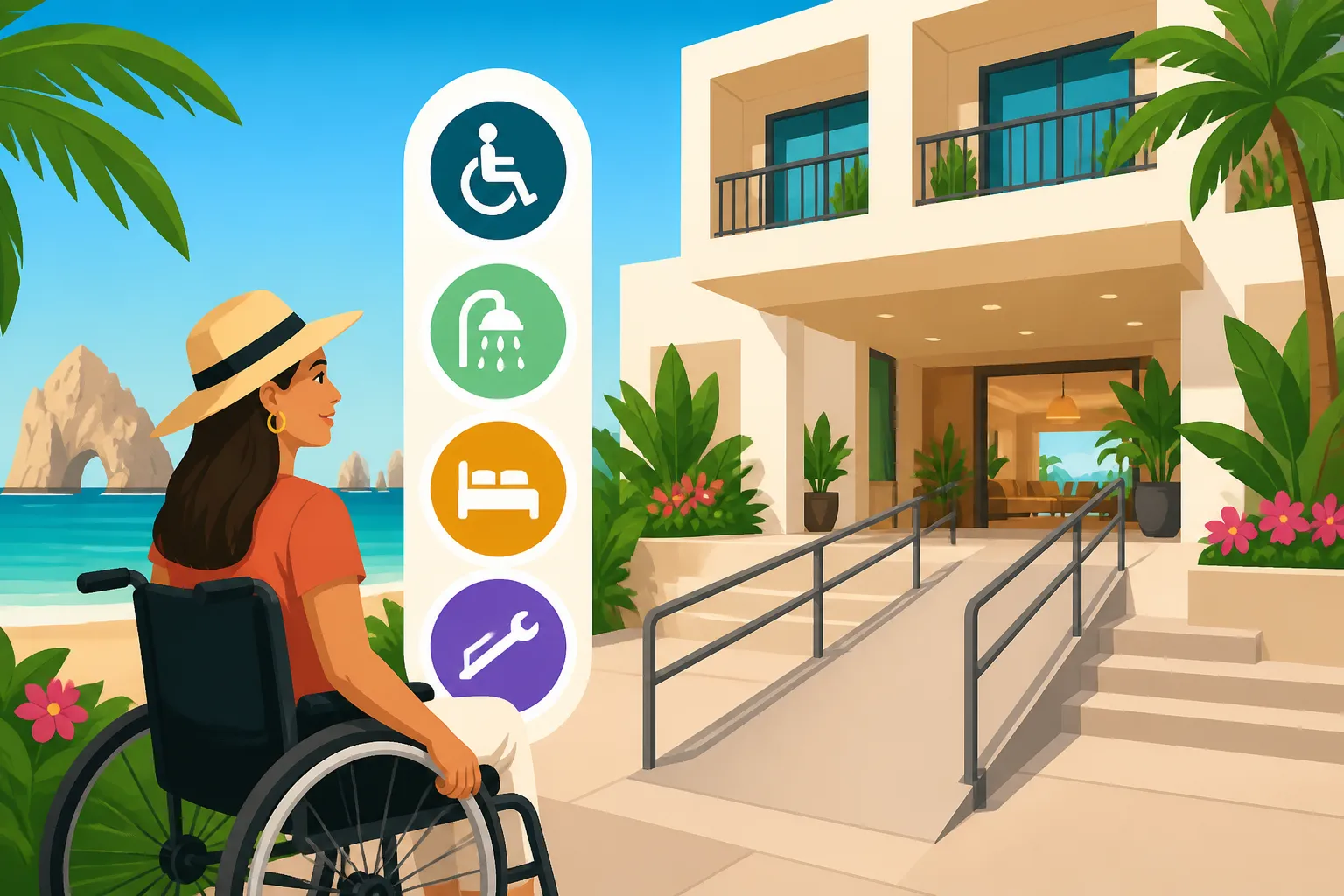
The term "accessible" is thrown around a lot, and often, what a hotel considers accessible might just be a single ramp at the entrance. But for those of us who truly need it, accessibility goes far, far deeper than that. We're talking about a whole suite of features that ensure comfort, safety, and independence.
For a hotel to be truly wheelchair-accessible, it's not just about getting into the building. It means:
- Accessible Routes: Smooth, wide pathways from the entrance to the lobby, elevators, common areas, and, of course, your room. Are there heavy doors that are difficult to open? Are the hallways cluttered?
- Room Features: This is critical. We're looking for wide doorways (ideally 32 inches or more), enough maneuvering space around the bed, and light switches and thermostats that are reachable from a seated position.
- Bathroom Accessibility: This is often the biggest hurdle. A roll-in shower with a bench or transfer seat is essential, along with grab bars around the toilet and shower, and a sink that allows for knee clearance underneath. Often, hotels will say they have an "accessible bathroom" but it's just a regular tub with grab bars – which isn't sufficient for many wheelchair users.
- Common Areas: Can you get into the breakfast area, the restaurant, the pool area, the gym, or the business center independently? Does the pool have a lift? Are there accessible restrooms in public areas?
- Emergency Preparedness: Does the staff know what to do in an emergency for guests with mobility issues? Are there visual alarms for hearing-impaired guests?
These are the details that truly make a difference, and simply trusting a generic "accessible" checkbox isn't enough. You need specific filters, and that's where a platform designed for detailed searching, like Booking.com, really shines.
Why Booking.com is Your Best Ally for Accessible Stays in Mexico
When you're trying to find a hotel that actually meets your specific accessibility needs in Mexico, you need more than just a vague "yes" on a website. You need granular filters and reliable information, and that's precisely why Booking.com has become an indispensable tool for many of us. It cuts through a lot of the initial guesswork and allows you to narrow down your options significantly before you even make that crucial phone call.
Navigating the Filters: Your Step-by-Step Guide to Finding the Right Fit
The magic of Booking.com lies in its extensive filtering options. Instead of just a single "accessible" box, they provide a range of specific criteria that are incredibly helpful. Let me walk you through how to use them effectively.
First, head over to Booking.com and enter your destination and dates. Once you get to the search results page, look for the "Filters" section on the left-hand side. Scroll down until you see "Accessibility." This is where you'll find the goldmine of options.
You'll typically see a main checkbox for "Wheelchair accessible." Definitely check that one. But don't stop there! This is where you need to get specific. Depending on the property and its listing, you might find even more detailed sub-filters, such as:
- Roll-in shower: This is non-negotiable for many and a huge indicator of a truly accessible bathroom.
- Toilet with grab rails: Essential for transfer safety.
- Lowered sink: Makes a world of difference for personal hygiene and comfort.
- Shower chair: Another critical piece of equipment for many.
- Entire unit wheelchair accessible: This suggests the room itself, not just the entrance, has been designed for mobility.
My advice? Select as many relevant specific filters as you can. For example, if a roll-in shower is an absolute must, check that box explicitly. If it only offers "wheelchair accessible" without further detail, be wary. The more detailed filters a property has checked, the more likely it is that they genuinely understand and cater to accessibility needs. By leveraging these precise filters on Booking.com, you significantly reduce the number of unsuitable properties you have to sift through. This saves you a ton of time and emotional energy.
Double-Checking is Key: Beyond the Digital Filter
Even with Booking.com's excellent filters, Mexico is a place where you always need to double-check. The digital world is one thing, but on-the-ground reality can sometimes differ, especially when it comes to older buildings or smaller establishments. The filters are your first, best line of defense, but they aren't the final word.
Once you've identified a few promising hotels using the detailed filters on Booking.com, the next crucial step is to pick up the phone. Yes, I know, calling internationally or in another language can be daunting, but it's absolutely vital. Don't rely solely on the written description, even if it looks perfect on Booking.com.
When you call, be prepared with a list of very specific questions. This isn't just about a ramp; it's about the nitty-gritty details that affect your daily comfort and safety. Here are some examples:
- "What is the actual width of the bathroom door in the accessible room?" (Sometimes "wide enough" isn't wide enough for your chair.)
- "Does the shower have a lip or is it truly a roll-in with no threshold?"
- "Is there a shower bench or seat, either built-in or portable?"
- "Are there grab bars around the toilet and in the shower? Are they securely fixed?"
- "Is there space on both sides of the toilet for transfer, or just one?"
- "How accessible are the common areas like the restaurant, pool, and lobby? Are there elevators? What are their dimensions?"
- "Does the pool have a lift, or is it zero-entry?"
- "Is there an accessible route from the accessible parking (if applicable) to the room?"
These detailed questions, asked after you’ve already narrowed your choices significantly using Booking.com, help bridge the gap between a general "accessible" claim and your specific requirements. It's a two-step process: filter smart on Booking.com, then confirm thoroughly via direct communication.
Key Accessibility Features to Look For Beyond Just the Room
Remember, a hotel stay isn't just about the bedroom. It's about your entire experience within the property. A truly accessible hotel allows you to enjoy all its amenities with dignity and ease. When you're making those confirmation calls after finding potentials on Booking.com, these are the points you really want to press on.
Common Areas and Amenities: Your Freedom to Roam
Imagine booking an "accessible room" only to find out you can't actually get to the hotel's fantastic rooftop restaurant or the refreshing pool. That's a nightmare scenario, and unfortunately, it's not uncommon. When inquiring, make sure to ask about:
- Lobby and Reception: Is the check-in desk at an accessible height? Is there space to maneuver around the lobby area?
- Restaurants and Bars: Are the dining areas easily reachable? Are there any steps or tight turns that would impede your path? Are tables spaced adequately apart?
- Elevators: This is huge. Are there elevators? What are their internal dimensions? Is the call button and control panel accessible? It's surprising how many places might have an elevator but it's too small for a power chair.
- Swimming Pools and Fitness Centers: For pools, a lift or a zero-entry ramp is essential. Don't just assume "pool access" means your access. For gyms, are any machines accessible for seated use, or is there clear space for floor exercises?
- Business Centers/Meeting Rooms: If you need to work or attend events, check if these facilities are accessible.
- Public Restrooms: Are there accessible restrooms in the common areas, not just in your room? This is a sign the hotel truly considers universal access.
These seemingly small details are what transform a merely "room-accessible" stay into a genuinely freeing and enjoyable experience. Being able to independently move throughout the hotel and utilize its offerings is paramount. For more on navigating healthcare, which might influence your choice of city, you can read our guide on Healthcare in Mexico: Complete Guide for Expats (Public vs Private).
Staff Training and Emergency Preparedness
This often overlooked aspect is incredibly important. Even the most perfectly designed accessible hotel can fall short if the staff aren't trained to understand and assist guests with disabilities. During your pre-booking call (after finding the hotel on Booking.com!), consider asking:
- Staff Awareness: "Do your staff receive training on assisting guests with disabilities?" A positive answer here indicates a more inclusive mindset. You want staff who understand the nuances of mobility challenges, not just those who awkwardly stare or offer unhelpful assistance.
- Emergency Procedures: "What is your emergency evacuation plan for guests in accessible rooms?" This is critical. Knowing that there's a clear, practiced plan for safely evacuating someone with mobility limitations in case of fire or other emergencies provides immense peace of mind. Are there visual fire alarms?
- Communication: Are there staff members who speak English well enough to understand specific needs, or is there a system in place to ensure clear communication? Overcoming Language Barriers at the Doctor: Tips for Expats is a good read if you're concerned about language, and the same principles apply here.
A hotel with well-trained, empathetic staff can make up for minor architectural shortcomings, while a hotel with perfect ramps but clueless staff can still be a frustrating experience. This human element is a huge part of genuine accessibility.
Popular Mexican Destinations and Their Accessibility Nuances
Mexico is a vast country with incredibly diverse landscapes and cityscapes. What's accessible in one region might be a total nightmare in another. Knowing these regional nuances will help you set realistic expectations and, ultimately, make better choices when searching on Booking.com.
Major Cities and Tourist Hubs: Where You'll Find More Options
Generally speaking, you'll find more consistently accessible hotel options in larger cities and popular tourist destinations. This is often due to newer construction, international hotel chains, and a greater awareness of tourism standards.
- Mexico City: As a mega-city, Mexico City has a growing number of modern hotels, many of which cater to international travelers and therefore incorporate better accessibility features. The newer parts of the city, like Polanco or parts of Roma Norte, tend to have smoother sidewalks and more accessible establishments. The Metro system has some accessible lines, but it's not universal. You'll likely find the widest selection of truly accessible hotels here, especially if you stick to bigger brands like Marriott, Hilton, or InterContinental, all of which often feature prominently on Booking.com. For more on the city, check out our guide on Healthcare in Mexico City: Top Hospitals and Clinics for Expats.
- Cancún and the Riviera Maya (Playa del Carmen, Tulum): These resort towns are built around tourism, so many of the larger all-inclusive resorts and newer hotels are quite good with accessibility. They often feature ramps to pools, accessible rooms with roll-in showers, and wide pathways. However, once you venture outside the resort bubble, you'll still encounter uneven sidewalks, sandy paths, and less accessible local businesses. For detailed local insights, our guide to Healthcare in Cancún and Riviera Maya: Hospitals and Clinics for Expats can offer peace of mind.
- Guadalajara & Monterrey: These are significant economic hubs with modern infrastructure in many areas. You'll find good quality private hospitals and a selection of international hotel chains that generally adhere to higher accessibility standards. The historic centers, like in Mexico City, will still present challenges with older architecture and cobblestones.
When searching Booking.com for these areas, you'll likely see more properties with those detailed accessibility filters checked. Remember, the newer the hotel, the higher the chance of it being genuinely accessible.
Quaint Colonial Towns and Smaller Pueblos: Expect Charming Challenges
While incredibly beautiful and rich in culture, Mexico's charming colonial towns and smaller Pueblos Mágicos (Magic Towns) are where accessibility often takes a backseat. This isn't out of malice, but simply due to their historical nature and the realities of preserving old-world charm.
- San Miguel de Allende, Oaxaca, Mérida: These cities are absolutely stunning, with vibrant colors, intricate architecture, and a slower pace of life. However, they are also characterized by narrow, often cobblestone streets, uneven sidewalks, and hotels converted from historic mansions. While some may have a ground-floor room or a single ramp, comprehensive accessibility can be rare. Maneuvering a wheelchair through these towns can be exhausting, if not impossible, in many areas.
- Smaller Pueblos: Even more so, tiny towns off the main tourist circuit will have very limited to no dedicated accessibility features. Hotels are typically small, family-run operations in older buildings.
If your heart is set on visiting these places, and you've filtered your options on Booking.com, prepare for a higher degree of pre-arrival vetting. Call ahead, ask very detailed questions about steps, doorway widths, and bathroom setups. Be realistic about what you can expect. You might find a gem, but it will require extra effort. In such places, having reliable transportation, perhaps a pre-arranged accessible taxi service, will be just as important as your hotel. Knowing about Calling an Ambulance in Mexico: How Emergency Services Operate is also a good precaution no matter where you travel.
Booking Your Accessible Stay with Confidence
The ultimate goal is to book your trip to Mexico with confidence, knowing that your accommodation won't be a source of stress but rather a comfortable haven. With the right strategy, combining powerful tools like Booking.com with your own diligent research, this is absolutely achievable.
Leveraging Guest Reviews and Photos
Once you've used Booking.com's filters to find potential accessible hotels, don't stop there. The next step is to become a detective: scrutinize the guest reviews and photos.
- Read the Reviews: Look for keywords in the reviews such as "accessible," "wheelchair," "disability," "roll-in shower," or even "stairs" or "ramps." Sometimes, other guests with similar needs will explicitly mention their experience, good or bad, regarding accessibility. Pay close attention to dates to ensure the reviews are recent, as hotels can undergo renovations or changes. Booking.com often highlights keywords, making it easier to spot relevant comments.
- Examine the Photos: Don't just glance. Zoom in on bathroom photos. Can you see a roll-in shower, or is it a tub with a step-over? Are there grab bars? Is there enough space around the toilet? Look at pictures of common areas: the lobby, pool, and restaurant. Do you see stairs where you'd expect a ramp? Do the elevators look modern and spacious? Sometimes, a quick visual scan can tell you more than a written description. If a hotel on Booking.com only has generic photos or none of the accessible room/bathroom, it's a red flag that warrants a direct call.
- Virtual Tours: Some hotels now offer virtual 360-degree tours. If available, these can be incredibly helpful for assessing the layout and maneuverability within rooms and common spaces.
This investigative step, coupled with Booking.com's filters, empowers you to cross-reference information and get a more complete picture before committing.
The Power of Direct Communication After Your Booking.com Find
I can't stress this enough: always confirm directly with the hotel. Even after finding a seemingly perfect option on Booking.com and poring over reviews, a direct call or email is your final and most important safeguard.
After you've made your reservation through Booking.com (because it's usually the easiest way to secure the room type you want and often offers free cancellation), immediately reach out to the hotel.
- Confirm Your Accessible Room: State clearly that you've booked an accessible room and reiterate your specific needs (e.g., "I need a room with a roll-in shower, grab bars, and space for my power wheelchair").
- Ask Follow-Up Questions: This is your chance to clarify any remaining doubts. "Can you guarantee this exact room type will be available?" "Will someone be able to assist with luggage upon arrival if needed?" "Is your staff prepared to handle specific needs?"
- Get it in Writing: If possible, ask for an email confirmation from the hotel specifically detailing their understanding of your accessibility needs and confirming the features of your room. This provides you with an extra layer of assurance.
This direct communication helps manage expectations on both sides and ensures there are no surprises upon arrival. It's an extra step, yes, but it’s a necessary one when ensuring genuine accessibility in Mexico. Your peace of mind is worth the effort, and Booking.com facilitates finding those initial promising leads. For general preparation, you might also find value in Building a First Aid Kit: Essential Medical Supplies for Expats in Mexico.
Accessible Hotel Features Checklist
Here’s a handy checklist to help you articulate your needs when researching properties and making those crucial confirmation calls, especially after filtering through Booking.com:
| Feature Category | Specific Accessible Features to Look/Ask For | Why It Matters |
|---|---|---|
| Room Entry | Wide doorway (32+ inches), smooth threshold, easy-to-reach key card reader. | Easy, independent access to your personal space. |
| Bedroom Space | Maneuvering space (36+ inches clear width) around bed, roll-under desk/table, reachable controls (lights, AC). | Comfort, independence, and safety within the room. |
| Bathroom Entry | Wide doorway (32+ inches), easy-open door (no heavy closing mechanisms). | Crucial for transferring into and out of the bathroom. |
| Shower | Roll-in shower (no lip/curb), grab bars (vertical & horizontal), shower bench/seat (fixed or portable), hand-held shower nozzle. | Safe and independent bathing. |
| Toilet | Grab bars (sides/rear), space for side/front transfer, accessible height. | Safe and independent use of facilities. |
| Sink | Knee clearance underneath, accessible faucet, mirror at usable height. | Personal hygiene and comfort. |
| Common Areas | Accessible pathways to lobby, restaurants, pool, gym, elevators (wide, accessible controls). | Ability to enjoy all hotel amenities without barriers. |
| Pool Access | Pool lift or zero-entry ramp. | Enables use of recreational facilities. |
| Transportation | Accessible parking, availability of accessible taxi services, proximity to accessible public transport. | Mobility beyond the hotel property. |
| Staff Training | Staff trained in assisting guests with disabilities, clear emergency evacuation plans. | Responsive and respectful assistance, critical safety. |
Disclaimer
The information provided in this guide is for general informational purposes only and does not constitute professional advice. While we strive to provide accurate and up-to-date information, accessibility standards and conditions in Mexico can vary and change without notice. Always verify specific accessibility features directly with the hotel or service provider before making bookings or travel arrangements. We are not responsible for any inaccuracies, omissions, or changes in information. Traveling with specific accessibility needs requires diligent personal research and confirmation.