How to Get a Local eSIM for Travel in Mexico
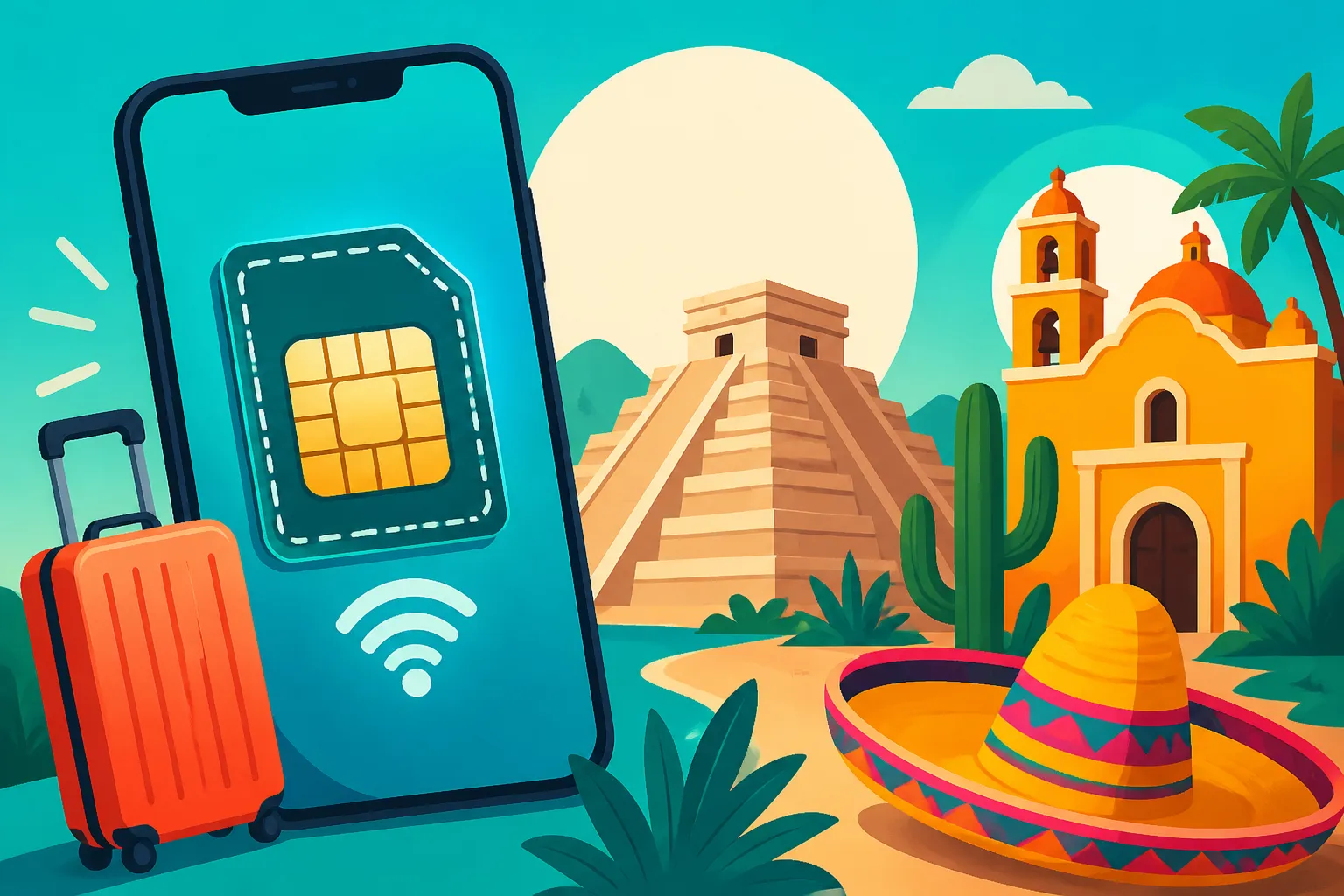
One of the biggest headaches when you first land in Mexico, or even when you're just traveling around, is staying connected. You want to navigate bustling streets, call a taxi, or simply check in with family, but suddenly your home plan is charging you an arm and a leg for roaming, or you're hunting desperately for elusive Wi-Fi. This guide is going to walk you through everything you need to know about getting a local eSIM for travel in Mexico, ensuring you have reliable, affordable internet right from the moment you step off the plane, making your journey smoother and more connected.
Disclosure: This post may contain affiliate links. We may earn a commission at no extra cost to you if you make a purchase through these links. Read full disclosure.
Why Ditch the Traditional SIM and Embrace an eSIM for Mexico?
The quest for connectivity in a new country can often feel like an unnecessary hurdle after a long flight. For years, the standard advice was to grab a local physical SIM card upon arrival. While still an option, the world of digital connectivity has evolved, offering a far more streamlined and less stressful experience for expats and tourists alike. An eSIM cuts through much of the hassle, delivering instant access to the internet, which is invaluable for everything from navigating your arrival to booking your next adventure.
The All-Too-Real Frustrations of Physical SIM Cards
Let's paint a picture that many expats in Mexico know all too well: You've just landed at the Mexico City airport, tired, perhaps a little disoriented, and now you're trying to find a Telcel kiosk. You spot one, stand in line, and when it's finally your turn, you're faced with a salesperson who might not speak much English. You fumble through your passport, they ask for paperwork or a local address you don't have, and then comes the moment you have to swap out your precious home SIM card. Where do you put it? What if you lose it? This isn't just an inconvenience; it's a legitimate stressor that can throw off your whole arrival vibe and eat into valuable time you could be spending exploring.
Many foreigners experience the frustration of trying to find a farmacia or OXXO outside the airport that sells SIMs, only to find they're out, or the activation process is more complex than you anticipated. You might even discover that activating a physical SIM from a major carrier like Telcel, AT&T Mexico, or Movistar requires an official ID or registration process that isn't straightforward for short-term visitors. This often leads to delays, communication breakdowns, and a reliance on potentially insecure public Wi-Fi while you sort things out. For a deeper dive into these traditional options, check out our guide on Getting a SIM Card in Mexico Telcel, AT&T, Movistar.
The Irrefutable Advantages of eSIM for the Savvy Traveler
The beauty of an eSIM is its sheer convenience and seamless integration into your travel plans. Imagine landing in Cancún, pulling out your phone, and boom – you're connected. No fumbling with tiny plastic cards, no hunting for stores, no language struggles with a sales assistant, and no worries about losing your primary SIM. Your home SIM stays securely in your phone, ready for when you return, and your Mexican eSIM is active, providing you with data for maps, messaging, and booking services. It's truly a game-changer for navigating the initial moments in a foreign country.
Moreover, eSIM technology allows you to have multiple eSIM profiles loaded onto one device. This means you could have a Mexico-specific plan for your trip and another for a future destination, offering incredible flexibility for frequent travelers or those planning multi-country adventures. This ability to switch between plans digitally saves both time and stress. And let's be honest, those international roaming charges from your home carrier? They're often astronomical compared to a local eSIM plan, allowing you to save money for more authentic Mexican experiences, not inflated phone bills. For a broader look at staying connected as an expat, our Internet and Mobile Phone Plans in Mexico Staying Connected as an Expat guide provides additional context.
Choosing Your Digital Companion: Top eSIM Providers for Mexico
Once you've decided an eSIM is the way to go, the next step is selecting the right provider and plan for your specific needs. The market has grown significantly, offering various options designed to cater to different types of travelers, from light data users to those who need constant, robust connectivity.
The Contenders: International eSIM Companies to Consider
When it comes to international eSIMs for Mexico, you'll frequently encounter names like Airalo, Holafly, and Nomad. Each offers a slightly different approach and set of features:
- Airalo is often praised for its extensive range of regional and country-specific plans. They are known for being cost-effective and offering various data packages (e.g., 1GB for 7 days, 5GB for 30 days) that make it easy to pick one that fits your trip duration and usage habits. Their plans typically leverage Mexico's major network, Telcel, ensuring good coverage.
- Holafly has gained popularity for offering "unlimited" data plans in many destinations, including Mexico. This can be a huge relief if you don't want to constantly monitor your data usage, making it ideal for heavy users, remote workers, or those who rely heavily on video calls and streaming. However, it's worth noting that "unlimited" plans sometimes come with a fair usage policy that may reduce speeds after a certain high data threshold.
- Nomad strikes a good balance, often providing competitive pricing and flexible plan options, similar to Airalo, and also typically utilizing the strong networks of Telcel or AT&T in Mexico. They often offer various data tiers and validity periods.
It's crucial to understand that most international eSIM providers primarily offer data-only plans. This means you'll rely on internet-based apps like WhatsApp (ubiquitous in Mexico), Google Voice, or FaceTime for calls and messages back home or within Mexico. For many expats and tourists, this isn't an issue, as these apps effectively replace traditional call and text functions. If you absolutely need a local Mexican phone number for traditional calls or SMS, a physical SIM from a local carrier might still be your go-to, but for pure data convenience, these international eSIMs are hard to beat.
Decoding Data Plans: Matching Your Needs to the Right Package
Before you make a purchase, take a moment to genuinely assess your data needs. This self-assessment is key to avoiding overspending or, worse, running out of data when you need it most.
- Trip Duration and Usage Habits: Are you in Mexico for a short week-long vacation where you'll mostly rely on hotel Wi-Fi and just need maps and messaging on the go? A smaller plan (e.g., 1-3GB) might suffice. Are you on a longer trip, working remotely, uploading lots of photos, or frequently making video calls? You'll need significantly more data, perhaps a 10GB+ plan or one of the unlimited options if available and truly suitable for your usage.
- Data-Only vs. Calls/SMS: As mentioned, most international eSIMs are data-only. Confirm this if local call/SMS capabilities are vital for you. If you really need a local number, research if any eSIM providers offer it, or consider a hybrid approach with a data eSIM and a basic local physical SIM for calls.
- Geographic Coverage: While most major international eSIMs will connect to one of Mexico's robust local carriers, usually Telcel (which boasts the most extensive network coverage across the country, including many rural areas), it’s always wise to double-check. AT&T Mexico and Movistar also provide strong coverage, especially in urban centers. If your trip involves off-the-beaten-path destinations, choosing an eSIM provider that partners with Telcel is generally a safer bet for consistent signal.
- Pricing and Validity Periods: Compare the cost per gigabyte and the plan's validity period. Some plans are for 7 days, others for 15, 30, or even 90 days. Ensure the validity covers your entire trip duration to avoid unexpected expiry. Don't pay for data you won't use, but definitely don't get caught short while trying to navigate or communicate important travel plans.
Seamless Activation: Your Step-by-Step Guide to Getting Online
One of the most appealing aspects of an eSIM is how easy it is to activate, often allowing you to be connected before you even leave the airport. But a little preparation goes a long way to ensure a smooth experience.
Getting Ready: Pre-Departure Checklist for Your eSIM
First things first, and this is non-negotiable: Is your phone eSIM compatible and unlocked? Most newer smartphone models (iPhone XS and later, many recent Android flagships) support eSIM technology. If you bought your phone through a specific carrier in your home country, it might be "locked" to that carrier, preventing you from using other SIMs or eSIMs. Contact your home carrier to ensure it's unlocked before you travel. Trust me, finding this out when you're already in Mexico and needing connectivity is a nightmare scenario you want to avoid at all costs.
Once you've confirmed compatibility, it's time to research and purchase your eSIM plan from your chosen provider online. This is best done a few days before your departure. You'll typically receive a QR code or manual activation details via email immediately after purchase. It's also a good idea to download the eSIM provider's dedicated app to your phone; these apps are invaluable for straightforward installation, monitoring your data usage, and topping up your plan if needed. Being prepared like this is a key component of effective Travel Logistics in Mexico Safety, Money, and Connectivity.
Activating Your eSIM Upon Touching Down in Mexico
This is where the true beauty of eSIM technology shines. As soon as you land at any Mexican airport – whether it's Cancún, Mexico City, or Guadalajara – connect to the airport Wi-Fi (most Mexican airports offer free basic Wi-Fi for a limited time). Open your phone's settings, navigate to the "Cellular" or "Mobile Data" section, and look for the option to "Add eSIM" or "Add Data Plan." You'll then typically scan the QR code that your eSIM carrier provided you. Follow the on-screen prompts to install and properly label your new Mexican data plan (e.g., "Mexico Travel" or "Work Mexico").
Crucially, once the eSIM profile is installed, you must enable "Data Roaming" for this specific eSIM profile. Yes, I know, "roaming" usually means extra charges, but for an eSIM from an international provider, it's how it connects to the local Mexican networks (like Telcel). Set your new eSIM as your primary data line, and you should be good to go! You can keep your home line active for calls (if you have an existing plan) but make sure to set it to not use cellular data to avoid any accidental, exorbitant roaming charges.
Having immediate, reliable connectivity means you can seamlessly use essential apps right from the moment you step off the plane. For instance, you can effortlessly open your mapping app to navigate or use apps for Using Uber and Ride-Hailing Apps A Guide for Expats in Mexico to get a safe ride to your accommodation. You can also quickly confirm or adjust your Booking.com hotel reservations without the stress of hunting for a Wi-Fi hotspot, making your arrival considerably smoother. This level of immediate digital access is particularly helpful when you're looking up details like How to Get From Cancún Airport to Playa del Carmen or Tulum.
Staying Connected: Monitoring Data and Topping Up on the Fly
Once your eSIM is active, the journey to staying connected is fairly simple. Most eSIM apps feature intuitive dashboards where you can easily see your remaining data, check the plan's validity, and purchase additional top-ups if your data starts running low. Get into the habit of checking this regularly, especially if you're a heavy data user. Running out of data when you're trying to navigate to a new restaurant or check bus schedules on Busbud in an unfamiliar city is, to put it mildly, no fun at all.
Topping up is typically a breeze: you just select a new plan within the app and complete the payment using a credit card. There's no need to venture out to a physical store or deal with language barriers, which significantly minimizes administrative tasks and allows you to focus more on enjoying your trip. This seamless process is a huge advantage over traditional SIM cards, where finding a top-up location might be more challenging.
Getting the Most Out of Your eSIM: Tips and Troubleshooting
Even with the best preparation, technology can sometimes throw a curveball. Knowing how to troubleshoot common issues and maximizing your eSIM's potential will ensure a truly connected and stress-free experience in Mexico.
Common Hiccups and How to Smooth Them Out
If your eSIM isn't working immediately after activation, don't despair; many common issues have quick fixes. First, double-check your phone's cellular settings:
- Is the eSIM profile actually enabled? Sometimes it gets accidentally toggled off.
- Is "Data Roaming" turned on for the eSIM profile? This is a frequent oversight for international eSIMs.
- Is the correct APN (Access Point Name) set? Your eSIM provider usually includes this in their instructions; occasionally, it needs manual entry.
- Have you restarted your phone? A simple reboot often resolves minor connectivity issues by resetting the network connection.
If you're still stuck, don't hesitate to contact your eSIM provider's customer support. Many offer 24/7 chat support directly through their apps or websites, which can be a lifesaver when you're in a pinch. This is where having a secondary Wi-Fi connection (like hotel Wi-Fi) or a tiny bit of emergency data on another line can be helpful for reaching support. While reliable public Wi-Fi can be tempting, be mindful of the security risks; using your private eSIM data helps in Avoiding Common Scams in Mexico that often target users on unsecured networks.
Unlocking Mexico's Potential with Constant Connectivity
Having reliable data truly transforms your travel experience in Mexico, moving it from potentially stressful to wonderfully seamless. No more worrying about getting lost in a labyrinthine market, not being able to communicate with locals, or missing out on spontaneous opportunities because you can't get online. Your eSIM lets you use translation apps on the go, which is an incredible aid for navigating conversations and making efforts to learn some How to Learn Enough Spanish for a Two-Week Trip to Mexico even easier and more practical.
Imagine being able to quickly look up a restaurant's reviews, book a last-minute tour on Viator, or simply confirm the opening hours for a local museum or attraction. Being able to access maps, check public transport routes, or even hail a ride-share service without a moment's hesitation significantly enhances your freedom and confidence to explore. This constant connection means you can easily research and experience more of what Mexico has to offer.
Beyond convenience, reliable data serves as a crucial safety net. In an emergency, having immediate access to maps, local emergency numbers, or the ability to call or message family and friends back home is paramount. While we all hope you never need it, knowing you can easily access information about What to Do in a Medical Emergency in Mexico or find a nearby Pharmacies in Mexico How to Get Medications OTC vs Prescription can bring immense peace of mind. Your eSIM isn't just data; it's your lifeline and your essential guide to exploring Mexico confidently and safely.
eSIM Provider Comparison for Mexico
To help you make an informed decision, here's a quick comparison of some popular international eSIM providers and their offerings for Mexico:
| eSIM Provider | Data Plans (Examples) | Validity (Examples) | Local Calls/SMS | Primary Network (Mexico) | Key Pros | Key Cons |
|---|---|---|---|---|---|---|
| Airalo | 1GB, 3GB, 5GB, 10GB | 7, 15, 30 days | Data Only | Telcel | Cost-effective, wide range of plans, good coverage | No local phone number |
| Holafly | Unlimited data | 5, 7, 10, 15, 20, 30+ days | Data Only | Telcel | Unlimited data for worry-free usage, dedicated customer support | Can be pricier, potential speed throttling on "unlimited" plans after high usage |
| Nomad | 1GB, 3GB, 5GB, 10GB, 20GB | 7, 15, 30 days | Data Only | Telcel, AT&T | Competitive pricing, diverse plan options, reliable network | No local phone number |
| Local eSIM (e.g., Telcel) | Various data plans (often larger) | 30 days+ | Yes | Telcel | Includes local phone number, potentially cheaper per GB for long-term | More complex initial setup for tourists, may require local ID/address |
Note: Plans and pricing are examples and subject to change. Always check the provider's website for the most current information.
Disclaimer
The information provided in this article is intended for general guidance and informational purposes only. While we strive to provide accurate and up-to-date information, regulations, policies, and service offerings can change frequently. Readers should always verify information with official sources, immigration authorities, and service providers. We do not provide legal, financial, or immigration advice, and this article should not be considered a substitute for professional consultation.