When Is Día de Muertos and How Is It Celebrated?
One of the most common mistakes visitors make is assuming Día de Muertos is just a Mexican version of Halloween, leading them to miss the profound spiritual depth and cultural significance of the holiday. This guide resolves that confusion by detailing exactly when the festivities occur, the deep-rooted meanings behind the rituals, and how you can participate respectfully as a guest in this sacred tradition.
Disclosure: This post may contain affiliate links. We may earn a commission at no extra cost to you if you make a purchase through these links. Read full disclosure.
The Exact Timing of the Celebration
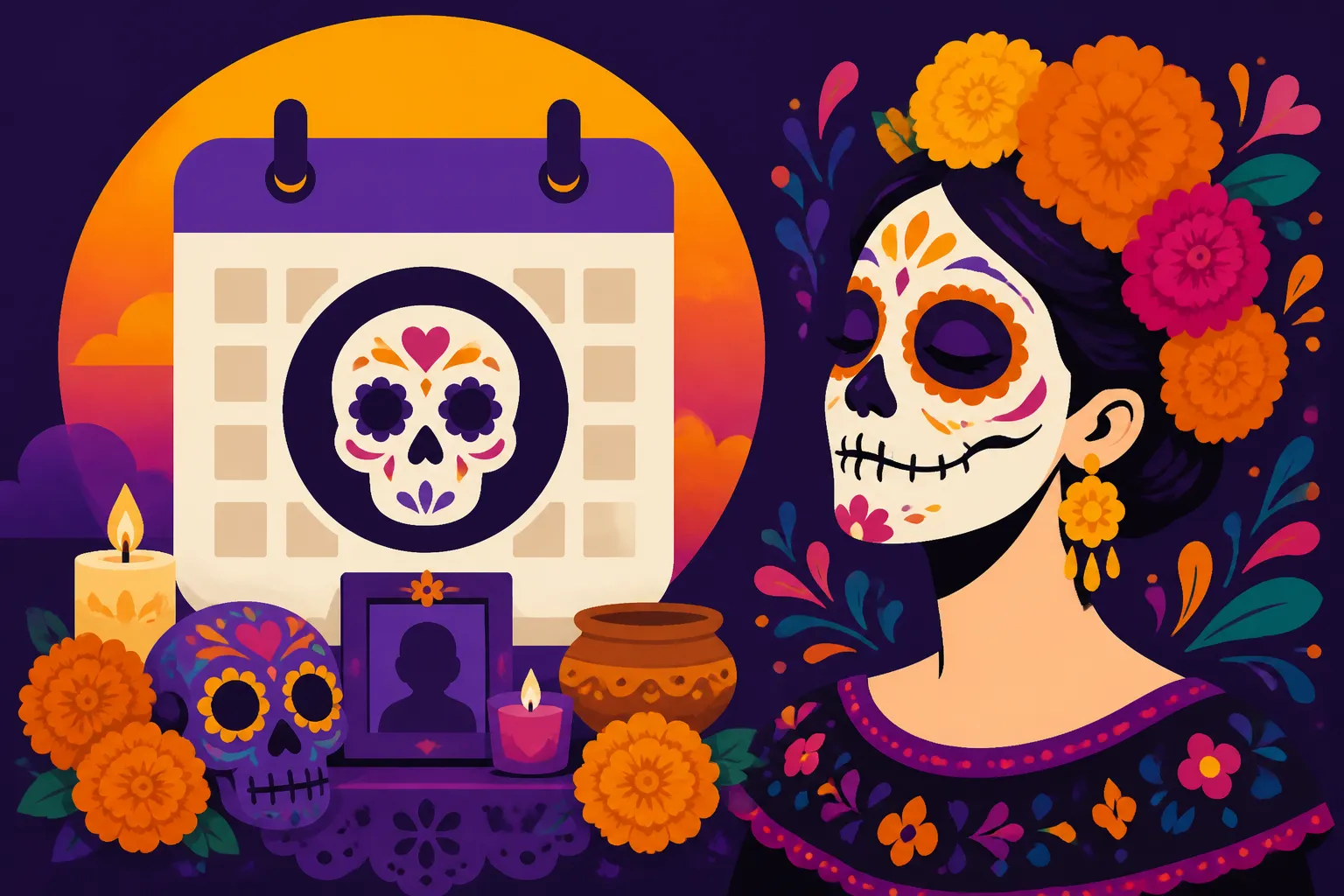
If you are planning to visit Mexico to witness this tradition, you need to understand that Día de Muertos is not a single twenty-four-hour event. It is a multi-day spiritual journey that requires specific timing. While the main dates on the calendar are November 1st and November 2nd, the preparations often begin as early as October 28th. Many families believe that souls return in a specific order, and the atmosphere in towns and cities begins to shift days before the official holiday.
When I first moved here, I was surprised to see ofrendas being built in homes and public squares as early as the last week of October. By October 31st, the energy is palpable. This is the night when many believe the gates between worlds open. However, the distinct separation of the days is what truly defines the holiday’s structure. To get the most out of your experience, check Where to Experience Day of the Dead in Mexico to see how different regions time their specific local events.
November 1st: Día de los Inocentes
November 1st is officially known in the Catholic calendar as All Saints’ Day, but in Mexico, it is affectionately called Día de los Inocentes (Day of the Innocents) or Día de los Angelitos (Day of the Little Angels). This day is dedicated specifically to the souls of children who have passed away. Families believe these spirits are the first to arrive because they are smaller and faster than the adults.
During this day, ofrendas are often decorated with white flowers, toys, and sweets rather than the spicy foods or mezcal seen later. It is a poignant, tender day. If you are walking through a local cemetery on the morning of November 1st, you will see families sitting by small graves, perhaps sharing a quiet meal or playing music that the child loved. It is a beautiful, if heart-wrenching, sight that highlights the Mexican perspective on death: it is not an end, but a continuation of a relationship.
November 2nd: Día de los Muertos
November 2nd is the main event, known as All Souls’ Day or the actual Día de los Muertos. This is when the souls of adults return to the earthly plane to visit their loved ones. The celebration shifts from the delicate nature of the previous day to a more robust, festive atmosphere. The air becomes thick with the scent of copal incense and the orange glow of thousands of marigolds.
This is the day when the large-scale celebrations occur. In many communities, families spend the entire night of November 1st going into November 2nd in the cemeteries. They bring the favorite foods of the deceased, including mole, tamales, and tequila. For travelers, this is the peak time to witness the vibrant cultural displays. Because this is the busiest time of the year for tourism, I highly recommend using Booking.com to secure your accommodations at least six months in advance, especially in high-demand areas like Oaxaca or Michoacán.
The Core Elements of the Ofrenda
The centerpiece of any Day of the Dead celebration is the ofrenda, or altar. These are not objects of worship, but rather invitations for the dead to return home. If you are living as an expat, you might find yourself invited to help build one, or you may even choose to create your own to honor your ancestors. Understanding the symbolism is vital to appreciating the effort that goes into these displays.
An ofrenda is a sensory roadmap for the soul. Each item serves a specific purpose, meant to guide the spirit back using sight, sound, smell, and taste. To learn more about how these traditions fit into the broader social fabric, you might want to read about Mexican Customs, Etiquette, and Social Life. The altars are typically built in levels, representing the different stages of the journey between the afterlife and the world of the living.
| Item | Symbolic Meaning | Elements Represented |
|---|---|---|
| Cempasúchil (Marigolds) | The scent and color guide souls to the altar | Earth |
| Papel Picado | The holes allow souls to travel through; represents the wind | Wind |
| Candles (Veladoras) | Light to guide the way; faith and hope | Fire |
| Water | To quench the soul's thirst after the long journey | Water |
| Pan de Muerto | Nourishment for the returning spirit | Earth |
| Copal Incense | Clears the air of evil spirits; carries prayers to heaven | Wind/Spirit |
| Salt | Purifies the soul and prevents the body from breaking down | Earth |
The Power of Cempasúchil
The bright orange Mexican marigold, known as Cempasúchil, is the "flower of the dead." Its name comes from the Nahuatl word cempohualxochitl, meaning "twenty flowers." Beyond just being a decoration, the petals are often scattered in a path from the street to the altar. The belief is that the vibrant color and the pungent, earthy scent act as a beacon for the spirits.
During late October, you will see truckloads of these flowers flooding the markets. If you are in a city like Mexico City, the Paseo de la Reforma becomes a golden river of marigolds. It is one of the most visually stunning times to be in the country. If you're interested in the logistics of visiting these floral displays, Getting Around Mexico: Buses, Flights, and Car Hire can help you plan your route through the most decorated neighborhoods.
Pan de Muerto and Traditional Flavors
You cannot celebrate Día de Muertos without tasting Pan de Muerto. This sweet, seasonal bread is usually dusted with sugar and flavored with orange blossom or anise. The shape is highly symbolic: the round circle represents the cycle of life and death, the knob on top represents the skull, and the crossed "bones" represent the four cardinal directions (and the four Aztec gods).
Every bakery (panadería) in the country will have its own version. Some are filled with cream, others are topped with sesame seeds. Eating this bread with a cup of thick Mexican hot chocolate is a ritual in itself. For those living here, it is the ultimate comfort food during the "cool" autumn evenings. If you want to dive deeper into the culinary side of the holiday, check out our guide on Mexican Food Culture: Eating and Drinking as a Visitor.
How the Holiday is Celebrated Regionally
While the core concept of honoring the dead remains the same, the actual "how" varies wildly depending on where you are in Mexico. For a veteran expat, watching these regional differences is one of the most rewarding parts of living here. Mexico is not a monolith, and the way a family in the jungle of Chiapas celebrates will look very different from a family in the high desert of the north.
Many people flock to the big, famous celebrations, but some of the most moving experiences are found in smaller "Pueblos Mágicos." If you are planning to hop between regions to see multiple styles of celebration, I suggest using Busbud to book your long-distance bus tickets, as they allow you to compare luxury lines like ADO or ETN which are much more comfortable for long hauls.
The Grand Parade of Mexico City
Interestingly, the massive Day of the Dead parade in Mexico City is a relatively new tradition, sparked by the James Bond film Spectre. However, the city has fully embraced it. It is a spectacle of giant marionettes, thousands of dancers in Catrina makeup, and massive floats. It is loud, crowded, and incredibly fun.
Beyond the parade, the city offers the "Mega Ofrenda" at the Zócalo and the boat tours in Xochimilco. Seeing the canals lit up with candles while listening to the legend of La Llorona is a quintessential Mexico City experience. If you're heading to the capital, make sure to read Mexico City for First-Time Visitors: Neighborhoods and Highlights to stay in the best areas for the festivities.
The Sacred Nights of Oaxaca
Oaxaca is often considered the heart of Día de Muertos. Here, the celebration is deeply rooted in community. You will see "comparsas," which are like street parties or parades led by brass bands and people in elaborate costumes. It is a time of incredible joy mixed with solemnity.
The markets in Oaxaca, like Mercado de Abastos, become a sensory overload of chocolate, incense, and flowers. If you want a more structured experience, you can find excellent guided cemetery tours through Viator, which often include transportation and a local guide who can explain the specific history of the Xoxocotlán cemetery. For those looking to stay longer, Living in Oaxaca City: Culture and Lifestyle Tips for Expats offers a great look at what it’s like after the tourists leave.
Etiquette and Cultural Respect for Visitors
As an expat who has seen many "tourist faux pas" over the years, I cannot stress enough the importance of respect. This is a living tradition, not a theme park. While Mexicans are incredibly welcoming and often happy to share their traditions, there is a line between being a curious observer and being an intrusive guest.
When you are in a cemetery, remember that for the people around you, this is a family reunion with people they miss dearly. It is a time of both laughter and tears. Always ask before taking a photo of a person or a private altar. If you see a family sitting at a grave, a simple "Buenas noches" is a polite way to acknowledge them without being disruptive.
What to Wear and How to Act
There is no strict dress code, but dressing modestly is appreciated, especially in rural areas or during nighttime cemetery vigils. Many people choose to get their faces painted like "Catrinas" (the iconic elegant skeletons). If you do this, hire a local artist in the town square—they are incredibly talented and it supports the local economy.
Avoid wearing "scary" Halloween costumes. This holiday isn't about horror; it's about beauty and remembrance. If you are invited into someone's home to see their ofrenda, it is customary to bring a small gift, like a bag of sugar, a bouquet of marigolds, or some candles. For more general advice on interacting with locals, look into Survival Spanish for Travelers in Mexico: Key Phrases to ensure you can express your gratitude and respect in the local language.
Navigating the Crowds and Logistics
The popularity of Día de Muertos has skyrocketed in recent years. This means that "the best" spots are going to be very crowded. Be prepared for traffic jams, sold-out tours, and packed restaurants. Patience is your best friend here.
If you are traveling between cities, remember that Long-Distance Buses in Mexico: ADO and Premium Lines fill up fast during the first week of November. Book your tickets as soon as they become available. Also, be aware that many businesses may close or have limited hours on November 2nd so that employees can spend time with their families. Planning your meals and transportation ahead of time will save you a lot of stress.
Why This Tradition Matters for Expats and Travelers
Living in Mexico as an expat changes your relationship with death. Back home, death is often seen as something to be feared, ignored, or hidden away. Here, the Day of the Dead teaches you that as long as someone is remembered, they are never truly gone. It is a celebration of legacy, history, and the enduring power of love.
Participating in these events allows you to connect with the "soul" of Mexico in a way that no other holiday does. It forces you to slow down, reflect on your own ancestors, and appreciate the fleeting beauty of life. Whether you are watching the sunset over a candlelit cemetery in Michoacán or sharing a piece of pan de muerto with a neighbor in Merida, the experience will stay with you long after the marigold petals have dried.
To make sure you are fully prepared for the environment, especially if you are traveling to higher altitudes like Mexico City or central Mexico, take a look at Staying Healthy in Mexico: Essential Tips for Food, Water, and Preventive Care. The combination of late nights, emotional intensity, and street food can be taxing on the system if you aren't careful.
Disclaimer
This guide is for informational purposes only and is based on personal experiences and general cultural observations. Customs and specific dates for events can vary significantly between different regions, municipalities, and even individual families in Mexico. Travelers are encouraged to check local listings and respect all local regulations and privacy during the holiday. This article contains affiliate links for services like Viator, Busbud, and Booking.com, which may provide a small commission at no extra cost to you.